Tree Care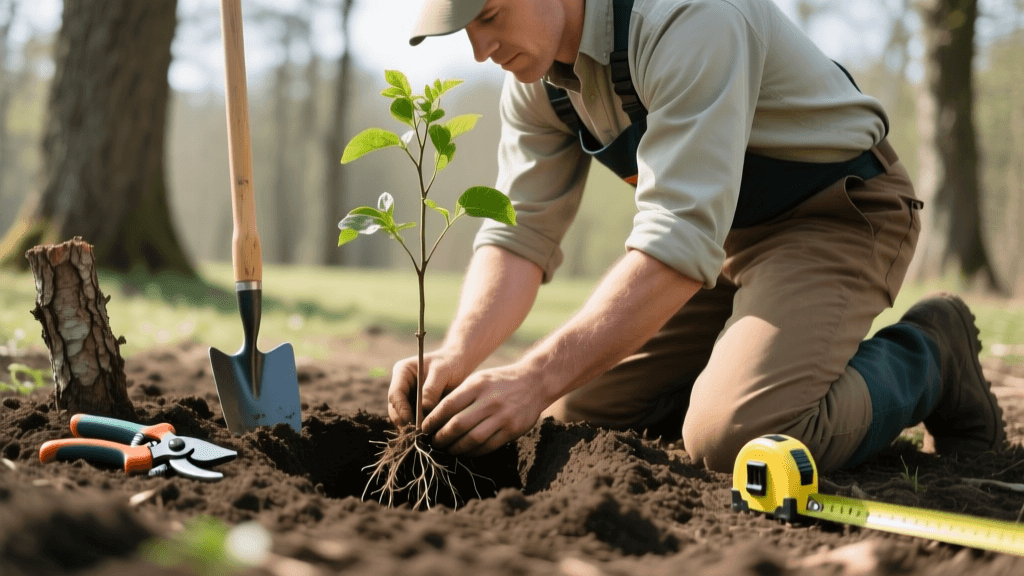
How To Plant A Tree Correctly Step By Step
Planting a tree is one of the most rewarding things you can do for your yard — but doing it wrong can set you back years, cost hundreds to replace, and even hurt nearby plants. Whether a tree thrives for decades or struggles from day one often comes down to choices made in the first hour.
Choosing the Right Tree for Your Site
Pick up a shovel only after you’ve done some homework on paper. Matching a tree species to your site — soil type, drainage, sun exposure, and USDA hardiness zone — matters more than any planting trick. The USDA Plant Hardiness Zone Map, updated in 2023, divides North America into 13 zones based on average annual minimum temperatures. Choose a tree rated for your zone — it’s the baseline.
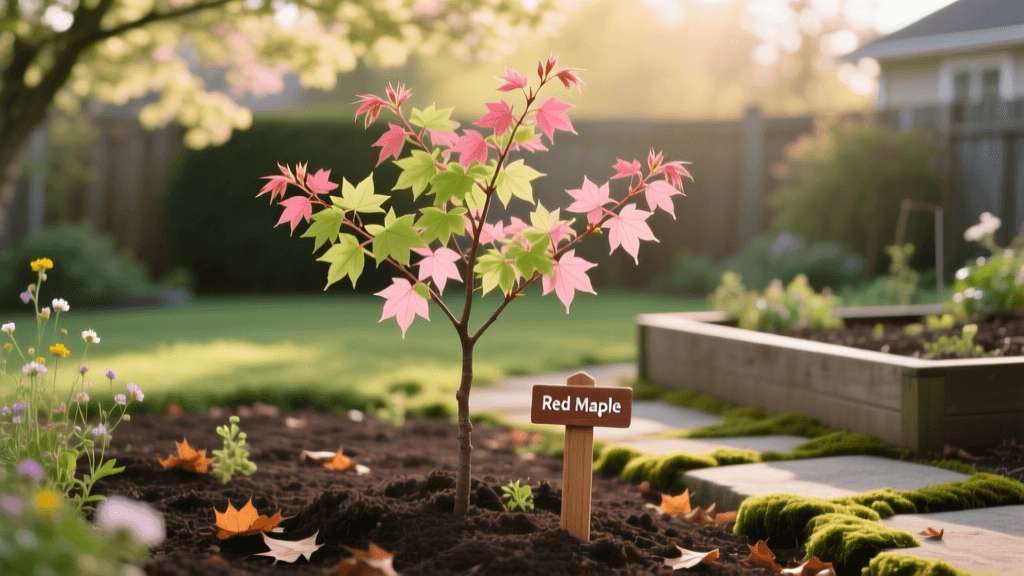
Growth rate matters too. Fast-growing trees like the Lombardy Poplar (Populus nigra 'Italica') can add 6 feet a year, but they’re short-lived and prone to disease. The Red Maple (Acer rubrum), common across the Eastern U.S., grows 1.5 to 2 feet per year and often lives 80 to 100 years. The Bur Oak (Quercus macrocarpa), popular in the Midwest for its drought tolerance, grows about 1 foot per year but can live 300 to 400 years with basic care.
Think about mature size — both height and spread. A tree planted 6 feet from your house may look fine as a sapling, but many develop root systems that reach 2 to 3 times the canopy radius. The International Society of Arboriculture (ISA) recommends keeping large-maturing trees — those over 40 feet tall at maturity — at least 20 feet from buildings, utilities, or paved areas.
Growth Rate Reference by Species
| Species | Growth Rate (ft/year) | Mature Height (ft) | USDA Zones |
|---|---|---|---|
| Red Maple (Acer rubrum) | 1.5 – 2.0 | 40 – 70 | 3 – 9 |
| Bur Oak (Quercus macrocarpa) | 0.75 – 1.0 | 60 – 80 | 3 – 8 |
| Tulip Poplar (Liriodendron tulipifera) | 2.0 – 2.5 | 70 – 90 | 4 – 9 |
| Lombardy Poplar (Populus nigra) | 5.0 – 6.0 | 40 – 60 | 3 – 9 |
| Eastern Redbud (Cercis canadensis) | 1.0 – 1.5 | 20 – 30 | 4 – 9 |
Timing Your Planting for Maximum Establishment
When you plant affects how fast roots settle in and how much stress the tree faces in its first season. Aim for mild temperatures and moist soil — conditions that let roots grow without fighting heat or frost.
In USDA Zones 3 through 5 (much of the northern U.S. and Canada), fall planting is risky for many species. The ground freezes before roots get anchored. Spring works better — after the last frost, but before summer heat hits. In Zones 6 through 8 (mid-Atlantic, Southeast, Pacific Northwest), late September through November is often ideal. Soil stays warm enough for root growth, but cooler air cuts down on water loss. In Zones 9 through 11 (Florida, Texas, Southern California), aim for late fall through early spring — just avoid peak summer heat.
Container-grown trees are more flexible than balled-and-burlapped (B&B) ones because their roots stay intact. Still, cooler periods help them settle in faster. University of Florida IFAS Extension research from 2021 found that trees planted in fall in Zone 8 and 9 climates developed 40% more root mass after one year than the same species planted in spring.
Digging the Planting Hole Correctly
Most tree-planting mistakes happen at the hole. The most common error — confirmed in ISA Best Management Practices — is digging it too deep and too narrow. A hole that’s too deep buries the root flare, starving roots of oxygen and inviting crown rot or girdling roots. A narrow hole forces roots to circle instead of spreading out.
Dig wide and shallow. Make the hole 2 to 3 times the width of the root ball, but no deeper than the root ball itself. For a 24-inch root ball, dig 48 to 72 inches wide and exactly 24 inches deep. Slope the sides outward at about 45 degrees — this helps roots push into native soil.
Identifying the Root Flare
The root flare — also called the root collar — is where the trunk widens into the root system. It needs to sit at or just above the finished soil level. On container-grown trees, it’s often buried under several inches of nursery soil. Before planting, brush or wash that away by hand until you see the flare clearly. Burying it even 2 to 3 inches below grade can shorten the tree’s life by decades.
"The number one cause of premature tree death in urban landscapes is improper planting depth. When the root flare is buried, the tree is essentially being asked to survive while slowly suffocating." — International Society of Arboriculture, Best Management Practices: Tree Planting, 2022 Edition
Use a straight edge or level across the top of the hole to check that the flare will sit at the right height before lowering the tree in. It’s much easier to adjust soil before the tree goes in than after.
Backfilling, Mulching, and Staking
Once the tree sits correctly with the root flare at grade, fill the hole with the native soil you dug out. Texas A&M University’s Department of Horticultural Sciences has found that mixing compost or other organic matter into backfill doesn’t help in most soils — and can trap roots in a “container effect,” keeping them from spreading into native soil. Stick with native soil unless your site is extreme: heavy clay that drains less than 1 inch per hour, or pure sand that holds no water.
Fill in layers, tamping gently with your foot to knock out big air pockets — don’t compact the soil. Skip tamping bars or mechanical compactors near the roots. Water halfway through filling, let it settle, then finish filling and water again.
Mulching the Root Zone
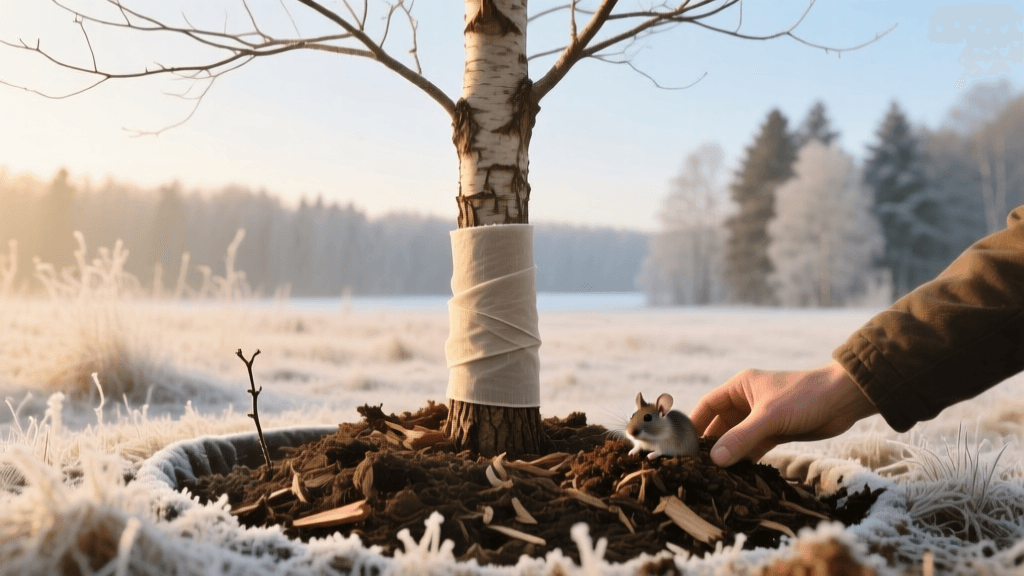
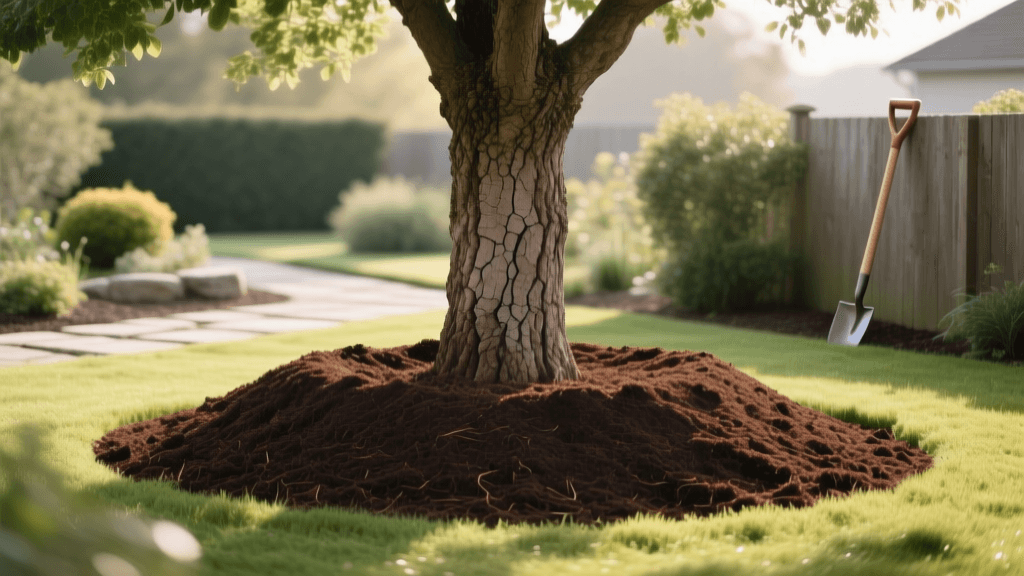
Spread 3 to 4 inches of organic mulch — shredded hardwood, wood chips, or pine bark — in a ring at least 3 feet from the trunk. For larger trees, 6 to 10 feet works better. Keep mulch 2 to 3 inches away from the trunk to keep moisture off the bark and avoid fungal problems or rodent damage. Piling mulch against the trunk — the “mulch volcano” — is harmful and best avoided.
Mulch helps hold moisture, smooths soil temperature swings, keeps weeds and grass down, and slowly improves soil as it breaks down. USDA Forest Service research from 2019 found that trees with a 4-inch layer of wood chips had 60% better survival rates in cities over five years than trees without mulch.
Stake only if the tree can’t stand on its own or if wind is constant. If you do stake, use two stakes outside the root ball, opposite each other. Connect them to the trunk with wide, flexible straps — never wire or rope directly on bark. Remove stakes after one growing season. Leaving them longer leads to weaker trunks and higher risk of breakage once they’re gone.
Watering Schedules and First-Year Care
Watering is the heaviest part of care in the first two years. A newly planted tree loses much of its root system during transplant — B&B trees may keep only 10 to 20% of their original roots — and must regrow roots while feeding its canopy.
The ISA suggests giving about 1 to 1.5 gallons of water per inch of trunk diameter, two to three times a week during the first growing season, adjusting for rain. A 2-inch caliper tree needs 2 to 3 gallons per session. Water slowly at the base so it soaks deep, not just runs off. Drip irrigation or a slow-release watering bag around the trunk both work well.
Water less often in fall as the tree slows down, but don’t stop until the ground freezes. In Zones 7 through 9, where winters are mild, keep watering occasionally during dry spells. A tree is established — able to survive on rain alone — after about one year per inch of trunk caliper. A 3-inch caliper tree needs roughly three years of extra water.
Pruning at Planting and in Subsequent Years
Don’t prune much at planting. The old idea of cutting off one-third of the canopy to “balance” root loss has been disproven. Leaves make the energy roots need to regrow — removing them slows things down. At planting, just cut dead, broken, or crossing branches. Save structural pruning for year two or three.
Pruning timing depends on species and zone:
- Zones 3–5: Prune deciduous trees in late winter (February–March) while fully dormant. Avoid fall pruning — it can spur new growth that gets hit by frost.
- Zones 6–7: Late winter still works for most. Spring-flowering trees like Eastern Redbud and Dogwood should be pruned right after they bloom, so you don’t cut off next year’s flowers.
- Zones 8–9: January through February is good for dormant pruning. If Oak Wilt (Bretziella fagacearum) is present, skip pruning oaks from February through June — fresh cuts attract beetles that carry the disease.
- Zones 10–11: Tropical and subtropical species have different windows — check species-specific advice. Avoid heavy pruning in the hottest months.
For anything beyond light hand-pruning, hire an ISA Certified Arborist. Certification means passing a thorough exam on tree biology, diagnosis, pruning, and safety — plus continuing education to keep it current. You can verify certification at treesaregood.org.
Understanding Root Spread and Long-Term Site Planning
Roots don’t mirror the canopy above. In most species, structural roots stretch 1.5 to 3 times the canopy radius, and fine feeder roots can go even further — sometimes 4 to 5 times the radius in open, well-drained soil. A mature Red Oak with a 40-foot canopy may have roots reaching 60 to 100 feet from the trunk.
This changes how you plan. Sidewalks, driveways, and underground lines placed inside a mature tree’s root zone will likely get disturbed. And construction near an existing tree — even if you don’t touch the trunk — can damage roots permanently. The ISA defines the critical root zone (CRZ) as a circle with a radius of 1 foot per inch of trunk diameter. A 12-inch tree has a 12-foot CRZ in all directions. Don’t disturb soil, compact it, or change the grade within that zone without talking to a certified arborist.
- Mark the CRZ with stakes and flagging tape before starting any construction or landscaping near existing trees.
- Install root barriers when planting within 8 feet of pavement — they steer roots downward and reduce heaving.
- Use structural soil or suspended pavement systems when trees must go in paved areas, like street tree pits.
- Record the planting location, species, and date — it helps arborists later.
- Check site conditions every 5 years to see if nearby structures, utilities, or grade changes are moving into the root zone.
The Morton Arboretum in Lisle, Illinois, has published detailed guidance on managing roots in cities and using structural soil. Their work shows that long-term tree health in developed areas depends just as much on soil volume and root space as on what you do above ground. Giving a tree room for roots at planting — even if it means shifting part of your landscape plan — pays off for its whole life.