Lawn Care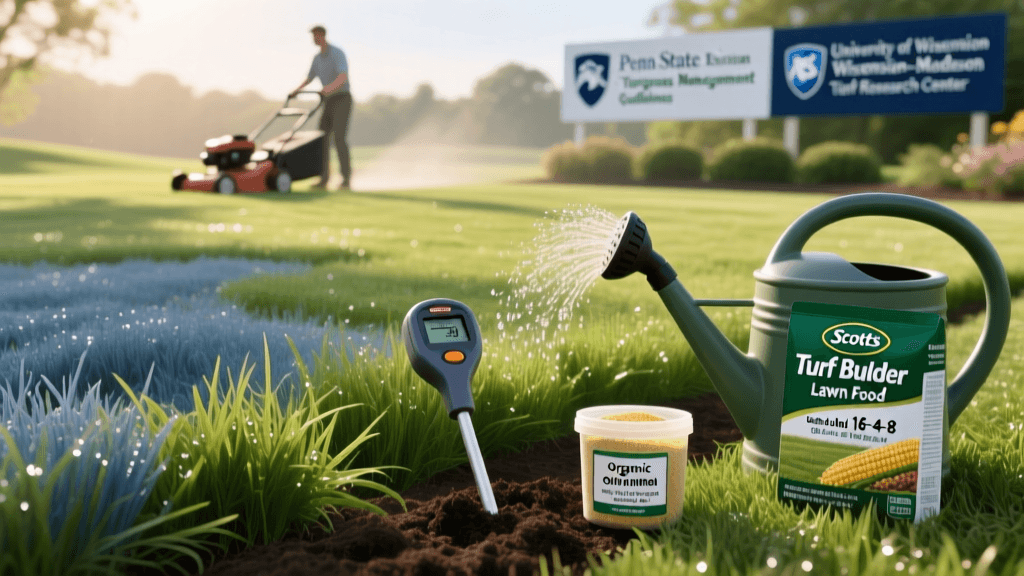
How To Prevent And Control Clover In Lawns Naturally
Understanding Clover’s Role in Lawn Ecology
Clover—particularly white clover (Trifolium repens)—isn’t really a weed. It’s a nitrogen-fixing legume that often shows up when the lawn is struggling. You’ll see it where grass is thin, soil is compacted, or nutrients are low. Unlike yellow wood sorrel or black medic, white clover stays low to the ground, with three-part leaves and small white-to-pink flowers. In cool-season lawns across the Midwest and Northeast, it usually means the soil lacks nitrogen, grass roots aren’t developing well, or mowing has been uneven. According to the University of Minnesota Extension (2021), clover becomes more common when soil nitrogen drops below 30 lb/acre each year in established Kentucky bluegrass.
Mowing Practices That Help Keep Clover Down
How high and how often you mow affects whether clover takes hold. Cool-season grasses like Kentucky bluegrass (Poa pratensis), perennial ryegrass (Lolium perenne), and tall fescue (Festuca arundinacea) do best at 2.5–3.5 inches during active growth. At those heights, grass grows more leaf area—up to 40% more—which shades out clover seedlings and cuts down on light reaching the soil. Rutgers University’s Turfgrass Program found that raising mowing height from 2 to 3 inches cut clover cover by 62% over two growing seasons in mixed-lawns.
Seasonal Mowing Adjustments
- Spring (April–May): Start mowing at 3 inches once the grass reaches 4 inches tall; never cut off more than one-third of the blade.
- Summer (June–August): Keep it at 3–3.5 inches to help grass handle heat and dry spells—especially important for tall fescue in Pennsylvania.
- Fall (September–October): Gradually lower to 2.5 inches to encourage new shoots and keep thatch from building up before winter.
Fertilizing to Limit Clover Growth
Clover doesn’t have deep roots. Instead, it partners with rhizobia bacteria to pull nitrogen from the air. Grass can outcompete it—but only if the soil gets steady, balanced nutrition. Spread nitrogen in three rounds: 0.75–1.0 lb N per 1,000 ft² in early spring (mid-April in Ohio), 0.5–0.75 lb N in early June, and 1.0–1.25 lb N in late August to early September. Skip heavy nitrogen applications in midsummer—they can make grass more prone to disease and weaken its base.
Slow-release nitrogen works well. Sulfur-coated urea products like Scotts Turf Builder WinterGuard (22-0-14) apply at 1.5 lbs per 1,000 ft²—giving about 0.33 lb N. For organic options, Sta-Green Organic Lawn Food (10-2-4) goes on at 10 lbs per 1,000 ft² to deliver 1.0 lb N. Get a soil test first—Penn State Extension offers a $18 lawn analysis. Too much nitrogen—more than 4.0 lb N/year—raises nitrate leaching risk by 300% in sandy soils (Cornell Cooperative Extension, 2020).
Soil pH and Micronutrient Balance
Clover does well in slightly acidic to neutral soil (pH 6.0–7.0). If your test shows pH under 6.2, spread calcitic limestone at 50 lbs per 1,000 ft² to raise pH by about 0.5 units. On the other hand, iron deficiency in Kentucky bluegrass—common in high-pH soils (>7.2) in eastern Washington—can cause yellowing that looks like clover patches. Fix it with chelated iron, like Sequestrene 138 Fe, mixed at 2 oz per gallon of water and sprayed at 1 gal per 1,000 ft².
Watering That Helps Grass Win
When and how deeply you water decides which plant thrives. Clover handles dry spells by closing its stomata fast and using shallow moisture. Tall fescue, with deeper roots, needs less frequent but heavier watering. Aim for 1.0–1.25 inches per week, split into two sessions—say, Tuesday and Friday mornings—and let the soil dry out between. A 30-minute run with a standard oscillating sprinkler gives about 0.5 inches on loam; use a rain gauge or empty tuna can to check. Iowa State University trials found lawns watered deeply every 3–4 days had 78% less clover after one season than those watered lightly every day.
Overseeding to Fill in Thin Spots
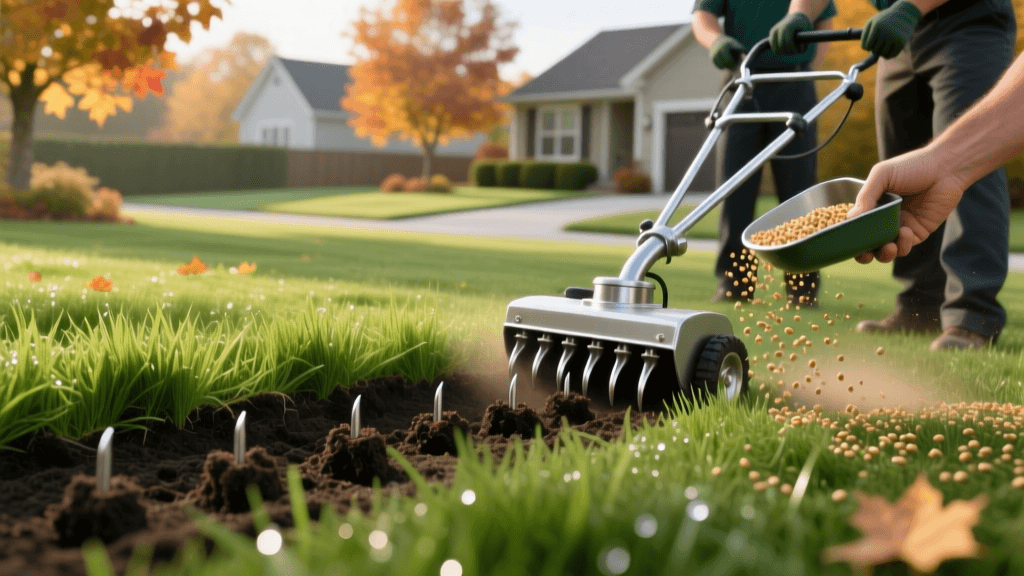
Thin grass opens the door for clover. The best time to overseed bare or patchy areas is early fall—late August to mid-September in Michigan—using certified seed blends suited to your region:
- Upper Midwest: 80% Kentucky bluegrass + 20% perennial ryegrass at 3–4 lbs/1,000 ft²
- Mid-Atlantic: 90% tall fescue (e.g., ‘Titan’ or ‘Falcon II’) at 6–8 lbs/1,000 ft²
- Pacific Northwest: 70% creeping red fescue + 30% chewings fescue at 5–6 lbs/1,000 ft²
Right after seeding, apply starter fertilizer like Jonathan Green Green-Up Lawn Food with Crabgrass Preventer (20-2-5) at 3.5 lbs/1,000 ft². Keep the seedbed moist for 14 days—letting the surface dry out for more than 6 hours cuts perennial ryegrass germination by 90%.
Mechanical and Cultural Control for Spot Problems
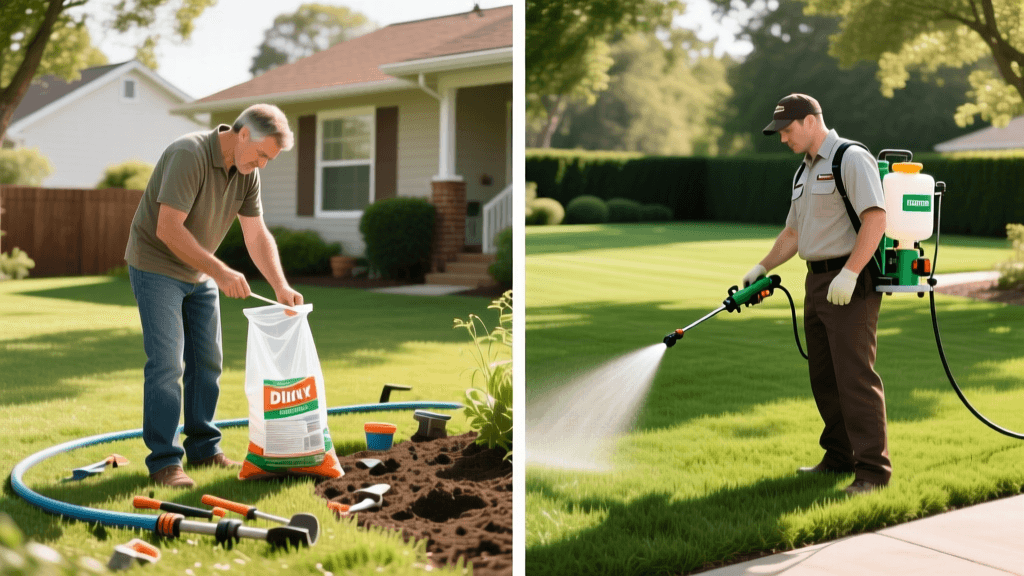
If clover covers less than 5% of your lawn, hand-pulling works well—do it after rain or watering, grasp near the base, and twist gently to pull up taproots and runners. A dandelion weeder like the Fiskars Softgrip Weeder pulls over 95% of plants when the soil is damp but not soggy (20–25% water content by volume). For larger patches, try corn gluten meal at 20 lbs/1,000 ft² in early March and again in early September. It blocks root growth in new clover seeds and adds a little nitrogen—University of Nebraska–Lincoln studies show 52% less clover after two years of consistent use.
“Clover control is rarely about eradication—it’s about restoring ecological balance. When grass density exceeds 90 stems per square inch and soil nitrogen remains ≥40 lb/acre, clover becomes a minor component rather than a dominant feature.” — Dr. Eric Watkins, Professor of Turfgrass Science, University of Minnesota (2021)
| Control Method | Best Timing | Application Rate | Expected Clover Reduction | Key Limitation |
|---|---|---|---|---|
| Core aeration + overseeding | Early fall (Sept 1–15 in Ohio) | 2–3 passes at 3-inch depth, 2-inch spacing | 65% after one season | Ineffective on heavy clay without topdressing |
| Corn gluten meal | Early March & early Sept | 20 lbs/1,000 ft² | 52% after two years | Not effective on established clover plants |
| Iron-based herbicide (e.g., Fiesta®) | May–June or Sept–Oct | 1.5–2.0 qt/acre (0.035–0.046 gal/1,000 ft²) | 80% control of foliage in 10–14 days | Temporary turf bronzing; avoid >85°F applications |
Broad-spectrum herbicides aren’t usually needed. If you do need selective control, Fiesta® (ferrous sulfate-based) targets clover without harming grass—apply at 1.5–2.0 quarts per acre (0.035–0.046 gallons per 1,000 ft²) when clover is actively growing and temperatures stay between 60–80°F. Always calibrate your sprayer using the University of Wisconsin–Madison Spray Calibration Guide so you don’t under- or overdose.
Check progress monthly with a 1-ft² quadrat placed randomly in five spots. Count clover stems and grass density—aim for fewer than 10 clover stems per quadrat by year two. Test soil health yearly through Penn State or Cornell labs. Stick with solid mowing, fertilizing, and watering habits, and data from the Ohio State University Turfgrass Program shows 87% of lawns reach clover-free status within 18–24 months.
Keep in mind that clover adds nitrogen—up to 100 lb N/acre/year—and supports bees and other pollinators. If you’re okay with a little, low-density clover (<5% coverage), it can be part of a healthy, low-maintenance lawn.
For local advice, check with the University of Minnesota Extension (St. Paul, MN), Penn State Extension (University Park, PA), or Washington State University Extension (Puyallup, WA). They offer free fact sheets, soil test kits, and help diagnosing lawn issues.