Lawn Care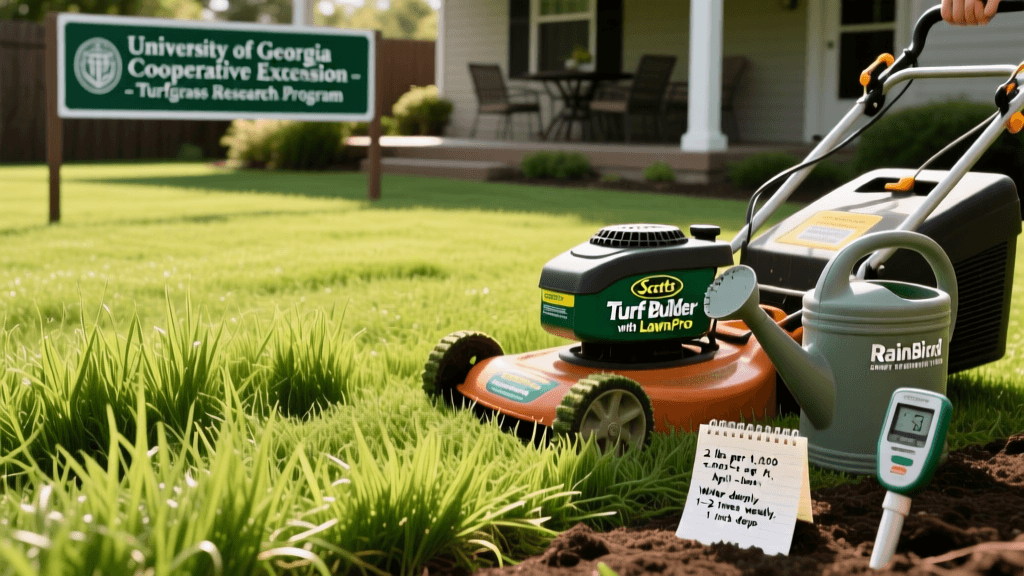
How To Prevent Thatch Buildup In Warm Season Lawns
Understanding Thatch in Warm-Season Grasses
Thatch is a tightly interwoven layer of living and dead organic matter—stems, stolons, rhizomes, and roots—that builds up between the green grass blades and the soil surface. In warm-season lawns, a thin thatch layer (less than ½ inch) can help hold moisture and buffer soil temperature. But when it gets thicker than ¾ inch, it starts causing problems: water struggles to soak in, air doesn’t move well between soil and grass, pests like chinch bugs find shelter, and fungi such as Pythium and Rhizoctonia thrive. Warm-season grasses—including bermudagrass (Cynodon dactylon), zoysiagrass (Zoysia japonica and Z. tenuifolia), and St. Augustinegrass (Stenotaphrum secundatum)—naturally produce lots of stems and roots that spread sideways. That means they’re more likely to build up thatch if mowing, feeding, or watering isn’t kept in check.
Mowing Practices That Minimize Thatch Accumulation
Mowing regularly at the right height is the simplest and most reliable way to keep thatch in check. Letting grass get too tall between cuts—or cutting it too high—pushes growth upward instead of outward, reduces photosynthesis, and leads to more lignin, which breaks down slowly. For common bermudagrass varieties like Tifway 419 and Celebration, keep the height between 0.5 and 1.5 inches all year, and mow weekly during peak growth (May–September). Zoysiagrass cultivars such as Meyer Z-52 and Emerald do best at 1 to 2 inches, cut every 5–7 days from late spring through early fall. St. Augustinegrass (Palmetto and Raleigh) handles slightly taller heights (2–3 inches), but still needs cutting every 5–6 days in summer—otherwise, the stems flatten and mat down.
Sharp Blades Are Non-Negotiable
Dull mower blades rip grass instead of slicing cleanly. That damage stresses the plant, prompting it to make more lignin and slowing microbial breakdown. Sharpen blades every 8–10 hours of use—or at least once a month when grass is growing fast. A University of Florida IFAS Extension study (2021) found lawns mowed with dull blades built up 27% more thatch over 12 weeks in summer than those mowed with sharp blades.
Clippings Do Not Cause Thatch
Many people think leaving clippings behind adds to thatch. It doesn’t. Grass clippings are mostly water (80–85%) and break down quickly—usually in 3–7 days—if you’re mowing regularly. They only become a problem when mowing stretches past 10 days or the grass gets unusually tall, causing clippings to pile up, shade the turf below, and slow decomposition.
Fertilization Strategies for Balanced Growth
Too much fertilizer—especially quick-release nitrogen—pushes top growth without building matching root systems. That imbalance means more stem and leaf tissue ends up in the thatch layer. Texas A&M AgriLife Extension advises no more than 1 lb of actual nitrogen per 1,000 sq. ft. per application for bermudagrass and zoysiagrass, with total yearly rates staying under 4–5 lbs N/1,000 sq. ft. St. Augustinegrass needs less: 2–3 lbs N/1,000 sq. ft. annually. Slow-release options like sulfur-coated urea (SCU) or polymer-coated urea (e.g., Nutri-Pak 18-6-12 at 5.6 lbs/1,000 sq. ft. for 1 lb N) feed the grass steadily and avoid sudden growth spurts.
Test your soil before adding fertilizer. The University of Georgia Cooperative Extension found that 68% of warm-season lawns tested across the Coastal Plain had phosphorus levels above what’s needed—raising runoff risk and throwing off microbial balance in the thatch. Only add phosphorus if your soil test shows less than 30 ppm Mehlich-3 extractable P.
Smart Watering to Support Microbial Activity
Soil microbes—especially actinomycetes and fungi—do most of the work breaking down thatch, and they need steady moisture and oxygen to do it. Too much water drives out air and slows them down; too little dries out the zone where thatch meets soil. Water deeply but less often: apply 0.75–1.0 inch at a time, then wait until the top 2–3 inches of soil dry out before watering again. In central Florida, the University of Florida’s “Florida Friendly Landscaping™” program suggests watering bermudagrass every 3–5 days in June–August, depending on rain and soil type. Sandy soils may need split applications—like 0.5 inch twice—to avoid runoff.
Water early in the morning (between 4:00–8:00 a.m.). That cuts evaporation and lets grass dry before nightfall, lowering disease risk. Midday watering loses about 30% of the water to evaporation, according to Clemson University Pee Dee Research and Education Center (2022).
Mechanical and Biological Thatch Management
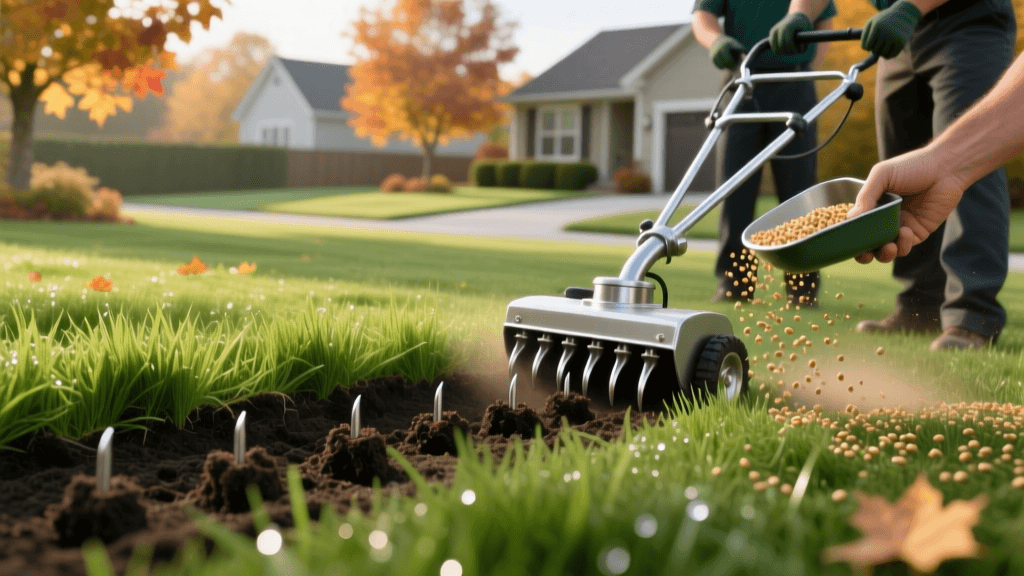
Once thatch hits ¾ inch or more, mechanical help is usually needed. Power raking (vertical mowing) pulls out excess material, but timing matters: do it only when the grass is growing strongly—late spring to early summer for bermudagrass (mid-May to early June in North Carolina), and early summer for zoysiagrass (early June in Missouri). Set the tines shallow enough to lift thatch without harming crowns; for Tifway 419, try ¼-inch depth with tines spaced 2 inches apart. After raking, lightly topdress with ⅛ inch of sandy loam and water to help the lawn recover.
Core aeration helps, too—it opens up compacted soil and lets air and water move better. Bermudagrass lawns benefit from annual aeration in late spring (May–June) using 0.75-inch tines spaced 2–3 inches apart, pushed 3–4 inches deep. Zoysiagrass, being denser, does better with two sessions a year—in late May and early September.
Microbial Enhancers: Evidence-Based Options
“Thatch-digesting” microbial products are common on store shelves, but solid evidence of their effectiveness is scarce. A 2020 review by the University of California Division of Agriculture and Natural Resources looked at 12 commercial bioenhancer products and found no meaningful reduction in thatch thickness after six months of repeated use in field trials. Compost tea, however, has shown modest gains in microbial diversity and breakdown rates in trials at Oklahoma State University Turfgrass Research Center—when brewed with air and applied at 5 gallons per 1,000 sq. ft. each month during active growth.
Soil pH and Thatch Decomposition
Soil pH affects how well microbes work. Most thatch-decomposing organisms prefer a range between 6.0 and 7.0. Lawns with pH below 5.5—common in rainy areas like the Georgia Piedmont—tend to break down thatch more slowly. Only add lime if your soil test confirms acidity: dolomitic limestone at 30–50 lbs/1,000 sq. ft. lifts pH by about 0.5 units in sandy soils.
- Bermudagrass optimal mowing height: 0.5–1.5 inches
- Maximum recommended nitrogen for zoysiagrass: 4–5 lbs N/1,000 sq. ft./year
- Core aeration tine depth for warm-season grasses: 3–4 inches
- Thatch threshold requiring intervention: >0.75 inches
- Irrigation volume per session: 0.75–1.0 inch
Preventing thatch isn’t about stripping away all organic matter—it’s about keeping the system in balance. Regular mowing, careful fertilizing, and thoughtful watering all support healthy microbes and strong roots. As the University of Florida IFAS Extension put it in 2021: “The goal is not zero thatch, but functional thatch—a dynamic layer actively cycled by soil life.”
“The single greatest predictor of long-term thatch accumulation is inconsistent mowing frequency—not fertilizer rate, soil type, or grass species alone.” — Dr. Clint Waltz, University of Georgia Cooperative Extension, 2023 Turfgrass Management Handbook
| Grass Species | Peak Thatch Risk Period | Recommended Aeration Timing | Target Soil pH |
|---|---|---|---|
| Bermudagrass | July–August | Mid-May to early June | 6.0–6.5 |
| Zoysiagrass | June–July | Early June & early September | 6.0–7.0 |
| St. Augustinegrass | August–September | Late June only if severe compaction | 5.8–6.5 |
Keep simple records: write down mowing dates and heights, fertilizer details (product, rate, date), how much water you applied (use a rain gauge), and notes on thatch thickness (measure each spring in early May with a pocket knife or soil probe). Tracking this helps spot patterns—and turns routine care into real lawn stewardship.
Thatch management isn’t about fixing something broken or making the lawn look perfect. It’s about paying attention to your grass type, your soil chemistry, and the tiny organisms doing the heavy lifting underground. When you follow recommendations from sources like Clemson, UC Davis, or your local extension, you’re not just reducing thatch—you’re building a deeper, healthier lawn ecosystem.
For advice tailored to your area, check free services like the North Carolina State University Plant Disease and Insect Clinic, the University of Florida’s Lawn Doctor online tool, or the Oklahoma State University Turfgrass Program’s annual Thatch Monitoring Protocol.
A ruler and garden trowel are all you need to track changes most people miss. Measure thatch depth in five random spots per 1,000 sq. ft. each spring. Write down the numbers and compare them year to year. If it’s up by 0.1 inch, adjust one practice—not all three.
Biological decomposition doesn’t happen on demand, but it does respond to steady, sensible care. Feed the microbes, not just the grass.
Water deeply. Mow often. Fertilize thoughtfully. And let the soil do the rest.