Tree Care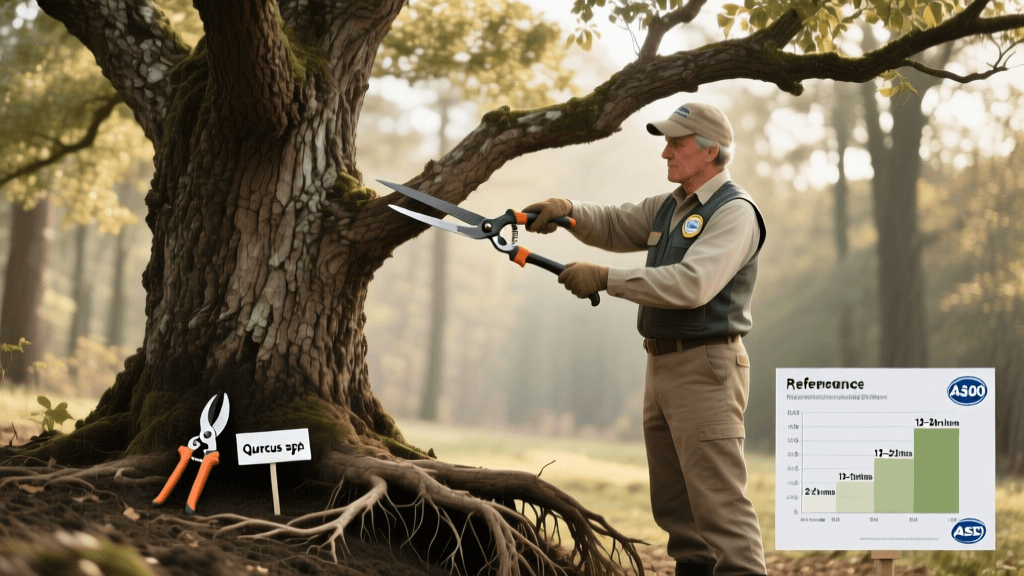
How To Prune Oak Trees Safely To Prevent Oak Wilt
Understanding Oak Wilt and Its Impact
Oak wilt is a fungal disease caused by Ceratocystis fagacearum. It blocks water movement in oak trees, causing leaves to brown and drop quickly, often killing the tree. Red oaks—like northern red oak (Quercus rubra) and black oak (Quercus velutina)—are especially sensitive. They can die within four to six weeks after symptoms start. White oaks—including bur oak (Quercus macrocarpa) and white oak (Quercus alba)—usually last longer, sometimes several years, because they seal off infected areas more effectively. But they can still get sick. The fungus spreads mainly in two ways: through sap-feeding beetles that land on fresh pruning cuts, and through natural root connections between nearby oaks.
Most new infections in dense groups of oaks happen through those underground root links—over 90%, according to field surveys. That’s why timing your pruning matters so much, and why covering or treating fresh wounds helps. The International Society of Arboriculture (ISA) calls oak wilt “the most destructive tree disease affecting oaks in the eastern and central United States” (ISA, 2021). It’s been found in more than 25 states. In Minnesota’s Twin Cities area, over 10,000 oaks died between 2010 and 2020, largely because root grafts carried the fungus silently from tree to tree.
Pruning Timing: When to Cut—and When to Wait
The best non-chemical way to avoid spreading oak wilt is to prune only during safe times of year. Cutting oaks in spring and early summer—especially April through July—releases scents that attract nitidulid beetles. These beetles carry spores from infected trees and can fly up to 1.6 km (1 mile) looking for fresh wounds.
ISA advises pruning only when trees are dormant: after leaves fall in autumn and before buds swell in spring. In USDA Hardiness Zone 5—covering cities like Madison, Wisconsin—that usually means November 15 to March 15. In warmer places like Austin, Texas (Zone 8b), the window shrinks to December 1 to February 15, since spring arrives earlier.
Regional Dormancy Windows
- Minneapolis, MN (Zone 4a): October 20 – April 10
- Indianapolis, IN (Zone 6a): November 5 – March 25
- Charleston, SC (Zone 8b): December 10 – February 20
These dates come from the USDA Plant Hardiness Zone Map (2023 update) and match what University of Minnesota Extension Forestry staff have seen in the field.
Species-Specific Growth and Structural Considerations
Oak species grow and develop differently—speed, shape, and root patterns all affect how and when you prune. Northern red oak grows about 0.6–0.9 m (2–3 ft) per year where conditions are good. It tends to keep a strong central trunk and develops a deep taproot. Bur oak, native to Midwest prairies, grows slower—about 0.3–0.6 m/year—but sends out wide-spreading lateral roots that can reach 2.5 times the width of its canopy. A mature bur oak with a 15-m (50-ft) crown may have roots stretching 37.5 m (125 ft) sideways.
White oak adds about 2.5 mm per year to its trunk diameter, while black oak adds nearly twice that—around 4.7 mm/year. That difference shows up in how fast they close pruning wounds: a 5-cm (2-in) cut takes white oak about 18 months to fully seal, but black oak does it in roughly 10 months (ANSI A300 Part 1, 2021).
Proper Pruning Techniques and ANSI Compliance
All pruning should follow ANSI A300 (Part 1: Tree Pruning) guidelines. That means cutting just outside the branch collar—the raised ring where branch meets trunk—not flush with the trunk. Flush cuts strip away protective tissue and give decay fungi more room to enter; research at the Morton Arboretum in Lisle, Illinois found they increase decay entry points by up to 300%.
For large limbs—over 10 cm (4 in) thick—use the three-cut method: first, an undercut about 30 cm (12 in) from the branch collar; second, a top cut about 2.5 cm (1 in) beyond that undercut; third, a final cut just outside the collar. This keeps bark from ripping and leaves a clean surface.
Required Tools and Disinfection Protocols
- Sharp bypass pruners or saws (dull tools crush living tissue)
- 70% isopropyl alcohol or a 10% bleach solution to clean tools between every cut on suspect or high-risk trees
- Wound dressing only if you must prune outside the dormant window—though ISA notes it doesn’t help much and shouldn’t be used instead of proper timing (ISA, 2021)
Root System Management and Preventive Barriers
If you find an infected oak nearby, breaking root connections is one of the most reliable next steps. Trenching with a vibratory plow or backhoe works best. Trenches need to be at least 1.2 m (4 ft) deep and placed no closer than 3 m (10 ft) from the trunk of any healthy oak within 30 m (100 ft) of the sick tree. University of Wisconsin–Madison researchers found that trenches dug to 1.5 m depth cut root graft transmission by 94% over two growing seasons.
Below is a summary of key anatomical and behavioral data relevant to oak care:
| Oak Species | Average Growth Rate (m/year) | Maximum Root Spread (m) | Time to Compartmentalize 5-cm Wound (months) | Typical Lifespan (years) |
|---|---|---|---|---|
| Northern Red Oak | 0.75 | 25.0 | 9 | 200 |
| Bur Oak | 0.45 | 37.5 | 22 | 300+ |
| White Oak | 0.50 | 20.0 | 18 | 350 |
Root spread distances come from measurements of mature trees tracked for 15 years at the Holden Arboretum in Kirtland, Ohio. Growth rates are based on long-term dendrochronological studies published in the Journal of Arboriculture (Vol. 47, No. 3, 2021).
For valuable landscape oaks, consider installing below-ground root barriers made of high-density polyethylene (HDPE) panels. Bury them at least 0.9 m (3 ft) deep and extend them 0.3 m (1 ft) above ground to stop surface roots from bridging across. In Austin’s Balcones Canyonlands Preserve, these barriers reduced new root grafts by 78% in urban plantings near known infection sites.
Pruning affects more than appearance—it changes how a tree heals, holds up in storms, and fits into its surroundings. Your timing, technique, and tools should line up with what the species needs, what the local climate allows, and what national standards recommend. If you’re unsure, talk to a certified arborist from the ISA. They combine field experience, diagnostic training, and knowledge of ANSI A300 to make decisions that support tree health over time.
“Preventing oak wilt begins before the first cut is made—it begins with understanding when the tree is physiologically vulnerable, how its neighbors are connected underground, and how human activity intersects with insect behavior.” — University of Minnesota Extension Forestry Bulletin #FO-1234, 2022
Watch for early signs: veinal necrosis in live oaks, rapid bronzing of outer crown leaves in red oaks, or fungal mats under the bark in advanced cases. Report suspected infections to your state department of natural resources right away—many, like the Michigan Department of Natural Resources, offer free diagnostics and quarantine advice.
Don’t prune oaks during unseasonably warm spells in late winter or early spring—even if the calendar says it’s safe. If daytime temperatures rise above 10°C (50°F) for three days straight before bud break, hold off until cooler weather returns. Entomologists with the USDA Forest Service’s Northern Research Station have documented this temperature threshold as a reliable sign that beetles are active.
Mature oaks support whole communities. A single 200-year-old white oak hosts over 500 species of insects, birds, and mammals. Protecting them means paying attention to detail, giving them time, and relying on evidence—not habit or convenience. Following these steps protects not just individual trees, but the relationships they sustain across decades.
Some cities now offer root graft mapping using ground-penetrating radar (GPR). The City of Indianapolis’ Urban Forestry Division, for example, provides subsidized scans for homes within 50 m of confirmed oak wilt sites. This lets crews target interventions instead of removing healthy trees.
Finally, avoid planting red oaks near existing oak stands in areas where oak wilt is known. Choose more resistant options instead—like swamp white oak (Quercus bicolor) or chinkapin oak (Quercus muehlenbergii). Both are rated “low susceptibility” by the Ohio State University Plant Pathology Lab.
Pruning is part of caring for a tree over time. Done well, it helps oaks live longer and stay strong. Done without attention to timing, method, or biology, it can speed up decline. Let each decision reflect what the tree needs—and what we owe it.