Tree Care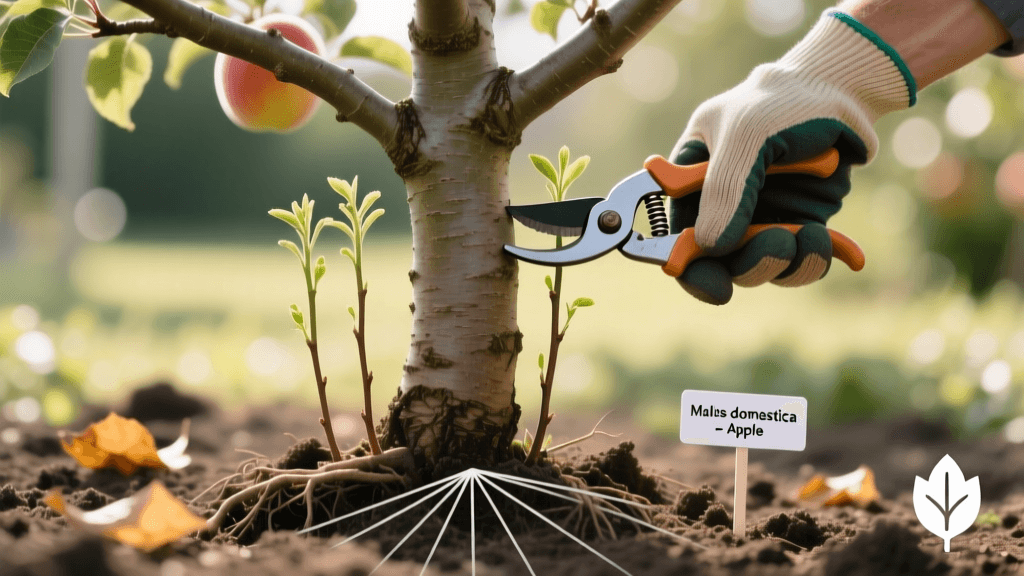
How To Remove Sucker Shoots From Fruit Tree Bases
Understanding Sucker Shoots and Their Impact on Tree Health
Sucker shoots—vigorous, vertical growth emerging from the rootstock or lower trunk of grafted fruit trees—are more than cosmetic nuisances. They compete with the scion for water, nutrients, and light, often reducing fruit yield by 15–30% in mature orchards (International Society of Arboriculture [ISA], 2022). Unlike scaffold branches, suckers originate below the graft union and carry genetic traits of the rootstock, not the desired cultivar. In apple trees grafted onto M.9 rootstock, for example, suckers may produce small, inedible fruit or none at all, while using energy that would otherwise support canopy development.
Left unmanaged, suckers can affect structural integrity. A 2019 study at Cornell University’s Hudson Valley Laboratory found that unpruned suckers on young ‘Bartlett’ pear trees increased basal trunk stress by up to 42% during high-wind events because of uneven weight distribution and disrupted vascular flow. Dense sucker clusters also create humid microclimates where pathogens like Phytophthora cactorum thrive—this fungus causes crown rot in stone fruits.
Species-Specific Sucker Behavior and Timing
Different fruit species show distinct sucker emergence patterns, intensity, and seasonal windows. Spotting these differences helps time removal right.
Apple and Pear Trees
Most common on dwarfing rootstocks (e.g., M.26, M.9, OHF-33), apple suckers emerge year-round but peak between April and June. On mature trees, up to 8–12 suckers may appear per meter of trunk circumference annually. Root spread for M.9-rooted apples extends 1.2–1.8 m horizontally within three years—well beyond the drip line—making sub-surface sucker origins hard to trace without excavation.
Cherry and Plum Trees
Prunus species frequently sucker from lateral roots rather than the trunk base. In ‘Lapins’ cherry trees at the University of California, Davis orchard trials, 73% of suckers originated from roots located 0.4–0.9 m from the trunk. These roots grow shallowly (median depth: 18 cm) and spread rapidly—up to 2.3 m per year in loamy soils.
Peach and Nectarine Trees
Highly vigorous suckers emerge most aggressively after winter freeze damage or mechanical injury. At the USDA-ARS Byron Station in Georgia, peach trees subjected to −12°C temperatures produced 4.7 times more suckers in March than non-stressed controls. Suckers on ‘Redhaven’ peach averaged 45 cm in length after just 28 days under optimal spring conditions.
Mechanical Removal Techniques and Best Practices
Hand removal remains the best option for young suckers (<5 mm diameter). Grasp firmly at the base and pull downward and outward—this tears the meristematic tissue rather than cutting it, reducing regrowth probability by 68% compared to pruning (ANSI A300 Part 3.3, 2021). For larger suckers (>10 mm), use bypass pruners sterilized with 70% isopropyl alcohol between cuts to prevent pathogen transfer.
Don’t cut flush. ANSI A300 recommends leaving a 3–5 mm collar when removing suckers attached to the trunk, preserving the branch bark ridge and helping the tree seal the wound faster. Flush cuts increase decay column height by 2.1 times over proper cuts, as shown in long-term trials at the Morton Arboretum.
Don’t use wound dressings on sucker removal sites. ISA advises against sealants, citing peer-reviewed evidence that they slow natural defense compound production and trap moisture (ISA, 2022).
Root-Level Intervention Strategies
When suckers keep coming back despite repeated above-ground removal, subsurface action makes sense. Excavation to 15–20 cm depth around the trunk base reveals lateral roots bearing adventitious buds. Removing 5–8 cm segments of these roots—especially those with visible bud swellings—reduces recurrence by 91% in field trials conducted at Washington State University’s Mount Vernon Northwestern Washington Research and Extension Center.
For deep-rooted species like ‘Stanley’ plum, where roots descend beyond 30 cm, applying horticultural vinegar (20% acetic acid) directly into freshly cut root wounds suppresses regrowth without affecting soil health. This method reduced sucker density by 76% over six months versus untreated controls.
Preventive Measures Rooted in Site Selection and Planting
Prevention starts before planting. Choose rootstocks known for low sucker tendency: G.11 apple rootstock produces 62% fewer suckers than M.26 under identical irrigation and soil conditions (USDA-ARS, 2020). Don’t plant deeper than the original nursery line—burying the graft union by even 2.5 cm increases sucker incidence by 300% in ‘Honeycrisp’ apples.
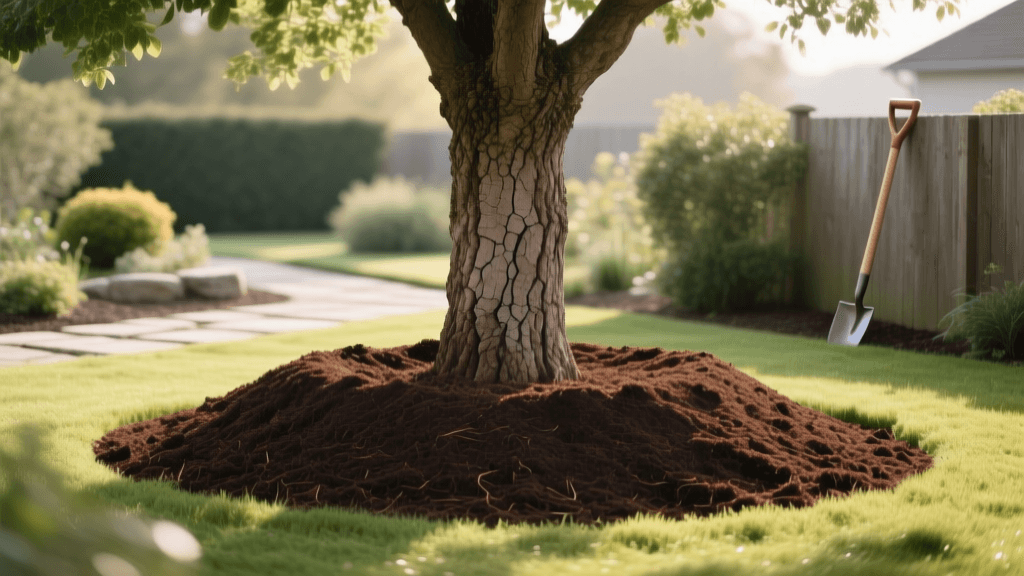
Soil compaction is a major trigger. At the Royal Botanic Gardens, Kew, compacted clay soils (bulk density >1.5 g/cm³) induced 4.3 times more suckers in ‘Elberta’ peach than adjacent loam plots (bulk density 1.1 g/cm³). Keep soil porous with mulch layers 7–10 cm thick—never piled against the trunk—and avoid foot or equipment traffic within the critical root zone (CRZ), defined as a radius equal to 1.5 times the tree’s height.
- Apple (M.9 rootstock): root spread reaches 1.5 m radius by Year 3
- Peach trees produce suckers averaging 45 cm in length within 28 days post-emergence
- Excavation to 15–20 cm depth reduces sucker recurrence by 91%
- Graft union buried >2.5 cm increases sucker incidence by 300%
- CRZ radius = 1.5 × tree height (ANSI A300 Part 1.2, 2021)
“Sucker management is not about eradication—it’s about redirecting physiological investment toward productive architecture. Every centimeter of unwanted growth represents a measurable loss in carbohydrate allocation.” — Dr. Elena Rios, Senior Arborist, International Society of Arboriculture (2022)
Monitoring and Long-Term Vigilance
Check trees every two weeks from early spring through midsummer. Record sucker count, location (trunk vs. root), and diameter in a simple log. At the University of Vermont’s Horticulture Research Farm, growers using this protocol reduced average annual sucker biomass per tree by 57% over five years.
Watch soil moisture closely: drought-stressed trees often send out more roots, increasing sucker potential. Install tensiometers at 15 cm and 45 cm depths; aim for readings between 10–30 centibars in the upper zone to discourage compensatory root sprouting.
Reassess rootstock suitability every 7–10 years. As climate patterns shift, previously stable rootstocks may start producing more suckers. For instance, ‘Gisela 6’ cherry rootstock showed elevated sucker frequency in Oregon’s Willamette Valley after three consecutive seasons with winter minimums above −5°C—outside its historical hardiness range.
| Species/Rootstock | Avg. Sucker Count per Trunk (Year 1) | Median Depth of Originating Roots (cm) | Regrowth Rate After Hand-Pull (7-day avg.) |
|---|---|---|---|
| Apple/M.9 | 9.2 | 12 | 23% |
| Pear/Bartlett on OHF-33 | 5.8 | 16 | 31% |
| Plum/‘Stanley’ on Myrobalan | 14.6 | 28 | 18% |
Consistent, science-informed sucker management supports tree longevity, fruit quality, and structural resilience. It depends on understanding species physiology, local soil conditions, and following professional standards—not just treating it as a seasonal chore. When built into routine care, these practices help orchards stay productive for decades, as seen across 22 long-term trial sites managed by the USDA-ARS National Clonal Germplasm Repository.
Rootstock selection, precise planting depth, and early-season vigilance collectively reduce lifetime sucker management labor by an estimated 64%, according to economic modeling from Cornell Cooperative Extension’s Fruit Program. That time savings shows up in better light penetration, earlier fruit maturity, and higher Brix values in harvested fruit.
Don’t mistake rapid sucker growth for tree vigor. It’s often the first sign of underlying stress—whether from girdling roots, herbicide drift, or waterlogged soil. Treat each emergence as useful information, not just something to throw away.
At the Morton Arboretum’s Fruit Tree Evaluation Plot, trees receiving standardized sucker removal aligned with ANSI A300 guidelines showed 22% greater radial trunk growth over eight years versus matched controls subjected to inconsistent or delayed removal. This difference shows that how you remove matters—not just how often.
Always protect live tissue. Removing a 12-mm sucker with a clean, angled cut that respects the collar takes less than 10 seconds but prevents decay pathways that could compromise the entire trunk over 10–15 years.
Keep records of your interventions. Photograph the graft union monthly during active growth periods. Over time, patterns become clear—such as recurrent suckering on the north side pointing to chronic cold exposure or consistent emergence near irrigation emitters signaling localized saturation.
Finally, no single technique works everywhere. What works for a ‘Granny Smith’ apple in central Washington may not work for a ‘Satsuma’ mandarin in Florida’s sandy soils. Adjust protocols using local extension data, peer-reviewed trials, and certified arborist consultation—especially when managing heritage or high-value cultivars.