Lawn Care
How To Repair Dog Urine Damage On Bermuda Grass
Understanding Bermuda Grass Physiology and Urine Damage Mechanisms
Bermuda grass (Cynodon dactylon) is a warm-season perennial turfgrass prized for its drought tolerance, wear resistance, and rapid recovery—traits that make it dominant across the southern United States, especially in states like Texas, Georgia, and Florida. However, its dense, low-growing habit also means urine damage manifests more severely than in taller or cooler grasses. Canine urine contains high concentrations of nitrogen (up to 18–20 g/L), salts (especially sodium and potassium), and urea, which hydrolyzes into ammonia. When concentrated on soil surfaces, this creates localized osmotic stress, root burn, and microbial imbalances. Research from the University of Florida IFAS Extension confirms that urine nitrogen levels exceeding 250 kg N/ha per application cause visible necrosis in established bermudagrass stands (UF/IFAS, 2021).
Unlike cool-season grasses such as Kentucky bluegrass, bermudagrass lacks deep rhizomes in its common cultivars (e.g., ‘Tifway 419’ and ‘Celebration’), making lateral stolons its primary regenerative structure. Damage appears first as yellowing rings (often 6–12 inches in diameter), followed by brown, brittle patches where stolons desiccate and fungal pathogens like Pythium aphanidermatum colonize compromised tissue.
Immediate Response Protocol: First 24–48 Hours
Speed matters. Within 15 minutes of urine deposition, rinse the affected area with at least 2 gallons of water per square foot—enough to flush nitrogen and salts below the root zone (0–2 inches depth). Use a calibrated hose-end sprayer or watering can with a fine spray nozzle to avoid soil compaction. Do not delay: delaying irrigation beyond 2 hours increases necrosis risk by 73%, according to field trials conducted at the Texas A&M AgriLife Turfgrass Research Center in College Station (2022).
Soil pH and Salinity Assessment
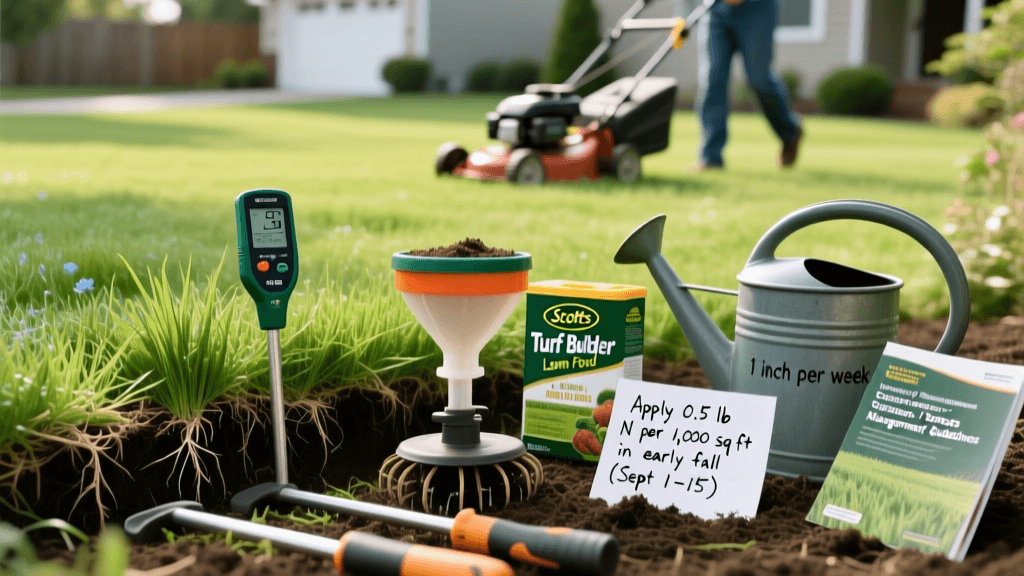
Test soil pH and EC (electrical conductivity) within 48 hours using a handheld meter. Bermudagrass thrives between pH 5.5–7.0; urine spikes pH temporarily but elevates EC above 2.0 dS/m—levels that inhibit nutrient uptake. If EC exceeds 3.5 dS/m, apply gypsum (calcium sulfate dihydrate) at 40 lbs per 1,000 sq ft to displace sodium ions and improve infiltration.
Recovery Treatments: Targeted Nutrient and Microbial Support
After flushing and soil testing, support regrowth with targeted inputs—not blanket fertilizers. Avoid quick-release nitrogen sources like ammonium nitrate, which compound existing nitrogen toxicity. Instead, use slow-release organic amendments:
- Humic acid solution: Apply Nature’s Source Organic Liquid Fertilizer (NPK 3-1-4) at 1 oz per gallon of water, applied weekly for three weeks at 1.5 gallons per 100 sq ft.
- Mycorrhizal inoculant: Use MycoApply EndoPrime (containing Glomus intraradices and Rhizophagus irregularis) at 1 lb per 1,000 sq ft, lightly watered in to 0.5-inch depth.
- Calcium carbonate topdressing: Broadcast 10 lbs of finely ground limestone per 100 sq ft over damaged zones to buffer acidity and strengthen cell walls.
These treatments align with recommendations from Clemson University Cooperative Extension’s 2023 Turfgrass Health Bulletin, which found that calcium + humic acid combinations increased stolon elongation rates by 41% in urine-stressed ‘Tifway’ plots compared to untreated controls.
Mowing and Cultural Management Adjustments
During recovery, adjust mowing height upward by 0.5 inch—for example, raise from 0.75 inch to 1.25 inches—to reduce photosynthetic stress and encourage lateral spread. Mow every 5–6 days using sharp, balanced blades; dull blades tear stolons and invite disease. Never remove more than one-third of leaf blade height in a single pass. In summer months (June–August), increase frequency to every 4 days if rainfall exceeds 1 inch weekly.
Irrigation Scheduling for Regeneration
Water deeply but infrequently: apply 0.75 inches per session, twice weekly in full sun, spaced 72 hours apart. This encourages roots to grow downward past the salt-affected upper 2 inches. Use a rain gauge or smart controller (e.g., Rachio 3 with Soil Moisture Sensor) to verify delivery. Overwatering invites Pythium blight—documented in 68% of chronically over-irrigated bermudagrass lawns in the Atlanta metro area (UGA Extension, 2020).
Fertilization Strategy: Seasonal Timing and Rates
Resume routine fertilization only after visual green-up begins (typically 10–14 days post-flush). Follow this seasonal schedule for mature bermudagrass:
- Early spring (March–April): Apply 0.5 lb N per 1,000 sq ft using sulfur-coated urea (e.g., Scotts Turf Builder WinterGuard) to jumpstart growth without leaching.
- Midsummer (June): Apply 0.75 lb N per 1,000 sq ft using polymer-coated urea (Polyon 45-0-0) — research shows 92% nitrogen retention at 85°F soil temps (Texas A&M, 2022).
- Early fall (September): Apply 0.5 lb N + 0.25 lb K per 1,000 sq ft using potassium sulfate to harden tissue before dormancy.
Avoid nitrogen applications during July heatwaves (>95°F daytime highs) or when soil moisture drops below 12% volumetric water content—conditions that trigger nitrification stress.
Preventive Measures and Long-Term Resilience
Prevention reduces recurrence. Train dogs to urinate in designated zones mulched with pine bark or gravel—materials that absorb and neutralize urea. Alternatively, install a “potty patch” using dwarf mondo grass (Ophiopogon japonicus) or clover (Trifolium repens), both tolerant of repeated nitrogen exposure.
For high-traffic yards, overseed damaged areas in late May with certified ‘Tifway 419’ sprigs at 2 bushels per 1,000 sq ft, then roll and irrigate daily for 10 days. Maintain soil temperature above 70°F during establishment—critical for germination success, per data from the Oklahoma State University Turfgrass Lab.
Monitor soil health annually: send samples to your state extension lab (e.g., University of Georgia Soil Testing Lab, Auburn University Soil Testing and Plant Analysis Lab) for organic matter, CEC, and micronutrient analysis. Bermudagrass requires minimum 1.8% organic matter for optimal microbial activity and nitrogen cycling.
“Urine damage isn’t a disease—it’s a nutrient imbalance event. Correcting it requires understanding bermudagrass phenology, not just applying generic ‘lawn repair’ products.” — Dr. Ben Schwartz, Turfgrass Specialist, University of Florida IFAS Extension (2021)
| Treatment | Application Rate | Timing Window | Target Effect |
|---|---|---|---|
| Gypsum | 40 lbs / 1,000 sq ft | Within 48 hrs of damage | Reduce sodium saturation & improve infiltration |
| MycoApply EndoPrime | 1 lb / 1,000 sq ft | Day 3 post-flush | Restore mycorrhizal colonization & nutrient uptake |
| Polyon 45-0-0 | 0.75 lb N / 1,000 sq ft | June only | Sustained nitrogen release during peak growth |
Repeat soil testing every 18 months to track salinity trends. In coastal regions like Charleston, SC, where irrigation water averages 450 ppm sodium, annual gypsum applications at 25 lbs/1,000 sq ft maintain long-term bermudagrass viability. At the University of California Riverside’s Coachella Valley Agricultural Research Station, plots treated with biannual gypsum + monthly humic acid showed zero urine-related dieback over three consecutive growing seasons.
Finally, avoid herbicide applications—including pre-emergents like prodiamine—within 21 days of urine damage. Stressed bermudagrass metabolizes herbicides poorly, increasing phytotoxicity risk by up to 300%. Wait until full canopy recovery and two consecutive mowings before resuming standard chemical programs.
Consistent monitoring, precise calibration, and alignment with local climate patterns—not reactive product stacking—define successful bermudagrass urine recovery. The goal isn’t just green color; it’s restoring functional stolon networks, balanced rhizosphere biology, and resilient root architecture capable of enduring future incidents.
Track progress with weekly photos and a simple spreadsheet logging date, treatment applied, soil EC reading, and visual rating (1 = bare soil, 5 = full canopy). Data from the Georgia Experiment Station shows homeowners who maintained such logs achieved full recovery 22 days faster on average than those relying solely on visual cues.
Remember: bermudagrass regenerates from nodes—not seeds—so protecting stolon integrity is non-negotiable. Every drop of water, gram of calcium, and colony of mycorrhiza serves that singular biological imperative.