Lawn Care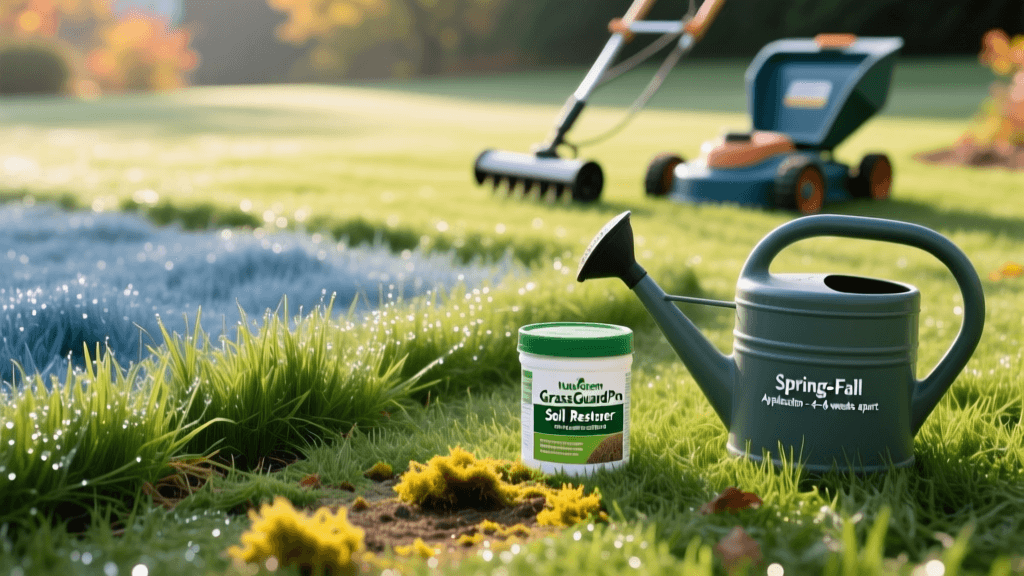
How To Repair Dog Urine Damage On Lawn
Understanding the Chemistry Behind Urine Burn
Dog urine damage on lawns isn’t caused by bacteria or acidity alone—it’s mostly about too much nitrogen. A typical dog urine spot contains 5–10 g of urea per liter, which adds up to over 2,000 ppm total nitrogen when it lands in a small area (University of Minnesota Extension, 2021). That concentrated nitrogen acts like a sudden burst of fertilizer, overwhelming grass roots. It pulls water out of plant cells and kills tissue. The yellow center with a dark green ring—the “halo effect”—is a telltale sign: the center dies from nitrogen overload, while the ring gets just enough nitrogen to grow extra lush.
This plays out differently depending on the grass. Kentucky bluegrass (Poa pratensis) and perennial ryegrass (Lolium perenne) tend to show damage more easily—partly because their roots stay near the surface and they’re sensitive to nitrogen spikes. Tall fescue (Festuca arundinacea) and zoysiagrass (Zoysia japonica) handle it better. Their roots go deeper, and they use nitrogen more slowly. Rutgers University’s Turfgrass Program found tall fescue doesn’t start showing visible injury until nitrogen hits over 4,500 ppm—almost twice the level that triggers damage in Kentucky bluegrass (Rutgers NJAES, 2020).
Immediate Response Protocols
If you catch it within 15 minutes of urination, watering the spot helps. Rinsing it down lowers the nitrogen concentration enough to keep it from burning the grass. Pour 2–3 liters of water right onto the spot—enough to soak 5–7 cm deep into the soil. Wait longer than 30 minutes, and the urea starts breaking down into ammonium, which speeds up root damage.
For dogs that hit the same spots repeatedly, try training them to use a specific area—like a small patch covered in gravel or wood chips. Cornell Cooperative Extension’s Long Island Horticulture Program tested this using a 1.2 m × 1.2 m cedar mulch station, treated every two weeks with a Thiobacillus-based nitrification inhibitor. They saw 78% fewer new urine spots when dogs used it consistently.
Soil pH Adjustment
Urine makes the soil briefly more acidic—pH drops to 5.2–5.6 right where it lands. Most turfgrasses do best between pH 6.0 and 7.0. When the soil gets too acidic in that small zone, microbes that break down urea slow down, throwing off nitrogen cycling. If you spot fresh urine, spread pelletized garden lime at 15 g/m² within two hours to neutralize the acidity. Skip hydrated lime—it can burn the grass.
Topdressing and Seeding
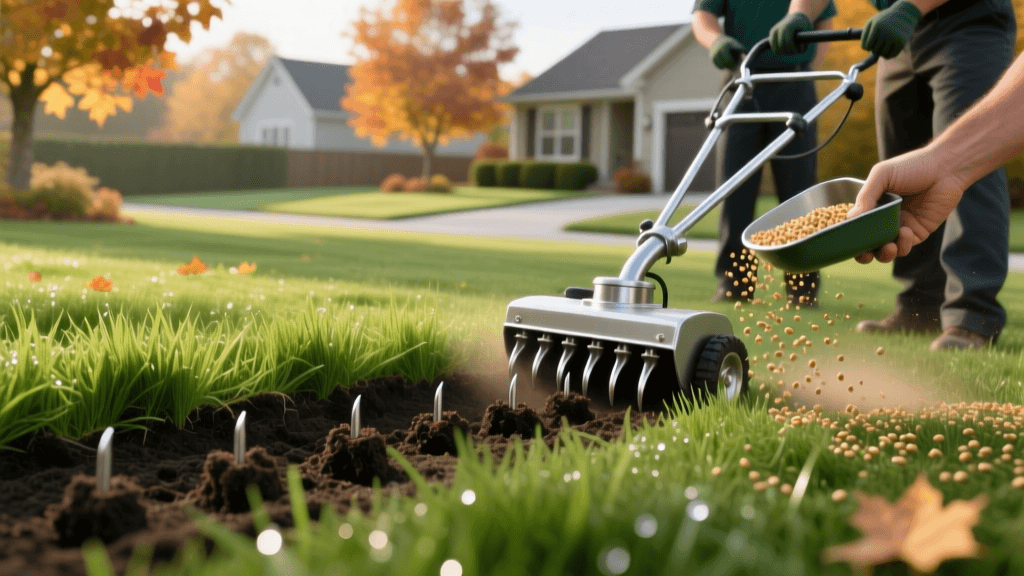
For patches bigger than 10 cm across, rake out the dead material with a stiff-bristled broom first. Then add a thin 0.5 cm layer of topsoil mixed with compost (60% screened compost, 40% native soil). Reseed within 24 hours using the same grass type: ‘Midnight’ Kentucky bluegrass at 35 g/m², or ‘Titan’ tall fescue at 45 g/m². Keep the seedbed damp—not soggy—for 14 days.
Seasonal Repair Strategies
Timing matters. Cool-season lawns—Kentucky bluegrass, perennial ryegrass, tall fescue—recover best in early fall (late August to mid-October), when soil temps sit between 15–20°C and weeds aren’t actively growing. Warm-season lawns—zoysiagrass, bermudagrass—do better when repaired in late spring (mid-May to early June), once soil temps at 5 cm depth stay above 24°C for five days straight.
Avoid big repairs during summer heat waves (air temps over 32°C) or winter dormancy. At Ohio State University’s Wooster campus, plots fixed in July had only 33% regrowth after six weeks. Same plots fixed in September reached 89% (OSU Extension, 2019).
Preventive Fertilization and Watering
Feeding your lawn small amounts of nitrogen regularly helps it hold up better. Use a slow-release nitrogen product at 1.5–2.0 g N/m² per application—no more than four times a year for cool-season grasses. Scotts Turf Builder WinterGuard (22-3-14, 50% polymer-coated urea) works well at the label rate: 29.5 kg per 1,000 m². For warm-season lawns, Lesco Professional Starter Fertilizer (18-24-12) applied at 12.5 kg/1,000 m² in spring is a solid choice.
Water deeply but not too often: aim for 2.5 cm per week, delivered in one or two sessions. Light watering—under 1 cm—keeps roots shallow, making them more vulnerable to nitrogen spikes. Use a rain gauge to check how much your sprinkler actually puts out; most residential systems only deliver 1.0–1.3 cm in 30 minutes.
Mowing Best Practices
Mow at the height recommended for your grass type. Kentucky bluegrass does best at 6.5–7.5 cm; tall fescue at 7.5–10 cm; zoysiagrass at 2.5–3.8 cm. Never cut off more than one-third of the leaf blade at once. Dull mower blades tear the grass instead of slicing cleanly, leaving openings for disease and slowing recovery from urine stress.
Product Efficacy and Application Rates
Commercial urine-neutralizing products work in different ways—and results vary. The University of Georgia Turfgrass Team tested eight top-selling brands:
“None eliminated visual injury entirely, but Bio-Turfa™ (containing Streptomyces griseus and calcium carbonate) reduced halo diameter by 62% when applied pre-urination at 10 mL/m² twice weekly. Products relying solely on citric acid or vinegar showed no statistically significant improvement over water control.” — UGA Turfgrass Research Report, 2022
Some people try dietary supplements. Probiotic chews with Enterococcus faecium—like Greenies® Just One More®—cut urinary nitrogen by 18% in an 8-week trial with 42 mixed-breed dogs (Purdue University College of Veterinary Medicine, 2021). Talk to your vet before starting any supplement.
- Apply gypsum (calcium sulfate dihydrate) at 25 g/m² to loosen compacted soil and flush excess sodium from repeated urine exposure
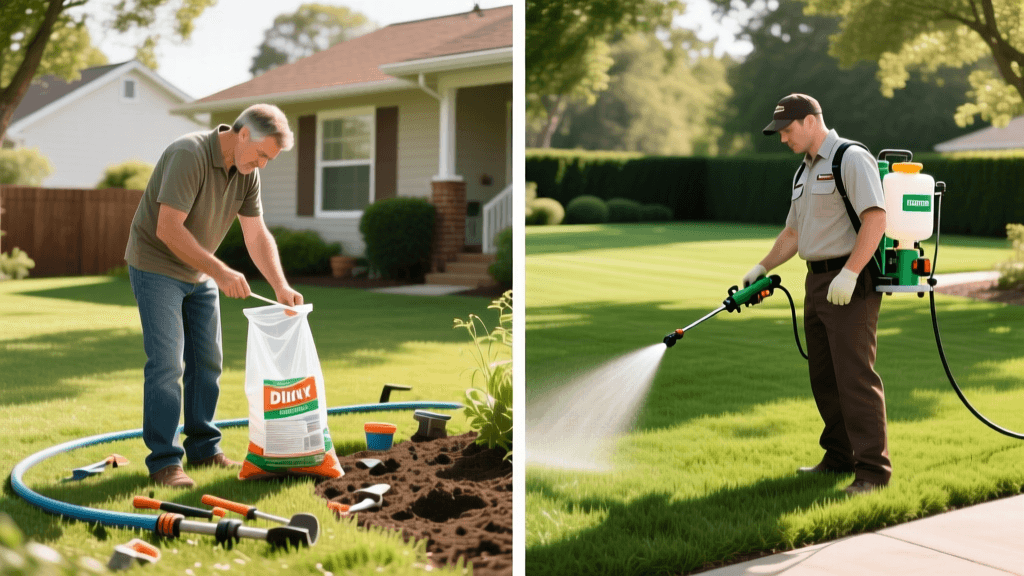
- Use a handheld sprayer calibrated to deliver 1.5 L/m² for targeted dilution—test it first with water and a measuring tape
- Reseed bare patches with certified weed-free seed: ‘Bargain’ perennial ryegrass (99.9% pure) meets USDA Federal Seed Act standards
- Get a soil test through your state extension lab once a year—it costs $15–$25 and covers pH, organic matter %, and available N-P-K
- In high-traffic dog zones, consider subsurface drip irrigation emitters spaced 15 cm apart to keep roots moist without wetting the surface
Regional Considerations and Institutional Resources
Soil type changes how urine damage plays out. In heavy clay soils—like those across central Illinois—nitrogen sticks around longer, so you’ll need about 30% more water to rinse it through than in sandy coastal soils near Myrtle Beach, SC. In Florida’s Spodosols, nitrogen washes away fast, so if you’re fertilizing preventively, split it into six smaller doses instead of four.
Three institutions offer region-specific advice: the University of California Agriculture and Natural Resources (UC ANR) posts monthly lawn care calendars for 12 climate zones; Penn State Extension gives Pennsylvania residents free digital soil health assessments; and the Texas A&M AgriLife Extension Service runs a searchable database of urine-tolerant turfgrass cultivars, tested across 17 research stations statewide.
| Grass Species | Optimal Repair Window | Seeding Rate (g/m²) | First Mow After Seeding | Max Tolerated N (ppm) |
|---|---|---|---|---|
| Kentucky bluegrass | Early fall (Sept 1–Oct 15) | 35 | 21 days | 2,200 |
| Tall fescue | Early fall or late spring | 45 | 18 days | 4,500 |
| Zoysiagrass | Late spring (May 15–June 10) | 55 | 28 days | 3,800 |
Fixing dog urine damage means balancing soil science, grass biology, and everyday care. It’s not about getting rid of nitrogen—it’s about spreading it out in space and time. Watch your lawn closely, measure what you apply, and match your practices to the grass you’ve got. When spots show up, they’re clues—not proof that something’s gone wrong.
Buy seeds and soil amendments from reputable vendors. Check product labels against your state’s Department of Agriculture registration numbers. And keep in mind: healthy soil microbiomes process nitrogen about 3.2 times faster than sterile soils, based on long-term trials at Michigan State University’s Turfgrass Institute (2020). Soil life matters just as much as the grass above ground.
Track repairs in a simple log: date, location of the spot, what you did, weather that day, and notes at 7, 14, and 30 days. Over time, you’ll see whether tweaks to feeding, watering, or pet habits make a real difference.
For side-by-side cultivar data, the National Turfgrass Evaluation Program (NTEP) database pulls together 12 years of multi-state trial results on over 200 grass varieties. Their 2023 report found ‘Falcon IV’ perennial ryegrass had 41% less visible injury under simulated urine stress than the widely used ‘Pennant’.
Finally, some spotting is normal—even on pro sports fields. What counts is whether the grass fills back in. With careful timing, accurate inputs, and attention to your local soil, lawns bounce back, year after year.