Lawn Care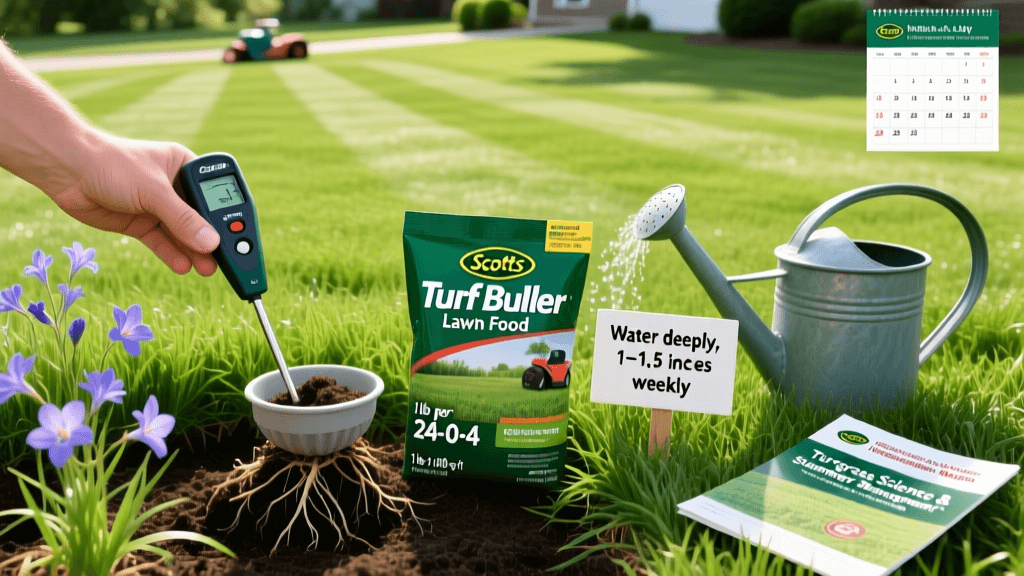
How To Repair Heat Stressed Lawn In Summer
Recognize Heat Stress Before It Escalates
Heat stress in lawns shows up as a dull bluish-gray color, footprints that stay visible for more than 30 minutes after walking, and leaves that roll up—especially in cool-season grasses. Kentucky bluegrass (Poa pratensis) starts showing stress when soil temperatures go above 85°F at the 2-inch depth for three days in a row. Tall fescue (Festuca arundinacea) handles heat better, but its roots grow slower when air temperatures stay above 95°F for five days or more. According to the University of Minnesota Turfgrass Science Program (2022), Kentucky bluegrass loses about 40% of its photosynthesis when daytime highs top 90°F for seven straight days. To catch it early, stick a digital soil thermometer 2 inches deep near the base of the grass crowns during mid-afternoon.
Adjust Mowing Height and Frequency Strategically
Raising your mowing height is one of the quickest ways to help a heat-stressed lawn. For Kentucky bluegrass, go from 2.5 inches up to 3.5 inches; for tall fescue, raise it from 3 inches to 4 inches. Taller grass shades the soil, keeps it cooler by as much as 12°F, and helps roots grow deeper. Never cut off more than one-third of the leaf blade at once—taking off too much shocks the plant and opens the door to disease. In peak summer (July–August in USDA Hardiness Zones 5–7), mow every 5–7 days instead of every 3–4 days. Keep mower blades sharp and balanced: dull blades tear the grass, which speeds up water loss and makes it more likely to get sick (Penn State Extension, 2021). Try not to mow between 10 a.m. and 4 p.m., when it’s hottest and most humid.
Recommended Mower Settings by Grass Type
- Kentucky bluegrass: Set rotary mower deck to 3.5 inches; sharpen blades every 8–10 hours of use
- Tall fescue: Maintain at 4.0 inches; use mulching blades to return nitrogen-rich clippings
- Zoysiagrass (Zoysia japonica): Raise from 1.5 to 2.0 inches in July; avoid scalping even on hybrid cultivars like ‘Emerald’
Water Deeply, Early, and Evenly
Light, frequent watering leads to shallow roots and makes lawns more vulnerable to drought. Instead, give them 1.0–1.25 inches per session—enough to wet the top 6–8 inches of soil, where most cool-season grass roots live. Use a rain gauge or an empty tuna can placed on the lawn to check how much water you’re actually applying. Water between 4 a.m. and 9 a.m. That cuts down on evaporation (which jumps 25–30% between noon and 3 p.m.) and lowers the chance of fungal problems. In dry places like Phoenix, AZ—where evapotranspiration averages 0.25 inches a day in July—you might need to water every 3–4 days. In humid coastal areas like Charleston, SC, one deep watering a week often covers it during mild heat waves.
Watering Schedule Based on Soil Type
- Sandy soils: Apply 0.75 inches every 2–3 days (water moves through fast but doesn’t hold much)
- Clay soils: Apply 1.25 inches every 5–7 days (water soaks in slowly but stays put)
- Loam soils: Apply 1.0 inch every 4–5 days (a good mix of drainage and moisture retention)
Choose Fertilizer Carefully
Hold off on high-nitrogen fertilizers in summer—they push top growth while the roots are already stretched thin. Go with a slow-release, low-nitrogen option like Scotts Turf Builder SummerGuard (17-0-7), applied at 3.5 lbs per 1,000 sq ft. It feeds the grass steadily over 8–10 weeks without forcing a growth spurt. In the Midwest, Purdue University suggests giving stressed tall fescue 0.25 lbs of actual nitrogen per 1,000 sq ft in early July using a polymer-coated urea product like ICL’s Polyon 42-0-0. Don’t fertilize Kentucky bluegrass between June 15 and August 15 in northern states—Michigan State University found that doing so raises the risk of summer patch (Magnaporthe poae) by 65%.
Use Stress-Mitigating Products and Practices
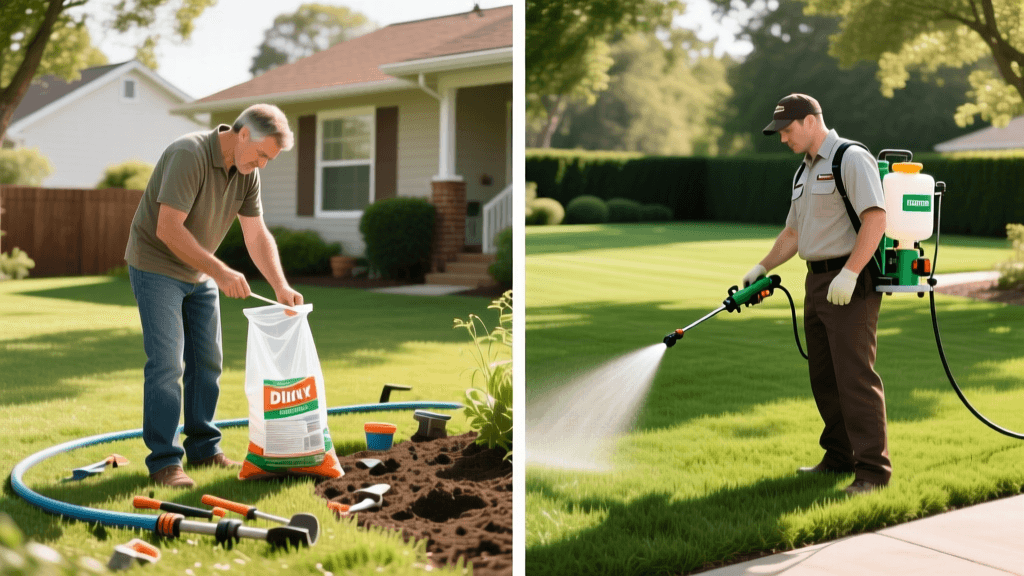
Humic acid-based biostimulants can help roots handle heat better. Nature Safe 8-2-4 Organic Lawn Food has 5% humic substances and works well applied at 15 lbs per 1,000 sq ft in early July. For foliar support, try a seaweed extract like SeaHume 0-0-2, diluted at 1 oz per gallon and sprayed just after dawn—repeat every two weeks during long hot stretches. Core aeration (with 0.5-inch tines, 2–3 inches deep, spaced 3–4 inches apart) in late June helps oxygen and water move into the soil. A 2020 study at Rutgers University’s Snyder Research and Extension Farm found that aerated tall fescue held 22% more moisture at the 4-inch depth after 10 days without rain than non-aerated plots.
“Turfgrass survival during extreme heat hinges less on reactive inputs and more on consistent, science-backed cultural adjustments—especially mowing height and irrigation timing. Skipping these fundamentals undermines all other interventions.” — Dr. Eric Watkins, Professor of Turfgrass Science, University of Minnesota (2022)
Monitor and Adjust Using Localized Data Sources
Local data helps fine-tune your plan. The Iowa State University Mesonet gives real-time soil temperature readings at 2-, 4-, and 8-inch depths from more than 150 stations across the state. In Georgia, the UGA Weather Network offers evapotranspiration (ET) calculators tailored to county-level conditions—useful for dialing in how much to water. For disease warnings, check the Turf Disease Risk Index from the University of Wisconsin–Madison, which flags brown patch (Rhizoctonia solani) when nighttime humidity stays above 90% for 48+ hours and temps hold above 75°F. Track recovery weekly: use a digital color meter like the GreenSeeker NDVI sensor to measure green-up, aiming for an NDVI value above 0.65 within two weeks of making changes.
| Grass Species | Heat Threshold (°F) | Root Growth Cessation Temp | Max Summer Height | Recovery Time After Stress Relief |
|---|---|---|---|---|
| Kentucky bluegrass | 85°F (soil, 2-in depth) | 82°F | 3.5 inches | 10–14 days |
| Tall fescue | 95°F (air, 5-day avg) | 90°F | 4.0 inches | 7–10 days |
| Zoysiagrass | 100°F (air, 3-day avg) | 98°F | 2.0 inches | 14–21 days |
Staying on top of things—and adjusting to your own yard—makes the difference between managing heat stress and just hoping for the best. Keep a simple log: note daily high temps, soil temp at 2 inches, how much water you applied, when and how high you mowed, and what the grass looks like (color, how stiff the leaves feel). Cross-check with extension resources—for example, Ohio State University’s “Summer Lawn Care Checklist” (OSU Extension Fact Sheet HYG-2015, 2023) spells out local thresholds for the Lake Erie Plains. In New England, the University of Vermont Extension says to skip fertilizer after June 1 in coastal zones because salt stress can make things worse. Healthy turf in July isn’t about staying perfectly green—it’s about keeping roots strong, avoiding disease, and bouncing back quickly once the heat breaks.
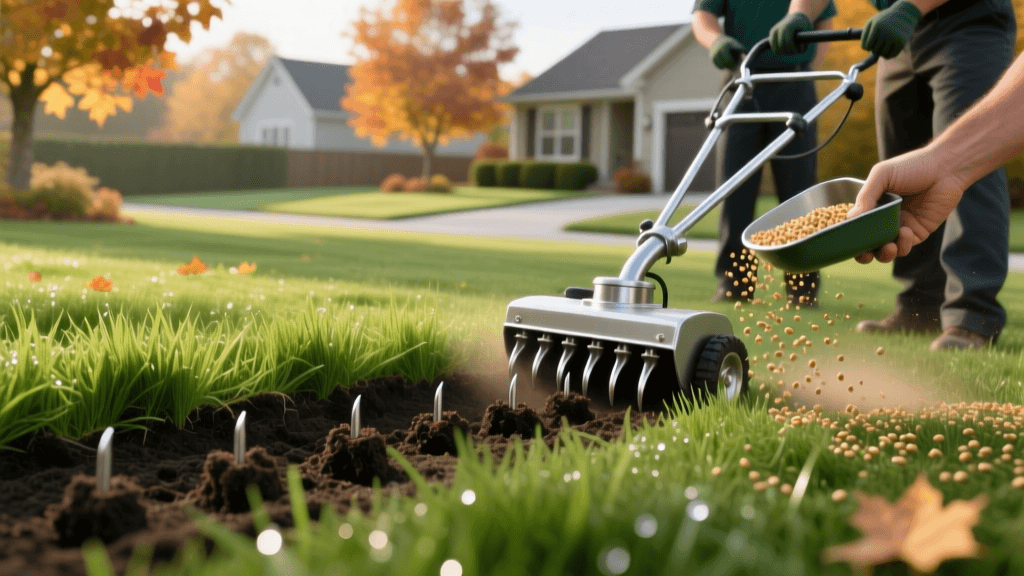
Don’t assume the lawn will recover as soon as it cools down. Take a close look afterward: dig a 4-inch soil core in three random spots per 1,000 sq ft and check root length and color. Healthy roots reach at least 4 inches down and have creamy-white tips; if they’re brown, short, and under 2 inches, the damage may be lasting—and overseeding in early September could help. In Chicago, IL, Kentucky bluegrass lawns do well with 3–4 lbs per 1,000 sq ft of certified seed like ‘Midnight II’ or ‘BVMG’. In Atlanta, GA, tall fescue lawns benefit from fall reseeding at 6–8 lbs per 1,000 sq ft using heat-adapted types like ‘TitanRTF’ or ‘Falcon II’.
Keep watering adjustments going even after the first cool spell. Drop irrigation gradually—not all at once—over 7–10 days once temps stay below 85°F. Cutting it off suddenly adds more stress. And wait to lower your mowing height until soil temps stay under 75°F at the 2-inch depth for five days straight. These small pauses give new growth time to settle in and build long-term strength.
University research backs up the idea that steady, hands-on care beats quick chemical fixes. A multi-year trial at Cornell University’s Long Island Horticultural Research & Extension Center found that lawns managed with higher mowing, careful watering, and no summer nitrogen survived 38% better after 21 days without rain than those on standard summer fertilizer programs. It’s not about big dramatic moves—it’s about paying attention, staying consistent, and working with how the grass actually grows.