Lawn Care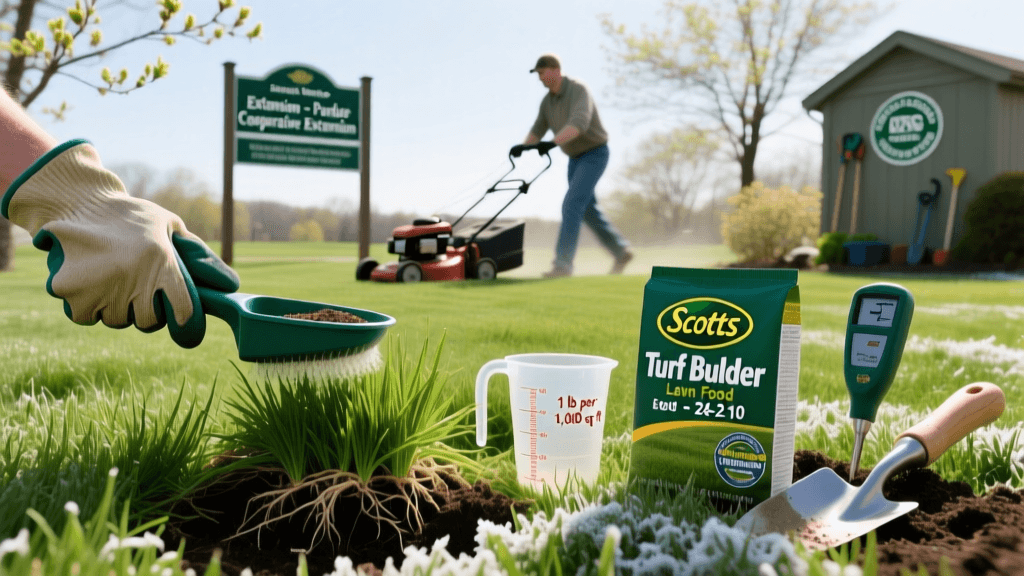
How To Repair Lawn Damage From Heavy Snow Melt
Assessing Snow Melt Damage
Heavy snow melt—especially when followed by prolonged saturation or ice cover—can hurt turf. Common problems include crown rot, ice desiccation, snow mold (Microdochium nivale), and soil compaction from walking on saturated ground. In northern U.S. regions like Minnesota and Wisconsin, where snowpack often exceeds 30 inches and lasts 90+ days, cool-season grasses take the hardest hit. Kentucky bluegrass (Poa pratensis) and perennial ryegrass (Lolium perenne) are especially sensitive to crown freezing below 20°F for more than 48 hours under ice. According to the University of Minnesota Extension (2022), up to 65% of damaged lawns in the Twin Cities metro show visible thinning within the first two weeks of spring thaw.
Grass Species and How They Recover
You’ll need to know what grass you have before starting repairs. Kentucky bluegrass recovers well from moderate damage because it spreads through rhizomes, but it needs soil temperatures above 50°F for at least 14 days before regrowth begins. Perennial ryegrass germinates quickly (5–7 days at 60–75°F), but it doesn’t handle cold well—it can suffer irreversible crown death after 72 hours under continuous ice. Fine fescues (Festuca spp.), including chewings fescue (Festuca rubra subsp. commutata), tolerate shade and low fertility but don’t hold up well to long periods of waterlogging—soil saturation beyond 72 consecutive hours cuts survival by 40% (Purdue Turf Science Lab, 2021). Tall fescue (Festuca arundinacea) handles wet conditions better: its deep roots tolerate up to 120 hours of saturated soil and start growing again once oxygen levels improve.
Soil Temperature Monitoring
Use a calibrated soil thermometer inserted 2 inches deep at five random spots across the lawn. Record readings at 9 a.m. daily for five days. Start active recovery only when the average temperature stays above 50°F for three straight days. Don’t walk on thawing soils with moisture content over 30%—this causes compaction that reduces pore space by up to 22%, per Cornell Cooperative Extension’s 2023 soil compaction study.
Core Aeration and Soil De-Compaction
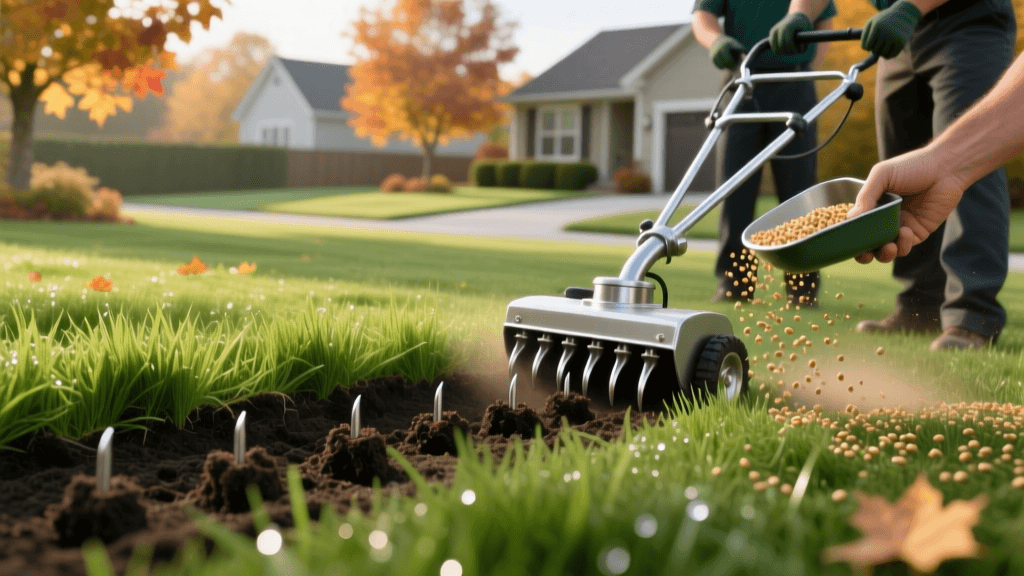
Compacted soils slow oxygen movement and root growth, which delays recovery. Core aeration works best when soil feels “crumbly”—not muddy, not dry and dusty. Use a machine with tines spaced no more than 2 inches apart, set to penetrate 3 inches deep. Aim for 20–25 holes per square foot. If your lawn has more than 1 inch of thatch, combine aeration with vertical mowing at ¼-inch depth before overseeding. Purdue University recommends doing this between April 15 and May 10 in USDA Hardiness Zones 4–5, when soil warming rates are most favorable in the Midwest.
Fertilizer Application for Early Spring
Apply a starter fertilizer with an N-P-K ratio of 10-10-10 at 0.5 lb nitrogen per 1,000 sq ft. Avoid high-nitrogen fertilizers before green-up; too much N can encourage fungal infection in weakened grass. Michigan State University Extension suggests using slow-release nitrogen sources like sulfur-coated urea (SCU) or polymer-coated urea (PCU) at half-rate (0.25 lb N/1,000 sq ft) if soil tests show pH <5.8 or organic matter <3%. Always water fertilizer in lightly (0.1 inch) within 2 hours of application to keep nitrogen from volatilizing.
Overseeding With Cold-Tolerant Grasses
Choose certified seed blends with disease-resistant cultivars tested by the National Turfgrass Evaluation Program (NTEP). For Kentucky bluegrass, ‘Bensun’ and ‘Moonlight’ resist snow mold about 30% better than older varieties. Perennial ryegrass blends should contain at least 80% endophyte-infected seed (e.g., ‘Manhattan IV’) to help fend off surface-feeding insects during recovery. Drill-seed at 6–8 lbs/1,000 sq ft for full renovation or 3–4 lbs/1,000 sq ft for spot repair. Cover seed with ¼ inch of compost or peat moss—not topsoil—to hold moisture without smothering.
- Best seeding window: April 20–May 15 in Chicago (Zone 5b)
- Tall fescue germination time: 10–14 days at steady 65°F soil temperature
- Mowing height adjustment: Set mower to 3.5 inches for the first three cuts after seeding
- Irrigation frequency: Water twice daily for the first 10 days (0.05 inch each time), then switch to once daily
- First mowing timing: Wait until new seedlings reach 3 inches tall—usually day 18–22
Watering During Recovery
Too much water is the most common reason recovery fails. After seedlings emerge, switch to deeper, less frequent watering: apply 0.75 inches per session, no more than twice a week, measured with a calibrated rain gauge. Let the soil surface dry slightly between waterings—this encourages roots to grow downward. In areas with heavy clay soils (e.g., central Ohio), cut total weekly water volume by 25% to avoid perched water tables. Check evapotranspiration (ET) data from your local NOAA station; replace only 80% of ET loss during Weeks 3–6 to prevent nutrients from washing away.
Mowing After Recovery Starts
Mow every 5–7 days with sharp blades set to the right height: 2.5–3 inches for Kentucky bluegrass, 3–4 inches for tall fescue, and 2–2.5 inches for perennial ryegrass. Never cut off more than one-third of the leaf blade at once. Dull blades tear grass tissue instead of cutting cleanly, making it easier for disease to move in—Rutgers University studies found 37% more dollar spot in lawns mowed with dull equipment.
Fungicide Use for Lingering Snow Mold
If pink or gray fungal mycelium is still visible after May 20—even with proper mowing, watering, and aeration—consider a targeted fungicide. Thiophanate-methyl (Cleary’s 3336F) at 1.5 fl oz/1,000 sq ft works well against Microdochium nivale when applied as a drench in early morning dew. Reapply only if symptoms return after 14 days. Skip broad-spectrum strobilurins (e.g., azoxystrobin) unless absolutely necessary—they interfere with beneficial microbes that break down organic matter. As Ohio State University Extension (2023) points out, fungicides support good management—they don’t replace it.
“Snow melt damage isn’t about fixing dead grass—it’s about restoring soil function, microbial balance, and photosynthetic capacity simultaneously. Rushing fertilization or ignoring soil oxygen deficits guarantees repeated failure.” — Dr. Eric Watkins, Turfgrass Science, University of Minnesota, 2022
| Grass Species | Minimum Soil Temp for Regrowth (°F) | Max Ice Cover Tolerance (hrs) | Recommended Overseed Rate (lbs/1,000 sq ft) | First Safe Mowing Height (in) |
|---|---|---|---|---|
| Kentucky bluegrass | 45 | 96 | 2–3 | 2.5 |
| Tall fescue | 50 | 120 | 6–8 | 3.5 |
| Perennial ryegrass | 48 | 72 | 4–5 | 2.0 |
Check progress every two weeks using a 1-ft² quadrat frame: count green tillers and estimate percent coverage. Take geotagged photos at solar noon for consistency. If coverage stays under 60% by June 15, consider sodding with certified tall fescue (e.g., ‘TitanRx’ or ‘Brilliant’) to get through summer heat. Healthy turf starts underground—focus on soil biology, not just how green the surface looks. Following university-backed guidance from places like the University of Minnesota, Purdue, and Rutgers helps build lawns that hold up year after year.
Soil testing is non-negotiable. Send samples to your state’s certified lab (e.g., Michigan State University Soil and Plant Nutrient Laboratory) before adding any amendments. Results tell you exactly how much lime or sulfur to use—this matters because pH shifts after thawing affect how well soil microbes work. Most extension labs turn around results in 7–10 business days and include interpretation guides.
Avoid rotary mowers with worn blades during recovery—they create tiny tears in the leaf tissue that open the door to Fusarium patch. Replace blades every 10–12 hours of use. Keep a simple log; dull blades raise fuel use by 18% and drop clipping quality by 42%, according to the University of Wisconsin–Madison Turfgrass Program.
When applying compost topdressing, stick to Class A biosolids-compost blends that meet EPA 503 standards—tested for heavy metals and pathogens. Apply no more than ¼ inch deep. Going thicker adds soluble salts that hinder seedling emergence, especially in fine fescue.
Hold off on quick-release nitrogen before May 1. University of Vermont Extension trials found Kentucky bluegrass plots given urea before soil temps stayed reliably above 50°F had 29% higher crown mortality than untreated plots.
Recovery takes time—not days, but weeks and months. Judge success by root depth (aim for 6 inches by August), not just how thick the grass looks. Deep roots hold soil in place, filter runoff, and buffer temperature swings—things no fertilizer or chemical can do.
Track key dates each year: first core aeration, first mowing, first irrigation. Logging these reveals patterns you’d miss otherwise—like slow drops in organic matter or gradual increases in pest pressure.
Always calibrate spreaders before each use. An uncalibrated Scotts EdgeGuard Mini can deliver up to 35% more or less nutrient than labeled—a difference that affects disease risk and drought tolerance.
For homeowners in the Pacific Northwest dealing with rain-saturated winters, bentgrass (Agrostis stolonifera) cultivars like ‘PennG-2’—validated by Oregon State University for wet climates—can be a good fit. But skip them in the Midwest; they struggle in summer heat.
Document everything: soil test dates, product lot numbers, unusual weather, and photo timestamps. This record becomes essential when comparing recovery across years—or when you need help from an extension agent.
Turf is a living system. Its strength comes from balanced care, diverse soil life, and time—not speed.