Lawn Care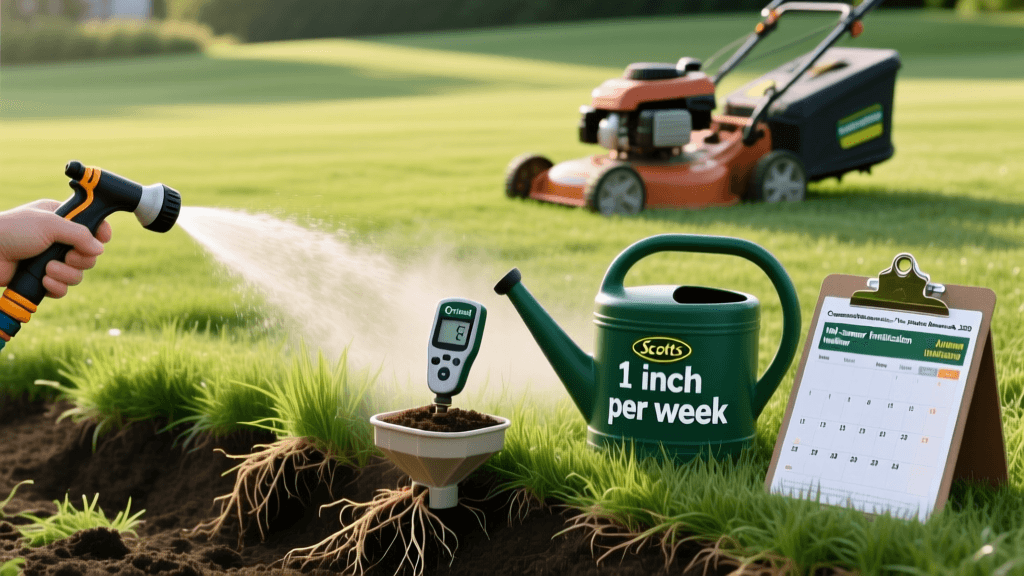
How To Repair Lawn Damage From Summer Drought Stress
Assessing the Extent of Drought Damage
Start by figuring out whether your grass is just dormant or actually dead. Cool-season grasses like Kentucky bluegrass (Poa pratensis) and tall fescue (Festuca arundinacea) often go brown in drought but keep living crowns and rhizomes underneath. Dead turf, on the other hand, has brittle, grayish crowns that fall apart when you tug gently. Try the “tug test”: sample a few spots, pull up small sections, and check how many crowns hold firm. If more than half resist pulling and show white or light-yellow tissue at the base, the grass will likely bounce back without reseeding (Penn State Extension, 2022). Warm-season lawns—think Bermuda grass (Cynodon dactylon) and zoysiagrass (Zoysia japonica)—usually go dormant after 14–21 days without rain or irrigation when temperatures stay above 85°F. At the University of Georgia’s Griffin Campus, field trials found ‘Tifway’ bermudagrass kept 92% of its crowns alive after 35 days with no water, while common bermuda dropped to 63% (UGA Turfgrass Team, 2021).
Strategic Watering for Recovery
Water slowly and carefully—not all at once. Soaking dried-out soil too fast leads to runoff and poor absorption. Start with 0.25 inches every other morning for five days, using a calibrated rain gauge to measure. Then move to 0.5 inches every third day for two weeks. This gives cracks in the soil time to close gradually and helps roots rehydrate without choking out oxygen. Skip evening watering—it raises the risk of disease, especially for varieties like ‘Midnight’ Kentucky bluegrass.
Irrigation Timing and Equipment
Water between 5:00 and 9:00 a.m. That’s when evaporation is lowest and leaves dry quickly, cutting down on fungal growth. Fixed-spray rotary nozzles—like Hunter MP Rotators or Rain Bird 5000 Series—work well if they’re calibrated for even coverage. To check how evenly water spreads, set out 6–9 straight-sided cans across one zone and run the system. The coefficient of uniformity (CU) should be above 0.75. If it’s under 0.65, tweak head spacing or swap out worn nozzles.
- Apply about 1 inch of water per week during active recovery (mid-August through early October for cool-season grasses)
- Keep moisture steady down to 4–6 inches—test with a screwdriver or soil probe
- Once green shoots start showing (usually 10–14 days after you begin watering), water less often but give more each time
- Hold off on watering if the soil temperature at 2-inch depth stays below 50°F—this matters most for fall recovery
- On clay soils (where water moves slower than 0.1 inch per hour), never apply more than 0.75 inches at once
Corrective Mowing Practices
Mowing height affects how well grass handles drought and how fast it recovers. Raise your mower deck to the highest setting recommended for your grass type: 3.5 inches for tall fescue, 2.5 inches for Kentucky bluegrass, and 1.5 inches for hybrid bermudagrass. And never cut off more than one-third of the leaf blade at a time—that avoids shock and keeps enough surface area for photosynthesis. Cornell University’s Long Island Horticultural Research & Extension Center found plots mowed at 3.0 inches recovered 27% faster than those cut at 2.0 inches under the same recovery conditions (Cornell Turf Program, 2020). Keep blades sharp—dull ones tear instead of slice, which means more water loss and easier entry for disease. Sharpen every 8–10 hours of use, or weekly during peak growth.
Fertilization Protocols for Stress Recovery
When and what kind of nitrogen you apply makes a real difference. Skip quick-release sources like urea or ammonium nitrate in midsummer heat—they can burn already-stressed crowns. Go for slow-release options instead: sulfur-coated urea (SCU) or polymer-coated urea (e.g., Nitroform® or Polyon®). For cool-season lawns, apply 0.5 lb N/1,000 ft² between August 15 and September 10. Warm-season grasses do better with two smaller doses: 0.25 lb N/1,000 ft² in late August and again in early September, using a balanced 16-4-8 granular fertilizer where half the nitrogen is slow-release (e.g., Lesco 16-4-8 Professional). Don’t add phosphorus unless your soil test says it’s low—most established lawns in the Midwest and Northeast already have enough, and extra P can wash into local waterways.
Soil Testing and Nutrient Prioritization
Test your soil before adding any fertilizer. The Michigan State University Soil Testing Lab suggests sampling to 4 inches deep for lawns coming out of drought, since nutrients tend to shift and concentrate near the surface after long dry spells. Watch these numbers:
- pH between 6.2–6.8 for Kentucky bluegrass to access nutrients best
- Organic matter at 3% or higher to help hold water (measured by loss-on-ignition)
- Potassium (K) at 120 ppm or more (Mehlich-3 extraction) to support stomatal function
- Calcium saturation above 65% to keep soil particles bound together
- CEC of 12 meq/100g or more in loam soils to reduce nutrient leaching
Overseeding and Spot Repair Tactics
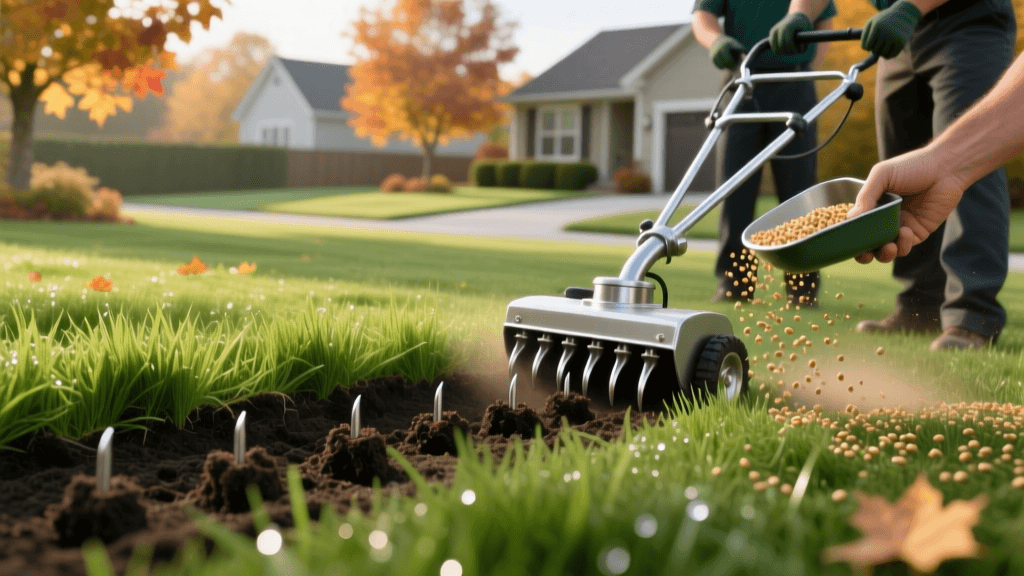
If less than 20% of the area is still green and crowns aren’t viable, it’s time to overseed. For cool-season lawns, choose certified seed blends with at least 70% perennial ryegrass (Lolium perenne) for quick cover and 30% Kentucky bluegrass for lasting density. Spread 8–10 lbs per 1,000 ft². Prep the surface by power-raking to about ¼ inch deep, then spread seed evenly with a centrifugal spreader (e.g., Scotts Turf Builder EdgeGuard DLX), calibrated to 5.5 lbs/1,000 ft² on setting 4.5. Right after, topdress lightly with ⅛ inch of compost (e.g., LeafGro® from Prince George’s County, MD), and water lightly 2–3 times daily until seeds sprout—ryegrass usually germinates in 5–7 days, bluegrass in 14–21.
“Drought-damaged lawns rarely require full renovation. Targeted interventions—guided by soil testing, species-specific physiology, and precise timing—restore function and aesthetics without unnecessary inputs.” — Purdue University Turf Science Program, 2023
Long-Term Resilience Building
Better roots mean better drought tolerance. Core aeration in early fall (September in USDA Hardiness Zones 5–7) helps loosen compacted soil and lets water soak in deeper. Use a machine with 3/4-inch tines spaced 2–3 inches apart, pulling cores 3 inches deep. After aeration, apply humic acid (e.g., Humic Growth® at 1.5 oz/1,000 ft² mixed in 2 gallons water) to boost microbial activity and encourage root hair growth. Consider endophyte-enhanced varieties—‘Arctic Green’ tall fescue contains Neotyphodium coenophialum, which raised drought tolerance by 40% in trials at Rutgers University’s Snyder Research and Extension Farm (Rutgers Turfgrass Science, 2022). And keep mowing height steady year-round—bouncing between heights stresses crowns and cuts into stored energy. Jot down mowing dates and heights in a simple notebook; data from Ohio State’s Byrd Polar and Climate Research Center showed lawns with consistent height management used 22% less supplemental water over three drought years.
| Grass Species | Optimal Recovery Mowing Height (in) | First Safe Fertilizer Application Date | Minimum Soil Temp for Seed Germination (°F) | Target Root Depth After 12 Weeks (in) |
|---|---|---|---|---|
| Kentucky bluegrass | 2.5 | Aug 20 | 55 | 6.2 |
| Tall fescue | 3.5 | Aug 15 | 60 | 8.7 |
| Bermudagrass | 1.5 | Sept 1 | 65 | 12.4 |
Check progress every two weeks with a digital camera on a tripod—same height and angle each time. Photos catch early greening that’s easy to miss otherwise. Adjust your plan based on what you see: if less than 30% green cover remains after 21 days of proper watering and mowing, dig deeper—look for problems like poor drainage or grub damage. Steady, science-backed care—not last-minute fixes—builds lawns that handle dry spells and support local ecosystems.