Lawn Care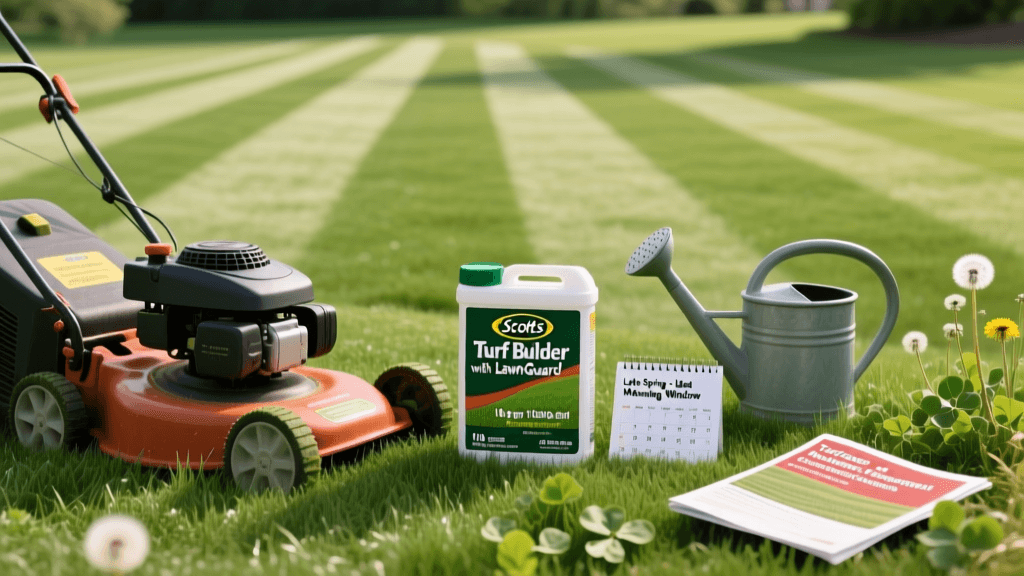
How To Stripe Your Lawn Like A Pro
The Science Behind Lawn Stripes
Those crisp, alternating dark and light bands you see on professional baseball fields and golf courses aren’t from different grass types or paint. Lawn striping works through light reflection. When grass blades are bent toward you, they reflect more sunlight and look bright. When bent away, they absorb more light and appear darker. The contrast between rows creates the stripe effect—the sharper the bend, the clearer the stripe.
Grass species differ in how well they stripe. Cool-season grasses like Kentucky bluegrass (Poa pratensis), tall fescue (Festuca arundinacea), and perennial ryegrass (Lolium perenne) have longer, flexible blades that bend easily and hold their position. Warm-season grasses such as Bermudagrass (Cynodon dactylon) and Zoysiagrass (Zoysia japonica) have shorter, stiffer blades that resist bending—so crisp stripes usually need a dedicated striping kit.
Research from Penn State's Center for Turfgrass Science shows mowing height affects stripe visibility. Taller grass bends more and gives better contrast. For most cool-season lawns, keeping it between 3 and 4 inches during the growing season balances stripe definition with turf health.
Equipment You Actually Need
A standard rotary mower makes faint stripes on its own, but a striping roller or striping kit makes them much clearer. These attach behind the mower deck and press the grass flat after cutting. Brands like Toro, Husqvarna, and Big League Lawns make kits for most residential mowers, usually priced between $60 and $200 depending on deck width.
Reel mowers cut with a scissor-like action instead of a spinning blade. They produce clean stripes because the cut is precise and the roller is built into the design. Golf courses use them on fairways, and more home gardeners are choosing them—even though they take more upkeep.
Mower Blade Condition
A dull blade tears grass instead of cutting it cleanly. Torn tips turn brown in 24 to 48 hours, giving the lawn a hazy, tan cast that blurs stripe contrast. Sharpen mower blades every 20 to 25 hours of use—or at least at the start of each season. A sharp blade also means less stress on the plant, so more energy goes into roots and sideways growth.
Striping Kit Alternatives
If you’d rather build your own, try a 4-inch PVC pipe filled with sand or concrete and mounted on a frame dragged behind the mower. It works like a commercial striping roller for much less money. Weight it enough to press the grass flat without compacting soil—about 15 to 25 pounds works for a 21-inch mowing width.
Preparing Your Lawn Before You Stripe
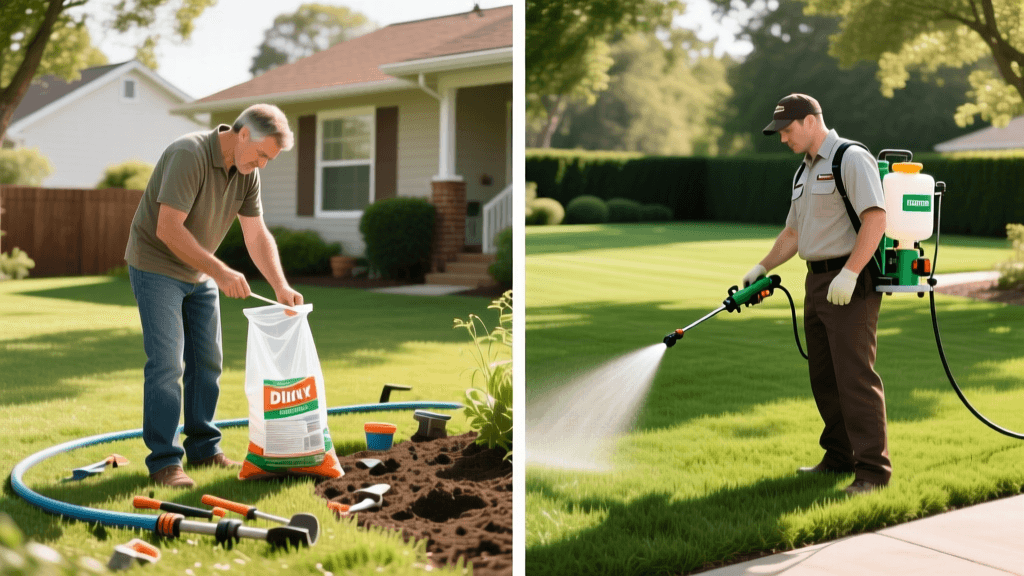
Striping won’t fix a lawn in poor shape—it just makes problems more obvious. Thin spots, bare patches, and uneven ground all stand out when light hits the grass at different angles. Fix those basics first.
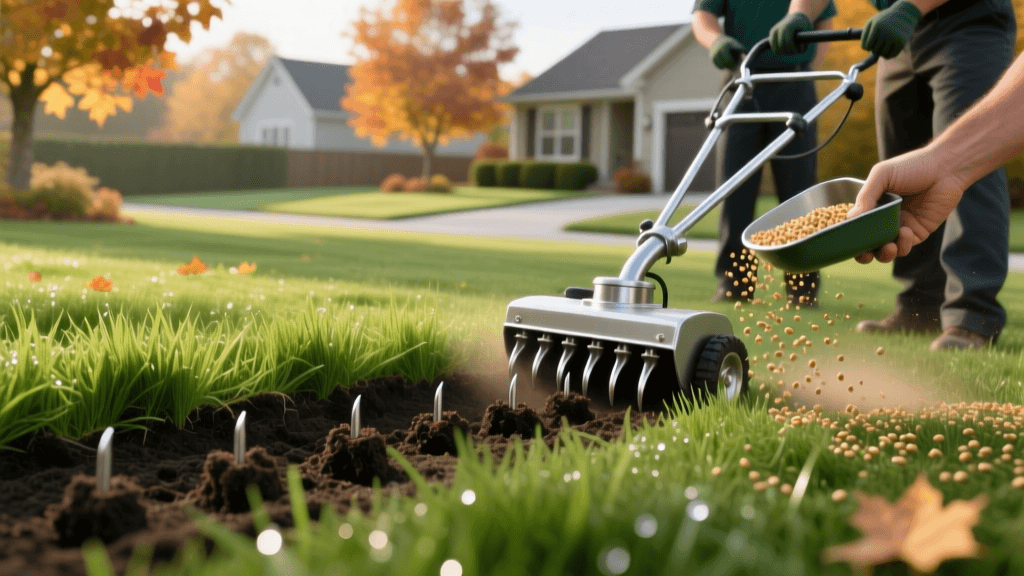
Soil compaction is one of the biggest roadblocks to a dense, stripe-ready lawn. Core aeration—pulling plugs of soil 2 to 3 inches deep—eases compaction, helps water soak in, and encourages deeper roots. The University of Minnesota Extension suggests aerating cool-season lawns in early fall, when temperatures are between 50°F and 65°F and the grass is growing well but not stressed by heat (University of Minnesota Extension, 2023).
Overseeding thin areas with a species-appropriate blend fills gaps that would otherwise show up as dark voids in your stripe pattern. For a Kentucky bluegrass lawn in the northern U.S., a mix with at least three cultivars helps with disease resistance and looks more even. Use 2 to 3 pounds of seed per 1,000 square feet for overseeding, or 4 to 6 pounds per 1,000 square feet if starting from bare ground.
Fertilization Timing and Rates
Dense, healthy grass stripes better than thin, underfed turf. For cool-season grasses, the most important fertilizer application happens in late summer to early fall—usually late August through October, depending on where you live. That timing matches the grass’s natural growth cycle and supports root development and energy storage before winter.
The Purdue University Turfgrass Science Program recommends applying 1 pound of actual nitrogen per 1,000 square feet during this fall window, using a slow-release source like polymer-coated urea (Purdue University Turfgrass Science, 2022). A 32-0-10 fertilizer applied at the label rate for 1 pound of nitrogen per 1,000 square feet also adds potassium, which strengthens cell walls and helps the grass handle foot traffic and temperature swings—both of which affect how long blades stay bent after striping.
Spring fertilization should be lighter—no more than 0.5 pounds of nitrogen per 1,000 square feet—to avoid pushing too much top growth at the expense of roots. Overfed spring lawns grow fast, need more frequent mowing, and are more prone to disease, all of which get in the way of clean stripes.
Mowing Patterns and Technique
The most common striping patterns are straight parallel lines, checkerboard, and diagonal. Straight lines are easiest and a good place to start. Checkerboard means mowing the same area twice, once in each direction. Diagonal patterns run at 45 degrees to the lawn’s edges—they look sharp but take planning to keep lines straight.
To mow a straight line, pick a fixed point at the far end of the lawn—a fence post, tree, or corner of the house—and aim for it. Don’t look down at the mower deck. After finishing the first pass, turn around and mow right next to it, overlapping by 2 to 3 inches to avoid missed strips. Keep going across the lawn, switching direction each time.
Edging before mowing gives clean borders that define where your stripes begin and end. Use a rotary edger or hold a string trimmer vertically along sidewalks, driveways, and garden beds. It takes 10 to 15 minutes on a typical yard but makes a real difference in the final look.
Change your mowing direction each week. Mowing the same way every time makes grass lean permanently in one direction—a condition called grain—and can wear ruts from repeated wheel traffic. Rotating your pattern by 90 degrees every one to two weeks keeps the grass upright and healthy.
Watering Practices That Support Stripe Quality
Good watering keeps grass blades firm and flexible, which helps them bend and reflect light well. Drought-stressed grass wilts and won’t hold a stripe. Too much water leads to shallow roots and more disease, both of which weaken turf density and stripe quality.
Established cool-season lawns usually need 1 to 1.5 inches of water per week, including rain. Deep, infrequent watering—one or two times a week instead of light daily sprinkles—pushes roots deeper. Kansas State University Research and Extension suggests watering in the early morning, between 4 a.m. and 10 a.m., to cut down on evaporation and shorten the time leaves stay wet (Kansas State University Research and Extension, 2021).
During hot summer stretches, cool-season grasses may go partially dormant. Pushing hard on striping then adds stress. Cut back on mowing, raise the height by half an inch, and focus on keeping the soil moist—not on perfect stripes—until things cool off.
Seasonal Striping Calendar
Timing your striping to match the grass’s growth cycle gives better results with less work. This schedule fits cool-season lawns in USDA Hardiness Zones 5 through 7—most of the northern and mid-Atlantic U.S.
| Season | Mowing Height | Mowing Frequency | Key Task |
|---|---|---|---|
| Early Spring (March–April) | 2.5–3 inches | Every 7–10 days | First mow, light fertilization (0.5 lb N/1,000 sq ft) |
| Late Spring (May–June) | 3–3.5 inches | Every 5–7 days | Establish stripe pattern, sharpen blade |
| Summer (July–August) | 3.5–4 inches | Every 7–14 days | Raise height, reduce frequency, monitor irrigation |
| Early Fall (September–October) | 3–3.5 inches | Every 5–7 days | Core aeration, overseeding, fall fertilization (1 lb N/1,000 sq ft) |
| Late Fall (November) | 2.5 inches | As needed | Final mow before dormancy, lower height gradually |
For warm-season grasses in Zones 8 through 10—like Bermudagrass in Georgia or Texas—the active growing season runs from late April through September. The best time for striping is June and July, when the grass is growing strongly and blades respond well to the roller. Mow Bermudagrass at 1 to 1.5 inches for the clearest stripes, and apply 1 pound of nitrogen per 1,000 square feet each month during the growing season using something like ammonium sulfate (21-0-0).
Troubleshooting Common Striping Problems
Stripes that fade in a day or two usually mean the roller isn’t pressing hard enough—or the grass is too short to bend well. Try raising the mowing height by half an inch and check that the roller touches the turf evenly across its full width.
Uneven stripe width often comes from varying mowing speed. Slowing down on turns and speeding up on straightaways makes stripes wider at the ends. Keep a steady pace the whole time, and make your turns on a hard surface like a driveway or sidewalk—not on the lawn—to avoid compressing the turf at the ends of rows.
- Stripes appear wavy: Pick a fixed point at the far end of the lawn and keep your eyes on it—not on the mower.
- Brown tips after mowing: Sharpen or replace the mower blade. Brown tips mean the edge is dull.
- Stripes disappear after rain: That’s normal—rain lifts the blades upright. Mow again once the lawn dries to bring the pattern back.
- Scalping on high spots: The surface is uneven. Top-dress low areas with a sand-soil mix and let the grass grow through it over one to two seasons.
- Grass leans permanently in one direction: Rotate your mowing pattern 90 degrees for the next few sessions to correct grain buildup.
Thatch thicker than half an inch also gets in the way of striping. It creates a spongy layer that absorbs roller pressure instead of passing it to the grass blades. Dethatch cool-season lawns in early fall with a power rake or vertical mower set just below the thatch layer. Then overseed and fertilize right away to help the turf recover.
"Mowing is the single most important cultural practice for maintaining turfgrass quality. Proper mowing height, frequency, and pattern management account for more of the visual difference between an average lawn and an exceptional one than any other input." — Turfgrass Management, Beard & Green, Michigan State University Turfgrass Information Center
It takes time. A newly seeded or sodded lawn needs at least one full growing season to build the density and root depth needed for clean, lasting stripes. Focus on soil health, steady fertility, and proper mowing during that first year. By the second season, the lawn will have the structure to show off your technique—like the ones you see on pro fields.