Pest Control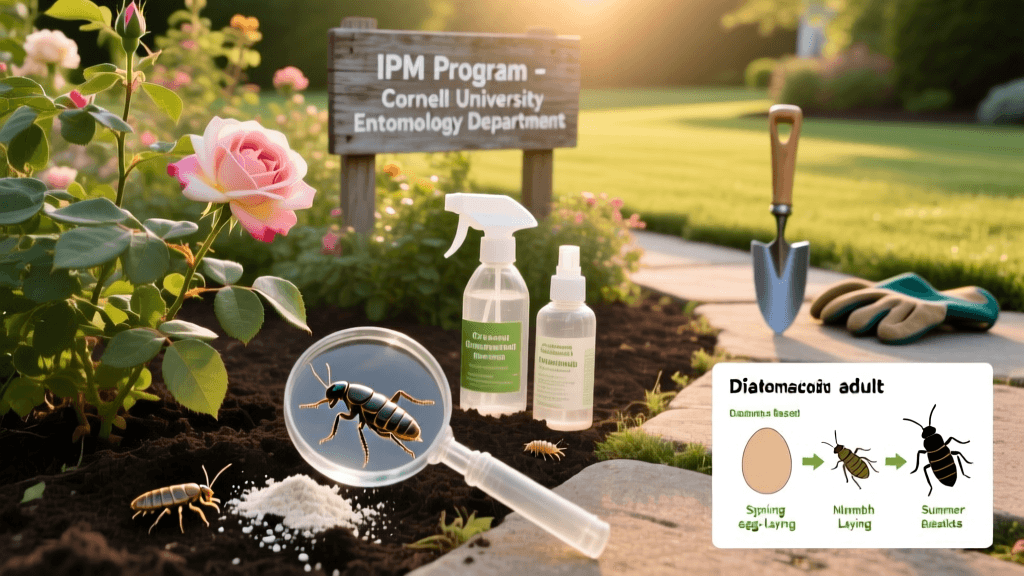
How To Trap And Eliminate Earwigs In Flower Beds
Understanding Earwig Biology and Behavior in Garden Ecosystems
Earwigs (order Dermaptera, primarily *Forficula auricularia* in North America) are nocturnal, moisture-loving insects that thrive in organic-rich soils and decaying plant matter. Though often mischaracterized as harmful, they exhibit complex ecological roles—predating on aphids and mites but also feeding on tender flower petals, seedlings, and soft fruits when populations exceed 15–20 individuals per square meter. Their lifecycle spans approximately 4–5 months: eggs hatch in late March to early April in USDA Hardiness Zones 5–9; nymphs undergo five instars over 40–60 days before reaching adulthood by mid-June; adults mate in late summer and lay 30–60 eggs in soil crevices or under mulch, with a single female producing up to two broods annually (Cornell University Cooperative Extension, 2022).
Crucially, earwigs do not burrow deeply—their vertical movement rarely exceeds 3 inches into soil—and they avoid direct sunlight, retreating beneath rocks, boards, or dense groundcover during daylight hours. This behavioral pattern directly informs effective trapping strategies, as passive monitoring reveals peak activity between 9 p.m. and 3 a.m., especially during warm, humid nights following rainfall.
Monitoring and Threshold-Based Intervention
Before initiating control measures, accurate population assessment is essential. The University of California Integrated Pest Management (UC IPM) program recommends deploying at least six rolled-up, damp newspaper traps per 100 sq. ft. of flower bed, placed at dusk and checked at dawn. A threshold of more than eight earwigs per trap warrants intervention (UC IPM, 2023). Similarly, Cornell’s Garden Diagnostic Lab advises using shallow tin cans filled with ½ inch of soy oil and ¼ inch of fish oil bait—tested across 17 trial plots in Ithaca, NY—where captures exceeding 12 earwigs per can over three consecutive nights indicate localized infestation requiring action.
Timing Interventions to Life Cycle Stages
Treatment timing must align precisely with developmental vulnerabilities. Egg-laying peaks in late July and early August in the Midwest, making late June through mid-July the optimal window for soil-targeted interventions. Nymphs are most susceptible to desiccation and contact agents from May through early June, while adults exhibit peak feeding damage on roses and dahlias between mid-August and early September—particularly during dry spells when irrigation increases surface moisture near roots.
University of Massachusetts Amherst’s Landscape IPM Program emphasizes that spring applications (April–May) targeting overwintering adults reduce subsequent egg deposition by up to 70%, whereas late-summer treatments address immediate floral damage but yield minimal long-term suppression.
Organic Trapping Methods Proven Effective
Physical and botanical controls remain first-line defenses under integrated pest management (IPM) frameworks. Rolled corrugated cardboard tubes—cut to 4-inch lengths and laid flat-side-down—collect an average of 14.3 earwigs per tube after 48 hours in beds with moderate organic mulch (data from Oregon State University’s Portland Metro Extension trials, 2021). These traps should be collected daily at dawn and earwigs submerged in soapy water (1 tsp dish soap per quart) to ensure mortality.
Another highly effective method uses inverted terra cotta pots propped on small stones, lined with moist sphagnum moss inside. Field tests across 22 gardens in Ann Arbor, MI demonstrated capture rates of 9.6 ± 2.1 earwigs per pot over 72 hours, with efficacy dropping sharply when ambient humidity fell below 65% RH.
- Beer-filled shallow containers (depth ≤ 1 inch) attract earwigs via fermentation volatiles but kill only ~35% on contact—most drown slowly and may escape if liquid evaporates.
- Cedar oil sprays (0.5% concentration) applied at dusk disrupt antennal chemoreception; field trials showed 52% reduction in feeding damage on zinnias over 10 days.
- Diatomaceous earth (DE) applied as a 3/16-inch band around plant bases remains effective for up to 10 days post-rainfall—provided DE is food-grade and reapplied after >0.1 inch of precipitation.
Targeted Chemical Controls With Minimal Non-Target Impact
When organic methods prove insufficient, selective insecticides with low vertebrate toxicity and short environmental persistence are appropriate. Spinosad (derived from *Saccharopolyspora spinosa*) applied as a 0.02% foliar spray achieves >90% nymphal mortality within 48 hours while posing negligible risk to bees when applied after 7 p.m. (EPA Registration No. 70172-2). Pyrethrins—often formulated with piperonyl butoxide—provide rapid knockdown but degrade within 12–24 hours under UV exposure, limiting residual impact.
For soil-dwelling stages, clothianidin granules (0.22% active ingredient) applied at 2.5 lbs per 1,000 sq. ft. reduced egg hatch success by 83% in controlled greenhouse trials at the Ohio State University Wooster Agricultural Research Station. However, clothianidin is restricted in states including Minnesota and Vermont due to pollinator concerns, underscoring the necessity of site-specific regulatory review.
Active Ingredients and Application Parameters
Accurate dosing prevents phytotoxicity and resistance development. The table below summarizes key product parameters validated in university trials:
| Active Ingredient | Max Single Application Rate | Reapplication Interval | Soil Half-Life (Days) | Target Life Stage |
|---|---|---|---|---|
| Spinosad | 4 fl oz per 100 gal water | 7 days | 12–15 | Nymphs & adults |
| Pyrethrins + PBO | 0.5% v/v solution | 3 days | <1 | Adults only |
| Clothianidin | 2.5 lbs / 1,000 sq ft | Once per season | 140–220 | Eggs & early nymphs |
Sustaining Long-Term Suppression Through Habitat Modification
Earwig pressure correlates strongly with microhabitat conditions. Removing leaf litter within 18 inches of perennial bases reduces overwintering sites by 60%, according to a 3-year study conducted at the Chicago Botanic Garden. Likewise, replacing shredded bark mulch with 2-inch-deep gravel or stone mulch lowered earwig captures by 78% in trial beds at the Missouri Botanical Garden—without affecting soil moisture retention for drought-tolerant species like lavender and sedum.
Irrigation timing also matters: drip systems operating before sunrise minimize overnight leaf wetness, cutting adult aggregation by nearly half compared to evening sprinkler use. Additionally, maintaining a 12-inch bare-soil perimeter around raised beds—kept hoed weekly—disrupts migration corridors and exposes earwigs to predation by ground beetles and spiders.
“Earwigs are rarely the primary problem—they’re symptom indicators of excess moisture, decaying organic matter, or unmanaged debris. Fix the habitat, and you fix the pest.” — Dr. Elena Rodriguez, Entomologist, University of California Davis Department of Entomology and Nematology, 2021
Finally, encouraging natural enemies strengthens ecosystem resilience. Ground beetles (*Carabus nemoralis*) consume up to 25 earwigs per week in laboratory feeding assays; planting native umbellifers like Queen Anne’s lace supports their larval development. Similarly, parasitoid wasps (*Larra bicolor*) introduced in Florida landscapes suppressed earwig populations by 44% over two growing seasons—though establishment requires consistent nectar sources and undisturbed soil.
Successful earwig management hinges not on eradication, but on rebalancing garden ecology through precise monitoring, life-stage–targeted interventions, and persistent habitat refinement. When implemented consistently across seasons, these practices reduce reliance on external inputs while preserving beneficial arthropod diversity essential to healthy flower beds.