Pest Control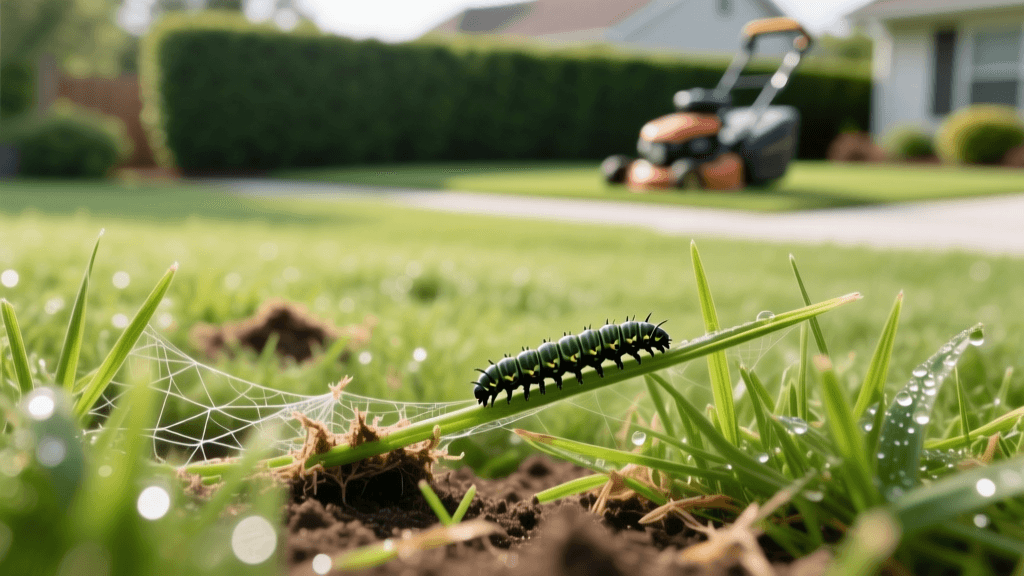
How to Identify and Treat Lawn Armyworm Infestations
The Threat of Fall Armyworms
Fall armyworms (Spodoptera frugiperda) are among the most destructive turfgrass pests in North America. Unlike typical lawn grubs that feed on roots, armyworms are voracious caterpillars that consume the green leaf blades of your grass. They get their name from their behavior; they march across lawns in massive numbers, eating everything in their path. An unchecked infestation can turn a lush, green lawn into a brown, devastated wasteland in as little as 48 to 72 hours. Because of their rapid life cycle and aggressive feeding habits, early identification and immediate treatment are critical. This practical, step-by-step guide will walk you through how to confirm an armyworm presence, select the right treatment, apply it effectively, and restore your lawn to health.
Step 1: Confirm the Presence of Armyworms
Before applying any pest control products, you must confirm that armyworms are the culprits. Damage is often mistaken for drought stress, dog urine spots, or fungal diseases. Look for the following visual cues:
- Ragged Leaf Edges: Armyworms chew along the edges of grass blades, leaving a ragged, translucent appearance.
- Brown Patches: Rapidly expanding brown areas that seem to appear overnight, particularly in late summer and early fall.
- Frass (Droppings):strong> Part the grass and look for small, green-to-brown cylindrical pellets near the soil line.
- Increased Bird Activity: Flocks of starlings, grackles, or crows aggressively pecking at your lawn are a massive red flag.
The Soap Flush Test
To confirm an active infestation and gauge its severity, perform a soap flush test. This is the gold standard for turfgrass pest identification.
- Mix 2 tablespoons of liquid dish soap (like Dawn) into 1 gallon of water.
- Pour the solution evenly over a 1-square-foot section of the lawn at the edge of a damaged area.
- Wait 3 to 5 minutes. The soap irritates the caterpillars, forcing them to the surface.
- Count the armyworms. They will be 1 to 1.5 inches long, green, brown, or black, with a distinctive inverted 'Y' shape on their heads.
Action Threshold: If you see 3 or more armyworms per square foot, immediate treatment is required to prevent catastrophic lawn loss.
Step 2: Select the Right Treatment
Once you have confirmed an infestation, you must choose a treatment strategy. Your choice will depend on your preference for organic versus synthetic chemicals, the size of your lawn, and your budget. Below is a comparison of the most effective treatments available to homeowners.
| Treatment Type | Product Example | Active Ingredient | Rate (per 1,000 sq ft) | Est. Cost | Pet Safe? |
|---|---|---|---|---|---|
| Organic (Biological) | Monterey Thuricide | Bacillus thuringiensis var. kurstaki (Btk) | 1.5 fl oz | $15 - $20 | Yes, immediately |
| Organic (Spinosyn) | Captain Jack's Deadbug Brew | Spinosad | 2.0 fl oz | $18 - $25 | Yes, after drying |
| Synthetic (Pyrethroid) | Talstar P Professional | Bifenthrin | 0.5 to 1.0 fl oz | $30 - $45 | Yes, after drying |
| Synthetic (Pyrethroid) | Bayer Advanced Complete | Cyfluthrin / Imidacloprid | 0.65 fl oz | $25 - $35 | Yes, after drying |
| Synthetic (Carbamate) | Sevin Lawn Insect Killer | Carbaryl | 1.5 fl oz | $15 - $20 | Yes, after drying |
Which Should You Choose?
For small, early-stage infestations or environmentally sensitive areas near water sources, Btk (Thuricide) is highly effective. Btk is a naturally occurring soil bacterium that specifically targets the digestive system of caterpillars without harming beneficial insects, earthworms, or pets. However, it must be ingested by the caterpillar and degrades quickly in sunlight.
For severe, widespread infestations where the lawn is being destroyed by the hour, a synthetic pyrethroid like Bifenthrin (Talstar P) is the industry standard. It provides rapid knockdown (killing on contact) and leaves a residual barrier that continues to kill emerging pests for up to 30 days.
Step 3: Proper Application Techniques
Even the best product will fail if applied incorrectly. Armyworms are nocturnal feeders, hiding in the thatch and soil during the heat of the day. Timing and preparation are everything.
Preparation
Mow your lawn slightly shorter than usual before application. This removes some of the chewed, damaged leaf tissue and allows the pesticide to penetrate the thatch layer and reach the soil surface where the caterpillars are hiding. Remove all grass clippings to ensure the product isn't absorbed by the debris.
Timing
Apply your treatment in the late afternoon or early evening (between 5:00 PM and 7:00 PM). This coincides with the time armyworms emerge from the soil to feed. Furthermore, applying pyrethroids or Btk during the heat of the day can lead to rapid UV degradation and potential phytotoxicity (chemical burn) on stressed grass.
Application and Watering
Use a hose-end sprayer or a pump tank sprayer with a fan nozzle for even coverage. Ensure you are spraying not just the damaged areas, but also a 10-foot buffer zone into the healthy grass, as the 'army' is likely marching just beyond the visible damage line. Do not water the lawn immediately after a liquid application. Allow the product to dry completely on the leaf blades (usually 2 to 4 hours) so the caterpillars ingest or contact the residue. If using a granular product like Sevin Granules, you must water the lawn lightly (about 1/4 inch) immediately after application to activate the chemical and wash it into the thatch.
Step 4: Lawn Recovery and Repair
Once the armyworms are eradicated, your lawn will likely look scorched. Fortunately, if the crown of the grass plant (the growing point at the soil line) was not completely eaten, the grass will recover. To speed up the recovery process:
- Water Deeply: Provide 1 to 1.5 inches of water per week to reduce environmental stress and encourage new shoot growth.
- Apply a Nitrogen-Rich Fertilizer: About one week after treatment, apply a fast-release nitrogen fertilizer (such as a 32-0-4 or 24-2-11 N-P-K ratio) at a rate of 1 pound of nitrogen per 1,000 square feet. Products like Scotts Turf Builder or Milorganite are excellent choices to push rapid green-up.
- Avoid Weed Control: Do not apply post-emergent herbicides like 2,4-D or Celsius WG to a recovering lawn. The grass is already stressed, and herbicides will stunt its ability to regenerate.
Step 5: Long-Term Prevention and IPM
Integrated Pest Management (IPM) relies on monitoring and prevention rather than purely reactive chemical warfare. Armyworms are migratory pests; the moths fly in from southern regions in late summer to lay eggs in your turf. While you cannot stop the moths from flying, you can make your lawn less hospitable.
Keep your thatch layer under 0.5 inches thick through annual core aeration. Thick thatch provides a perfect, humid hiding spot for caterpillars during the day. Additionally, encourage natural predators. Ground beetles, spiders, and parasitic wasps are natural enemies of the armyworm. By reducing broad-spectrum insecticide use earlier in the spring, you preserve these beneficial insect populations.
Expert Insight: According to the Texas A&M AgriLife Extension, 'Fall armyworm outbreaks are highly dependent on weather patterns, particularly heavy rains and humid conditions in late summer. Homeowners in the southern and transitional zones should monitor their lawns weekly starting in August, as early detection is the only reliable way to prevent severe turf loss.' (Source: Texas A&M AgriLife Extension, Fall Armyworm Management in Turfgrass).
By staying vigilant, utilizing the soap flush test, and applying targeted treatments at the correct time of day, you can successfully defend your lawn against armyworms and maintain a thick, healthy turf year-round.