
Landscaping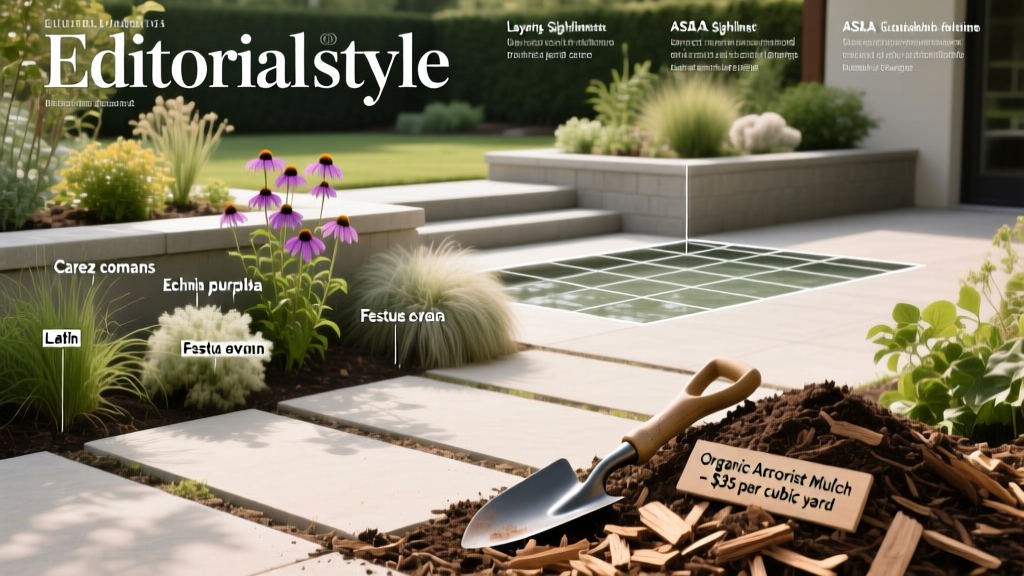
How To Use Mulch In Landscaping Correctly
The Role of Mulch in a Well-Designed Landscape
Mulch is a practical, unifying material that landscape designers and homeowners use regularly. When applied well, it helps keep weeds down, keeps soil temperatures steadier, holds moisture, and slowly adds organic matter to the soil as it breaks down. But it’s easy to get wrong — too deep, too close to plant stems, or mismatched with the plants or design style. A good mulch job balances what plants need with how the space looks.
The American Society of Landscape Architects (ASLA) includes soil health and water conservation as key parts of sustainable site design. Mulching is one of the simplest, least expensive ways to support both. According to the University of Minnesota Extension (2022), a properly mulched bed can cut irrigation needs by up to 25% and lower surface soil temperatures by as much as 10°F during hot summer days.
Selecting the Right Mulch Material
Different mulches behave differently. The best choice depends on your plants, your climate, and the look you want. Organic mulches — like shredded hardwood, pine bark, wood chips, straw, and cocoa hulls — break down over time and feed soil life. Inorganic options — gravel, decomposed granite, and rubber chips — don’t add nutrients but last longer and fit certain styles, like xeriscape or modern gardens with lots of hardscape.
For mixed perennial borders with plants like Echinacea purpurea (purple coneflower), Salvia nemorosa (woodland sage), and Penstemon digitalis (foxglove beardtongue), shredded hardwood or double-ground bark mulch works well at 2 to 3 inches deep. These break down steadily and usually need topping up every 12 to 18 months.
In woodland gardens planted with Hydrangea quercifolia (oakleaf hydrangea), Fothergilla gardenii (dwarf fothergilla), and Trillium grandiflorum (great white trillium), pine bark nuggets or leaf mold feel more natural and support the fungal networks these plants rely on.
For Mediterranean-style or drought-tolerant plantings — think Lavandula angustifolia (English lavender), Cistus × purpureus (orchid rockrose), and Rosmarinus officinalis (rosemary) — a 2-inch layer of pea gravel or decomposed granite often makes more sense. These plants evolved in lean, fast-draining soils, and heavy organic mulch can hold too much moisture around their crowns and lead to rot.
Organic vs. Inorganic: A Quick Reference
| Mulch Type | Best Use | Depth | Lifespan | Approx. Cost per Cubic Yard |
|---|---|---|---|---|
| Shredded hardwood | Mixed borders, foundation plantings | 2–3 inches | 12–18 months | $30–$45 |
| Pine bark nuggets | Woodland gardens, acid-loving shrubs | 2–3 inches | 18–24 months | $35–$50 |
| Wood chips (arborist) | Tree rings, naturalistic areas | 3–4 inches | 24–36 months | Free–$20 |
| Pea gravel | Xeriscape, Mediterranean plantings | 2 inches | Indefinite | $40–$60 |
| Decomposed granite | Paths, dry gardens | 2–3 inches | Indefinite | $35–$55 |
How Much Mulch Do You Actually Need?
Figuring out how much mulch to buy is simple math — but people often miscalculate. One cubic yard covers about 108 square feet at 3 inches deep, or 162 square feet at 2 inches. For a typical foundation planting that’s 4 feet wide and 60 feet long (240 square feet), you’d need roughly 2.2 cubic yards to reach 3 inches.
On larger projects — like those at the Chicago Botanic Garden or Longwood Gardens in Kennett Square, Pennsylvania — landscape architects usually order mulch in bulk, often 10 cubic yards or more. That brings the price down to $25–$40 per cubic yard, compared to $6–$9 for a 2-cubic-foot bag at a garden center. Bulk delivery starts making sense once you’re covering more than about 500 square feet.
Calculating Coverage for Irregular Beds
For curved or oddly shaped beds, estimate the length and average width, multiply to get square footage, then use this formula: (square footage × depth in inches) ÷ 324 = cubic yards needed. Add 10% extra to cover settling and uneven spots. Most pros round up to the nearest half cubic yard when placing orders.
The Sustainable Sites Initiative (SITES v2, 2014), developed by ASLA, the Lady Bird Johnson Wildflower Center at The University of Texas at Austin, and the United States Botanic Garden, gives credit for practices that protect and build soil health — including proper mulching. Projects aiming for SITES certification need to record mulch type, depth, and coverage as part of their soil management plan.
Application Techniques That Protect Plants
The most common mulching mistake is the “mulch volcano” — piling mulch high against tree trunks or shrub stems. This traps moisture against the bark, shelters rodents that chew through stems, and can rot the living tissue under the bark. Over time, it kills otherwise healthy trees. The International Society of Arboriculture (ISA, 2021) advises keeping mulch at least 3 to 6 inches away from the base of any woody plant.
A better approach is a flat or slightly dished “donut” shape around trees, spreading outward toward the drip line if possible. For a mature shade tree with a 20-foot canopy, that means mulching a circle about 10 feet in radius — roughly 314 square feet — which takes about 2.9 cubic yards at 3 inches deep.
In perennial beds, pull mulch back a little from the crowns of plants like Hemerocallis spp. (daylilies), Hosta spp., and Astilbe spp. in spring so new growth isn’t blocked. Once shoots are 3 to 4 inches tall, you can gently work the mulch back around the base.
Timing Your Mulch Applications
Spring is the usual time to apply or refresh mulch, but timing matters. Putting mulch down too early — before the soil has warmed — can slow root activity and delay microbial activity in the soil. In USDA Hardiness Zones 5 through 7, wait until soil temperatures at 2 inches deep consistently hit 50°F. That usually falls between mid-April and mid-May, depending on where you are.
A lighter application in late fall — after the ground cools but before it freezes — helps shield roots from freeze-thaw cycles and supports marginally hardy plants like Caryopteris × clandonensis (bluebeard) and Buddleja davidii (butterfly bush). Aim for 1 to 2 inches, and work it into the soil in spring instead of removing it.
Mulch and Hardscape Integration
In today’s landscape design, mulch doesn’t sit alone — it connects with nearby hardscape. When mulched beds meet concrete, bluestone, or brick pavers, how you define the edge matters. A steel, aluminum, or composite edging strip set flush with the ground keeps mulch from spilling onto paved surfaces and gives the whole design a clean, intentional look.
Color also plays a role. Dark-dyed hardwood mulch (black or dark brown) creates strong contrast against light limestone or concrete, which works well in modern or minimalist settings. Natural, undyed wood chips tend to blend more easily with warm-toned brick, terracotta, or decomposed granite pathways. At the Denver Botanic Gardens, for example, decomposed granite mulch ties together planted beds and gravel paths in their xeriscape areas.
Avoid dyed mulches near water features or rain gardens. The colorants can wash into the water during heavy rain. Natural wood chips or river rock are safer choices there and fit better with low-impact design goals.
Long-Term Soil Health and Mulch Decomposition
One quiet benefit of organic mulch is how it builds soil over time. As it breaks down, it feeds earthworms, fungi, and bacteria — all of which help improve soil structure, drainage, and nutrient availability. Researchers at the Morton Arboretum in Lisle, Illinois found that mulching tree root zones consistently over 10 years increased soil organic matter and improved survival rates for newly planted trees compared to bare-soil controls.
But too much mulch — especially fine-textured types like shredded hardwood applied deeper than 4 inches — can dry into a crust that repels water instead of holding it. If water beads up on top instead of soaking in, rake the surface lightly to break up the crust and let moisture through.
- Refresh organic mulch once a year or every other year — don’t just keep adding layers on top of old, broken-down material
- Test soil pH every 3 to 5 years in heavily mulched beds. Some wood mulches gradually lower pH — great for Rhododendron spp. and Kalmia latifolia (mountain laurel), but not ideal for plants that prefer neutral soil
- Don’t use fresh wood chips from diseased trees. Some pathogens can survive in the chips
- In vegetable gardens, stick with straw or untreated grass clippings. Wood-based mulch can temporarily tie up nitrogen as it breaks down
- Keep track of mulch type and application dates in your landscape maintenance log — helpful for SITES documentation and for watching soil improve over time
Mulching isn’t a one-off chore. Done thoughtfully, its benefits grow with each season. The cost is modest — usually $0.50 to $1.50 per square foot installed for organic mulch across most U.S. markets — but the payoff shows up in healthier plants, less watering and weeding, and a more polished-looking yard.
"Healthy soil is the foundation of sustainable landscape design. Mulching is the single most accessible tool practitioners have for building and protecting that foundation across virtually every climate and plant community." — American Society of Landscape Architects, Sustainable Landscapes Resource Guide, 2020
- Apply mulch at 2 to 3 inches deep for most ornamental beds; 3 to 4 inches for tree root zones
- Keep a mulch-free zone of at least 3 to 6 inches around all woody plant stems and trunks
- Match mulch material to plant community — organic for woodland and mixed borders, inorganic for xeriscape and Mediterranean plantings
- Time spring applications after soil reaches 50°F; fall applications after soil cools but before freeze
- Integrate mulch selection with adjacent hardscape materials for visual coherence
When these ideas become routine, mulch stops being just something you spread on the ground — it becomes part of how your landscape stays healthy, easy to care for, and cohesive over time.

