
Landscaping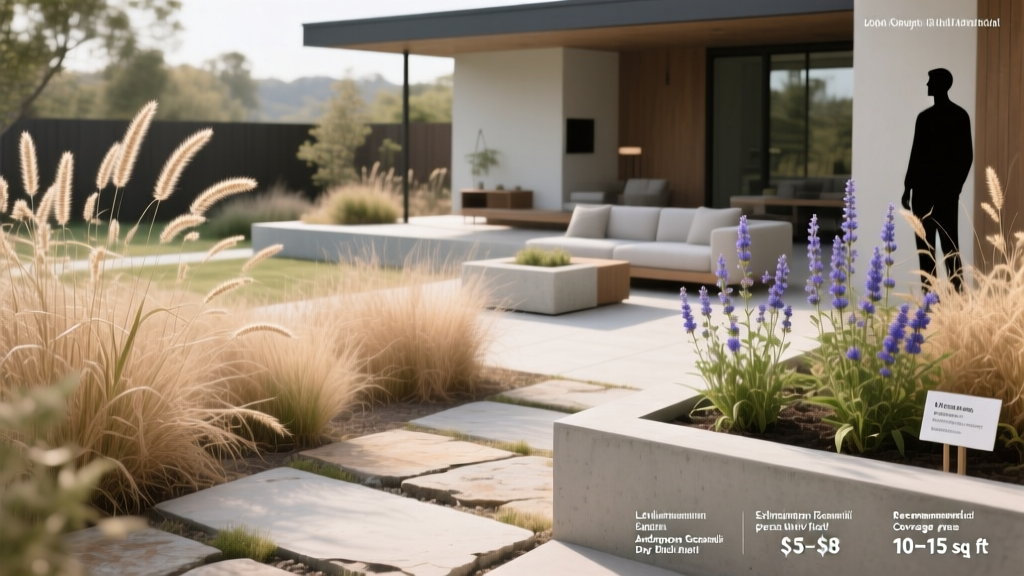
How To Use Native Grasses In Contemporary Landscaping Design
Integrating Ecological Function with Aesthetic Intent
Contemporary landscape architecture increasingly prioritizes ecological performance without sacrificing visual coherence or human experience. Native grasses serve as foundational elements in this shift—offering year-round structure, habitat support, and stormwater infiltration while aligning with the American Society of Landscape Architects’ (ASLA) 2021 Climate Action Plan, which identifies regionally appropriate vegetation for climate-resilient design.
Unlike traditional ornamental beds dominated by non-native perennials requiring frequent irrigation and fertilization, native grasses reduce long-term maintenance inputs by up to 60% after establishment, according to a three-year monitoring study conducted at the Chicago Botanic Garden’s Regenstein Center for Native Plants (2022). Their deep root systems—often extending 6–10 feet into the soil profile—boost soil stability and increase infiltration rates by 300% compared to conventional turfgrass, supporting ASLA’s “Green Infrastructure” guidelines for urban runoff mitigation.
Site-Specific Species Selection and Sourcing
Successful implementation starts with matching species to site hydrology, sun exposure, and soil pH—not just regional origin. For example, Schizachyrium scoparium (little bluestem) thrives in well-drained, acidic soils with full sun but fails in compacted clay with seasonal ponding. Conversely, Andropogon gerardii (big bluestem) tolerates moderate clay content and intermittent flooding, making it ideal for bioswale edges in suburban developments like those designed for the University of California, Davis West Village expansion.
Regional Adaptation Framework
Designers should consult local ecotype data before procurement. The Lady Bird Johnson Wildflower Center’s National Native Plant Database recommends sourcing seed or plugs within 150 miles of the project site to preserve genetic integrity and phenological synchronicity with local pollinators. In practice, this means selecting Elymus canadensis (Canada wild rye) from Minnesota-sourced stock for projects in the Twin Cities metro—not from Kansas-grown material, even if botanically identical.
Scale, Spacing, and Installation Metrics
Establishment success depends on precise density calculations and timing. For mixed-grass meadow installations, ASLA’s Guidelines for Sustainable Site Design (2020) recommends a minimum planting density of 12–15 plugs per square meter when using containerized stock. This translates to approximately 1.1–1.4 plugs per square foot. At the High Line in New York City, designers used 18 plugs/ft² for initial installation of Panicum virgatum (switchgrass) and Sporobolus heterolepis (prairie dropseed) to achieve visual dominance within 18 months.
Cost Considerations and Budget Allocation
Initial investment remains a common concern. Plug costs range from $2.75 to $4.20 each depending on species and nursery scale; bulk seed averages $0.08–$0.14 per square foot for broadcast application. A 1,200-square-foot residential rain garden planted with five native grass species—including Bouteloua curtipendula (sideoats grama), Calamagrostis stricta (bluejoint reedgrass), and Muhlenbergia capillaris (pink muhly)—typically requires $3,100–$4,600 in plant materials alone, excluding soil amendment or irrigation setup. Labor accounts for 55–65% of total installation cost, per the 2023 ASLA Project Cost Survey.
- Schizachyrium scoparium: Mature height 2–4 ft; spacing 18–24 in; drought-tolerant after 2 growing seasons
- Andropogon gerardii: Mature height 4–7 ft; spacing 30–36 in; supports >30 native Lepidoptera species
- Panicum virgatum: Mature height 3–6 ft; spacing 24–30 in; biomass yield: 8–12 tons/acre/year
- Muhlenbergia capillaris: Mature height 2–3 ft; spacing 12–18 in; peak floral display: October–November
- Calamagrostis stricta: Mature height 2–4 ft; spacing 18–24 in; tolerates pH 4.5–7.8
Hardscape Integration Strategies
Native grasses gain architectural clarity when juxtaposed with precisely detailed hardscaping. At the Miller House and Garden in Columbus, Indiana—a National Historic Landmark restored under ASLA-endorsed conservation protocols—landscape architect Dan Kiley used low limestone retaining walls (12 in tall, 8 in thick) to frame sweeping drifts of Schizachyrium scoparium. The vertical edge contrasts with the grasses’ horizontal movement, reinforcing modernist composition principles rooted in proportion and repetition.
Pathways adjacent to grass plantings should maintain a minimum 18-inch buffer zone to prevent soil compaction and allow for seasonal expansion. Permeable pavers set in decomposed granite—installed to ASTM C936 standards—provide structural support while permitting root penetration and water percolation. In Portland’s Tanner Springs Park, designers embedded linear strips of Elymus canadensis between basalt coping stones, achieving both erosion control and visual rhythm across a 0.8-acre urban wetland.
Maintenance Protocols and Long-Term Stewardship
Post-installation care differs significantly from conventional landscapes. Mowing is discouraged; instead, annual dormant-season cutting (late February to early March in USDA Zones 5–7) maintains vigor and prevents woody encroachment. A controlled burn every 3–5 years—conducted under certified burn manager supervision—works well for prairie-type assemblages, though not feasible in dense urban settings. In such cases, mechanical removal of thatch to a depth of 2 inches achieves comparable results, as validated by field trials at the University of Wisconsin–Madison Arboretum.
Irrigation requirements drop sharply after establishment: supplemental watering beyond the first 12 weeks is unnecessary for most species in regions receiving ≥25 inches of annual precipitation. At the Denver Botanic Gardens’ Plains Conservation Center, monitored plots of Bouteloua gracilis (blue grama) showed no mortality over six consecutive drought years (2017–2022) despite zero irrigation after year one.
“Native grasses are not ‘low effort’—they’re ‘right effort.’ Their value emerges from alignment with site processes, not human convenience. Designers who treat them as decorative fill miss their greatest contribution: turning inert space into functioning ecology.” — Dr. Laura K. Hurd, Senior Ecologist, Lady Bird Johnson Wildflower Center, 2023
Quantitative Performance Benchmarks
Performance metrics anchor design decisions in empirical evidence. The following benchmarks derive from peer-reviewed studies and municipal monitoring programs:
| Performance Metric | Value | Source |
|---|---|---|
| Soil carbon sequestration rate (Andropogon gerardii) | 0.87 metric tons/acre/year | USDA NRCS, 2022 |
| Peak evapotranspiration reduction vs. turfgrass | 42% less water loss during July–August | Chicago Botanic Garden, 2022 |
| Average root depth of mature Schizachyrium scoparium | 6.2 ft | University of Nebraska-Lincoln Soil Ecology Lab, 2021 |
| Minimum viable patch size for pollinator foraging efficiency | 1,500 ft² contiguous area | ASLA Biodiversity Task Force Report, 2020 |
| Estimated labor hours/acre/year for established native grass meadow | 12–18 hours | Denver Botanic Gardens Operations Audit, 2023 |
These figures show that native grass integration is more than stylistic—it responds directly to measurable environmental conditions. When scaled appropriately and maintained with ecological literacy, they turn residential yards, corporate campuses, and civic plazas into functional parts of regional watersheds and pollinator corridors.
At the University of Texas at Austin’s Dell Medical School campus, a 2.4-acre bioswale planted exclusively with Andropogon gerardii, Schizachyrium scoparium, and Calamagrostis stricta reduced peak stormwater flow by 71% during 10-year return interval rainfall events, exceeding Austin Water Utility’s mandated 65% reduction threshold. Such outcomes show how native grasses meet regulatory requirements while delivering aesthetic cohesion and habitat value.
Designers working in arid zones must prioritize species with proven xeriscaping capacity. Bouteloua curtipendula, for instance, survives on 12–15 inches of annual precipitation and exhibits leaf rolling behavior to minimize transpiration—reducing water loss by 38% compared to non-adapted grasses under identical conditions (USDA ARS Southwest Watershed Research Center, 2021).
For high-visibility commercial sites, pairing grasses with low-profile hardscape reinforces legibility. At the Miller House, limestone seat walls were set at exact 14-inch heights to match the basal foliage height of Schizachyrium scoparium in early spring—creating a clean transition between constructed and vegetated elements. This dimensional precision lifts native plantings beyond ecological function into intentional spatial experience.
When specifying Muhlenbergia capillaris for southern projects, designers should select cultivars tested for heat tolerance in Zone 9b, such as ‘White Cloud’, which maintains floral integrity above 95°F—unlike standard seed-grown stock that often aborts inflorescences under sustained high temperatures.
The integration of native grasses demands care in selection, installation, and stewardship—and delivers tangible returns in resilience, biodiversity support, and spatial authenticity. As cities confront intensifying heat islands and erratic precipitation, these plants are becoming standard tools in the landscape architect’s repertoire.
Field verification remains essential. Before finalizing a palette, visit established installations: the High Line’s Grasslands section (New York), the Lady Bird Johnson Wildflower Center’s Demonstration Meadow (Austin), and the UW–Madison Arboretum’s Curtis Prairie—the oldest restored prairie in North America, continuously managed since 1935. Direct observation reveals how species behave in context: how light filters through Panicum virgatum at 4 p.m., how wind moves Sporobolus heterolepis in unison, how snow loads shape the silhouette of Andropogon gerardii in January.
This grounded knowledge—paired with quantitative benchmarks and adherence to ASLA sustainability frameworks—enables designers to deploy native grasses not as botanical tokens, but as fully integrated, performative elements of contemporary outdoor space.

