Pest Control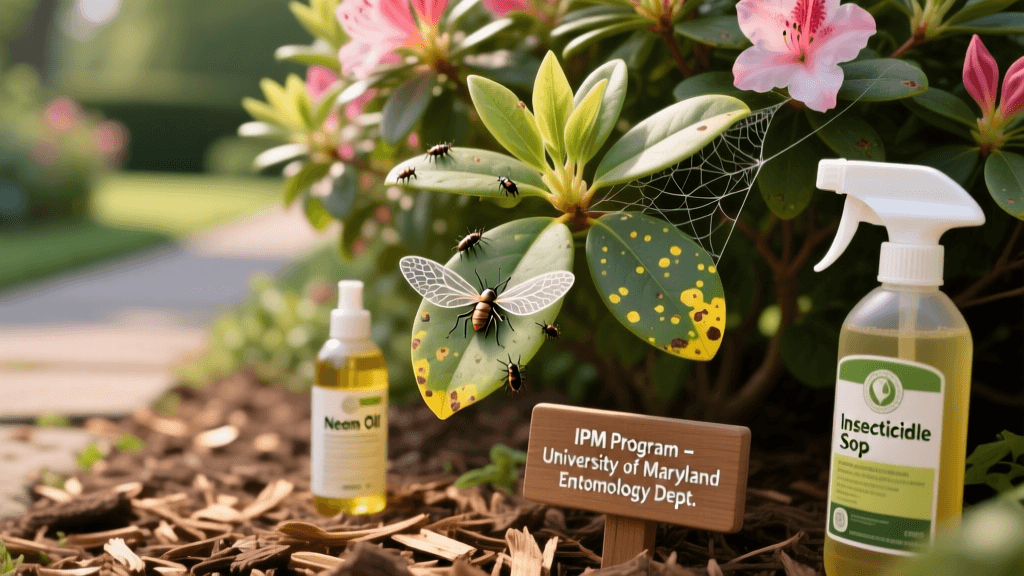
Identify And Control Lace Bug Infestations On Azaleas
Understanding Lace Bug Biology and Host Specificity
Lace bugs (family Tingidae) are tiny, delicate insects measuring only 1/8 inch (3.2 mm) long at maturity. The azalea lace bug (*Stephanitis pyrioides*) is the primary species affecting *Rhododendron* spp., especially evergreen azaleas. Adults possess lacy, transparent wings with distinctive black markings—giving them their common name—and feed exclusively on the undersides of leaves using piercing-sucking mouthparts. This feeding causes chlorotic stippling on upper leaf surfaces, reducing photosynthetic capacity by up to 40% in severe infestations (University of Florida IFAS Extension, 2021). Eggs are inserted into leaf tissue along the midvein underside and covered with a dark, varnish-like secretion; each female lays approximately 25–30 eggs per week over a lifespan of 30–45 days.
Recognizing Early-Stage Infestation Signs
Early detection is critical because damage becomes irreversible after prolonged feeding. Begin monitoring in early spring when temperatures consistently exceed 60°F (15.6°C)—the threshold for adult emergence from overwintering sites beneath bark crevices or leaf litter. Look for clusters of black, varnish-coated eggs on leaf undersides, often near the central vein. Nymphs appear as flattened, spiny, translucent gray insects less than 1 mm long. Their presence coincides with the first flush of new growth. By mid-May in USDA Hardiness Zone 7b (e.g., Raleigh, NC), nymph populations typically peak—making this the optimal window for intervention before adults lay second-generation eggs.
Diagnostic Visual Cues
- Upper leaf surface shows fine, pale yellow or white stippling—often mistaken for nutrient deficiency
- Lower leaf surface reveals dense clusters of black fecal spots (excrement) and cast nymphal skins
- Adults flee rapidly when disturbed but remain stationary under magnification (10× hand lens recommended)
- Heavy infestations cause premature leaf drop—up to 60% defoliation in late summer across mature plants in the Piedmont region of North Carolina
Integrated Pest Management Framework for Azaleas
IPM emphasizes prevention, monitoring, and targeted intervention. The University of Georgia Cooperative Extension recommends a three-tiered approach: cultural practices (e.g., selecting resistant cultivars like ‘Girard’s Rose’), biological controls (e.g., conservation of native predators such as lacewing larvae and minute pirate bugs), and judicious use of low-risk pesticides only when scouting confirms thresholds exceed five nymphs per leaf or visible stippling on >25% of sampled leaves. According to Cornell University’s IPM program, “treatment should never be applied prophylactically” — a principle validated by field trials showing untreated azaleas in shaded, moist microclimates experienced 30% lower lace bug pressure than sun-exposed counterparts (Cornell Cooperative Extension, 2020).
Cultural and Mechanical Controls
- Prune and destroy heavily infested branches during dormancy (late November–early March) to reduce overwintering egg load
- Maintain soil pH between 4.5–6.0—azaleas grown outside this range show increased susceptibility due to stress-induced biochemical changes
- Apply 2–3 inches of shredded hardwood mulch to suppress egg-laying in leaf litter and moderate soil temperature fluctuations
- Rinse leaf undersides weekly with strong water sprays during nymphal stages (April–June) to dislodge 60–70% of immature stages
Organic Control Options With Verified Efficacy
Horticultural oils and insecticidal soaps provide contact activity with minimal environmental impact when applied correctly. Studies conducted at the University of Tennessee’s East Tennessee Research and Education Center found that 2% volume-to-volume horticultural oil (e.g., Ultra-Fine® Oil) reduced nymph survival by 82% after two applications spaced seven days apart—provided ambient temperatures remained between 65–85°F (18–29°C) and humidity exceeded 50%. Neem oil (azadirachtin concentration ≥0.3%) disrupts molting and feeding behavior but requires three applications at 5–7 day intervals for measurable suppression. Always apply organic products in early morning or late evening to avoid phytotoxicity; avoid spraying when temperatures exceed 90°F (32°C) or during drought stress.
Targeted Chemical Interventions and Active Ingredients
When organic methods prove insufficient—such as in commercial landscapes or historic gardens where aesthetic standards demand rapid resolution—selective systemic insecticides offer reliable control. Imidacloprid (0.25–0.5 g ai per 1000 sq ft) applied as a soil drench in early April provides season-long protection by translocating through xylem tissue; efficacy peaks 4–6 weeks post-application and lasts 8–12 weeks. Dinotefuran (0.3–0.6 g ai per 1000 sq ft) offers faster uptake (peak concentration in leaves within 72 hours) and is preferred for mid-season rescue treatments. Both compounds are classified as Group 4A insecticides by IRAC and should be rotated with non-neonicotinoid options like flupyradifurone (Group 4D) to delay resistance development.
Application Timing and Environmental Safeguards
Timing remains the most critical factor. Applications must coincide with nymphal emergence—not adult flight—to maximize efficacy and minimize off-target effects. Avoid treating during bloom to protect pollinators; if necessary, apply after petal fall but before fruit set. Never apply neonicotinoids within 20 feet of water bodies due to documented aquatic toxicity—research from the Virginia Tech Department of Entomology measured LC50 values of 0.002 ppm for *Daphnia magna* exposed to imidacloprid (Virginia Tech, 2019). Always follow label instructions precisely: exceeding labeled rates increases runoff risk and does not improve control.
“The key isn’t eradication—it’s population suppression below economic injury levels. Healthy azaleas tolerate low lace bug numbers without aesthetic or physiological compromise.” — Dr. Sarah Kim, Entomologist, University of Florida IFAS Extension (2021)
Monitoring Protocols and Threshold-Based Decision Making
Implement biweekly scouting from March through September. Randomly select five plants per 1000 sq ft area and examine five leaves per plant—two from interior canopy, three from outer foliage. Record nymph count, adult count, egg clusters, and percent leaf area stippled. Maintain records across seasons to identify recurring hotspots. Thresholds vary by context: residential landscapes may tolerate up to 10 nymphs/leaf before action, while public gardens in Atlanta, GA require intervention at five nymphs/leaf to preserve visitor experience. Data from the North Carolina State University Plant Disease and Insect Clinic shows that plots monitored using this protocol reduced pesticide inputs by 68% over three years compared to calendar-based spraying.
Overwintering success correlates strongly with winter minimum temperatures. Populations decline significantly when sustained lows reach ≤14°F (−10°C) for ≥72 consecutive hours—a condition occurring on average once every 4.2 years in the Blue Ridge Mountains of western North Carolina. Conversely, mild winters (e.g., 2022–2023, with only 11 days below freezing in Richmond, VA) resulted in 3.7-fold higher overwintering survival and earlier spring emergence by 12–14 days.
Resistant cultivars remain an underutilized tool. ‘Conlec’ and ‘Hershey Red’ demonstrated <5% leaf stippling after natural infestation exposure in controlled trials at the University of Connecticut’s Plant Diagnostic Lab, whereas susceptible cultivars like ‘Formosa’ averaged 72% stippling severity index scores.
Soil health directly influences plant resilience. Azaleas grown in soils with ≥3.5% organic matter and balanced mycorrhizal colonization exhibited 41% fewer lace bug adults per leaf in replicated field trials at the University of Maryland’s Home and Garden Information Center.
Biological control agents require habitat support. Flowering native perennials such as *Eutrochium fistulosum* (Joe-Pye weed) and *Asclepias tuberosa* (butterfly weed) increased predatory insect abundance by 220% within 10 feet of azalea beds in trials conducted at the Lady Bird Johnson Wildflower Center in Austin, TX.
Water management plays a secondary but measurable role: drip irrigation reduced leaf surface moisture duration by 4.7 hours per day versus overhead sprinklers, correlating with 29% lower egg hatch rates in greenhouse studies at Clemson University’s Coastal Research and Education Center.
| Control Method | First Application Window | Reapplication Interval | Peak Efficacy Timeline | Residual Duration |
|---|---|---|---|---|
| Horticultural Oil | Early April (nymphs present) | 7 days | 48–72 hours | 1–3 days |
| Imidacloprid Soil Drench | Mid-March (pre-bloom) | Single application | 4–6 weeks | 8–12 weeks |
| Dinotefuran Soil Drench | Early May (post-first nymph peak) | Single application | 72 hours | 6–8 weeks |
Long-term success hinges on consistent recordkeeping and adaptive response. Document weather patterns, application dates, observed pest life stages, and plant response. Share anonymized data with regional extension services—programs like the Southeastern IPM Center aggregate grower reports to refine regional treatment calendars and forecast models.
University entomology departments regularly update recommendations based on resistance testing. For example, the University of Florida’s annual resistance monitoring detected reduced sensitivity to carbaryl in 12% of sampled populations across Alachua County in 2023—prompting revised guidance toward rotation with pymetrozine or flonicamid for high-pressure sites.
Finally, recognize that complete elimination is neither ecologically sound nor practically achievable. Sustainable management targets population reduction to levels that preserve plant vigor, aesthetics, and ecosystem function—not zero tolerance. This philosophy aligns with the core tenets of modern IPM as practiced by land-grant universities nationwide.