Pest Control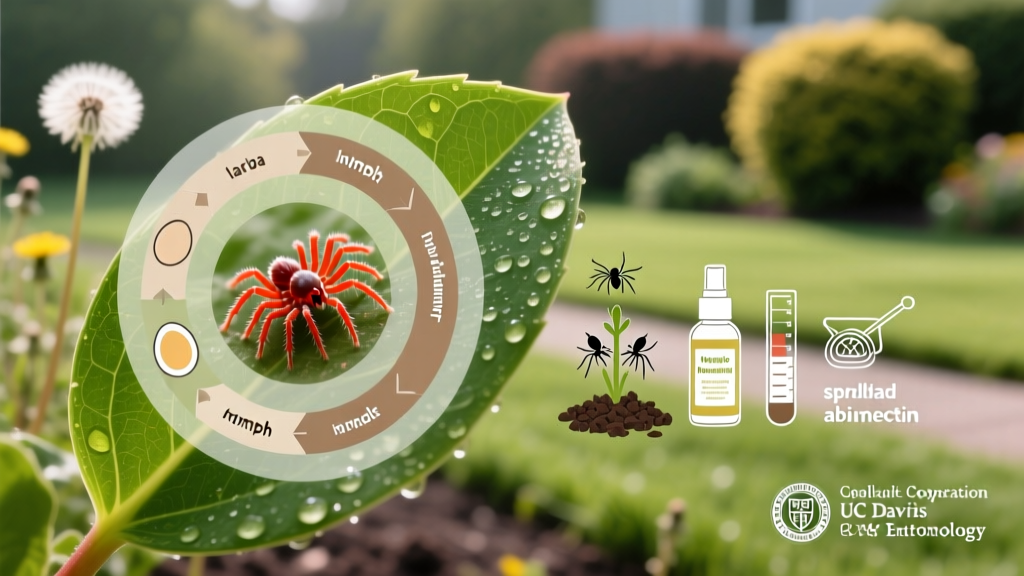
Identify And Treat Spider Mite Infestations Early
Recognize the Early Signs Before Damage Becomes Irreversible
Spider mites—tiny arachnids in the family Tetranychidae—are among the most destructive and frequently misdiagnosed pests in home gardens and commercial horticulture. Measuring only 0.4–0.8 mm in length, they are nearly invisible to the naked eye without magnification. Their presence is often first detected not by seeing the mites themselves but by subtle physiological changes in host plants: stippled or bronzed leaf surfaces, fine webbing on undersides of leaves, and premature leaf drop. A single adult female can lay up to 20 eggs per day, with populations doubling every 3–5 days under optimal conditions (70–90°F and low humidity). This explosive reproductive capacity means an infestation observed today may be tenfold larger within one week.
Understand the Lifecycle to Time Interventions Strategically
Spider mites undergo incomplete metamorphosis, progressing through egg → larva → protonymph → deutonymph → adult stages. Eggs hatch in 3–7 days depending on temperature; at 86°F, development from egg to adult takes just 5 days, whereas at 59°F it extends to 20 days. Larvae have only three pairs of legs and are non-mobile for the first few hours after hatching; protonymphs and deutonymphs each have four pairs of legs and feed actively before molting. Adults live 2–4 weeks and reproduce continuously during warm, dry periods. Crucially, overwintering females enter diapause in protected crevices—under bark flaps, in soil cracks, or beneath plant debris—emerging in spring when temperatures consistently exceed 50°F.
Key Developmental Thresholds
- Egg-to-adult development time: 5 days at 86°F vs. 20 days at 59°F (University of California Integrated Pest Management Program, 2022)
- Optimal relative humidity for population explosion: below 60% RH
- Minimum temperature for egg hatch: 45°F
- Maximum daily fecundity: 20 eggs per female
- Generation time under greenhouse conditions: 7–10 days
Deploy Integrated Pest Management (IPM) Frameworks
IPM prioritizes prevention, monitoring, and ecologically sound interventions over routine pesticide applications. The Cornell University Cooperative Extension recommends weekly visual inspections using a 10× hand lens—focus on the undersides of lower, older leaves where mites congregate earliest. Thresholds vary by crop: for tomatoes, intervention is warranted at ≥10 mites per leaflet; for strawberries, action begins at ≥5 mites per leaf. Monitoring should coincide with environmental triggers—low rainfall (<0.5 inches/week), high temperatures (>80°F), and wind events that disperse mites between plants.
Monitoring Protocols
- Tap suspect leaves over a white sheet of paper and count moving specks with a hand lens
- Record mite counts per leaflet across 10 random plants per 1,000 sq ft zone
- Track cumulative degree-days above 50°F to predict emergence timing
Organic Control Options That Deliver Measurable Results
Organic interventions rely on physical disruption, biological agents, and botanical compounds with minimal residual impact. Horticultural oils—including narrow-range mineral oils at 1–2% concentration—suffocate mites on contact and disrupt egg viability. Studies conducted at the Ohio State University Extension found that two applications of 1.5% oil spray at 5-day intervals reduced populations by 82% on pepper crops without phytotoxicity. Insecticidal soaps (potassium salts of fatty acids) must contact mites directly and are most effective against immature stages; efficacy drops sharply when applied to dusty foliage or when ambient temperatures exceed 90°F. Beneficial predators such as Phytoseiulus persimilis (a predatory mite) consume 5–20 spider mite eggs or nymphs daily and establish best when released at ratios of 1:10 predator-to-pest prior to population peaks.
Chemical Controls: Selectivity and Resistance Management
When organic methods prove insufficient, targeted miticides offer rapid knockdown—but resistance management is critical. Spider mites develop resistance rapidly; populations in California’s Central Valley have documented resistance to abamectin (a macrocyclic lactone), bifenthrin (a pyrethroid), and dicofol (an organochlorine) since the early 2000s. Miticides fall into distinct modes of action (MoA) groups defined by the IRAC (Insecticide Resistance Action Committee). Effective rotation requires alternating between MoA Group 5 (mitochondrial electron transport inhibitors, e.g., acequinocyl), Group 21A (lipid synthesis inhibitors, e.g., spirodiclofen), and Group 23 (METI inhibitors, e.g., fenpyroximate). Applications must cover leaf undersides thoroughly—coverage failure accounts for >70% of control failures in field trials.
Registered Active Ingredients and Application Parameters
| Active Ingredient | Miticide Class | Target Stage | PHI (days) | Re-entry Interval (hours) |
|---|---|---|---|---|
| Acequinocyl | Group 5 | All life stages | 1 | 12 |
| Spirodiclofen | Group 21A | Eggs & nymphs | 3 | 24 |
| Fenbutatin oxide | Group 12 | All stages | 7 | 48 |
Timing remains decisive: apply miticides during early morning or late evening to avoid photodegradation and reduce risk to pollinators. Avoid tank-mixing with sulfur or oil-based products unless label instructions explicitly permit it—phytotoxicity spikes when these combinations are used above 85°F. Rotate chemistries every 2–3 generations, not calendar weeks, to align with actual mite development cycles.
Preventive Cultural Practices That Reduce Recurrence
Cultural controls form the bedrock of long-term suppression. Maintain consistent irrigation—spider mite populations increase 300% faster on drought-stressed plants—and avoid excessive nitrogen fertilization, which boosts leaf sap amino acid content and accelerates mite reproduction. Remove crop residues immediately post-harvest; research from the University of Florida IFAS shows that delaying residue removal by 7 days increases overwintering survival by 45%. Introduce flowering ground covers like alyssum or yarrow near vegetable beds to support populations of predatory insects including Stethorus punctillum, a lady beetle species that consumes up to 75 spider mites per day in its larval stage.
“Early detection combined with precise application timing—not product volume—is the strongest predictor of successful spider mite management in diversified cropping systems.” — Dr. Elena Rodriguez, Entomologist, UC Davis Department of Entomology and Nematology, 2021
Sanitation protocols matter at scale: clean pruning tools with 70% ethanol between plants, and disinfect greenhouse benches with quaternary ammonium compounds between crop cycles. In landscapes, avoid planting susceptible hosts—roses, junipers, and fruit trees—in contiguous rows without buffer zones of resistant species like boxwood or holly. Monitor adjacent wild areas: mite migration from native blackberry thickets into nearby strawberry fields has been documented across Oregon’s Willamette Valley.
Resistance monitoring is essential. Submit suspected resistant populations to diagnostic labs—such as the Washington State University Pesticide Analytical Laboratory—for bioassay testing. Their 2023 regional survey found that 68% of tested Tetranychus urticae samples from western Washington showed reduced susceptibility to abamectin, reinforcing the need for MoA rotation grounded in local resistance data.
Finally, record-keeping transforms reactive responses into proactive planning. Log dates of first mite detection, weather conditions, treatment type and rate, and post-application efficacy assessments. Over three seasons, this data reveals patterns—such as recurring infestations beginning 14 days after extended dry spells—that inform future scheduling of preventive releases of Neoseiulus californicus or pre-emptive oil sprays.
Consistent implementation of these science-based strategies reduces reliance on broad-spectrum acaricides by up to 60%, according to multi-year trials coordinated by the USDA-ARS Vegetable Crops Unit in Beltsville, Maryland. Success hinges not on finding a single “silver bullet,” but on integrating observation, ecology, and chemistry with discipline and timing.