
Landscaping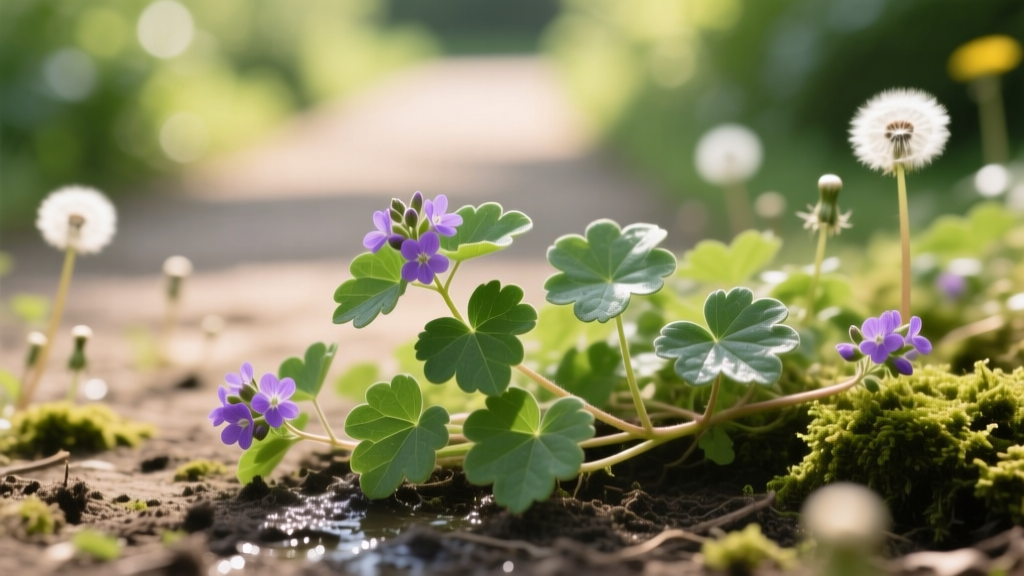
How to Identify and Eradicate Creeping Charlie in Your Landscape
Lisa ThompsonPublished
Introduction to Creeping Charlie (Glechoma hederacea)
Creeping Charlie, scientifically known as Glechoma hederacea, is a perennial broadleaf weed that strikes fear into the hearts of homeowners and landscape professionals alike. Often referred to as ground ivy, gill-over-the-ground, or creeping Jenny, this aggressive invader belongs to the mint family. It is notorious for forming dense, mat-like canopies that choke out desirable turfgrass and suffocate delicate ornamental plants in garden beds. Because it spreads via both seeds and creeping stems (stolons) that root at the nodes, a single plant can quickly colonize a large section of your yard. Eradicating Creeping Charlie requires a strategic approach that combines proper identification, targeted removal techniques, and long-term cultural prevention.
How to Identify Creeping Charlie
Before you can effectively remove Creeping Charlie, you must accurately identify it. It is frequently confused with other broadleaf weeds like common mallow or henbit. According to the University of Wisconsin-Madison Division of Extension, accurate identification is the first critical step in an integrated pest management plan.
Leaf and Stem Characteristics
Creeping Charlie features distinct square stems, a hallmark of the mint family. The leaves are typically round to kidney-shaped with scalloped or crenate edges. They grow in opposite pairs along the stem and are attached by relatively long petioles (leaf stalks). The foliage is usually a vibrant to dark green, though it may take on a slightly purplish hue in cooler weather or when exposed to direct sunlight. When the leaves or stems are crushed, they emit a strong, pungent minty odor.
Flowers and Growth Habit
In the spring, typically between April and June, Creeping Charlie produces small, funnel-shaped flowers. These blossoms are usually a pale blue to lavender color and grow in clusters of two or three in the leaf axils. The plant's growth habit is prostrate, meaning it hugs the ground closely, allowing it to evade lawn mower blades and spread laterally across the soil surface.
Why Creeping Charlie Invades Landscapes
Creeping Charlie is an opportunistic weed that thrives in environments where turfgrass struggles. It prefers moist, shaded areas with poor soil drainage and low nitrogen levels. If your landscape has dense tree canopies, compacted soil, or a history of under-fertilization, Creeping Charlie will readily exploit these weaknesses. Furthermore, it is highly adaptable and can tolerate a wide range of soil pH levels, making it a formidable opponent in both garden beds and lawns.
Step-by-Step Removal Guide
Successfully removing Creeping Charlie requires persistence. Because the plant stores energy in its extensive root system and nodes, simply breaking off the top growth will only result in rapid regrowth. Below are the most effective organic and chemical removal strategies.
Manual and Organic Removal Methods
For small infestations or areas near sensitive ornamental plants where herbicide drift is a concern, manual removal is the safest option.
- Hand-Pulling: The best time to hand-pull Creeping Charlie is immediately after a heavy rain or deep irrigation, when the soil is soft. Use a hand trowel or a specialized weeding tool to carefully lift the roots and nodes. You must remove every node; any piece left behind will regenerate.
- Dethatching Rake: For larger patches in the lawn, a manual dethatching rake can be used to tear up the mats of stolons. Rake aggressively to break the root connections, then gather and dispose of the debris in sealed yard waste bags. Never compost Creeping Charlie, as the nodes can survive the composting process.
- The Borax Treatment: A popular organic remedy involves using Borax (sodium borate), which is toxic to Creeping Charlie but tolerated by turfgrass in small amounts. The Iowa State University Extension notes that this method should be used sparingly to avoid boron toxicity in the soil. The standard recipe is: Dissolve 10 ounces of 20 Mule Team Borax in 4 ounces of warm water, then dilute this mixture into 2.5 gallons of water. This solution treats exactly 1,000 square feet. Apply in the spring when the weed is actively growing.
Chemical Herbicide Options
For severe infestations, post-emergent broadleaf herbicides are the most effective solution. The University of Minnesota Extension recommends utilizing products containing specific active ingredients that target the weed's unique biology.
- Active Ingredients: Look for herbicides containing Triclopyr, 2,4-D, or Dicamba. Triclopyr is widely considered the most effective active ingredient against Creeping Charlie. Products like Ortho WeedClear or SpeedZone Lawn Weed Killer often contain a combination of these chemicals for broader control.
- Timing is Everything: The absolute best time to apply herbicides is in the early fall (late September to early October). During this period, the plant is actively pulling nutrients down into its root system to prepare for winter, which draws the herbicide deep into the roots for a complete kill. Spring applications (May) are the second-best option, targeting the plant while it is flowering and vulnerable.
- Application Tips: Always add a non-ionic surfactant (spreaders-sticker) to your tank mix if the product label recommends it. The waxy cuticle on Creeping Charlie's leaves can cause herbicide droplets to bead up and roll off. A surfactant breaks the surface tension, ensuring the chemical coats the leaf and is absorbed. Avoid spraying on windy days or when temperatures exceed 85°F to prevent vapor drift from damaging nearby trees, shrubs, and garden plants.
Comparison Table: Removal Methods
| Method | Effectiveness | Cost | Time to Results | Best Use Case |
|---|---|---|---|---|
| Hand-Pulling | Moderate (High if thorough) | Low (Labor intensive) | Immediate | Small patches, garden beds |
| Borax Solution | Moderate | Very Low | 2-3 Weeks | Organic lawns, isolated spots |
| Triclopyr / 2,4-D Herbicide | High | Moderate | 2-4 Weeks | Large lawn infestations |
| Smothering (Solarization) | High | Low-Moderate | 4-8 Weeks | Clearing new garden beds |
Preventing Future Outbreaks
Once you have successfully eradicated Creeping Charlie, the focus must shift to prevention. Weeds are simply nature's way of covering bare or struggling soil. To keep ground ivy from returning, you must create an environment where your desired landscape plants and turfgrass can outcompete any invading weed seeds.
- Improve Lawn Density: A thick, healthy lawn is the best defense against weeds. Overseed bare patches in the early fall with a shade-tolerant grass seed mix if your yard lacks direct sunlight. Apply a high-nitrogen fertilizer in the autumn to encourage deep root growth and dense turf.
- Adjust Mowing Heights: Never scalp your lawn. Set your mower deck to a height of 3 to 4 inches. Taller grass shades the soil surface, depriving Creeping Charlie seeds of the sunlight they need to germinate and establish.
- Modify the Landscape Environment: Since Creeping Charlie thrives in damp, shady conditions, consider pruning lower tree branches to allow more sunlight to penetrate the canopy. If soil drainage is poor, core aeration and the incorporation of organic compost can improve water percolation and reduce surface moisture.
- Maintain Mulch in Beds: In ornamental garden beds, maintain a 2-to-3-inch layer of organic mulch (such as shredded hardwood or pine bark). Mulch blocks sunlight from reaching weed seeds and helps retain soil moisture for your desirable plants.
Conclusion
Creeping Charlie is a resilient and frustrating weed, but it is not invincible. By accurately identifying the plant, understanding its preference for shade and moisture, and deploying targeted removal methods like Triclopyr-based herbicides or meticulous hand-pulling, you can reclaim your landscape. Remember that long-term success relies heavily on cultural practices; a thick, well-fertilized lawn and properly mulched garden beds will serve as your ultimate barrier against future invasions. Stay vigilant, treat outbreaks early, and enjoy a pristine, weed-free outdoor space.

