
Landscaping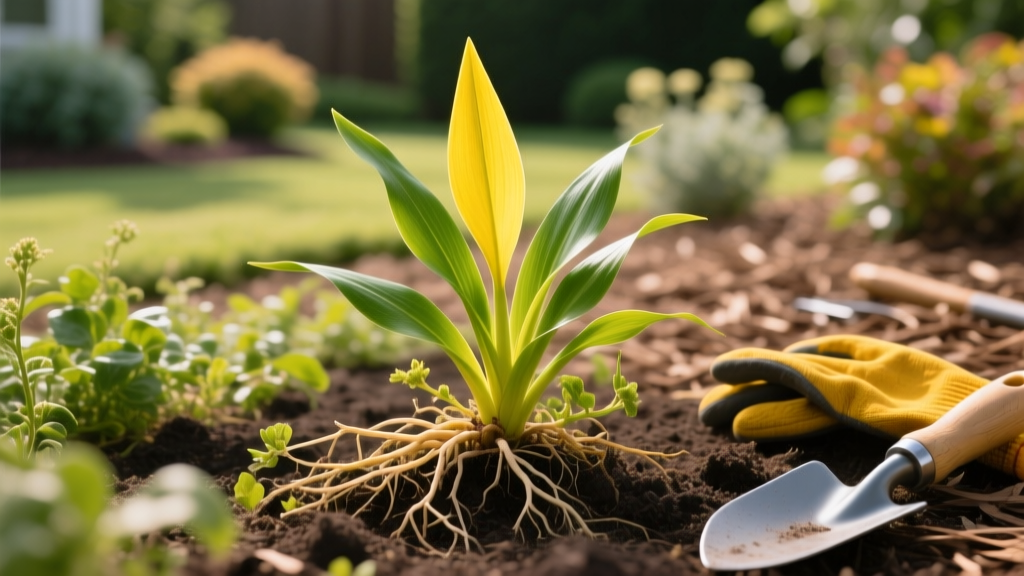
How to Identify and Remove Yellow Nutsedge in Landscape Beds
Lisa ThompsonPublished
Introduction to Yellow Nutsedge in Landscaping
Landscape beds are meant to be the crown jewels of your outdoor living space, showcasing vibrant ornamental plants, carefully arranged shrubs, and beautiful hardscaping elements. However, nothing ruins the aesthetic of a pristine garden bed faster than an invasion of yellow nutsedge (Cyperus esculentus). Often mistakenly referred to as 'nutgrass,' this aggressive weed is neither a true grass nor a broadleaf weed; it is a sedge. Its rapid growth rate, unique biology, and stubborn root system make it one of the most frustrating weeds for homeowners and landscaping professionals alike. If left unchecked, yellow nutsedge will quickly outcompete your prized ornamentals for water, nutrients, and sunlight, turning a meticulously planned landscape into an overgrown mess.
Understanding the biology of yellow nutsedge is the first step toward reclaiming your garden beds. Unlike standard annual weeds that complete their life cycle in a single season, yellow nutsedge is a perennial that reproduces primarily through a complex underground network of rhizomes and tubers, commonly called 'nutlets.' These tubers can remain dormant in the soil for years, sprouting new plants whenever conditions become favorable. According to the NC State Extension Plant Toolbox, a single nutsedge plant can produce hundreds of tubers in a single growing season, making eradication a multi-year commitment rather than a quick weekend chore.
Identifying Yellow Nutsedge: Grass or Weed?
Before you can effectively remove nutsedge, you must accurately identify it. Many homeowners mistake it for a fast-growing grass and apply standard grassy weed killers, which are entirely ineffective against sedges. There is a classic botanical rhyme that landscapers use to remember the difference: 'Sedges have edges, rushes are round, and grasses have nodes from their tips to the ground.'
When inspecting your landscape beds, look for the following key characteristics:
- Stem Shape: If you roll the stem between your fingers, you will feel that it is distinctly triangular. True grasses have round or flat stems.
- Leaf Arrangement: The leaves of yellow nutsedge emerge from the base in sets of three, whereas grass leaves emerge in sets of two.
- Color and Growth Rate: Nutsedge is typically a lighter, yellowish-green compared to surrounding plants. It also grows significantly faster than most ornamental plants and turfgrasses, often poking through mulch and canopy layers within days of being cut back.
- Seed Heads: If allowed to mature, the plant produces a distinctive, spiky, umbrella-like seed head that turns golden-brown in late summer.
Comparison Chart: Yellow Nutsedge vs. Standard Grass
| Feature | Yellow Nutsedge | Standard Garden/Turf Grass |
|---|---|---|
| Stem Shape | Triangular (Solid) | Round or Flat (Often Hollow) |
| Leaf Arrangement | Three-part (Base) | Two-part (Base) |
| Growth Rate | Extremely Fast (Outpaces turf) | Moderate |
| Root System | Rhizomes with Tubers (Nutlets) | Fibrous Roots |
| Color | Yellowish-Green | True Green to Dark Green |
The Hidden Threat: Tubers and Rhizomes
The primary reason yellow nutsedge is so difficult to eradicate from landscape beds is its underground reproductive system. The plant produces small, nut-like tubers (nutlets) on its rhizomes. These tubers are the plant's survival mechanism. When you pull the visible weed from the soil, the rhizome often snaps, leaving the tubers safely buried underground. A single tuber can produce multiple new shoots, meaning that pulling one plant can actually stimulate the growth of several more.
Furthermore, these tubers can survive in the soil for up to three years or more without sprouting. This is why you might treat a garden bed successfully, only to see a fresh outbreak of nutsedge the following spring when soil temperatures reach 54°F (12°C) and moisture levels rise.
Cultural and Mechanical Removal Strategies
Mechanical removal (hand-pulling or hoeing) can be effective, but only if timed perfectly. Landscaping professionals often refer to the '6-leaf rule.' Research indicates that yellow nutsedge begins forming new tubers once the plant reaches the 6-leaf stage, which can happen in as little as three to four weeks during the peak of summer. If you pull the weed before it develops six leaves, the root system has not yet stored enough energy to produce new tubers, significantly reducing the chance of regrowth.
Never use a string trimmer or tiller to chop up nutsedge in your landscape beds. Tilling will slice the rhizomes into multiple pieces, each of which can generate a brand new plant, effectively multiplying your weed problem overnight.
Improving Drainage and Soil Health
Yellow nutsedge thrives in poorly drained, compacted, and consistently moist soils. If your landscape beds are constantly soggy, you are creating an ideal nursery for this weed. To make your garden beds less hospitable to nutsedge:
- Amend the Soil: Incorporate organic matter like composted pine bark to improve soil structure and drainage.
- Adjust Irrigation: Ensure your drip irrigation or sprinkler systems are not overwatering the beds. Allow the top inch of soil to dry out between waterings.
- Core Aeration: While typically used for lawns, aerating heavily compacted soil in large landscape areas can improve water percolation and reduce the surface moisture that nutsedge loves.
Mulching Strategies: Why Standard Mulch Fails
Many homeowners believe that laying down a standard 2-inch layer of shredded hardwood mulch will smother weeds. While this works for many annual broadleaf weeds, it is entirely ineffective against yellow nutsedge. The sharp, pointed tips of nutsedge shoots are uniquely adapted to pierce right through standard mulch, landscape fabric, and even thin plastic sheeting.
To suppress nutsedge mechanically, you must use a much thicker, denser barrier. The Clemson University Home & Garden Information Center recommends using a thick layer of coarse arborist wood chips (at least 4 to 6 inches deep) combined with a heavy-duty, woven geotextile landscape fabric. Avoid thin, non-woven plastic weed barriers, as the nutsedge will easily puncture them, and the plastic will trap moisture in the soil, creating the exact damp conditions the weed prefers.
Chemical Control in Landscape Beds
When mechanical and cultural methods are not enough, targeted chemical control becomes necessary. However, applying herbicides in landscape beds is highly complex because you must kill the weed without harming the root systems of your prized ornamental shrubs, perennials, and trees.
Pre-Emergent Herbicides
Pre-emergent herbicides are applied in early spring before soil temperatures consistently reach 54°F. They work by creating a chemical barrier in the top layer of soil that prevents tubers from successfully sprouting. Products containing the active ingredient dimethenamid-P (such as Tower) or metolachlor are highly effective against nutsedge and are generally safe for use around established ornamental plants. Always apply pre-emergents to moist soil and water them in according to the label instructions to activate the chemical barrier.
Post-Emergent Herbicides
If the nutsedge has already emerged, you will need a selective post-emergent herbicide. Standard glyphosate (Roundup) is non-selective and will kill any ornamental plant it touches, making it incredibly risky for use in densely planted landscape beds. Instead, look for herbicides specifically formulated for sedges:
- Halosulfuron-methyl (e.g., SedgeHammer): This is the gold standard for post-emergent nutsedge control. It is absorbed through the leaves and translocates down into the tubers, effectively killing the entire root system. It can be used as a directed spray around many established ornamentals, but you must use a shield to prevent drift onto the leaves of desirable plants.
- Sulfentrazone: Often found in broad-spectrum landscape weed killers, sulfentrazone provides excellent contact control of sedges and also has some pre-emergent soil activity. It is safe for many woody ornamentals but can cause damage to certain shallow-rooted perennials and annual flowers.
Cost Consideration: A quality halosulfuron-methyl product typically costs between $30 and $50 for a small bottle that treats up to 10,000 square feet, making it a highly cost-effective solution for severe infestations when compared to the recurring cost of bulk mulch and manual labor.
Step-by-Step Eradication Plan
To successfully rid your landscape beds of yellow nutsedge, follow this integrated pest management timeline:
- Early Spring (March - April): Apply a pre-emergent herbicide like dimethenamid-P to the beds. Ensure your irrigation system is calibrated to avoid overwatering.
- Mid-Spring to Early Summer (May - June): Monitor the beds weekly. Hand-pull any escaped nutsedge shoots immediately, ensuring you pull them before they develop their sixth leaf.
- Peak Summer (July - August): If patches emerge and are safely away from the foliage of ornamentals, apply a directed spray of halosulfuron-methyl. Use a cardboard shield to protect desirable plants. A second application may be required 4 to 6 weeks later to catch late-emerging tubers.
- Autumn (September - October): Refresh your mulch layer with 4 to 6 inches of coarse arborist chips to smother any late-season growth and protect the soil over winter.
- Year Two and Beyond: Repeat the pre-emergent application and monitoring process. Because tubers can remain dormant for years, consistent vigilance is the only way to achieve total eradication.
Conclusion
Yellow nutsedge is a formidable opponent in the landscape bed, armed with a rapid growth rate and a resilient underground tuber system. By shifting your perspective from treating it as a simple grass to managing it as a perennial sedge, you can employ the right mechanical, cultural, and chemical tools to win the battle. Remember the 6-leaf rule, improve your soil drainage, utilize thick layers of coarse mulch, and apply targeted herbicides like halosulfuron-methyl with precision. With patience and a consistent, multi-year strategy, you can reclaim your garden beds and restore the pristine beauty of your landscape design.

