Lawn Care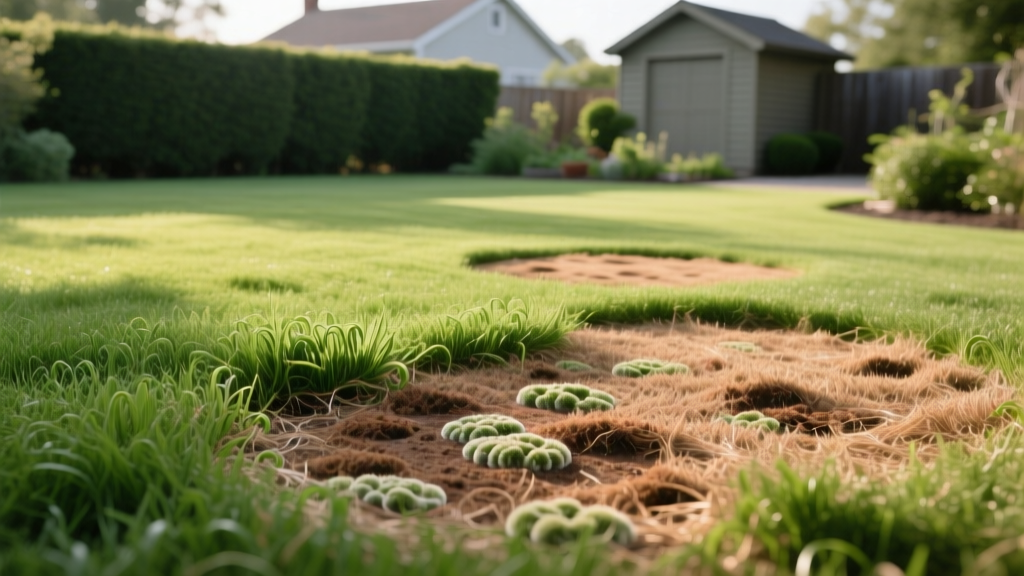
How to Identify and Treat Brown Patch Lawn Disease
David ParkPublished
What is Brown Patch Disease?
Brown patch is one of the most common and destructive turfgrass diseases, caused by the soil-borne fungus Rhizoctonia solani. This pathogen thrives in warm, humid conditions, typically striking when daytime temperatures exceed 85°F and nighttime temperatures remain above 68°F. While it primarily affects cool-season grasses like tall fescue, Kentucky bluegrass, and perennial ryegrass, it can also damage warm-season grasses such as St. Augustine and Zoysia during periods of prolonged leaf wetness. According to NC State TurfFiles, the fungus survives the winter in the soil and thatch layer as sclerotia, waiting for the perfect environmental triggers to infect vulnerable grass blades.
How to Identify Brown Patch in Your Lawn
Early identification is critical to preventing widespread turf loss. Brown patch manifests as circular or irregularly shaped patches of dead or dying grass that can range from a few inches to several feet in diameter. Key identification markers include:
- The "Smoke Ring": In the early morning when dew is present, you may see a dark, purplish-green border at the edge of the patch. This "smoke ring" indicates active fungal growth.
- Leaf Lesions: Individual grass blades will exhibit tan or light brown lesions with dark brown borders. The lesions often wrap around the leaf blade, causing the tip to die back while the base remains green.
- Thinning Turf: Unlike some diseases that kill the crown and roots immediately, brown patch primarily attacks the foliage. The grass may appear matted down and thin, but the crown may still be alive if treated promptly.
Brown Patch vs. Other Common Lawn Diseases
Misdiagnosing a lawn disease can lead to ineffective treatments and wasted money. Use the comparison table below to differentiate brown patch from other common summer turf diseases.
| Disease | Pathogen | Optimal Temperature | Key Symptoms | Primary Grass Targets |
|---|---|---|---|---|
| Brown Patch | Rhizoctonia solani | 80°F - 90°F (High Humidity) | Circular patches, smoke rings, tan leaf lesions with dark borders. | Tall Fescue, Ryegrass, Bentgrass |
| Dollar Spot | Clarireedia jacksonii | 60°F - 85°F | Small, silver-dollar-sized spots that merge; hourglass-shaped lesions. | Creeping Bentgrass, Fescues, Zoysia |
| Pythium Blight | Pythium spp. | 85°F - 95°F (Night > 70°F) | Greasy, water-soaked patches; white cottony mycelium in morning. | Perennial Ryegrass, Bentgrass, Fescue |
Cultural Practices for Prevention and Control
Fungicides are only half the battle. Modifying your lawn care routine to reduce environmental stress and leaf wetness is essential for long-term control. Penn State Extension emphasizes that cultural practices are the first line of defense against Rhizoctonia solani.
1. Optimize Your Irrigation Schedule
Prolonged leaf wetness is the primary catalyst for brown patch spore germination. Never water your lawn in the evening, as this leaves the grass wet for 12+ hours. Instead, water deeply and infrequently between 4:00 AM and 8:00 AM. This ensures the soil receives the necessary 1 to 1.5 inches of weekly moisture while allowing the sun and wind to dry the grass blades quickly.
2. Adjust Mowing Heights and Frequency
Scalping your lawn stresses the grass and creates open wounds for the fungus to enter. Raise your mower deck to 3.5 or 4 inches during the peak summer heat for cool-season grasses. Never remove more than one-third of the grass blade in a single mowing, and ensure your mower blades are razor-sharp to prevent tearing the leaf tips.
3. Manage Nitrogen and Thatch
Applying high-nitrogen, quick-release fertilizers in the middle of summer promotes lush, succulent growth that is highly susceptible to brown patch. Switch to slow-release nitrogen or halt fertilization entirely during July and August. Additionally, maintain a thatch layer of less than 0.5 inches. Excessive thatch harbors fungal sclerotia and prevents water and air from reaching the root zone.
Expert Tip: If your lawn has a history of brown patch, schedule core aeration in the early fall. This relieves soil compaction, improves drainage, and disrupts the thatch layer where the fungus overwinters.
Chemical Treatments: Fungicide Application Guide
When cultural practices are not enough, or if you are managing a high-value turfgrass area, chemical intervention is necessary. Fungicides are most effective when applied preventatively in late spring or early summer before symptoms appear. Curative applications can stop the spread but will not instantly repair dead tissue.
Top Active Ingredients and Product Examples
- Azoxystrobin (FRAC Group 11): Found in products like Heritage TL or Scotts DiseaseEx. Excellent preventative and early curative control. Apply at a rate of 2 to 4 fluid ounces per 1,000 square feet.
- Propiconazole (FRAC Group 3): Found in products like Honor Guard or Bayer Advanced Fungus Control. Highly effective systemically. Apply at 1 to 2 fluid ounces per 1,000 square feet.
- Flutolanil (FRAC Group 7): Found in professional products like ProStar. Provides long-lasting residual control (up to 28 days).
The Importance of Fungicide Rotation
Fungi can quickly develop resistance to chemicals if the same mode of action is used repeatedly. The Clemson University Home & Garden Information Center recommends rotating fungicides with different FRAC (Fungicide Resistance Action Committee) codes. For example, apply an FRAC 11 fungicide (Azoxystrobin) in May, follow up with an FRAC 3 (Propiconazole) in June, and use a combination product like Headway (FRAC 11 + FRAC 3) in July.
Application Costs and Best Practices
For DIY homeowners, granular fungicides like Scotts DiseaseEx cost approximately $15 to $20 per 5,000 square feet. Liquid concentrates are more cost-effective for large lawns, averaging $8 to $12 per 1,000 square feet when mixed in a pump sprayer. Always water liquid fungicides into the soil lightly (about 1/8 inch of irrigation) if the product label specifies soil-borne activity, though most foliar brown patch treatments should be left to dry on the leaf blade. Always read the manufacturer's label for exact mixing ratios and safety precautions.
Recovery and Overseeding Damaged Areas
If brown patch has killed the crown and roots of your grass, the bare patches will not recover on their own. Once the disease is eradicated and the heat of summer breaks, prepare the damaged areas for renovation. Rake out the dead thatch and debris to expose the soil. In the early fall, overseed the bare spots with a disease-resistant cultivar of tall fescue or Kentucky bluegrass. Top-dress the seeded areas with a thin layer of compost, keep the seed consistently moist until germination, and resume a standard fall fertilization program to rebuild your lawn's density before winter.