Pest Control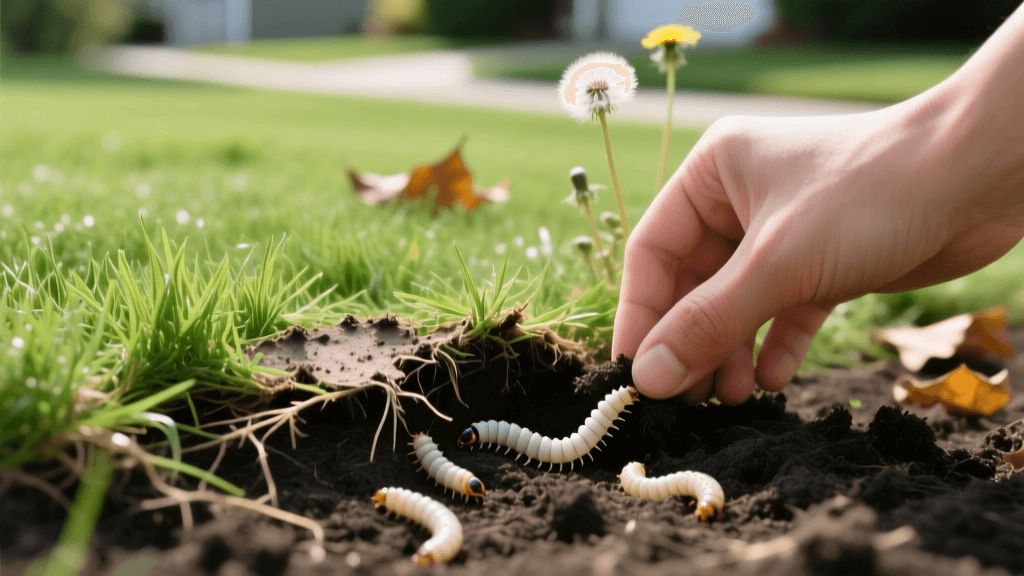
How to Identify and Eliminate Grub Worms in Your Lawn
The Hidden Threat: Understanding Lawn Grubs
White grubs, the C-shaped larval stage of various scarab beetles, are among the most destructive below-ground pests in North American lawns. Species such as the Japanese beetle, European chafer, and June beetle lay their eggs in the soil during early summer. When these eggs hatch, the ravenous larvae begin feeding on the roots of your turfgrass, severing the plant's ability to absorb water and nutrients. Left unchecked, a severe grub infestation can roll up your lawn like a carpet, leaving behind thousands of dollars in landscaping damage. In this comprehensive guide, we will walk through the precise steps for diagnosing a grub problem, identifying the specific species, and implementing targeted, cost-effective solutions using both organic and chemical controls.
Problem Diagnosis: Is Your Lawn Suffering from Grub Damage?
Many homeowners mistake grub damage for drought stress, fungal diseases, or dog urine spots. Accurate problem diagnosis requires looking below the surface. Grub feeding destroys the root system, meaning the grass above ground will show signs of severe moisture deprivation even when the soil is wet.
Key Symptoms of Grub Activity
- Irregular Brown Patches: Unlike the perfect circles of fairy ring fungus, grub damage appears as irregular, expanding brown patches that typically emerge in late summer or early fall.
- Spongy Turf: Walk across your lawn. If the ground feels spongy, loose, or squishy underfoot, the root structure has likely been devoured.
- The Carpet Effect: In severe cases, you can grab a handful of dead grass and peel it back like a freshly laid carpet because there are no roots anchoring it to the soil.
- Secondary Wildlife Damage: Crows, skunks, raccoons, and moles love to eat grubs. If you notice chunks of turf torn up or small holes dug into your lawn, animals are likely foraging for a grub buffet.
The Shovel Test: Confirming the Infestation
To move from suspicion to a confirmed diagnosis, you must perform the Shovel Test. Using a flat-edged spade, cut a 1-foot by 1-foot square of turf on three sides, about 3 to 4 inches deep. Peel back the sod and sift through the soil and thatch layer, counting every C-shaped white grub you find. Replace the sod and water it immediately. Repeat this test in 3 to 4 different areas of your lawn, focusing on the margins between brown and green grass.
According to the Penn State Extension, a healthy, well-maintained lawn can tolerate up to 5 grubs per square foot without visible damage. Curative treatment is generally only recommended when populations exceed 8 to 10 grubs per square foot, or if secondary animal damage is occurring.
Identifying the Culprit: White Grub Species
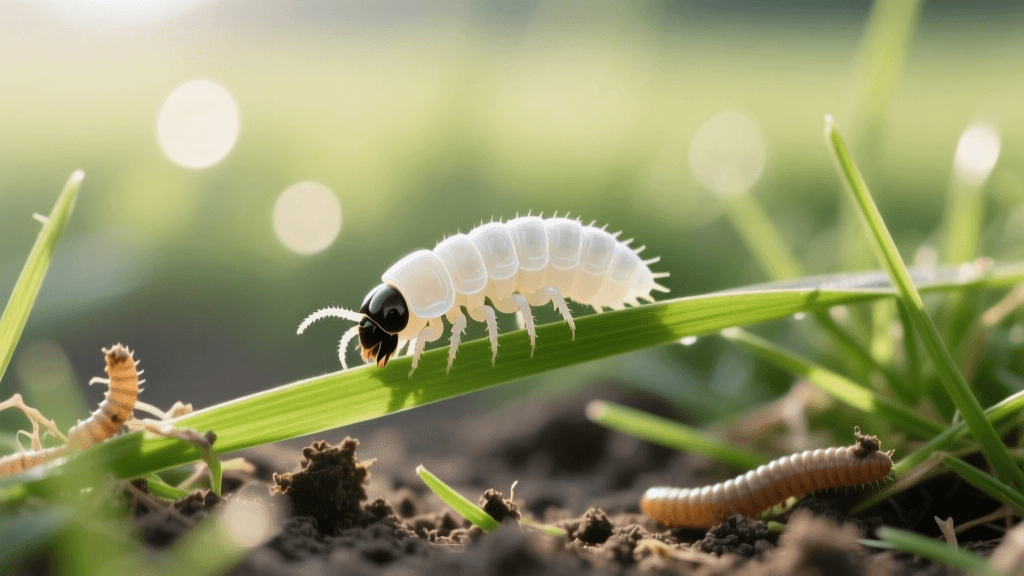
Effective Integrated Pest Management (IPM) relies on proper identification. While all white grubs look similar at a glance, featuring fat, C-shaped, white bodies with brown heads and six legs near the thorax, you can identify the exact species by examining the raster pattern. This is the unique arrangement of tiny bristles and hairs on the underside of their tail end.
- Japanese Beetle Grubs: Feature a distinct V-shaped raster pattern just below the anal slit. These are the most common culprits in the eastern and midwestern United States.
- European Chafer Grubs: Have a Y-shaped raster pattern with two parallel rows of spines. They are highly destructive and tend to feed deeper into the soil profile.
- June Beetle Grubs: Possess a zipper-like raster pattern. These grubs have a multi-year life cycle, meaning they can feed on your lawn roots for up to three years.
Solutions: Preventative vs. Curative Grub Control
Once you have diagnosed an active infestation or identified a high risk based on local beetle flights, you must choose between preventative and curative treatments. Preventatives target young, newly hatched grubs in mid-summer, while curatives target larger, actively feeding grubs in the fall or spring.
| Treatment Type | Active Ingredient / Product | Target Timing | Estimated Cost (per 5,000 sq ft) | Best Used For |
|---|---|---|---|---|
| Preventative (Chemical) | Chlorantraniliprole (e.g., Scotts GrubEx1) | Early May to Mid-July | $18 - $25 | Lawns with a history of grub damage; long-lasting residual control. |
| Preventative (Chemical) | Imidacloprid (e.g., BioAdvanced Season Long) | Mid-June to Early August | $15 - $22 | Standard summer prevention before eggs hatch. |
| Curative (Chemical) | Trichlorfon (e.g., Bayer 24 Hour Grub Killer) | Late August to October (or early Spring) | $20 - $30 | Active fall infestations causing immediate turf death. |
| Curative (Organic) | Heterorhabditis bacteriophora (Beneficial Nematodes) | Late Summer / Early Fall | $35 - $50 | Organic lawns; safe for pets, earthworms, and pollinators. |
| Long-Term (Organic) | Paenibacillus popilliae (Milky Spore) | Spring or Fall | $40 - $60 | Specifically targets Japanese beetle grubs; builds up over 2-3 years. |
Step-by-Step Application Guide
Applying grub control incorrectly is the number one reason for treatment failure. Grub control products must reach the soil surface where the larvae are feeding; if the product gets stuck in a thick thatch layer, it will be entirely ineffective.
Step 1: Prepare the Lawn
Mow your lawn slightly lower than usual and remove any excessive thatch. If your thatch layer is thicker than 0.5 inches, perform a core aeration or dethatching before applying any chemical or organic treatments.
Step 2: Apply the Product
Use a calibrated broadcast or drop spreader to apply granular products evenly. For liquid beneficial nematodes, use a hose-end sprayer, ensuring you apply them in the late afternoon or early evening to protect the nematodes from deadly UV radiation. Nematodes are living organisms and require soil temperatures above 60 degrees Fahrenheit to remain active.
Step 3: Water It In (The Most Critical Step)
You must water the lawn immediately after application. Apply at least 0.5 inches of water to wash the active ingredient off the grass blades and down into the top 2 to 4 inches of soil where the grubs reside. Without this watering step, products like Imidacloprid and Trichlorfon will degrade in the sunlight and fail to reach the target pests.
Step 4: Monitor and Reassess
Wait 14 to 21 days after a curative application, then perform the Shovel Test again. If grub populations remain above the threshold, a secondary application of a different active ingredient may be required, though this is rare with Trichlorfon.
Post-Treatment Lawn Recovery and IPM Strategies
Killing the grubs is only half the battle; you must also repair the damage and fortify your lawn against future invasions.
Repairing Grub Damage
For areas where the turf has completely died, use a garden rake to remove the dead grass and loosen the topsoil. Overseed the bare patches with a turf-type tall fescue or Kentucky bluegrass blend that is appropriate for your hardiness zone. Apply a starter fertilizer (such as a 10-18-10 NPK ratio) to encourage rapid root development, and keep the seed consistently moist until germination occurs. Conducting a soil test prior to seeding can also help you adjust the pH to the optimal 6.0 to 7.0 range, ensuring the new grass thrives.
Long-Term IPM Prevention
Integrated Pest Management emphasizes cultural practices that make your lawn naturally resistant to pests.
- Mow High: Set your mower deck to 3 to 4 inches. Taller grass develops deeper, more robust root systems that can withstand minor grub feeding without showing surface damage.
- Deep, Infrequent Watering: Water your lawn deeply once or twice a week rather than lightly every day. Scarab beetles prefer to lay their eggs in moist, soft soil. Allowing the top inch of soil to dry out between waterings can cause beetle eggs to desiccate and die before they hatch.
- Encourage Beneficial Insects: Avoid broad-spectrum insecticides that kill ground beetles, ants, and parasitic wasps, which are natural predators of scarab beetle eggs and young grubs.
By combining accurate diagnosis, targeted treatment, and resilient cultural practices, you can permanently break the grub life cycle and maintain a thick, vibrant, and pest-resistant lawn.