Pest Control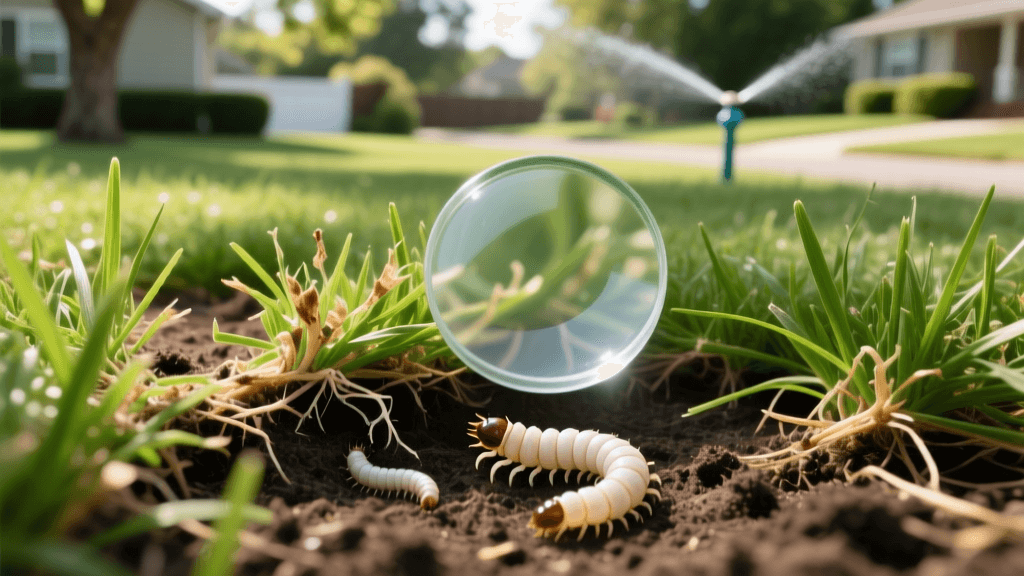
How to Identify and Treat White Grubs in Home Lawns
The Hidden Threat Beneath Your Turf
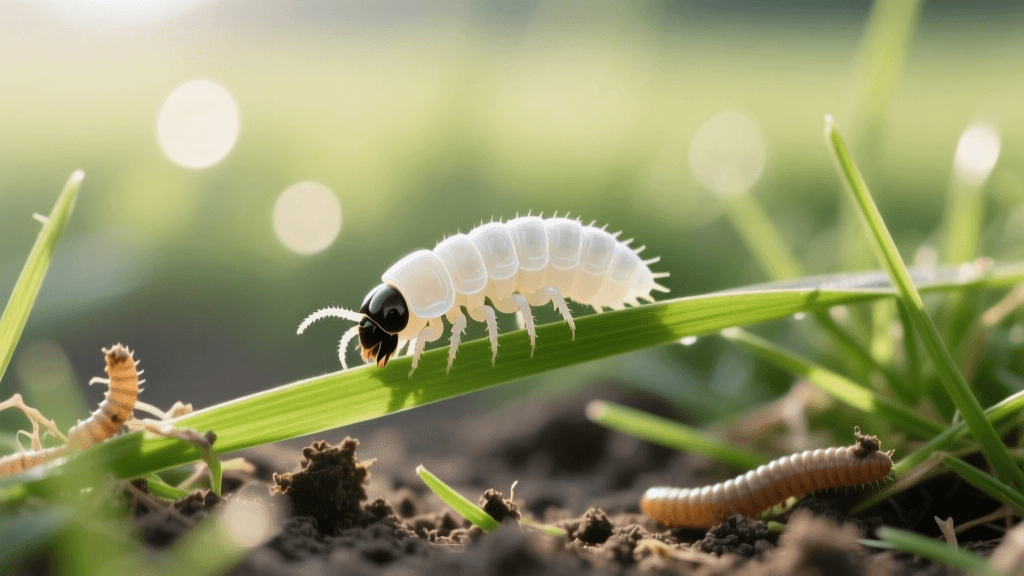
White grubs represent one of the most destructive below-ground pests that can infiltrate home lawns. These C-shaped, creamy-white larvae of various scarab beetles feed aggressively on the root systems of turfgrass, severing the plant's ability to absorb water and nutrients. Left untreated, a severe grub infestation can destroy an entire lawn in a matter of weeks. For homeowners and lawn care enthusiasts, understanding how to accurately diagnose a grub problem and implement targeted, science-backed solutions is critical for maintaining a lush, healthy landscape.
Understanding the Grub Life Cycle
Effective problem diagnosis requires a basic understanding of the pest's life cycle. Most common lawn grubs follow a one-year life cycle. Adult beetles emerge from the soil in early summer to mate and lay eggs in the turf. By late July and August, these eggs hatch into young grubs that immediately begin feeding on grassroots. As autumn approaches and soil temperatures drop, the grubs burrow deeper into the soil to overwinter. In the spring, they return to the surface to feed briefly before pupating and emerging as adult beetles, starting the cycle anew. The most severe damage typically occurs in late summer and early fall when the grubs are large and consuming the most root mass.
Diagnosing a Grub Infestation: Signs and Symptoms
Before reaching for a pesticide, you must confirm that grubs are the actual cause of your lawn's decline. Grub damage is frequently misdiagnosed as drought stress, fungal disease, or dog urine burn. Look for the following key indicators:
- Irregular Brown Patches: Turfgrass turns brown and dies in irregular, expanding patches, usually appearing in late summer or early fall.
- Spongy Turf: The grass feels spongy or loose underfoot because the root system has been severed.
- Animal Digging: Skunks, raccoons, armadillos, and birds like crows will tear up your lawn to feast on the protein-rich grubs beneath the surface.
- Lack of Drought Recovery: Unlike drought-stressed grass, which recovers quickly after a deep watering, grub-damaged turf remains brown and dead because it has no roots to absorb the moisture.
The Tug Test and Soil Sampling Method
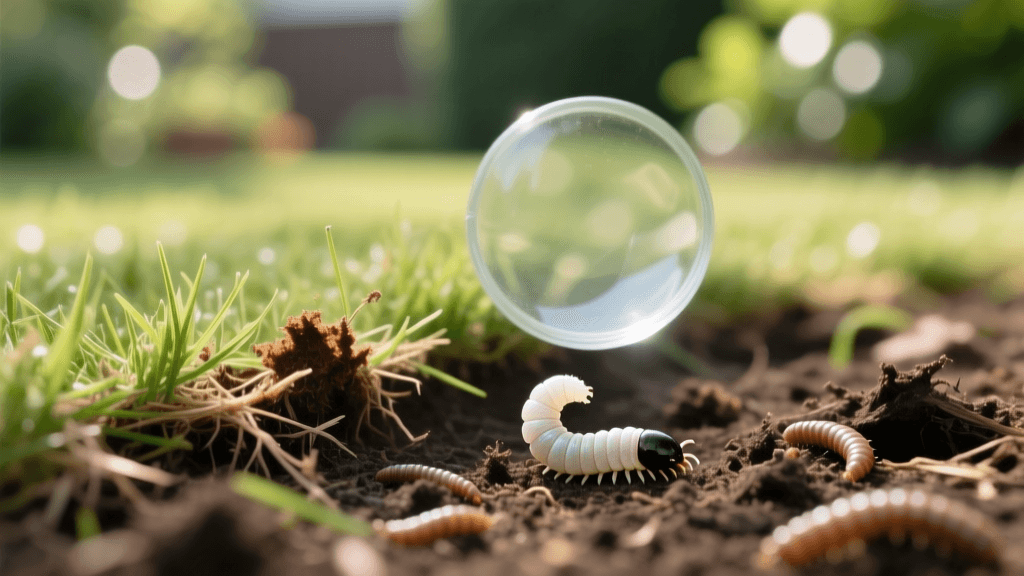
To definitively diagnose a grub problem, you must perform a physical soil inspection. The most reliable method is the 'Tug Test' combined with soil sampling. Walk to the edge of a brown patch where the dying grass meets the green grass. Grab a handful of turf and pull gently. If the grass rolls back like a loose carpet, grubs have likely eaten the roots.
For a precise population count, use a flat shovel to cut a one-foot by one-foot square of turf, about three inches deep, and peel it back. Count the number of C-shaped grubs in the soil and on the roots. According to turfgrass entomologists, the treatment threshold is generally five to ten grubs per square foot for healthy, cool-season lawns. If you find fewer than five, your lawn can likely outgrow the damage with proper fertilization and irrigation.
Identifying the Culprit: Common Grub Species
Not all grubs are created equal. Identifying the specific species can help you predict their behavior and peak damage seasons. Entomologists identify grub species by examining the 'raster pattern'—the arrangement of tiny bristles and hairs on the underside of the grub's abdomen, just above the anal slit. You will need a magnifying glass to see this clearly.
| Grub Species | Adult Beetle Appearance | Raster Pattern (Underside) | Peak Damage Season |
|---|---|---|---|
| Japanese Beetle | Metallic copper and green | V-shape bristles | Late Summer to Fall |
| Masked Chafer | Golden brown, smooth | Parallel rows of bristles | Late Summer to Fall |
| June Beetle (May/June) | Dark brown to black | Zipper-like medial line | Spring and Fall |
| Asiatic Garden Beetle | Cinnamon brown, velvety | Curved row of bristles | Late Summer to Fall |
Actionable Treatment Solutions
Once you have diagnosed and identified the infestation, it is time to select a treatment strategy. Solutions fall into three main categories: preventative chemicals, curative chemicals, and biological controls.
Preventative Chemical Controls
Preventative treatments are designed to kill young grubs as they hatch, preventing damage before it starts. These products do not kill mature, overwintered grubs in the spring.
- Active Ingredients: Chlorantraniliprole (e.g., Scotts GrubEx) or Imidacloprid (e.g., Bayer Advanced Season-Long Grub Control).
- Timing: Apply between mid-May and late June. Chlorantraniliprole requires a longer lead time and is best applied in April or early May.
- Cost: Approximately $25 to $40 per 5,000 square feet.
- Pros & Cons: Highly effective and safe for the environment when used correctly, but useless if applied after damage has already occurred in late summer.
Curative Chemical Controls
If you missed the preventative window and discover an active infestation in August or September, you need a fast-acting curative insecticide.
- Active Ingredients: Trichlorfon (e.g., Bayer Advanced 24 Hour Grub Killer Plus / Dylox) or Carbaryl.
- Timing: Apply immediately upon discovering high grub populations in late summer or early fall. These products degrade quickly in the soil and will not provide long-term control.
- Cost: Approximately $30 to $50 per 5,000 square feet.
- Pros & Cons: Kills large, active grubs within 24 to 48 hours. However, it is highly toxic to earthworms and aquatic life, requiring strict adherence to label instructions and buffer zones.
Organic and Biological Controls
For homeowners practicing Integrated Pest Management (IPM) or organic lawn care, biological controls offer a sustainable alternative to synthetic chemicals.
- Beneficial Nematodes: Microscopic worms, specifically the Heterorhabditis bacteriophora (Hb) species, actively seek out and infect grubs with lethal bacteria. Apply via hose-end sprayer when soil temperatures are consistently above 60°F and keep the soil moist for two weeks post-application. Cost is roughly $35 to $50 for 10 million nematodes (covers ~2,000 sq ft).
- Milky Spore Disease: A naturally occurring bacterium (Paenibacillus popilliae) that specifically targets Japanese Beetle grubs. It takes two to three years to establish in the soil but can provide control for up to a decade. Cost is about $40 per 4,000 square feet.
Step-by-Step Application Guide for Chemical Controls
To maximize the efficacy of your chosen grub control product, follow these precise application steps:
- Mow the Lawn: Mow your turf to a height of 2.5 to 3 inches and remove any heavy thatch buildup. Thicker thatch can intercept the pesticide and prevent it from reaching the soil.
- Apply the Product: Use a calibrated broadcast spreader for granular products, ensuring even coverage. Overlap your wheel tracks slightly to avoid missing strips where grubs can survive.
- Water Immediately: This is the most critical step. You must water the lawn with 0.5 to 1 inch of water immediately after application to wash the active ingredient off the grass blades and into the root zone where the grubs are feeding.
- Allow to Dry: Keep children and pets off the treated lawn until the grass is completely dry.
- Overseed and Fertilize: If your lawn suffered root loss, overseed the damaged areas in early fall and apply a starter fertilizer to encourage rapid turf recovery.
Expert Insights and Authoritative Citations
Integrated Pest Management relies on accurate data and regional timing. According to the Purdue University Extension Department of Entomology, the efficacy of preventative grub control is heavily dependent on proper irrigation. Dr. Doug Richmond, a turfgrass entomologist at Purdue, emphasizes that without adequate post-application watering, even the best chemical controls will fail to reach the target pests. Furthermore, the University of Kentucky College of Agriculture advises that spring treatments for grubs are generally a waste of resources, as the overwintered grubs are nearing the end of their life cycle and will soon pupate, causing minimal further damage to the turf.
By combining vigilant monitoring, accurate species identification, and precisely timed treatments, you can effectively eradicate white grubs and restore your lawn to its former glory. Always read and follow the manufacturer's label instructions, as the label is the law.