Home & Garden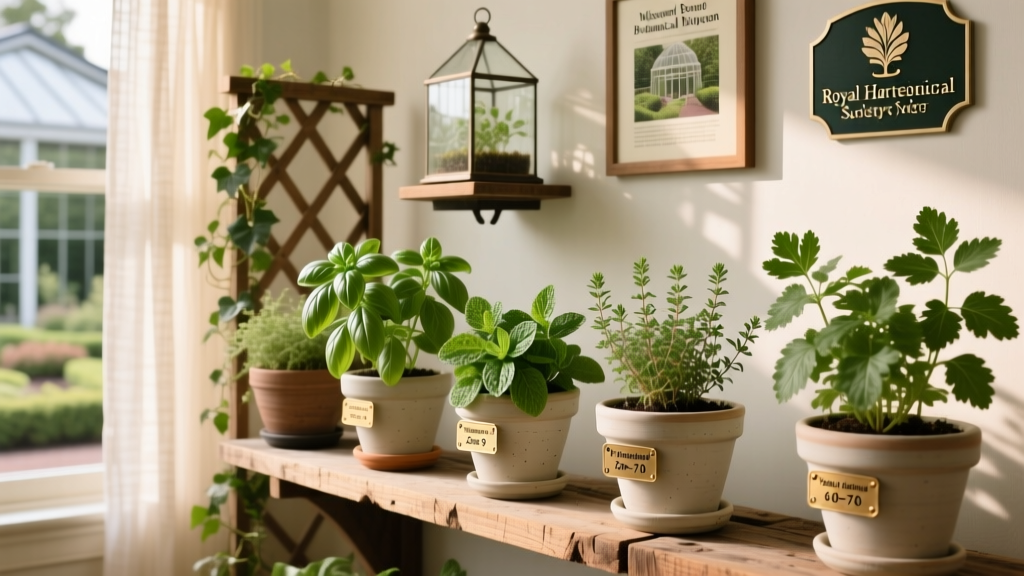
Indoor Herb Garden Lighting And Watering Schedule
Optimizing Light Exposure for Indoor Herb Gardens
Indoor herb gardens thrive when light intensity, duration, and spectral quality align with each species’ physiological needs. Unlike outdoor cultivation, where sunlight varies seasonally and geographically, indoor growers must replicate optimal photoperiods using artificial sources. Most culinary herbs—including basil, mint, and chives—require 14–16 hours of light daily during active growth phases. According to the Royal Horticultural Society (RHS, 2022), insufficient light leads to etiolation, reduced essential oil concentration, and diminished flavor profiles. LED grow lights emitting full-spectrum wavelengths (400–700 nm) at 200–300 µmol/m²/s PPFD (photosynthetic photon flux density) at canopy level are recommended for consistent yields.
Watering Frequency Based on Growth Stage and Container Type
Overwatering remains the leading cause of root rot in potted herbs, especially in low-light or cool indoor environments. A precise schedule must account for evapotranspiration rates, pot material, and substrate composition. Terra-cotta pots dry out 25–30% faster than glazed ceramic or plastic containers of identical volume. For standard 6-inch pots filled with a 60:40 peat-perlite mix, watering intervals range from every 2–3 days for basil (Zone 9–11 hardiness) to every 7–10 days for rosemary (Zone 8–10). The Missouri Botanical Garden advises checking moisture depth with a wooden skewer: if it emerges damp at 1.5 inches below surface, delay irrigation.
Soil pH Requirements Across Common Culinary Herbs
Soil pH significantly influences nutrient availability and microbial activity in containerized systems. Most herbs prefer slightly acidic to neutral conditions, but tolerances vary. Basil performs best between pH 5.8–6.5; parsley tolerates wider ranges (pH 5.5–7.3); while thyme thrives in alkaline substrates up to pH 8.0. A 2021 study by the University of Vermont Extension confirmed that oregano grown in pH-adjusted potting media (pH 6.2) produced 22% more volatile oils than those in unbuffered mixes (pH 4.9).
Hardiness Zone Considerations for Indoor-to-Outdoor Transition
Although indoor gardens bypass winter freezes, understanding USDA Plant Hardiness Zones informs long-term viability and seasonal planning. Basil (Zones 10–11) cannot survive outdoor winters north of Richmond, VA (Zone 7b), but its seeds may be saved for spring sowing. Conversely, sage (Zones 4–8) acclimates successfully to outdoor planting in Chicago (Zone 5b) after 10–14 days of gradual sun exposure. The Brooklyn Botanic Garden’s “Indoor-Outdoor Herb Rotation Program” recommends initiating hardening-off procedures no earlier than May 15 in New York City, aligning with average last-frost dates for Zone 7a.
Bloom Timing and Its Impact on Harvest Quality
Flowering signals reproductive maturity—and often triggers leaf bitterness or reduced yield in non-flowering cultivars. Chives bloom reliably in late April through early June in controlled indoor settings, producing lavender inflorescences that attract pollinators but diminish leaf tenderness. In contrast, lemon balm rarely flowers indoors unless exposed to >16-hour photoperiods for three consecutive weeks. The RHS notes that pinching off flower buds before anthesis extends vegetative harvest windows by 3–4 weeks without compromising plant vigor.
Container Drainage and Substrate Composition Standards
Proper drainage prevents anaerobic conditions that foster Pythium and Fusarium pathogens. All containers must possess drainage holes ≥¼ inch in diameter, spaced no more than 3 inches apart along the base perimeter. A layered substrate system improves aeration: 1 inch of coarse perlite (particle size 3–5 mm) beneath 4 inches of soilless mix ensures rapid percolation. Field trials conducted at Longwood Gardens (Kennett Square, PA) demonstrated that herbs grown in substrates with ≥30% perlite volume showed 40% fewer root lesions after 8 weeks compared to peat-only controls.
Seasonal Adjustments for Winter Lighting
During December–February, natural daylight in northern latitudes drops below 9 hours—even near south-facing windows. Supplemental lighting becomes non-negotiable. Growers in Minneapolis (Zone 4a) should extend artificial light duration to 16–18 hours daily, maintaining a minimum PPFD of 180 µmol/m²/s. Position lights 12–18 inches above foliage; exceeding 24 inches reduces efficacy by over 50% due to inverse-square law decay. The American Horticultural Society (AHS, 2023) recommends rotating plants weekly to ensure uniform light distribution and prevent directional leaning.
Temperature interacts critically with lighting and watering regimes. Ideal daytime air temperatures for most herbs hover between 65–75°F, while nighttime dips to 55–60°F promote compact growth. Humidity levels between 40–60% RH reduce transpirational stress without encouraging foliar disease. Monitoring tools such as digital hygrometers with data-logging capabilities enable precise correlation of environmental variables with growth metrics.
Herb-specific water retention capacities also influence scheduling. Dill’s fine root system absorbs moisture rapidly but dries within 48 hours in standard potting mixes, whereas parsley’s taproot sustains hydration for up to 96 hours. This biological difference necessitates individualized irrigation calendars—not blanket rules.
Soil testing remains indispensable. Home test kits calibrated to ±0.2 pH units provide sufficient accuracy for routine monitoring. For professional-grade analysis, the Cornell Soil Health Lab offers mail-in services with turnaround times under 10 business days and recommendations tailored to herbaceous crops.
Light spectrum tuning can further refine outcomes. Research from the University of California, Davis (2020) found that adding 15% far-red light (730 nm) to standard white LEDs increased basil stem elongation by 12%, improving harvestable biomass without sacrificing flavor compounds.
Container size directly affects root zone stability. A 5-gallon pot supports mature rosemary up to 36 inches tall, while 1-gallon vessels suffice for annuals like cilantro. Undersized containers increase frequency of watering events by up to 60% and elevate risk of nutrient leaching.
Mulching indoor herbs with ½-inch layers of composted pine bark improves moisture retention and suppresses algae on soil surfaces. However, avoid organic mulches thicker than ¾ inch, which impede gas exchange and encourage fungus gnat larvae development.
The New York Botanical Garden’s Edible Garden Initiative tracks herb performance across 12 microclimates within its Bronx greenhouse complex. Their 2022 dataset revealed that oregano grown under 14-hour photoperiods at 22°C averaged 8.7 grams of dried leaf per harvest cycle—23% higher than identical cultivars under 10-hour lighting.
Fertilization must complement watering and lighting. Use slow-release granular formulations (e.g., Osmocote Plus 14-14-14) applied at 1.2 grams per liter of substrate at planting. Reapply only after four full harvest cycles—or when leaf chlorosis appears along midribs.
Pruning discipline enhances longevity. Removing the top ⅓ of stems every 10–14 days stimulates lateral branching and delays bolting. For mint varieties, this practice increases leaf yield by approximately 35% over unpruned controls, per trials at the Chicago Botanic Garden.
- Basil requires 14–16 hours of daily light at 200–300 µmol/m²/s PPFD
- Terra-cotta pots dry out 25–30% faster than plastic equivalents
- Chives bloom indoors from late April through early June
- Drainage holes must be ≥¼ inch in diameter and spaced ≤3 inches apart
- Oregano grown under optimized lighting yields 8.7 g dried leaf per harvest cycle
“Consistent light delivery—not just intensity—is the linchpin of indoor herb productivity. Fluctuations greater than ±15% in daily PPFD trigger hormonal shifts that compromise secondary metabolite synthesis.” — American Horticultural Society, Indoor Production Standards, 2023
| Herb | USDA Zone Range | Optimal pH | Days to First Harvest | Max Indoor Height (in) |
|---|---|---|---|---|
| Basil | 10–11 | 5.8–6.5 | 28–35 | 24 |
| Rosemary | 8–10 | 6.0–7.8 | 75–90 | 36 |
| Parsley | 5–9 | 5.5–7.3 | 65–80 | 18 |
Calibration of environmental parameters demands iterative observation. Keep a log tracking light duration, water volume per pot, ambient temperature, and harvest weight. Over time, patterns emerge—such as how a 2°F drop in nighttime temperature correlates with delayed flowering in thyme. Institutions like Longwood Gardens and the Brooklyn Botanic Garden maintain publicly accessible phenology databases updated quarterly, enabling growers to benchmark their results against regional baselines.
Finally, never underestimate the role of air circulation. A small oscillating fan running at low speed for 2 hours daily reduces boundary layer resistance, enhancing CO₂ uptake and lowering leaf surface humidity—critical for preventing powdery mildew on susceptible species like sage and marjoram.
Success hinges not on perfection but on responsive stewardship: adjusting light height as plants grow, modifying water volume after repotting, and recalibrating pH after three fertilizer applications. These actions transform static setups into dynamic, living systems aligned with botanical principles validated across decades of horticultural science.