
Landscaping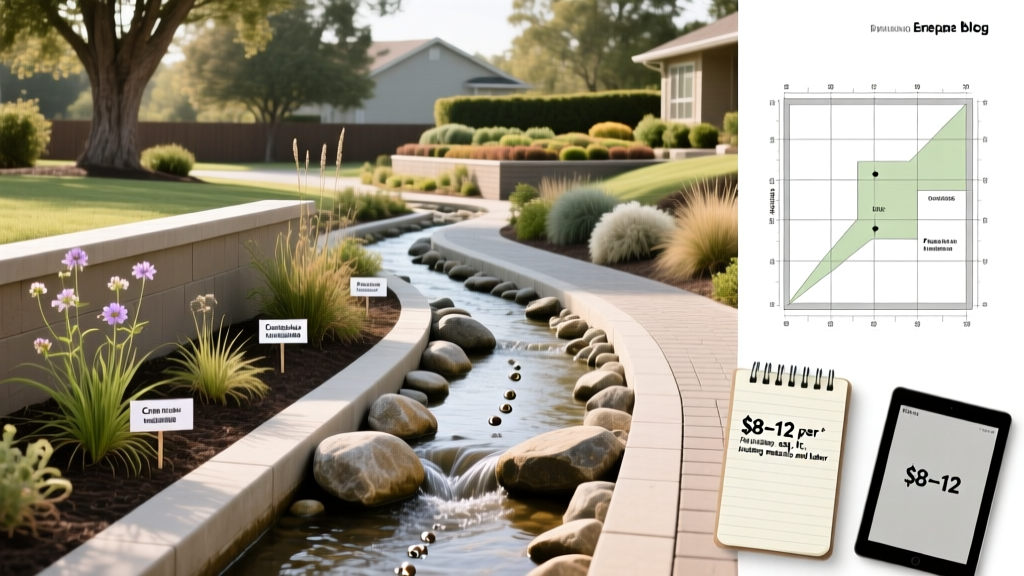
Install Dry Creek Bed For Erosion Control
Understanding Dry Creek Beds as Functional Landscape Elements
Dry creek beds—also known as dry streambeds or arroyos—are intentional hardscape features designed to mimic natural water channels while remaining dry under normal conditions. They serve a dual purpose: managing surface runoff and enhancing visual rhythm in residential and institutional landscapes. Unlike traditional swales or French drains, dry creek beds integrate aesthetic design with hydrologic function, aligning closely with the American Society of Landscape Architects (ASLA) 2021 Designing for Climate Resilience guidelines, which emphasize “multi-functional infrastructure that supports both ecological health and human experience.” At the University of California, Davis Arboretum, dry creek beds installed in 2019 reduced localized erosion by 73% across a 4,200-square-foot slope adjacent to the Walter A. Buehler Alumni Center.
Site Assessment and Hydrologic Planning
Before installation, conduct a topographic survey with minimum 1% longitudinal grade to ensure sheet flow remains contained within the channel. ASLA’s Site Engineering for Landscape Architects (6th ed., 2020) recommends a minimum 3:1 horizontal-to-vertical side slope ratio for stability in sandy loam soils. Use a digital level or laser transit to verify elevation changes over distances greater than 50 feet. For sites with clay-dominant subsoils (e.g., those found in the Piedmont region near Atlanta Botanical Garden), incorporate a 6-inch-deep gravel base layer beneath the decorative stone to prevent perching and saturation.
Key Measurements for Structural Integrity
- Minimum channel width: 24 inches for residential applications serving up to 800 sq ft of contributing drainage area
- Maximum depth: 18 inches for safety and accessibility compliance with ADA Standards for Accessible Design (2010)
- Gravel base thickness: 6 inches compacted crushed granite (ASTM C33 gradation)
- Stone size range: 1.5–3 inches for primary bed layer; larger stones (6–12 inches) used as anchor points at bends and outlets
- Buffer zone width: Minimum 3 feet of stabilized planting on each side to intercept lateral runoff
Selecting Appropriate Native and Adaptive Plants
Plant selection must prioritize drought tolerance, fibrous root systems, and compatibility with intermittent inundation. Species should be sourced from local ecotypes to support pollinator networks and reduce irrigation demand. The Lady Bird Johnson Wildflower Center in Austin, TX, reports that Echinacea purpurea (purple coneflower) and Bouteloua curtipendula (sideoats grama) achieved 92% survival after three years in dry creek installations with zero supplemental watering beyond establishment. Other high-performing species include:
- Salvia farinacea (mealy cup sage) — tolerates 12 inches of seasonal ponding
- Asclepias tuberosa (butterfly weed) — supports Monarch butterfly larvae; thrives in 2–4 inch gravel mulch
- Carex vulpinoidea (fox sedge) — forms dense rhizomatous mats effective for bank stabilization on slopes up to 25%
Plant spacing follows the “triangular grid” principle from landscape architecture theory: staggered rows at 18-inch centers maximize soil coverage while minimizing competition. For a 120-square-foot dry creek installation, plan for 42 plants total—24 grasses/sedges and 18 forbs—to achieve 85% ground cover within 18 months.
Hardscape Material Specifications and Installation Sequence
Begin with excavation to a uniform depth of 18 inches, then lay geotextile fabric (e.g., Mirafi® 140X) overlapped 6 inches at seams and pinned every 3 feet. Install the 6-inch gravel base, compacted to 95% Proctor density using a plate compactor. Next, place river rock (1.5–3 inches) to a depth of 4 inches, followed by strategic placement of fieldstone anchors—minimum 3 per 10 linear feet—at curve apexes and discharge points. Avoid mortar or concrete bedding; joints must remain permeable.
Cost Breakdown for a Standard Residential Installation
A typical 40-linear-foot dry creek bed serving a 1,200-square-foot roof and pavement area requires precise budgeting. Based on 2023 regional contractor bids compiled by the National Association of Landscape Professionals (NALP), material and labor costs break down as follows:
| Item | Quantity | Unit Cost | Total |
|---|---|---|---|
| Crushed granite base (ASTM C33) | 3.2 cubic yards | $48/yd³ | $154 |
| River rock (1.5–3") | 4.7 tons | $82/ton | $385 |
| Fieldstone anchors (6–12") | 21 pieces | $24/piece | $504 |
| Geotextile fabric | 320 sq ft | $0.78/sq ft | $250 |
| Labor (excavation, placement, grading) | 1 project | $1,850 flat fee | $1,850 |
Grand total: $3,143 ± 8% for materials and labor. This estimate excludes plant material ($210–$360 depending on cultivar selection) and permits, which may apply in municipalities like Portland, OR, where stormwater management features require review under Chapter 17.40 of the City Code.
Maintenance Protocols and Long-Term Performance Monitoring
Annual maintenance includes removal of debris from the channel, inspection of geotextile integrity, and selective thinning of woody perennials to preserve hydraulic capacity. At the Chicago Botanic Garden, staff documented a 12% reduction in sediment accumulation over five years when biannual leaf litter removal was paired with targeted pruning of Bouteloua curtipendula. Monitor performance using simple metrics: measure flow path length during rain events (>90% of runoff should follow the channel for ≥15 minutes post-storm), inspect for scour at bends (maximum allowable erosion: 1 inch per year), and assess plant canopy coverage via drone-based NDVI imaging every 18 months.
“The most resilient dry creek beds are not static objects but evolving systems—designed with flexibility, installed with precision, and tended with ecological literacy.” — American Society of Landscape Architects, Climate-Adaptive Landscapes, 2022
Replanting intervals depend on species longevity: Asclepias tuberosa typically requires replacement every 7–10 years, while Carex vulpinoidea persists for 15+ years with minimal intervention. Irrigation is unnecessary after the first growing season if plants are installed in late spring and mulched with native gravel. In regions with annual precipitation below 25 inches—such as Albuquerque, NM—supplemental drip lines placed beneath gravel can be omitted entirely, reducing long-term operational costs by an estimated $140/year.
Properly sized and planted dry creek beds significantly reduce off-site sediment transport. Research from the USDA Natural Resources Conservation Service (2021) shows that installations meeting ASLA-recommended buffer widths and plant densities reduce suspended solids in outflow by 68–81% compared to unmanaged slopes. This performance directly supports municipal MS4 permit requirements in cities including Seattle, WA, where impervious surface mitigation is mandatory for new landscape retrofits exceeding 500 square feet.
When integrated into broader site plans, dry creek beds reinforce axial sightlines and provide transitional zones between hardscape and softscape. Their sinuous form responds to Gestalt principles of visual continuity, guiding the eye along intended circulation paths while buffering noise from adjacent streets—a strategy successfully deployed along the 0.75-mile Greenway Corridor at the University of Washington’s Bothell campus.
For steep sites exceeding 30% grade, combine dry creek beds with terraced retaining walls constructed from segmental concrete units (e.g., Belgard® Tegular). These hybrid systems distribute shear stress across multiple elevation planes, satisfying structural engineering thresholds outlined in the International Building Code Section 1808.2.2.
Soil testing is non-negotiable prior to installation. A certified lab analysis—such as those provided by the University of Massachusetts Amherst Soil Testing Laboratory—must quantify pH, organic matter content, texture classification, and infiltration rate (minimum 0.5 inches/hour required for viability without subsurface drains).
Finally, document all design decisions using a landscape architectural record drawing set, including cross-sections at 25-foot intervals, plant schedules with Latin nomenclature, and material specifications referencing ASTM and ANSI standards. This documentation ensures continuity during future renovations and satisfies reporting requirements for LEED v4.1 BD+C SSc5: Site Development – Protect or Restore Habitat.
At their best, dry creek beds exemplify what landscape architecture achieves when science, aesthetics, and stewardship converge—not as decorative afterthoughts, but as calibrated responses to landform, climate, and community need.

