
Landscaping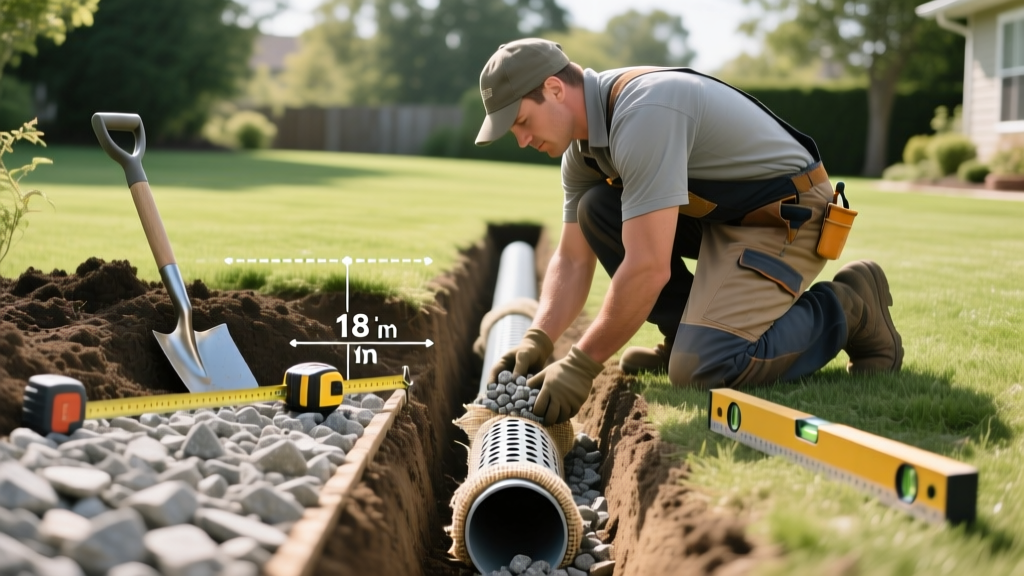
How to Install a French Drain to Fix Yard Drainage
Mike RodriguezPublished
Understanding the French Drain System
Water pooling in your yard after a heavy rainstorm is more than just a visual nuisance; it is a direct threat to your home’s foundation, your lawn’s root system, and your overall landscape design. When surface grading, soil amendment, and downspout extensions are not enough to manage hydrostatic pressure and excess runoff, installing a French drain is the most reliable, practical solution available to homeowners. A French drain is essentially a gravel-filled trench containing a perforated pipe that intercepts groundwater and surface water, redirecting it safely away from vulnerable areas of your property.
In this comprehensive how-to guide, we will walk you through the exact steps, precise measurements, and material choices required to build a professional-grade French drain system in your own yard. Whether you are dealing with a chronically soggy lawn, a flooded basement, or a washing-out garden bed, this practical guide will equip you with the knowledge to tackle the project confidently.
Tools and Equipment Required
Before breaking ground, you must gather the appropriate tools. Renting a mechanical trencher can save you hours of backbreaking labor if your drain line exceeds fifty feet in length. For shorter, more precise runs near garden beds or foundations, manual digging is often preferred to avoid damaging existing landscaping.
- Spade and trenching shovel (or a rented walk-behind trencher)
- Wheelbarrow for soil and gravel transport
- String line and line level (or a laser level for longer runs)
- Tape measure and marking paint
- Utility knife and heavy-duty scissors
- Staple gun with landscape fabric staples
- Work gloves, safety glasses, and steel-toe boots
Materials Checklist and Estimated Costs
Selecting the right materials is critical for the longevity of your drainage system. Cheap materials will clog, collapse, or degrade, leading to costly re-excavation. Budget approximately $20 to $35 per linear foot for a high-quality DIY French drain installation.
- Perforated Drainage Pipe: Choose rigid SDR 35 PVC pipe with pre-drilled holes over cheap corrugated black pipe. Rigid PVC resists crushing and prevents root intrusion.
- Washed Drainage Gravel: You need washed #57 stone (roughly 3/4-inch in diameter). Never use crushed limestone or pea gravel, as the stone dust and small particles will clog the pipe perforations over time.
- Landscape Fabric: Use a high-quality, woven, permeable geotextile fabric (minimum 3 ounces per square yard) to separate the soil from the gravel and prevent siltation.
- PVC Fittings and Primer/Cement: Couplings, end caps, and PVC cement for securing the pipe joints.
- Topsoil and Sod: For backfilling the top two inches and concealing the trench.
Step-by-Step Installation Guide
Step 1: Plan the Route and Check for Utilities
The most critical step occurs before you ever touch a shovel. You must determine the exact path for your drain. The trench should start at the lowest point of the water accumulation and route toward a safe discharge area, such as a municipal storm drain, a dry well, or a lower-elevation sloped area of your property. Always call 811 (the national call-before-you-dig hotline) at least a few days before your project begins. Utility companies will come out and mark underground gas, water, and electrical lines for free, preventing catastrophic and dangerous accidents.
Step 2: Dig the Trench with Proper Slope
A French drain relies entirely on gravity to move water. Therefore, the trench must have a consistent downward slope. The industry standard for drainage slope is a 1 percent grade, which equates to a 1-inch drop for every 8 feet of horizontal run. Use your string line and line level to establish this grade before you start digging. Dig the trench to be exactly 12 inches wide and 18 to 24 inches deep. Keep the sides of the trench as vertical as possible to prevent soil collapse, and pile the excavated dirt on one side only to make backfilling easier later.
Step 3: Line the Trench and Add Base Gravel
Once the trench is dug and the slope is verified, roll out your woven landscape fabric. Drape the fabric across the bottom and up the sides of the trench, leaving at least 6 to 8 inches of excess fabric hanging over the edges on both sides. This excess will be folded over the top of the gravel later to create a complete protective envelope. Secure the fabric to the soil walls using landscape staples. Next, shovel a 2-inch to 3-inch layer of your washed #57 gravel into the bottom of the trench to serve as a stable, permeable base for the pipe.
Step 4: Lay and Connect the Perforated Pipe
Place the rigid SDR 35 perforated PVC pipe on top of the base gravel layer. Ensure the perforations are facing downward. While this is a subject of debate among amateur landscapers, civil engineers and drainage experts agree that placing the holes down allows water to enter the pipe from the bottom of the gravel bed, minimizing the amount of sediment that washes directly into the pipe. Connect multiple sections of pipe using PVC couplings and cement, ensuring a watertight seal at the joints so that soil and roots cannot penetrate the seams. At the termination point, attach a solid end cap or route the pipe to a pop-up emitter.
Step 5: Backfill, Conceal, and Restore
With the pipe securely in place, begin shoveling the washed gravel over and around the pipe. Fill the trench with gravel until it is about 3 to 4 inches below the surface grade. Tap the sides of the trench lightly to help the gravel settle and eliminate large air pockets. Once the gravel bed is level, take the excess landscape fabric hanging over the edges and fold it tightly over the top of the gravel, overlapping the seams to create a sealed bundle. Finally, cover the wrapped gravel with 2 inches of native topsoil and lay fresh sod or sow grass seed to seamlessly blend the trench back into your existing lawn.
Pipe Comparison: Rigid PVC vs. Corrugated Plastic
Choosing the correct pipe is where many DIY landscaping projects fail. Below is a comparison chart to illustrate why rigid PVC is the superior choice for permanent yard drainage.
| Feature | Rigid SDR 35 PVC Pipe | Corrugated Black Plastic Pipe |
|---|---|---|
| Structural Integrity | High; withstands heavy soil loads and foot traffic without crushing. | Low; easily crushes under heavy soil compaction or vehicular weight. |
| Interior Surface | Smooth; allows water to flow rapidly and prevents debris buildup. | Ridged; catches sediment, leaves, and roots, leading to frequent clogs. |
| Root Intrusion | Low; tight, cemented joints prevent roots from entering the pipe. | High; loose snap-fit joints are easily penetrated by aggressive roots. |
| Lifespan | 50+ years when installed correctly with washed gravel. | 5 to 10 years before requiring replacement or aggressive flushing. |
| Cost per Foot | Higher upfront cost ($4.00 - $7.00 / ft). | Lower upfront cost ($1.50 - $3.00 / ft). |
Authoritative Guidelines on Yard Drainage
Proper water management is essential not just for your property, but for local watersheds. According to the University of Minnesota Extension, managing yard runoff through subsurface drainage systems like French drains helps prevent soil erosion, reduces the burden on municipal storm sewers, and protects home foundations from hydrostatic pressure. The Extension office emphasizes that French drains must always discharge into a designated, safe outlet rather than simply dumping water onto a neighboring property or back into the soil too close to the home's foundation. They also strongly advocate for the use of filter fabrics and washed stone to ensure the system remains functional for decades without requiring invasive maintenance.
Long-Term Maintenance Tips
While a properly installed French drain using rigid PVC and washed gravel is largely maintenance-free, a few proactive steps will ensure its longevity. Inspect the discharge outlet every spring and autumn to ensure that leaves, debris, or small animals have not blocked the exit point. If you use a pop-up emitter at the end of the line, remove the top and flush the system with a garden hose once a year to clear any minor silt accumulation. Avoid planting deep-rooted shrubs or trees directly over the trench line, as aggressive root systems can eventually seek out the moisture and compromise the pipe joints over time. By following these practical steps, your landscape will remain dry, healthy, and structurally sound for decades.

