
Landscaping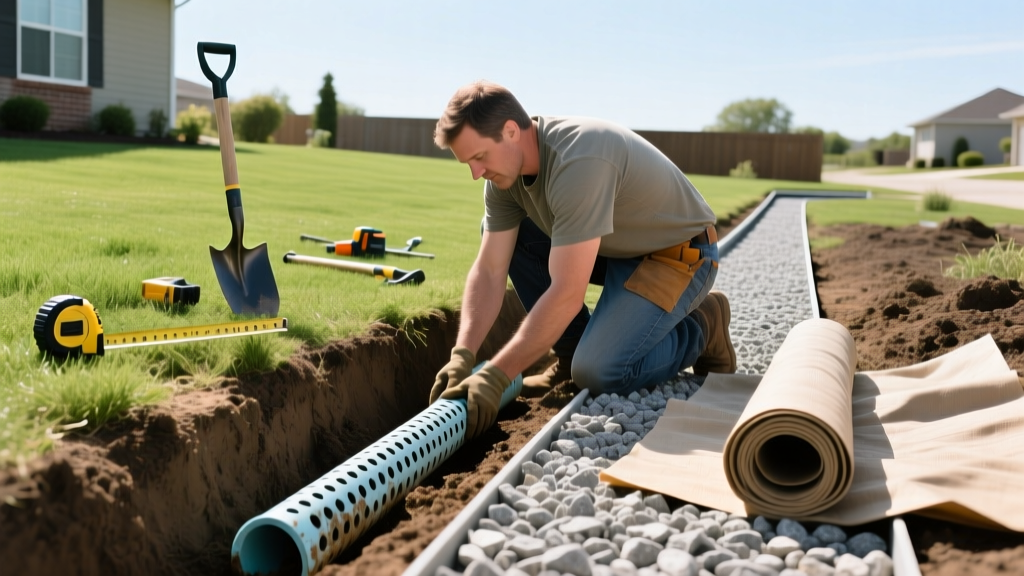
How to Install a French Drain to Fix Soggy Yard Drainage
Anna KowalskiPublished
Why Install a French Drain?
A persistently soggy yard is more than just a landscaping nuisance—it can weaken your home's foundation, drown your lawn's roots, and lower your property's value. When surface water pools or the water table rises too close to the surface, you need a reliable way to redirect that moisture. The French drain is a proven, widely used solution for residential drainage. Unlike a simple surface swale, a French drain is a subsurface trench filled with gravel and a perforated pipe that catches groundwater and surface runoff, moving it safely away from vulnerable areas.
If you're dealing with a flooded basement, a swampy back lawn, or runoff from a neighbor's elevated driveway, this guide walks you through the exact steps, measurements, and materials needed to install a French drain yourself.
Tools and Materials Required
Gather your tools and materials before you start digging. Using low-quality landscape fabric or the wrong kind of gravel is the main reason DIY French drains fail within a few years.
Tools You’ll Need
- Spade shovel and trenching shovel
- Mattock or pickaxe (for breaking up hard soil and roots)
- Wheelbarrow
- String line and line level
- Tape measure and carpenter's level
- Utility knife and heavy-duty staple gun
- Work gloves and safety glasses
Materials You’ll Need
- Perforated Drain Pipe: Use 4-inch corrugated flexible pipe (brands like NDS or ADS). Rigid PVC works only if you need sharp 90-degree turns under heavy driveways.
- Landscape Fabric: Heavy-duty, non-woven geotextile fabric (e.g., Mirafi 500X). Skip cheap woven weed barrier—it clogs easily and slows water flow.
- Drainage Gravel: 3/4-inch washed, angular crushed stone. The angular edges lock together to resist compaction, and the 'washed' part means no fine dust to clog your pipe. Don’t use round pea gravel.
- Topsoil and Sod: For backfilling and restoring the lawn surface.
Step-by-Step Installation Guide
Step 1: Planning and Routing the Drain
Water follows the path of least resistance. Your job is to intercept it and route it to a safe discharge point—like a municipal storm drain, a dry well, or a lower-elevation pop-up emitter. Before you dig, call 811 at least a few days in advance. It’s free, and they’ll mark underground gas, water, and electrical lines.
Next, figure out your slope. Gravity powers your French drain, so the trench must slope downward toward the discharge point. Use a string line and a line level to map the route. Aim for at least 1% slope—that’s a 1-inch drop for every 8 feet of trench length. If your yard is flat, you may need to dig deeper at the discharge end—or add a sump pump, which makes the job much more involved.
Step 2: Digging the Trench
Mark your route with landscaping spray paint. A standard residential French drain trench is usually 12 inches wide and 18 to 24 inches deep. How deep depends on where the water’s coming from: surface water issues need shallower trenches; deep foundation drainage needs deeper digging—often below the frost line or footing.
As you dig, check your slope often with your tape measure and line level. Pile the excavated soil on a tarp—it’ll make backfilling and cleanup easier later. If you hit heavy clay, a mattock helps break up the dense subsoil.
Step 3: Lining the Trench with Fabric
Once the trench is dug and sloped, line the whole thing with your non-woven geotextile fabric. It lets water through while keeping soil, silt, and roots out of the gravel and pipe. Leave 12 to 18 inches of extra fabric hanging over each side—you’ll fold it over the top later to fully wrap the gravel, sealing the system from soil.
Step 4: Adding Base Gravel and Laying the Pipe
Shovel 2 to 3 inches of your 3/4-inch washed angular gravel into the bottom of the fabric-lined trench. Rake it smooth and double-check the slope.
Lay the 4-inch perforated corrugated pipe on top of the gravel bed. Tip: Put the pipe with the holes facing down. It sounds backward, but water rises up through the gravel and enters the bottom of the pipe. If the holes face up, sediment and debris fall straight in and clog it fast.
Connect pipe sections with snap couplers. Wrap the pipe in a sock or bury it in gravel to keep roots out. If you’re connecting to a downspout, use a solid-to-perforated adapter at the highest point.
Step 5: Covering and Backfilling
Cover the pipe with more washed gravel until the layer sits about 3 to 5 inches below your lawn’s surface. Don’t fill the trench all the way with gravel unless you want a visible gravel path.
Now fold the excess landscape fabric over the top of the gravel, overlapping the seams. Staple it down securely. That full wrap is what keeps dirt out and helps the system last.
Finally, fill the remaining 3 to 5 inches with good topsoil, tamp it lightly, and lay fresh sod or sprinkle grass seed to match your lawn.
Cost Breakdown: DIY vs. Professional Installation
Knowing the costs helps you decide whether to do it yourself or hire someone. Below is a comparison for a standard 50-foot French drain.
| Expense Category | DIY Cost Estimate | Professional Cost Estimate |
|---|---|---|
| Materials (Pipe, Gravel, Fabric) | $350 - $550 | $350 - $550 |
| Equipment Rental (Mini-excavator) | $250 - $400 | Included in Labor |
| Labor (Trenching, Hauling, Sodding) | $0 (You do the work) | $1,200 - $2,500 |
| Permits / Utility Locates | $0 (811 is free) | $50 - $150 |
| Total Estimated Cost | $600 - $950 | $1,600 - $3,200 |
Note: Professional costs vary depending on where you live, soil type (rock vs. loam), and how tricky the discharge routing is.
What Experts Recommend
Good drainage isn’t just about moving water—it affects soil health and your home’s structure. Sticking to tried-and-true horticultural and engineering practices helps your system work as it should.
'A minimum slope of 1 percent is required for gravity-fed drainage systems to ensure adequate water velocity and prevent sediment accumulation inside the pipe. Enveloping the perforated pipe in washed gravel and geotextile fabric is especially important in fine-textured clay soils to keep the holes clear.'
— Clemson Cooperative Extension, Home & Garden Information Center (Drainage Guidelines)
Following Clemson’s advice on slope and fabric wrapping will help you avoid digging it all up again in three years.
Ongoing Maintenance Tips
A well-installed French drain doesn’t need much attention—but it’s not maintenance-free. A little care goes a long way:
- Annual Flushing: Once a year, preferably in early spring, insert a garden hose—or a pressure washer on low—into the exposed end of the pipe. Flush it to clear silt, biofilm, or fine sediment.
- Inspect the Discharge Point: Make sure the pop-up emitter or daylighted end isn’t blocked by leaves, debris, or rodent nests. A clogged exit means water backs up into the trench.
- Monitor Surface Grading: Soil settles over time. Check that the ground above the trench hasn’t sunk into a depression that pools water directly over the drain—especially during heavy rain.
Stick with these measurements, material choices, and basic upkeep, and your French drain should protect your lawn and home from water damage for many years.

