
Landscaping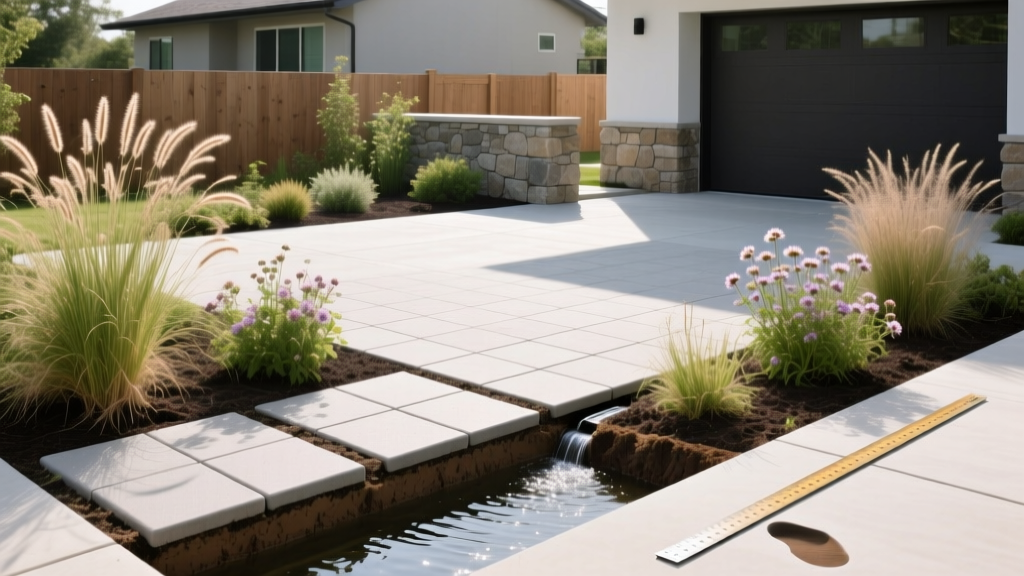
Install Permeable Pavers For Rainwater Management
Integrating Permeable Pavers into Sustainable Landscape Design
Permeable pavers represent a foundational shift in hardscaping philosophy—moving beyond aesthetics to embrace hydrologic function, soil health, and ecological integration. Unlike conventional impervious surfaces that contribute to stormwater runoff, erosion, and urban heat island effects, permeable systems allow rainwater to infiltrate directly into the underlying soil profile. This aligns with core principles of sustainable landscape architecture, particularly the American Society of Landscape Architects’ (ASLA) 2021 Designing for Climate Resilience framework, which emphasizes on-site water retention as a non-negotiable component of site planning in regions experiencing increased precipitation intensity.
In practice, permeable paver installations reduce peak runoff rates by up to 80% compared to asphalt or concrete when properly engineered (ASLA, 2021). They also support bioretention functions by filtering suspended solids, nutrients, and hydrocarbons through aggregate layers and adjacent vegetated zones. At the University of California, Davis, a campus-wide permeable paver retrofit across 42,000 sq. ft. of service courtyards reduced annual runoff volume by 67% and lowered downstream sediment loads by 92% over a five-year monitoring period.
Site Assessment and Hydrologic Sizing Requirements
Effective implementation begins with rigorous site evaluation—not just soil texture, but infiltration capacity, slope, and proximity to building foundations or utilities. The U.S. Environmental Protection Agency recommends minimum infiltration rates of 0.5 inches per hour for sandy loams and at least 0.1 inches per hour for silty clay loams to support viable permeable pavement systems (EPA, 2022). Soils below this threshold require underdrain augmentation or engineered soil mixes.
Minimum Depth Specifications
Structural integrity and filtration performance depend on layered construction. A standard section includes:
- 2.5–3.5 inch thick interlocking concrete pavers (e.g., Belgard Eco-Optima®)
- 1-inch washed stone bedding layer (ASTM C33 gradation)
- 12–24 inch base of open-graded crushed stone (typically ASTM No. 2 or No. 57)
- Optional 6–12 inch sub-base of engineered soil (sand:clay ratio ≥ 15:1 by weight)
- Geotextile separation fabric beneath base (AASHTO M288 Class II)
For residential driveways supporting occasional passenger vehicles, a total section depth of 24 inches is typical; commercial loading zones may require up to 36 inches.
Plant Integration and Bioretention Adjacencies
Permeable pavers achieve maximum ecological benefit when paired with purpose-selected native vegetation. Plantings along perimeter swales, overflow channels, or integrated planter cells stabilize soils, enhance evapotranspiration, and provide microbial rhizosphere activity that breaks down pollutants. Species must tolerate periodic saturation and fluctuating moisture levels while maintaining root structure in compacted substrates.
Recommended Native Species with Latin Nomenclature
The following species are documented for use in permeable paver edge treatments across USDA Hardiness Zones 5–8:
- Eutrochium fistulosum (Joe-Pye weed): Tolerates 48-hour inundation; mature height 4–7 ft; spacing 24–36 in
- Iris versicolor (Blue flag iris): Thrives in saturated clay-loam; blooms May–July; requires full sun to partial shade
- Chasmanthium latifolium (Northern sea oats): Forms dense fibrous roots; spreads via rhizomes; height 2–4 ft
- Lobelia siphilitica (Great blue lobelia): Supports pollinators; tolerates seasonal flooding; prefers moist, acidic soils (pH 5.5–6.5)
- Carex vulpinoidea (Fox sedge): Evergreen in mild winters; establishes rapidly in disturbed soils; used in bioswale linings at Chicago Botanic Garden
At the Brooklyn Bridge Park waterfront in New York City, over 18,000 sq. ft. of permeable paving integrates with Carex vulpinoidea and Iris versicolor plantings along tidal-influenced edges—reducing combined sewer overflows by an estimated 1.2 million gallons annually.
Cost Analysis and Budget Planning
Material and labor costs vary significantly based on regional availability, site access, and design complexity. As of Q2 2024, average installed costs for residential-scale projects range from $12–$22 per square foot, depending on subsurface conditions and edge detailing. Commercial applications with reinforced bases and underdrain systems typically cost $18–$34/sq. ft.
A 600 sq. ft. permeable patio in Portland, Oregon—including engineered base, pavers, geotextile, and native planting—averaged $14,700 ($24.50/sq. ft.) in 2023. By comparison, standard concrete for the same area averaged $8,400 ($14/sq. ft.), underscoring the premium for ecological performance. However, long-term savings accrue through avoided stormwater utility fees, reduced need for detention basins, and lower maintenance—permeable systems require only annual vacuuming and occasional joint re-sanding versus crack sealing and resurfacing every 7–10 years.
Performance Monitoring and Maintenance Protocols
Sustained functionality depends on proactive stewardship. Infiltration rates should be tested annually using a double-ring infiltrometer; decline exceeding 25% from initial commissioning values signals clogging requiring remediation. Vacuum sweeping with high-efficiency particulate air (HEPA)-filtered equipment removes fine sediments before they migrate into the base.
Key maintenance intervals include:
- Vacuum sweeping: twice yearly (spring and fall)
- Joint sand replenishment: every 2–3 years
- Base inspection via probe rod: every 5 years
- Underdrain flow testing: every 7 years
Failure to maintain infiltration capacity can reduce system effectiveness by 40–60% within five years—a finding corroborated by field studies at the North Carolina State University Stormwater Research Center (2020).
Regulatory Alignment and Professional Standards
Many municipalities now mandate or incentivize permeable paving through zoning codes and stormwater ordinances. Seattle’s Department of Construction and Inspections requires all new residential developments >5,000 sq. ft. to retain 100% of the first 1.25 inches of rainfall onsite—achievable only with integrated permeable systems and vegetated buffers. Similarly, the City of Austin’s Watershed Protection Department offers up to $5,000 in rebates for qualifying installations meeting Texas Commission on Environmental Quality (TCEQ) standards.
Designers must adhere to ASLA’s Green Infrastructure Guidelines (2022), which specify minimum contributing drainage areas (≤ 5:1 paved-to-vegetated ratio), maximum allowable slopes (5% for pedestrian-only, 2% for vehicular), and setback distances from building foundations (minimum 5 ft). These thresholds ensure both hydraulic efficiency and structural longevity.
“Permeable pavers are not merely a surface treatment—they are a living infrastructure node, linking hydrology, soil science, botany, and human use in one calibrated assembly.” — Landscape Architecture Foundation, Water Resilience Report, 2023
| Design Parameter | Residential Standard | Commercial Standard | Testing Method |
|---|---|---|---|
| Minimum Infiltration Rate | 0.5 in/hr | 0.75 in/hr | EPA SWMM Infiltration Module |
| Maximum Slope (Vehicular) | 2% | 1.5% | Survey-grade laser level |
| Base Stone Depth | 18 in | 24–36 in | Core sampling + sieve analysis |
When specifying permeable pavers, landscape architects prioritize materials certified to ASTM C1318 (interlocking concrete) or ASTM C1782 (segmental concrete). Product selection should also consider compressive strength (minimum 8,000 psi for driveways), freeze-thaw durability (ASTM C666 passing), and joint width consistency (±0.06 in tolerance). At the U.S. National Arboretum in Washington, D.C., a 12,000 sq. ft. permeable plaza installation uses pavers with 92% void space and a 100-year design life—demonstrating how technical rigor and ecological intentionality coexist in high-visibility public landscapes.
Success hinges on interdisciplinary coordination: soil scientists validate subsoil suitability, civil engineers model runoff volumes, botanists select appropriate taxa, and contractors follow strict sequencing protocols to prevent sediment contamination during installation. This integrated approach transforms hardscape from inert barrier to dynamic interface—where rain becomes resource, pavement becomes habitat, and landscape design fulfills its highest ethical mandate: regeneration.

