
Landscaping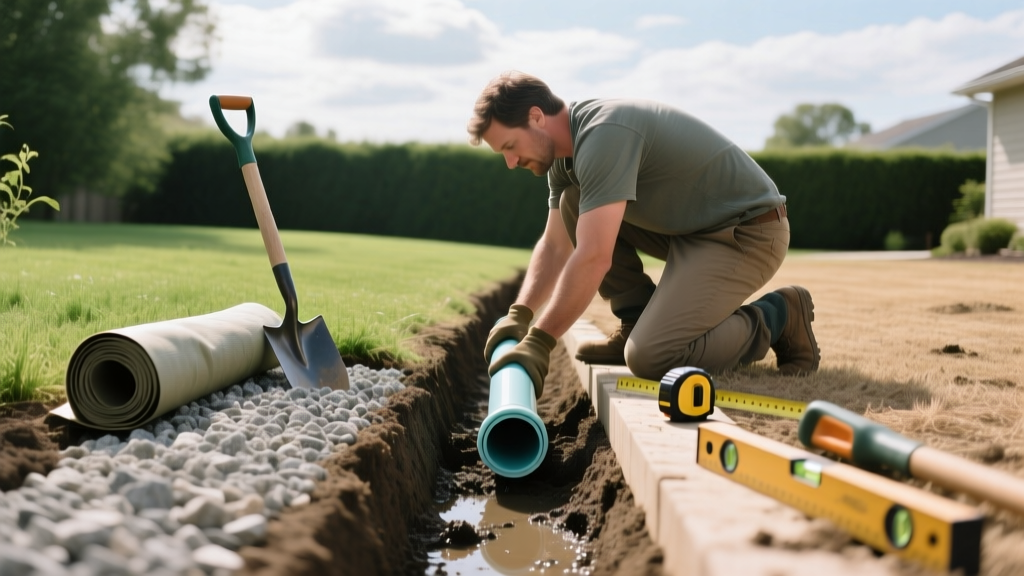
Step-by-Step Guide to Installing a Yard French Drain
Anna KowalskiPublished
Why Your Yard Needs a French Drain
Standing water in your yard is more than just a nuisance; it can kill your turfgrass, breed mosquitoes, and slowly compromise the structural integrity of your home's foundation. When surface grading fails to move water away from your property, a subsurface drainage solution is required. The most effective and time-tested method for intercepting and redirecting groundwater and surface runoff is the French drain.
A French drain is essentially a gravel-filled trench containing a perforated pipe that collects water and channels it to a safe discharge point. This practical how-to guide will walk you through the exact measurements, material selections, and installation steps required to build a durable French drain system on your property, saving you thousands of dollars in professional landscaping fees.
Tools and Materials Required
Before breaking ground, gather the necessary tools and materials. For a standard 50-foot DIY French drain, expect to spend between $250 and $400 on materials.
- Spade and Trenching Shovel: For digging a clean, flat-bottomed trench.
- String Line and Line Level: Essential for maintaining a consistent slope.
- Non-Woven Geotextile Fabric: Minimum 4 oz to 6 oz weight to prevent soil clogging.
- Washed Crushed Stone: 3/4-inch gravel (approx. 1.5 tons for a 50-foot trench).
- Perforated Drain Pipe: 50 feet of 4-inch SDR 35 PVC or corrugated pipe.
- Wheelbarrow and Rake: For moving gravel and backfilling soil.
- Utility Knife and Hacksaw: For cutting fabric and pipe.
Step 1: Plan the Route and Check for Utilities
Water always flows downhill, so your drain must start at the lowest, soggiest point of your yard and terminate at a suitable exit point. This exit could be a municipal storm drain, a dry well, or a lower-elevation street curb. Never route drainage water onto a neighbor's property, as this violates most local zoning laws.
Crucially, before you dig any trench deeper than 12 inches, you must call 811 (the national 'Call Before You Dig' hotline) to have local utility companies mark underground gas, water, and electrical lines. This free service prevents catastrophic accidents and costly repairs.
Step 2: Dig the Trench with the Proper Slope
The ideal French drain trench is 12 inches wide and 18 to 24 inches deep. However, the most critical factor in trenching is the slope. Without a positive slope, water will pool inside the pipe rather than flow out of it.
Calculating the 1 Percent Slope
To move water effectively, gravity is your best friend. A French drain requires a minimum slope of 1 percent, which translates to a 1-inch drop for every 8 feet of horizontal distance. To calculate this for your specific yard, measure the total length of your planned trench. For example, if your trench is 40 feet long, the exit point must be exactly 5 inches lower than the starting point. Use a string line tied to stakes at both ends, and place a line level on the string to verify this gradient before you start digging.
Step 3: Line the Trench and Add Base Gravel
Once the trench is dug, line the entire interior with your non-woven geotextile fabric. Leave at least 12 inches of excess fabric hanging over each side of the trench; you will use this to wrap the gravel later. The fabric acts as a filter, allowing water to pass through while blocking silt, clay, and roots from entering the gravel bed.
After laying the fabric, shovel in a 2-inch to 3-inch base layer of 3/4-inch washed crushed stone. It is vital that the gravel is 'washed.' Unwashed gravel contains fine stone dust and dirt that will wash into the pipe and create a concrete-like clog over time. Tamp the base gravel down to create a firm, level bed for the pipe.
Step 4: Install the Perforated Drain Pipe
Lay the perforated pipe directly on top of the gravel base. Ensure the pipe is continuous, using PVC couplings if you need to join multiple sections.
SDR 35 PVC vs. Corrugated Flexible Pipe
When you visit the hardware store, you will see two main types of perforated pipe. Black corrugated flexible pipe is cheaper and easier to bend, but its ribbed interior catches debris and slows water flow. For a permanent, low-maintenance landscape drainage solution, invest in 4-inch SDR 35 rigid PVC pipe. It features a smooth interior wall that allows water and debris to flush through easily. When using SDR 35, ensure the perforated holes are facing downward. This counterintuitive placement allows the rising water table to enter the pipe from the bottom, while the gravel above filters the water and prevents topsoil from washing directly into the holes.
Step 5: Backfill with Gravel and Fold the Fabric
With the pipe in place, cover it with another 4 to 5 inches of washed gravel. The gravel should sit slightly above the pipe to ensure it is completely encased. Next, take the excess landscape fabric hanging over the edges of the trench and fold it over the top of the gravel, creating a 'burrito' wrap. This overlapping fabric layer ensures that no dirt from the topsoil layer can migrate down into the drainage stone.
Finally, cover the wrapped gravel with 2 to 3 inches of native topsoil and lay sod or plant grass seed to match the surrounding lawn. The finished drain will be virtually invisible, leaving you with a pristine, dry landscape.
Comparing French Drains to Other Drainage Solutions
While a French drain is highly effective for subsurface water issues, it is not the only landscaping drainage solution. Use the comparison table below to determine if a French drain is the right choice for your specific yard problem compared to other common methods.
| Feature | French Drain | Dry Well | Surface Swale |
|---|---|---|---|
| Best Used For | Subsurface water & soggy lawns | Downspout runoff & localized pooling | Surface runoff & heavy rain sheets |
| Average DIY Cost | $10 - $25 per linear foot | $150 - $400 per unit | $5 - $15 per linear foot |
| DIY Difficulty | Moderate (Heavy digging) | Moderate (Deep hole required) | Easy (Shallow grading) |
| Lifespan | 20 to 30+ years | 15 to 20 years | 5 to 10 years (requires regrading) |
Maintenance and Expert Insights
A properly installed French drain requires minimal maintenance, but neglecting a few key principles during installation can lead to premature failure. According to the University of Minnesota Extension's guidelines on yard and landscape drainage, subsurface drainage systems must be wrapped in a geotextile fabric to prevent soil particles from migrating into the gravel and pipe, which is the leading cause of French drain failure. Furthermore, they emphasize that positive outlet flow is mandatory; a French drain cannot simply terminate in a low-lying, poorly draining clay pit, as the water will back up into the system.
To maintain your system, inspect the exposed exit point of the pipe every spring and fall. Clear away any leaves, mud, or animal nests that may block the outflow. If you notice the drain is slowing down, you can rent a sewer jetter with a specialized drain hose to flush out accumulated silt from the interior of the PVC pipe without digging up your lawn.
By following these precise measurements and material guidelines, you can permanently eliminate standing water, protect your home's foundation, and reclaim your yard for outdoor living and healthy turf growth.

