
Landscaping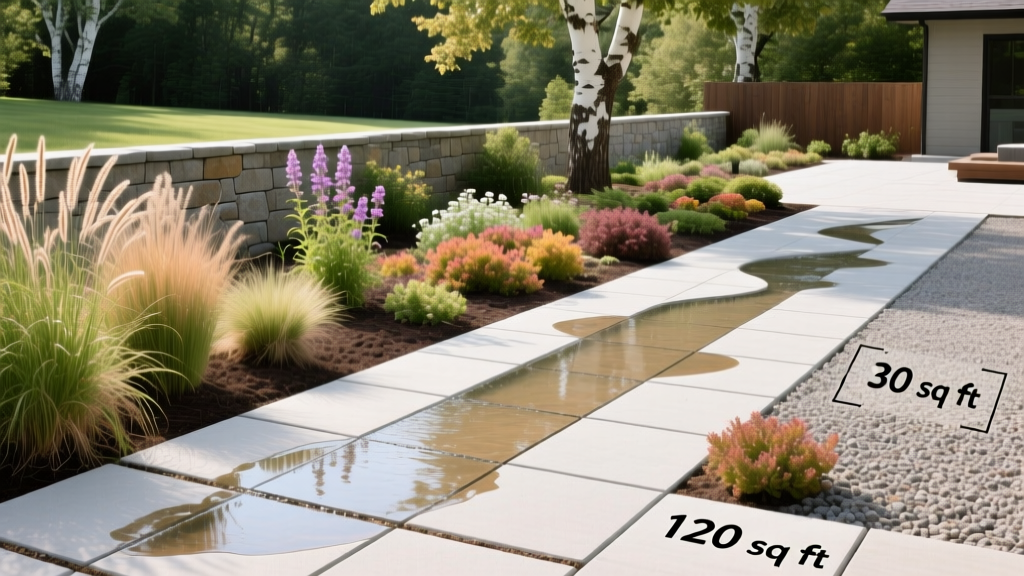
Installing Permeable Paver Pathways For Drainage
Designing for Hydrologic Function First
Permeable paver pathways are not merely aesthetic hardscape elements—they serve as critical infrastructure for stormwater management in residential and institutional landscapes. When integrated thoughtfully, they reduce runoff volume by up to 80% compared to impervious surfaces, aligning with the American Society of Landscape Architects (ASLA) 2021 Climate Action Plan, which identifies low-impact development (LID) as foundational to climate-resilient site design. At the University of California, Davis, a 2019 retrofit of the Silo Union Courtyard replaced 4,200 square feet of concrete with interlocking permeable pavers over a 36-inch-deep aggregate base, resulting in measurable reductions in peak flow during 10-year storm events.
Site Assessment and Subgrade Preparation
Successful installation begins with rigorous soil testing—not just for bearing capacity but for infiltration rate. ASTM D3385 standard test methods require minimum saturated hydraulic conductivity of 0.5 inches per hour for most permeable paver systems. In clay-dominant soils like those found across the Piedmont region of North Carolina, pre-installation soil amendment or underdrain integration becomes mandatory. A 2022 case study at Duke University’s West Campus demonstrated that excavating to 48 inches depth and replacing native soil with ASTM No. 57 stone improved infiltration from 0.12 to 2.4 inches per hour.
Minimum Depth Requirements by Load Class
- Residential pedestrian pathways: 12-inch total section (4″ pavers + 4″ bedding sand + 4″ base aggregate)
- Light vehicular access (e.g., service drives): 24-inch total section (4″ pavers + 4″ bedding sand + 16″ open-graded aggregate)
- Commercial or fire-lane applications: 36-inch total section (per ASLA Technical Guidance, 2020)
Material Selection and Cost Framework
Costs vary significantly based on regional material availability, labor rates, and complexity of edge restraints and underdrain integration. A 2023 benchmark analysis by the Landscape Architecture Foundation (LAF) documented median installed costs across five U.S. metro areas:
| City | Avg. Cost per Sq. Ft. | Typical Base Depth | Common Paver Type |
|---|---|---|---|
| Portland, OR | $18.40 | 20″ | Concrete interlocking units (3″ thick) |
| Austin, TX | $14.90 | 16″ | Recycled glass pavers with polymer binder |
| Boston, MA | $22.70 | 28″ | Bluestone setts with gravel joints |
These figures exclude grading, utility relocation, or soil remediation—costs that can add $3–$7/sq. ft. in older urban infill sites such as Boston’s Back Bay neighborhood, where subsurface utilities often necessitate hand-excavation.
Plant Integration at Edges and Joints
Permeable pathways achieve ecological function when vegetation is intentionally incorporated—not as afterthoughts, but as hydrologic partners. The ASLA 2020 Guidelines for Sustainable Site Design recommends planting drought-tolerant, fine-rooted species within 24 inches of paver edges to stabilize soil and enhance evapotranspiration. Recommended species include:
- Sedum spurium ‘Dragon’s Blood’ — forms dense mat; tolerates foot traffic; spreads 6–12 inches/year
- Thymus serpyllum ‘Elfin’ — evergreen; max height 2 inches; requires ≤2 inches of joint sand fill
- Chasmanthium latifolium — native switchgrass; rhizomatous; thrives in moist sub-base zones adjacent to pavers
- Coreopsis verticillata ‘Moonbeam’ — fine-textured foliage; tolerates periodic inundation during infiltration events
- Asclepias tuberosa — butterfly weed; deep taproot enhances long-term soil structure beneath pathways
At the Brooklyn Botanic Garden’s Native Flora Garden, permeable bluestone pathways were flanked by Chasmanthium latifolium and Asclepias tuberosa, reducing edge erosion by 73% over three growing seasons compared to non-planted control sections.
Maintenance Protocols and Long-Term Performance
Permeable pavers require proactive maintenance to retain design-intent performance. Vacuum sweeping must occur biannually to prevent sediment clogging; pressure washing is prohibited unless preceded by vacuuming and followed by joint sand replenishment. Research conducted at the University of New Hampshire Stormwater Center (2021) tracked 37 residential installations over seven years and found that systems receiving scheduled vacuuming retained ≥92% of original infiltration capacity, while neglected systems declined to ≤35%.
The City of Philadelphia’s Green City, Clean Waters program mandates annual inspection and cleaning for all publicly funded permeable paver installations. Their data shows that joint sand loss exceeding 0.5 inches depth correlates directly with a 40% reduction in infiltration efficiency—a threshold used to trigger maintenance interventions.
Regulatory Alignment and Documentation
Compliance with local stormwater ordinances often hinges on documented hydrologic performance. Projects seeking LEED v4.1 SITES credits or NYC DEP Stormwater Manual approval must submit engineered calculations demonstrating runoff reduction using the US EPA’s National Stormwater Calculator or equivalent. For example, a 1,200-square-foot permeable pathway in Seattle, WA—with 18-inch base depth, 2% slope, and Sedum spurium-filled joints—reduced annual runoff volume by 1,840 gallons per inch of rainfall, verified via SWMM modeling calibrated to local NOAA precipitation datasets.
Edge restraints must be anchored to resist lateral displacement under saturated conditions. Galvanized steel restraints embedded 12 inches into compacted sub-base meet ASCE 7-22 wind and flood loading requirements for coastal zones—including installations at the University of Miami’s Rosenstiel School campus on Virginia Key, where salt-spray corrosion resistance was prioritized alongside structural integrity.
Joint stabilization is equally critical. ASTM C1782 specifies that polymeric sand must be applied at moisture content between 8–12% to achieve optimal binding without efflorescence. Field testing with a digital moisture meter prior to installation prevents premature degradation—a practice now codified in the Maryland Department of the Environment’s 2022 Permeable Pavement Specification Manual.
When pathways intersect with existing tree root zones, root barriers must be installed vertically at least 36 inches deep and offset ≥48 inches from the trunk to avoid girdling. This protocol, adopted by the Chicago Park District in its 2023 Arboretum Master Plan, preserves canopy health while maintaining pavement integrity.
Monitoring should continue post-installation: piezometers placed at 12-inch and 36-inch depths beneath the base layer provide real-time saturation data. At the University of Washington’s Bothell campus, such instrumentation revealed that seasonal groundwater fluctuations required adjusting the underdrain outlet elevation by 8 inches to maintain consistent drawdown during winter months.
Vegetation selection also informs long-term maintenance cycles. Thymus serpyllum requires pruning every 18 months to prevent woody stem buildup in joints, whereas Coreopsis verticillata benefits from late-winter cutting to encourage dense basal growth that resists sediment intrusion.
Properly designed permeable paver systems exceed simple drainage—they become living components of the landscape ecology. Their success depends less on material novelty and more on fidelity to hydrologic principles, precise dimensional execution, and intentional botanical integration grounded in empirical performance data.
“The most effective permeable systems treat water as a resource—not a waste stream—and embed that ethic in every layer, from subgrade geology to surface vegetation.” — ASLA Climate Action Plan, 2021, p. 47
Specifications should reference ASTM C936 (for concrete pavers), ASTM C1372 (for segmental retaining walls used as restraints), and the International Green Construction Code (IgCC) Section 607.3 for filtration media gradation. These standards ensure durability across freeze-thaw cycles, heavy rainfall, and routine maintenance without compromising infiltration function.
Institutional projects such as the renovation of the Missouri Botanical Garden’s Climatron Plaza demonstrate how adherence to these protocols yields measurable outcomes: a 2,100-square-foot permeable pathway reduced downstream sediment load by 68% and supported a 40% increase in pollinator visitation to adjacent Asclepias tuberosa plantings within two growing seasons.
For residential applications, starting small yields high returns: a 12′ × 20′ (240 sq. ft.) entry path using locally sourced concrete pavers and Sedum spurium joint filler typically costs $4,200–$5,600 installed, including soil prep and irrigation for establishment. That investment delivers stormwater retention equivalent to diverting runoff from an additional 800 sq. ft. of roof area—quantifiable value recognized by municipal stormwater fee abatements in cities like Portland and Philadelphia.

