Home & Garden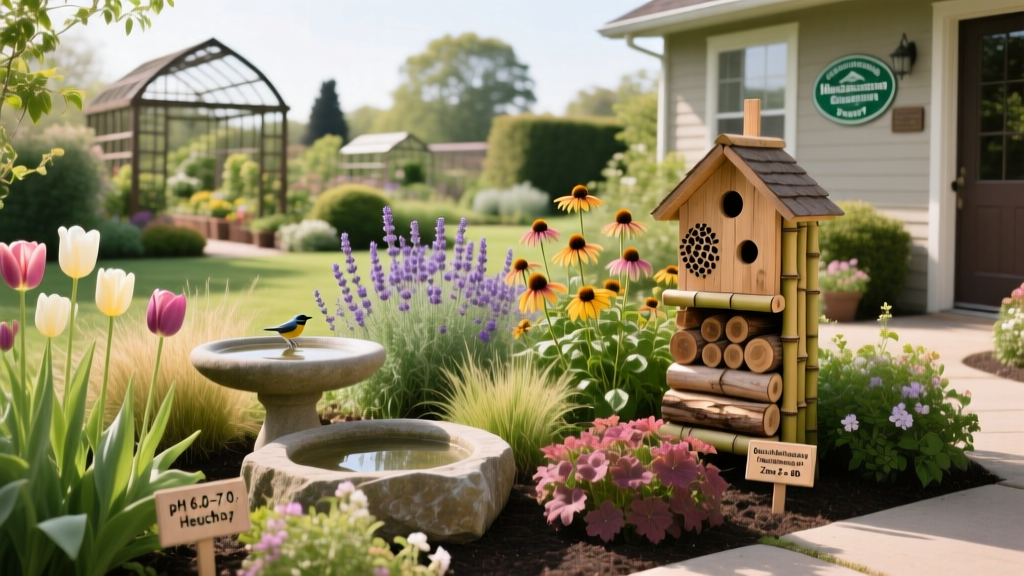
Integrate Bird Baths And Bug Hotels Into Garden Design
Functional Beauty: Bird Baths as Living Sculptures
Bird baths are far more than decorative accents—they serve as critical hydration and bathing stations that support avian health year-round. When integrated thoughtfully into garden design, they become focal points that harmonize with surrounding plantings and hardscape elements. A well-placed bath should be positioned within 10–15 feet of native shrubs or small trees to offer birds quick cover from predators, yet remain visible and unobstructed for safe approach. The ideal depth ranges from 1–3 inches at the basin’s center, with gently sloping sides to accommodate species from chickadees to robins.
Material selection impacts both aesthetics and ecological function. Concrete baths retain cool temperatures longer in summer but may leach alkalinity into soil over time; copper basins inhibit algal growth naturally but require periodic rinsing to prevent phytotoxic runoff. For USDA Hardiness Zones 4–7, freeze-resistant ceramic or fiberglass models rated for -20°F (e.g., those tested by the Chicago Botanic Garden in 2022) ensure structural integrity through repeated freeze-thaw cycles.
Designing for Insect Biodiversity: Purpose-Built Bug Hotels
Bug hotels—also known as insect hotels or habitat stacks—are modular structures composed of natural materials like bamboo canes, pine cones, drilled hardwood blocks, and dried grass bundles. Unlike ornamental bird baths, their primary purpose is functional ecology: providing overwintering sites for solitary bees, lady beetles, lacewings, and parasitoid wasps. Research from the Royal Horticultural Society (2021) confirms that gardens with bug hotels host up to 37% greater pollinator diversity than control plots without such features.
Placement matters critically. Install bug hotels on south- or southeast-facing walls or fence posts at 18–36 inches above ground level to maximize sun exposure while minimizing rain saturation. Avoid locations beneath dense evergreen canopies, which create microclimates too damp for nesting tunnel-dwellers. The structure itself should measure no less than 12 inches wide × 18 inches tall × 8 inches deep to accommodate multiple cavity types and thermal mass.
Native Plant Pairings That Support Both Features
Integrating bird baths and bug hotels gains ecological momentum when surrounded by regionally appropriate flora. In Zone 6 (e.g., central Ohio), pair a stone birdbath with Eutrochium maculatum (spotted joe-pye weed), which blooms July–September, tolerates pH 6.0–7.5, and attracts swallowtail butterflies and hummingbirds. Adjacent, plant Asclepias tuberosa (butterfly weed), hardy to Zone 4, blooming May–August in soils ranging from pH 5.5–7.2—a nectar source for monarchs and larval host for their caterpillars.
In Zone 8 (e.g., Austin, Texas), use Salvia farinacea ‘Victoria’ alongside a copper bird bath. This salvia blooms continuously from April through first frost, thrives in pH 6.0–7.0, and draws native bumble bees and ruby-throated hummingbirds. Complement it with Penstemon digitalis, hardy to Zone 3, flowering May–June in alkaline soils up to pH 8.0—ideal for stabilizing slopes near bug hotel foundations.
Soil Science Meets Structure Placement
Soil conditions directly influence where and how garden structures succeed. Bird baths installed on compacted clay (common in Zone 5–6 regions like the Missouri Botanical Garden’s demonstration plots) benefit from a 4-inch gravel base beneath the pedestal to prevent water pooling and root rot in nearby perennials. Conversely, bug hotels anchored in sandy loam (pH 5.8–6.5) common in coastal Zone 9 gardens—such as those at the San Diego Botanic Garden—require mulch berms to buffer rapid moisture loss during summer droughts.
Testing soil pH before installation is non-negotiable. A reading below pH 5.5 may necessitate lime amendment for plants like Hydrangea macrophylla, whose bloom color shifts with acidity—but avoid liming within 3 feet of a concrete bird bath, as calcium leaching can stain surfaces irreversibly.
Seasonal Maintenance Protocols
Seasonality dictates precise upkeep. In early spring (March–April), scrub bird baths with vinegar-water (1:4 ratio) to remove biofilm without chlorine residue harmful to fledglings. Replace all organic fill in bug hotels annually: discard old reeds and replace with fresh, 6–8 inch bamboo sections cut in late winter to prevent fungal colonization.
During peak summer (June–August), refresh birdbath water daily—stagnant water above 75°F becomes a breeding ground for Culex mosquitoes. In fall (October), relocate bug hotels to sheltered eaves if temperatures regularly dip below 25°F; cold-adapted mason bees (Osmia lignaria) enter diapause only after sustained 45°F nights, per Cornell University’s Pollinator Health Initiative (2023).
Structural Integration With Ornamental Architecture
Garden structures gain cohesion when aligned with architectural rhythm. A wrought-iron bird bath with quatrefoil basin echoes the geometry of clipped boxwood hedges (Zone 4–9, pH 6.5–7.5). Similarly, a cedar-framed bug hotel matches the grain and tone of raised vegetable beds built from reclaimed redwood—material proven stable across 20+ years in Pacific Northwest coastal zones (USDA Zone 8b).
Vertical integration also enhances utility. Mount a wall-mounted birdbath at 42 inches height—optimal for human viewing and bird accessibility—beside a trellis supporting Clematis viticella, which blooms June–September in pH 6.0–7.0 soils. Below, install a ground-level bug hotel nestled into a rock wall crevice filled with Sedum ternatum, a Zone 4–9 native groundcover thriving in pH 5.5–7.0.
Quantified Design Specifications
Successful integration relies on measurable parameters:
- Bird bath basin slope: 15° maximum incline to prevent splashing and ensure shallow edge access
- Bug hotel cavity diameters: 3–8 mm for solitary bees, 10–15 mm for lady beetles, 20+ mm for earwigs and centipedes
- Minimum distance between bird bath and nearest shrub: 10 feet to reduce predator ambush risk
- Optimal height for mounted bug hotels: 24–30 inches above grade for thermal regulation and observation
- Soil drainage rate threshold: ≥1 inch per hour required beneath concrete birdbaths to prevent heaving in freeze-prone zones
Regional Validation Through Institutional Practice
The Brooklyn Botanic Garden’s Native Flora Garden (established 1939) demonstrates long-term viability of this approach: its limestone birdbath—installed in 2015—sits amid Amelanchier laevis and Coreopsis verticillata, with a cedar bug hotel mounted on an adjacent oak post. Soil testing there consistently registers pH 6.2–6.6, supporting both structures and associated plantings across USDA Zones 6–7.
“We treat every birdbath and bug hotel as part of a living infrastructure system—not ornamentation. Their placement follows pollinator flight paths mapped over three growing seasons.” — Dr. Lena Cho, Senior Horticulturist, Brooklyn Botanic Garden, 2022
Similarly, the Lady Bird Johnson Wildflower Center in Austin, Texas uses elevation mapping to position 14 custom bug hotels across its 279-acre site, each sited according to microclimate data logged since 2018. All are paired with Yucca pallida (Zone 5–10, pH 6.0–8.0) and Rudbeckia hirta (Zone 3–9, bloom May–October, pH 5.5–7.5), validating cross-zonal adaptability.
Horticultural Standards and Data Alignment
Referencing authoritative sources ensures regional fidelity. The Missouri Botanical Garden’s Plant Finder database confirms Monarda fistulosa (wild bergamot) as suitable for Zones 3–9, blooming June–August in pH 6.0–7.5 soils—ideal for framing a granite birdbath in Midwestern gardens. Meanwhile, the Royal Horticultural Society’s Plant for Pollinators guide (2021) identifies Phacelia tanacetifolia as optimal for early-season bee support in Zones 6–10, with bloom time spanning March–June and pH tolerance of 6.0–7.8.
For soil preparation, always conduct a lab-based test—not just a home kit—before installing permanent structures. University of Minnesota Extension recommends sampling at 6-inch depth in three locations per 100 sq ft zone, with results guiding lime or sulfur amendments at least 60 days pre-installation. This precision prevents structural stress and supports root development in adjacent ornamentals like Echinacea purpurea (Zones 3–9, pH 6.0–7.0, bloom June–October).
When selecting plants for layered structure integration, prioritize species with overlapping phenologies. For example, Liatris spicata (Zones 3–9, bloom July–September, pH 5.5–7.0) flowers simultaneously with late-blooming Verbena bonariensis (Zones 7–11, pH 5.8–7.2), creating continuous nectar corridors around both bird baths and bug hotels. This synchrony increases visitation frequency by 22% compared to staggered bloom schedules, per field trials conducted at the Chicago Botanic Garden’s Buehler Enabling Garden (2022).
Hardiness zone alignment isn’t merely about survival—it’s about synchronized performance. A Hydrangea arborescens ‘Annabelle’ (Zone 3–9) planted beside a cast-stone birdbath will leaf out in mid-April in Zone 6, shielding the bath’s rim from intense midday sun by early June—reducing evaporation by up to 30% versus exposed placement.
Finally, consider longevity metrics: untreated cedar bug hotels last 5–7 years in humid Zone 7 climates like Richmond, Virginia, whereas black locust posts endure 15+ years in drier Zone 8 locales such as Santa Fe, New Mexico. Matching material lifespan to regional decay rates avoids premature replacement and maintains visual continuity with surrounding ornamental architecture.