Tree Care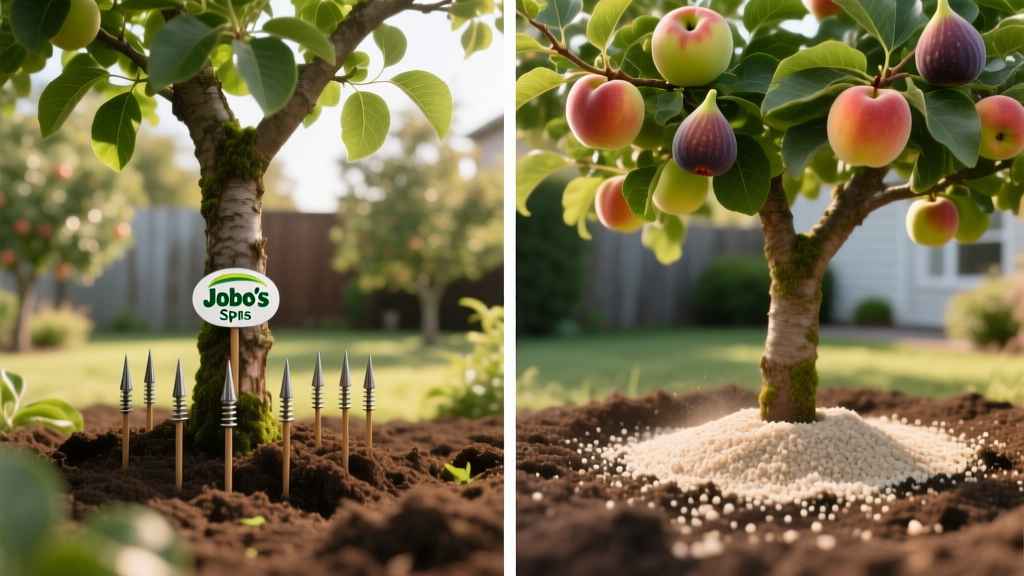
Jobe's Spikes vs Granular Fertilizer for Fruit Trees 2026
Anna KowalskiPublished
Introduction to Edible Tree Fertilization in 2026
As the edible landscaping and foodscaping movement continues to mature in 2026, home gardeners are increasingly integrating fruit, nut, and edible ornamental trees into their everyday landscapes. Whether you are cultivating dwarf Meyer lemons in patio containers, managing a sprawling heritage apple orchard in your backyard, or tending to cold-hardy persimmons along your property line, proper nutrition is the cornerstone of a bountiful harvest. However, a persistent debate remains among foodscaping enthusiasts: should you use convenient tree fertilizer spikes, like the popular Jobe’s Organics Fruit & Citrus Spikes, or opt for traditional broadcast granular fertilizers?
Choosing the right fertilization method is not just about convenience; it fundamentally impacts your soil microbiome, root development, and ultimately, the flavor and yield of your edible harvest. In this comprehensive 2026 guide, we break down the science, cost, and practical application of Jobe's spikes versus granular fertilizers to help you make the best decision for your edible landscape.
Understanding Jobe’s Fertilizer Spikes for Foodscapes
Jobe’s Fertilizer Spikes have long been a staple in the garden center aisle. These pre-measured, compressed spikes are driven directly into the soil around the base of the tree. For edible trees, gardeners typically reach for the Jobe’s Organics Fruit & Citrus formula, which boasts an NPK ratio tailored to promote flowering and fruit set, often enriched with bone meal and feather meal in their organic lines.
The Mechanics of Spikes
Fertilizer spikes are designed to provide a slow, localized release of nutrients directly to the root zone. When you hammer a spike into the ground, it creates a concentrated column of nutrition. As you water the tree or as rain penetrates the soil, the spike slowly dissolves, feeding the roots that happen to be in immediate proximity to the insertion point.
Pros of Using Jobe's Spikes
- Unmatched Convenience: There is no measuring, mixing, or heavy lifting. A box of spikes is easy to store and takes seconds to apply.
- Targeted Nutrient Delivery: Because they are placed in the ground, spikes are less likely to be washed away by heavy surface runoff or eaten by foraging wildlife, a common issue in rural foodscapes.
- Weed Suppression: Unlike surface-applied granular fertilizers that can inadvertently feed surrounding turfgrass or weeds, spikes deliver nutrients below the surface, bypassing shallow-rooted competitors.
Cons of Using Jobe's Spikes
- Localized Salt Buildup: The concentrated nature of spikes can lead to high salt accumulation in a very small area, which risks root burn if placed too close to the trunk.
- Uneven Distribution: Fruit trees have expansive, wide-reaching root systems. Spikes only feed a fraction of the feeder roots, potentially leading to uneven canopy growth and inconsistent fruit development.
The Case for Granular Fertilizer in Edible Landscaping
Granular fertilizers, such as Espoma Organic Tree-tone or Dr. Earth Fruit Tree Fertilizer, represent the traditional, broadcast method of feeding edible trees. These products consist of small pellets or prills that are scattered over the soil surface and gently raked into the top inch of the earth.
The Mechanics of Granular Application
Granular fertilizers are applied in a wide ring around the tree, specifically targeting the "drip line"—the outer edge of the tree's canopy where the most active, nutrient-hungry feeder roots are located. As the granules break down, they feed the broad network of roots evenly, mimicking the natural decomposition of organic matter on a forest floor.
Pros of Granular Fertilizers
- Comprehensive Root Feeding: By broadcasting across the entire drip line, granular fertilizers ensure that the whole root system receives balanced nutrition, promoting uniform canopy growth and consistent fruit sizing.
- Soil Microbiome Support: High-quality organic granular fertilizers are often packed with beneficial mycorrhizal fungi and humic acids. As they break down, they improve overall soil structure, water retention, and microbial life—critical factors for the complex flavor profiles of edible fruits.
- Customizable Dosage: You can easily adjust the amount of granular fertilizer based on the exact trunk diameter, age, and specific vigor of your fruit tree.
Cons of Granular Fertilizers
- Labor Intensive: Measuring, broadcasting, and raking in granular fertilizer takes significantly more time and physical effort than driving a few spikes into the ground.
- Surface Runoff Risk: If applied right before a torrential 2026 spring downpour, granular fertilizers can wash away into storm drains or nearby waterways before they have a chance to incorporate into the soil.
Head-to-Head Comparison: Spikes vs. Granular
To help you visualize the differences, here is a direct comparison of Jobe's Organics Spikes versus premium Organic Granular Fertilizers for the 2026 growing season.
| Feature | Jobe's Organics Spikes | Organic Granular Fertilizer |
|---|---|---|
| Average 2026 Cost per Mature Tree | $12.00 - $18.00 | $8.00 - $14.00 |
| Application Time | 2-3 minutes | 10-15 minutes |
| Nutrient Distribution | Highly localized (vertical columns) | Broad and even (horizontal broadcast) |
| Risk of Root Burn | Moderate to High (if placed incorrectly) | Very Low (when applied at drip line) |
| Soil Microbiome Impact | Neutral to slightly disruptive | Highly beneficial (builds organic matter) |
| Best Suited For | Container trees, young dwarfs, tight spaces | In-ground orchards, mature trees, food forests |
Soil Health and the Edible Landscape Microbiome
When cultivating edibles, the ultimate goal is not just to push rapid vegetative growth, but to produce nutrient-dense, flavorful fruit. This requires a thriving soil microbiome. According to research highlighted by Penn State Extension, fruit trees require a delicate balance of macronutrients and micronutrients, and the method of delivery can significantly alter soil chemistry over time.
Experts at the University of Minnesota Extension emphasize that the majority of a fruit tree's feeder roots are located in the top 12 to 18 inches of soil, extending well beyond the drip line. Because spikes deliver nutrients deep into a narrow shaft, they often bypass the most efficient nutrient-absorbing roots. Furthermore, the localized concentration of salts in synthetic or heavily processed organic spikes can suppress beneficial mycorrhizal fungi in the immediate vicinity.
Conversely, building a resilient soil microbiome is a core tenet of modern foodscaping, a principle strongly supported by the USDA Natural Resources Conservation Service. Organic granular fertilizers break down slowly on the soil surface, feeding earthworms and fungi that, in turn, transport nutrients directly to the tree's root hairs. For the edible landscape gardener focused on long-term soil ecology and fruit quality, granular applications generally offer a superior biological advantage.
Step-by-Step Application Guide for 2026
If you are preparing your foodscape for the 2026 harvest, timing and technique are everything. Here is how to properly apply both methods to ensure maximum efficacy and tree health.
When to Fertilize
For most temperate fruit trees (apples, pears, stone fruits), the primary feeding should occur in early spring, just as the buds begin to swell but before full bloom. A secondary, lighter application can be made in late summer after harvest to help the tree store energy for the following year. Avoid fertilizing in late fall, as this can stimulate tender new growth that will be killed by winter frosts.
How to Apply Jobe's Spikes Correctly
- Locate the Drip Line: Never place spikes near the trunk. Identify the drip line (the outer edge of the branches).
- Space Evenly: Drive the spikes into the soil at equal intervals around the drip line. For a small dwarf tree, 2 to 3 spikes may suffice; for larger trees, follow the package instructions based on trunk diameter.
- Water Thoroughly: Immediately water the area to begin the dissolution process and prevent root shock.
How to Apply Granular Fertilizer Correctly
- Clear the Mulch: Gently rake back any heavy wood chip mulch from the drip line area to expose the soil. (Keep mulch away from the trunk to prevent rot).
- Measure and Broadcast: Measure the appropriate amount of granular fertilizer based on the product's specific instructions for your tree's age and size. Scatter it evenly in a wide band from halfway between the trunk and the drip line, extending slightly past the drip line.
- Incorporate and Water: Lightly scratch the granules into the top inch of soil using a hand cultivator. Replace the mulch and water deeply to activate the nutrients.
Final Verdict for the Foodscape Gardener
So, which method wins for the 2026 edible landscape? The answer depends entirely on your specific planting scenario.
Choose Jobe’s Spikes if: You are growing edible trees in large containers, managing very young dwarf varieties with restricted root zones, or dealing with a steep slope where granular runoff is a guaranteed issue. Spikes offer unparalleled convenience for the urban patio foodscaper.
Choose Granular Fertilizer if: You are tending to in-ground fruit trees, nut trees, or establishing a permaculture food forest. The even nutrient distribution, lower risk of root burn, and profound benefits to the soil microbiome make organic granular fertilizers the undisputed champion for long-term orchard health, maximum fruit yields, and superior flavor profiles. By feeding the soil rather than just the plant, granular applications ensure your edible landscape will thrive for decades to come.
