Tree Care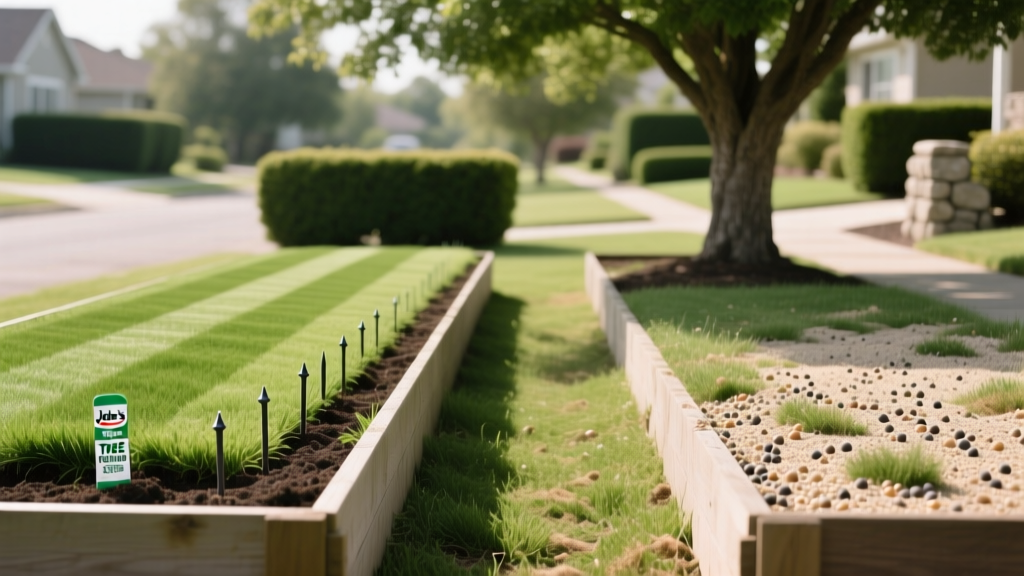
Jobe's Spikes vs Granular Tree Fertilizer 2026: Lawn Aesthetics
David ParkPublished
The Intersection of Tree Nutrition and Lawn Striping
For dedicated lawn care enthusiasts in 2026, achieving the perfect lawn striping pattern is a point of immense pride. Whether you are mowing a classic checkerboard, a diamond lattice, or sweeping parallel lines that mimic a professional baseball outfield, the visual impact of a striped lawn relies entirely on uniformity. However, landscape trees planted within or adjacent to these manicured turf areas present a unique challenge. Trees require deep, consistent nutrition to maintain vibrant canopies and robust root systems, but the methods used to deliver this nutrition can severely disrupt your lawn's aesthetic patterns.
The debate between using Jobe's tree fertilizer spikes and traditional granular tree fertilizers is no longer just about plant health; it is fundamentally about landscape aesthetics. When you spend hours attaching a heavy roller or striping kit to your zero-turn mower to bend grass blades for optimal light reflection, the last thing you want is a localized fertilizer burn or surface residue that breaks the visual continuity of your stripes. In this comprehensive 2026 guide, we will explore how subsurface spikes compare to granular applications, specifically through the lens of preserving pristine lawn striping patterns and overall landscape symmetry.
The Science of Lawn Stripes and Surface Interference
To understand why fertilizer choice matters, we must first understand the optical illusion of lawn striping. Stripes are created by bending turfgrass blades in opposite directions. The grass bent away from you reflects light, appearing as a light stripe, while the grass bent toward you absorbs light and casts shadows, appearing as a dark stripe. This effect requires a uniform, healthy, and unobstructed canopy of grass.
When granular tree fertilizers are applied carelessly, they introduce two major aesthetic threats. First, tree-specific granular fertilizers often possess a high nitrogen concentration and a high salt index. If these prills land on the turfgrass and are not immediately watered in, they draw moisture out of the grass blades, causing localized chemical burns. A single brown, dead patch in the center of a pristine diamond pattern instantly ruins the optical illusion. Second, the physical presence of large, un-dissolved granular prills on the soil surface can interfere with the mower's striping roller. Instead of bending the grass smoothly, the roller crushes the grass against the hard fertilizer pellets, causing uneven matting and physical damage to the turf canopy.
Jobe's Tree Fertilizer Spikes: The Subsurface Aesthetic Advantage
Jobe's tree fertilizer spikes have long been a staple in the arboriculture and landscaping industries, and their 2026 formulations continue to prioritize slow-release, subsurface nutrient delivery. For the lawn striping purist, spikes offer an unparalleled aesthetic advantage: they completely eliminate surface interference.
By hammering the spikes directly into the soil at the tree's drip line (the outer edge of the canopy where the most active feeder roots reside), you bypass the turfgrass root zone and the soil surface entirely. According to The Morton Arboretum, the majority of a tree's absorbing roots are located in the top 12 to 18 inches of soil, extending well beyond the trunk. Jobe's spikes are driven deep into this zone, ensuring that the die. There are no surface prills to melt and burn the grass, no chemical residue to alter the soil pH of the surrounding turf, and no physical obstructions to interfere with your mower's striping kit.
9-3-3Furthermore, Jobe's spikes utilize a bio-degradable matrix that breaks down slowly over the course of the season. This means you apply them once in the early spring or late fall, and you never have to worry about surface runoff washing concentrated tree nutrients into your carefully striped lawn beds. The result) a significant advantage for those who maintain formal.
Granular Tree Fertilizer: Precision Application for Striped Lawns
Despite the aesthetic benefits of spikes, many landscaping professionals and homeowners still prefer granular tree fertilizers in 2026 due to their cost-effectiveness and customizable NPK (Nitrogen-Phosphorus-Potassium) ratios. Products like Espoma Tree-tone or generic 10-10-10 granular blends allow for precise nutrient tailoring based on recent soil tests. However, applying granular fertilizer without ruining your lawn stripes requires meticulous technique.
University of Minnesota Extension, surface applications of granular fertilizers can be subject to volatilization and runoff if not properly incorporated into the soil or watered in immediately.
For lawn striping enthusiasts, immediate and deep watering is non-negotiable after a granular application. You must waterrill the granules into the soil to prevent them from sitting on the surface where they can burn the grass or obstruct the striping roller. If you are maintaining a highly visible front lawn with complex striping patterns, the extra labor required to hand-apply and deeply water granular fertilizer may outweigh the initial cost savings compared to using subsurface spikes.
2026 Comparison Table: Spikes vs. Granular for Aesthetic Lawns
| Feature | Jobe's Tree Fertilizer Spikes | Granular Tree Fertilizer |
|---|---|---|
| Surface Residue | None (Subsurface application) | High (Prills sit on soil surface) |
| Risk of Turf Burn | Extremely Low | Moderate to High (if overlapped) |
| Interference with Striping Roller | None | High (Hard prills dent grass) |
| Application Time per Tree | 3-5 minutes (Hammering) | 10-15 minutes (Spreading & Watering) |
| Cost per Tree (2026 Avg) | $4.50 - $6.00 | $1.50 - $2.50 |
| Nutrient Distribution | Localized around spike | Broad and even across root zone |
Step-by-Step Guide: Fertilizing Trees Without Ruining Lawn Stripes
If you are committed to maintaining both the health of your landscape trees and the crisp, geometric perfection of your striped lawn, follow this specialized application protocol for the 2026 growing season:
- Map the Drip Line: Identify the outermost edge of your tree's canopy. This is the drip line. As noted by Penn State Extension, this is where the tree's feeder roots are most concentrated and where fertilizer should be applied.
- Choose Your Method Based on Turf Proximity: If the tree's drip line extends directly over your primary striped lawn area, use Jobe's spikes to eliminate any risk of surface burn. If the tree is in a dedicated mulch bed that borders the lawn, granular application is safe provided you use a drop spreader with a deflector shield facing the turf.
- Execute Subsurface Spiking: For Jobe's spikes, use a mallet and the provided plastic cap to drive the spikes into the ground at the drip line. Space them evenly in a circle. Ensure the top of the spike is completely flush with or slightly below the soil surface so it is invisible and poses no hazard to mower blades or striping kits.
- Watering Protocol for Granular: If you must use granular fertilizer near the lawn, apply it by hand to avoid stray prills. Immediately follow up with a targeted, deep watering using a hose-end sprayer or a targeted sprinkler. Do not rely on the lawn's standard irrigation cycle, as it may not provide enough volume to wash the tree fertilizer off the grass blades and into the soil.
- Mowing and Striping Timing: Wait at least 48 hours after any granular application before running your heavy striping roller over the area. This allows the soil to absorb the moisture and the granules to begin breaking down, preventing the roller from grinding the fertilizer into the turf canopy.
Seasonal Timing and Root Zone Science
Timing your tree fertilization correctly is just as important as the method you choose, especially when balancing turfgrass health. In 2026, arborists continue to recommend late fall (after the tree has gone dormant but before the ground freezes) or early spring (just before bud break) as the optimal windows for tree fertilization.
Fertilizing in late fall is particularly advantageous for lawn striping enthusiasts. During this period, the turfgrass is also entering its own dormancy phase or slowing its top, meaning the risk of erratic, uneven growth surges that could ruin your striping patterns is minimized. Furthermore, late fall applications allow the tree's root system to absorb and store the nutrients over the winter, fueling a vibrant spring canopy without the need for disruptive surface applications during the peak spring mowing and striping season.
Ultimately, the choice between Jobe's spikes and granular fertilizer comes down to your tolerance for risk and your dedication to lawn aesthetics. While granular fertilizers offer a more economical and broad-spectrum approach to tree nutrition, they demand a level of precision and post-application labor that many lawn artists find cumbersome. Jobe's spikes, by contrast, offer a 'set it and forget it' subsurface solution that guarantees your landscape trees receive the deep nutrition they need, while leaving the soil surface perfectly clear for your mower's striping roller to carve flawless, uninterrupted patterns across your lawn.
