Tree Care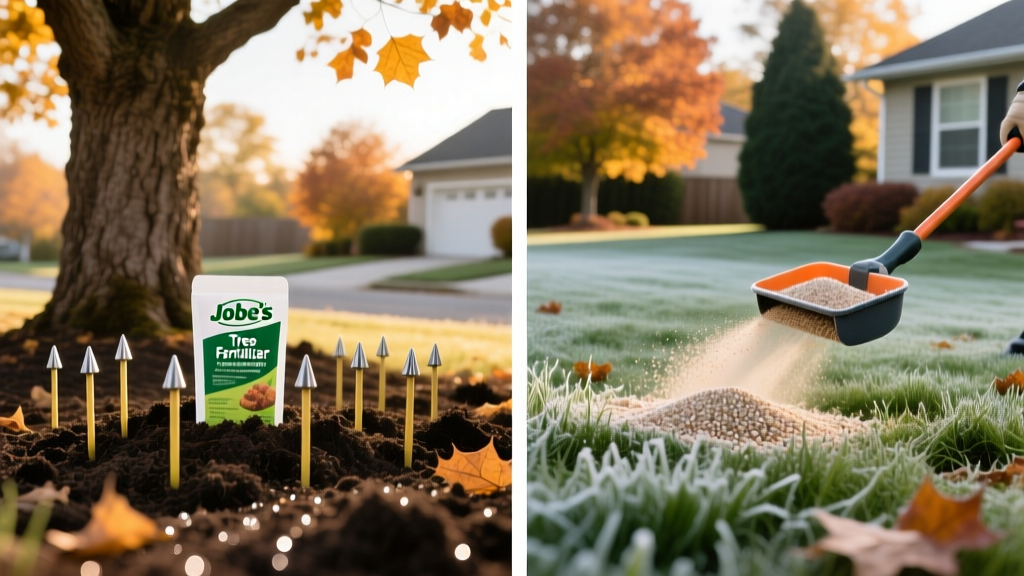
Jobe's Spikes vs Granular Tree Fertilizer: Fall 2026 Guide
Mike RodriguezPublished
The Intersection of Fall Lawn Care and Tree Nutrition in 2026
As homeowners across the country finalize their autumn landscaping checklists, the focus often narrows to turfgrass: core aeration, overseeding, and leaf management. However, a truly comprehensive fall lawn care routine must extend upward to the canopy and downward to the deep root zones of your landscape trees. As we navigate the unique weather patterns of autumn 2026, characterized in many regions by late-summer drought stress followed by erratic fall rainfall, preparing your trees for winter dormancy is more critical than ever.
During the fall, the above-ground growth of deciduous trees slows dramatically, but beneath the soil, root systems are actively expanding and storing carbohydrates and essential nutrients for the following spring. According to the University of Minnesota Extension, late autumn is one of the most effective times to fertilize trees because the nutrients are directed entirely toward root development and winter storage rather than vulnerable late-season leafy growth.
When it comes to delivering these vital nutrients, homeowners generally face a choice between two popular methods: Jobe's tree fertilizer spikes and traditional granular applications. Both have distinct advantages, but they interact very differently with your surrounding lawn and soil ecology. In this guide, we will break down the science, cost, and practical application of Jobe's spikes versus granular tree fertilizers to help you make the best decision for your 2026 fall landscape.
Deep Dive: Jobe's Tree Fertilizer Spikes
Jobe's tree fertilizer spikes are concentrated, solid cylinders of fertilizer designed to be driven directly into the soil around the base of a tree. In 2026, Jobe's continues to dominate the spike market with both synthetic and organic (Jobe's Organics) formulations, typically featuring an NPK ratio tailored for woody plants, such as 15-5-10 or 13-3-4.
How They Work
The spikes are placed in a ring around the tree's drip line—the imaginary circle on the ground that corresponds to the outermost edge of the tree's canopy. By hammering the spikes into the earth, you bypass the turfgrass root zone and thatch layer, delivering nutrients closer to the deeper tree roots. The spikes dissolve slowly over several months, activated by rain and irrigation.
Pros of Jobe's Spikes
- Targeted Delivery: Nutrients are placed exactly where the tree's fine absorbing roots are most likely to access them, minimizing competition from lawn grass.
- Convenience and Speed: For a yard with only three or four mature shade trees, driving a dozen spikes into the ground takes less than fifteen minutes.
- No Special Equipment: All you need is a mallet and the plastic cap provided in the box to protect the spike from shattering.
Cons of Jobe's Spikes
- Localized Nutrient Burn: Because the fertilizer is highly concentrated in small nodes, roots that grow directly into a dissolving spike can suffer from fertilizer burn or osmotic stress.
- Uneven Distribution: Soil nutrient levels are incredibly high near the spike and virtually unchanged just a few inches away.
- Cost Per Tree: In 2026, a standard box of 15 Jobe's spikes costs roughly $18 to $22. While cheap for a single tree, treating a heavily wooded property with dozens of trees becomes significantly more expensive than bulk granular options.
Deep Dive: Granular Tree Fertilizer Applications
Granular fertilizers consist of small, dry pellets that are broadcast across the soil surface. For fall tree care, arborists often recommend slow-release granular formulations with a balanced or nitrogen-forward ratio, such as a 10-10-10 or a specialized 18-6-12 tree and shrub blend.
How They Work
Granular fertilizer is spread evenly over the soil surface from the tree trunk (starting about a foot away to prevent trunk rot) out to the drip line and slightly beyond. According to the International Society of Arboriculture (ISA), surface application is highly effective because the majority of a tree's fine, nutrient-absorbing roots are located in the top 12 to 18 inches of soil, intermingling directly with turfgrass roots.
Pros of Granular Application
- Uniform Distribution: Nutrients are spread evenly across the entire root zone, preventing localized burn and encouraging widespread root branching.
- Dual-Purpose Feeding: When you broadcast granular fertilizer over a tree's drip line, the surrounding lawn grass benefits simultaneously, promoting thick, healthy turf that resists weeds.
- Economies of Scale: A 40-pound bag of high-quality granular tree and lawn fertilizer costs around $35 to $45 in 2026, which is enough to treat multiple large trees and thousands of square feet of lawn.
Cons of Granular Application
- Turf Competition: Lawn grass is an aggressive competitor. If the grass is not kept adequately watered, the turf roots may intercept the nitrogen before it percolates down to the deeper tree roots.
- Runoff Risk: If applied right before a heavy autumn downpour on sloped terrain, granular fertilizers can wash away into storm drains before breaking down into the soil.
- Equipment Needed: Requires a broadcast or drop spreader for even application, which takes up garage space and requires calibration.
Head-to-Head Comparison: Spikes vs. Granular
To help you decide which method fits your specific landscape, review the 2026 comparison chart below:
| Feature | Jobe's Tree Spikes | Granular Fertilizer |
|---|---|---|
| Application Speed | Very Fast (Minutes per tree) | Moderate (Requires spreading and watering) |
| Nutrient Distribution | Highly localized (Node-based) | Uniform across the root zone |
| Lawn Synergy | None (Bypasses turf) | Excellent (Feeds tree and turf) |
| Cost Efficiency | High cost per acre/tree count | Low cost per square foot |
| Risk of Root Burn | Moderate to High (if placed too close) | Low (when broadcast evenly) |
Syncing Tree Fertilization with Your Fall Lawn Care Routine
The decision between Jobe's spikes and granular fertilizer should not be made in isolation; it must be integrated with your broader fall lawn care strategy. In 2026, the gold standard for autumn lawn renovation involves core aeration, overseeding, and deep-root tree feeding.
If you are core aerating your lawn this fall to relieve soil compaction and prepare for overseeding, granular tree fertilizer is the superior choice. The aeration process pulls thousands of soil plugs from the ground, creating open channels. When you broadcast granular fertilizer immediately after aeration, the pellets fall directly into these holes, bypassing the thatch layer and delivering nutrients straight to the tree's deeper root zone while simultaneously feeding your new grass seed.
Conversely, if you are not aerating and have a thick layer of autumn leaves that you plan to mulch into the lawn, Jobe's spikes offer a distinct advantage. Driving spikes through the leaf litter and thatch ensures the fertilizer reaches the soil without being trapped in the organic debris layer. Furthermore, if your trees are located in mulched landscape beds rather than embedded in the lawn, spikes prevent the accidental over-fertilization of nearby sensitive perennial beds that often occurs with careless granular broadcasting.
Step-by-Step Fall Application Guide
Whether you choose spikes or granular, timing and technique are everything. The Penn State Extension recommends applying fall fertilizers after the first hard frost but before the ground freezes solid. In most northern and midwestern zones, this window falls between late October and mid-November.
Step 1: Calculate the Drip Line
Look at your tree's canopy. The drip line is the outer edge of the branches. The most active, nutrient-hungry roots are located just inside and slightly outside this circle. Never pile fertilizer directly against the trunk, as this invites rot and rodent damage.
Step 2: Measure and Apply
- For Jobe's Spikes: Use the formula on the box based on trunk diameter. Space the spikes evenly in a circle along the drip line. Use a mallet to drive them at least 2 inches below the soil surface so they do not become exposed as the soil settles.
- For Granular: Set your spreader to the manufacturer's recommended setting for trees and shrubs. Walk in overlapping circles around the drip line, ensuring an even broadcast. Keep the fertilizer at least 12 inches away from the trunk flare.
Step 3: Water Thoroughly
Fertilizer must be dissolved to be absorbed. If autumn rains are scarce, run your sprinklers or a soaker hose over the treated area for 30 to 45 minutes. This initiates the breakdown process and washes the nutrients into the soil profile before winter sets in.
Final Thoughts for the 2026 Season
There is no single 'wrong' choice between Jobe's tree fertilizer spikes and granular applications, provided they are used correctly. For the homeowner with a few prized shade trees set in isolated mulch beds, Jobe's spikes offer unmatched convenience and targeted delivery. However, for the dedicated lawn care enthusiast looking to maximize the efficiency of their fall aeration and overseeding efforts, granular fertilizer provides a uniform, cost-effective solution that nourishes both the mighty oak above and the pristine Kentucky Bluegrass below. Assess your landscape, check your local frost dates, and give your trees the winter reserves they need to explode with vibrant growth next spring.