Tree Care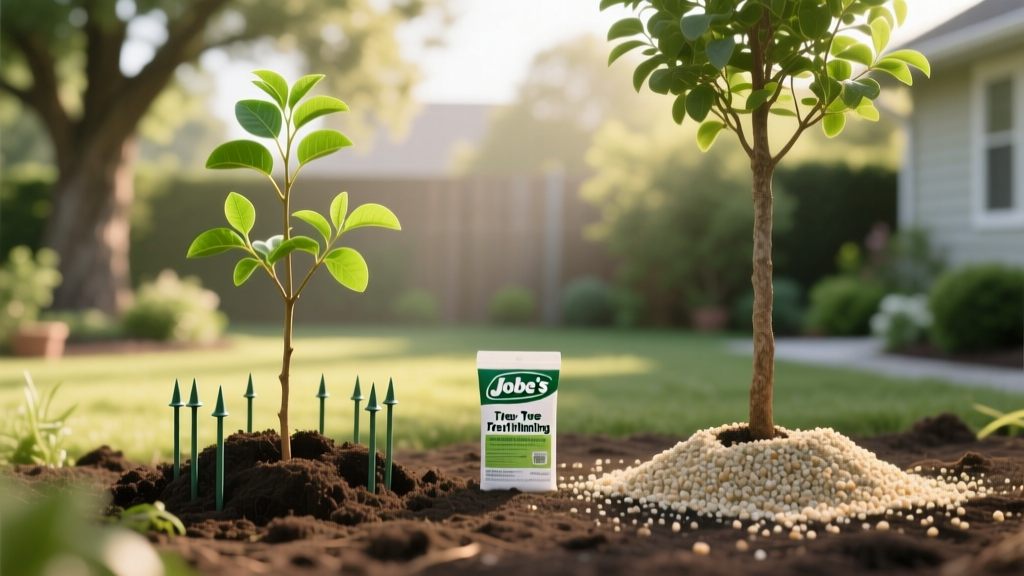
Jobe's Spikes vs Granular Tree Fertilizer: 2026 Planting Guide
James MillerPublished
Introduction to Tree Fertilization During Planting
Selecting the right tree for your landscape is only the first step in establishing a thriving urban or suburban canopy. As we navigate the 2026 planting season, homeowners and landscape professionals alike are re-evaluating how they nourish newly planted trees. The debate between using Jobe's tree fertilizer spikes versus traditional granular application is more relevant than ever, especially as soil science and slow-release technologies have evolved. When you are following modern tree selection and planting guides, understanding the mechanics of root establishment and nutrient uptake is critical to your tree's long-term survival.
The Science of Root Establishment in 2026
When a tree is transplanted from a nursery container or a balled-and-burlapped (B&B) state into your native soil, it experiences significant transplant shock. The primary goal during the first one to two years is not explosive top growth, but rather the development of a robust, widespread root system. According to the University of Minnesota Extension, newly planted trees rarely require immediate, heavy fertilization unless a comprehensive soil test indicates a severe macro or micronutrient deficiency. Over-fertilizing a newly planted tree can lead to salt accumulation, which draws moisture out of the delicate new root hairs, effectively causing chemical drought and root burn.
In 2026, arborists emphasize the importance of matching the fertilizer delivery method to the tree's current root architecture. The roots of a newly planted tree are largely confined to the original root ball. Therefore, the method you choose—spikes or granular—dictates where the nutrients are deposited and how accessible they are to the recovering root system.
Jobe’s Tree Fertilizer Spikes: Deep-Root Feeding
Jobe’s Tree & Shrub Fertilizer Spikes (typically featuring a 15-3-3 or 16-8-8 NPK ratio) are designed to be driven into the soil, delivering nutrients directly to the subterranean root zone. The 2026 formulation of these spikes utilizes an improved polymer-coated slow-release matrix that breaks down gradually over 90 to 120 days, triggered by soil moisture and microbial activity.
Pros of Jobe's Spikes
- Targeted Delivery: Nutrients are placed below the surface, reducing runoff and minimizing weed competition in the topsoil.
- Convenience: Application is quick, requiring only a mallet and the included plastic cap to drive the spike into the earth.
- Long-Lasting: A single application in early spring or late fall provides continuous feeding for months.
Cons for Newly Planted Trees
- High Burn Risk: If a spike is driven too close to the trunk or directly into the dense root ball of a newly planted tree, the concentrated salts can severely damage tender roots.
- Localized Feeding: Spikes create concentrated zones of nutrients. Young trees with limited root spread may not encounter these zones if the spikes are placed at the drip line, which is often far beyond the actual root ball of a newly planted specimen.
Granular Fertilizer: Broad-Spectrum Soil Integration
Granular fertilizers, whether synthetic blends or organic options like Espoma Tree-tone (6-3-2), are broadcast over the soil surface and lightly raked into the top inch of the mulch or soil. The Morton Arboretum emphasizes that fertilizer should be applied evenly across the entire root zone to encourage uniform root expansion.
Pros of Granular Application
- Uniform Coverage: Nutrients are distributed evenly, ensuring that the entire root ball and the surrounding native soil receive balanced nutrition.
- Lower Burn Risk: When applied at the correct rates and watered in, granular fertilizers pose a much lower risk of localized salt toxicity compared to concentrated spikes.
- Soil Amendment Synergy: Granular organic fertilizers feed the soil microbiome, which in turn helps the tree's roots establish symbiotic relationships with mycorrhizal fungi.
Cons of Granular Application
- Surface Runoff: Heavy spring rains can wash granular nutrients away before they percolate down to the root zone.
- Weed Feeding: Broadcasting fertilizer over the surface can inadvertently feed surrounding turfgrass or weeds, which then compete with the young tree for water and resources.
Feature Comparison: Jobe's Spikes vs. Granular Application
| Feature | Jobe's Tree Spikes (15-3-3) | Granular Tree Fertilizer |
|---|---|---|
| Best Application Timing | Early Spring or Late Fall | Early Spring, with optional light Fall dose |
| 2026 Average Cost | ~$18.50 per 15-spike box | ~$26.00 per 40lb bag (organic) |
| Root Zone Coverage | Localized, concentrated columns | Broad, uniform surface distribution |
| Burn Risk (New Plantings) | High (if placed in root ball) | Low to Moderate (if properly watered) |
| Labor Intensity | Low (hammer and go) | Moderate (broadcasting and raking) |
| Ideal Tree Stage | Established trees (Year 3+) | Newly planted and establishing trees |
How to Fertilize Based on Your Planting Method
Your tree selection and planting strategy should dictate your fertilization approach. In 2026, nursery stock is generally sold in three ways, each requiring a different touch:
1. Container-Grown Trees
Container trees often have circling roots that must be teased out during planting. Because the root system is entirely confined to the potting mix, granular fertilizer is vastly superior. Top-dress the planting hole's backfill and the surrounding 2-foot radius with a gentle organic granular fertilizer. Avoid spikes entirely, as the concentrated salts will burn the tightly wound container roots.
2. Balled-and-Burlapped (B&B) Trees
B&B trees are heavy and possess a dense clay root ball. The transition zone between the clay ball and your native soil is a major barrier to water and root penetration. A granular application mixed lightly into the top layer of the backfill encourages roots to venture outward into the native soil. If you must use Jobe's spikes, wait until the tree's second growing season, and place the spikes strictly at the drip line (the outer edge of the canopy), never inside the original root ball.
3. Bare-Root Trees
Bare-root trees, often selected for reforestation or fruit orchards, have exposed, highly vulnerable root systems. Do not use fertilizer spikes or synthetic granular fertilizers at the time of planting. Instead, rely on compost-enriched backfill and a light dusting of organic granular fertilizer on the surface mulch after the tree is watered in.
Step-by-Step Application Instructions
Applying Granular Fertilizer to New Plantings
- Test Your Soil: Use a 2026 digital soil probe or mail a sample to your local university extension to determine baseline NPK levels.
- Calculate the Rate: Apply no more than 1 to 2 pounds of actual nitrogen per 1,000 square feet of root zone area.
- Broadcast Evenly: Scatter the granules from the trunk (keeping them 3 inches away from the bark to prevent collar rot) out to the edge of the planting hole and slightly beyond.
- Water Deeply: Immediately apply 10 to 15 gallons of water to dissolve the granules and carry the nutrients into the root zone.
Applying Jobe's Spikes to Established Trees
- Identify the Drip Line: Locate the outer circumference of the tree's canopy. This is where the most active feeder roots reside.
- Space the Spikes: Follow the package instructions based on trunk diameter. Typically, spikes are spaced 3 to 4 feet apart along the drip line.
- Pre-Soften the Soil: If the ground is hard, water the area deeply a day before application to prevent the spikes from shattering when driven into the earth.
- Drive and Conceal: Use the provided cap and a mallet to drive the spike until it is flush with or slightly below the soil surface. Cover with mulch.
Common Mistakes to Avoid in 2026
- The 'More is Better' Fallacy: Doubling the recommended dose of Jobe's spikes or granular fertilizer will not make your tree grow twice as fast. It will likely cause osmotic stress, leading to leaf scorch and dieback.
- Fertilizing Stressed Trees: If your newly planted tree is suffering from drought stress, pest infestation, or disease, do not fertilize. Fertilizer forces top growth that a compromised root system cannot support. Focus on hydration and mulching first.
- Ignoring the Mulch Ring: Fertilizer applied over a thick, impenetrable layer of wood chips may never reach the soil. Always rake back excessive mulch, apply the granular fertilizer to the soil, and then replace a 2-to-3-inch layer of organic mulch, keeping it away from the trunk.
Conclusion
When integrating fertilization into your tree selection and planting guides, the consensus for 2026 is clear: context is everything. For newly planted trees, granular fertilizer offers the gentle, uniform coverage necessary to encourage outward root expansion without the severe burn risks associated with concentrated spikes. Jobe's tree fertilizer spikes remain an excellent, convenient tool, but they are best reserved for established trees (year three and beyond) that have developed the extensive root networks required to seek out and utilize those localized nutrient columns. By matching the fertilizer format to the tree's developmental stage and planting method, you ensure a resilient, vibrant landscape for decades to come.
