Tree Care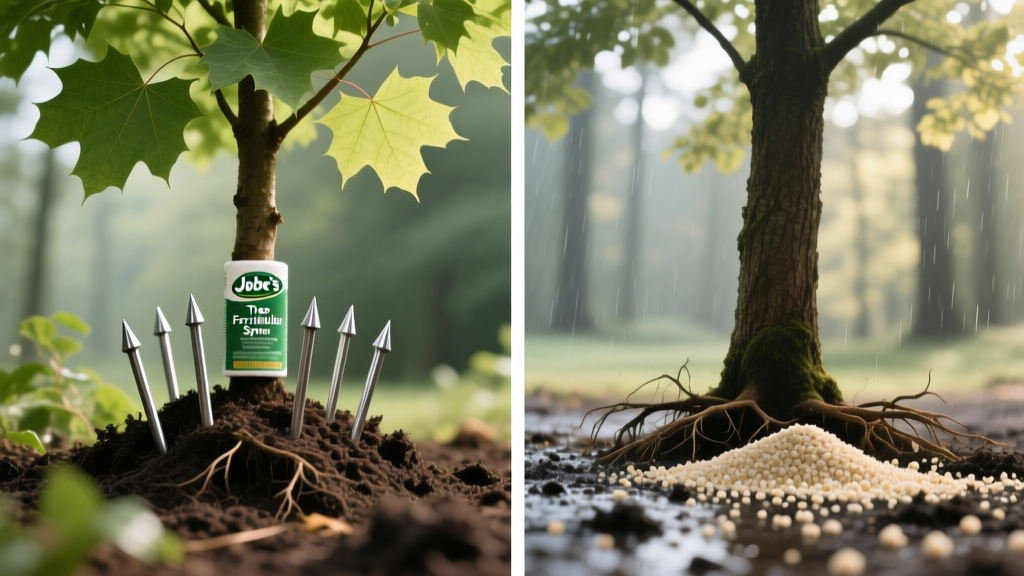
Jobe's Spikes vs Granular: 2026 Tree Web Worm Defense Guide
Emily WatsonPublished
The Hidden Link Between Fertilizer and Web Worms
As we navigate the 2026 growing season, arborists and home gardeners are increasingly recognizing a critical, often overlooked factor in pest management: soil nutrition. When it comes to defending your landscape against the fall webworm (Hyphantria cunea) and the eastern tent caterpillar, the type of fertilizer you use matters just as much as your pruning schedule. While many homeowners view fertilization and pest control as entirely separate tasks, modern Integrated Pest Management (IPM) strategies emphasize that a tree's nutrient profile directly dictates its susceptibility to defoliating insects.
According to research highlighted by the University of Minnesota Extension, fall webworms are notorious for targeting stressed trees or those exhibiting rapid, lush, nitrogen-heavy growth. This creates a paradox for tree care enthusiasts: you want to feed your trees to promote health, but the wrong application method can inadvertently roll out a red carpet for caterpillars. In this comprehensive guide, we break down the debate between Jobe's tree fertilizer spikes and traditional granular applications, evaluating which method best supports robust tree immunity against web worm infestations in 2026.
The Science of Nitrogen and Pest Susceptibility
To understand why your fertilizer choice impacts web worm control, you must first understand plant physiology. Nitrogen is the primary driver of vegetative growth. When a tree absorbs a massive, concentrated dose of nitrogen, it produces rapid cellular expansion. This results in leaves that are larger, greener, and significantly more tender. While this might look visually appealing to a homeowner, it is exactly what a female fall webworm seeks when selecting a host for her eggs.
Tender leaves have lower concentrations of defensive compounds like tannins and lignin. They are easier for young caterpillars to chew and digest, providing a high-amino-acid diet that accelerates their life cycle. Conversely, trees that receive a slow, steady supply of balanced nutrients develop thicker cell walls and higher tannin levels, making the foliage unpalatable and difficult for web worms to consume. Therefore, the goal of a 2026 web worm defense strategy is not to starve your tree, but to avoid localized nitrogen surges that trigger vulnerable growth flushes.
Jobe's Tree Fertilizer Spikes: Pros, Cons, and Pest Impact
Jobe's tree fertilizer spikes have been a staple in garden centers for decades, and their 2026 formulations remain popular due to their convenience. Typically boasting an NPK ratio of 15-3-3 or 13-3-4, these spikes are hammered directly into the soil around the tree's drip line. The primary advantage is ease of use; there is no measuring, broadcasting, or raking required.
The Web Worm Risk Factor
From a pest management perspective, Jobe's spikes present a distinct challenge. Because the fertilizer is concentrated in small, localized columns, it creates 'hot spots' of intense nitrogen availability in the immediate vicinity of the spike. The roots closest to the spike absorb a massive dose of nitrogen, leading to localized flushes of extremely tender, highly attractive foliage on specific branches. Web worms are opportunistic; they will often target these specific lush branches to build their protective silk tents.
Furthermore, if spikes are placed too close to the trunk—a common error among novice gardeners—they can burn the primary structural roots, inducing systemic tree stress. Stressed trees emit volatile organic compounds (VOCs) that act as a beacon for pests, including web worms and borers. While Jobe's spikes are effective for quick green-ups in severely depleted soils, their localized delivery makes them a riskier choice for homeowners actively trying to deter defoliating caterpillars.
Granular Fertilizer Applications: Uniformity and Vigor
Granular fertilizers, whether synthetic slow-release blends or organic options like Espoma Tree-tone (6-3-2), are broadcast evenly across the soil surface over the tree's entire root zone. In 2026, supply chain stabilizations have made high-quality, slow-release organic granular fertilizers more accessible and affordable than ever before.
The Web Worm Defense Advantage
The primary benefit of granular application for pest defense is uniformity. By broadcasting the fertilizer evenly from the trunk out to the drip line (and slightly beyond), you ensure that the entire root system absorbs a balanced, moderate level of nutrients. This promotes steady, uniform growth across the entire canopy. Steady growth allows the tree to allocate resources toward secondary metabolites—like tannins and defensive enzymes—rather than just rapid cellular expansion.
According to guidelines published by Penn State Extension, broadcasting granular fertilizer mimics the natural decomposition of leaf litter in a forest environment. This method builds long-term soil structure and encourages a robust mycorrhizal fungal network, which helps the tree regulate its own nutrient uptake. A tree that can self-regulate its nitrogen absorption is far less likely to produce the sudden, tender growth flushes that attract fall webworms.
2026 Comparison Chart: Jobe's Spikes vs. Granular Fertilizer
| Feature | Jobe's Tree Spikes (15-3-3) | Granular Slow-Release (e.g., 10-10-10) |
|---|---|---|
| Application Method | Driven into soil at drip line | Broadcast evenly over root zone |
| Nutrient Distribution | Localized, concentrated hot spots | Uniform, widespread absorption |
| Foliage Growth Type | Rapid, tender flushes on specific branches | Steady, uniform canopy development |
| Web Worm Risk Level | Moderate to High (attracts localized feeding) | Low (promotes tougher, tannin-rich leaves) |
| Estimated 2026 Cost | $12 - $18 per box (8 spikes) | $25 - $40 per 40lb bag |
| Best Use Case | Container trees or severely restricted root zones | In-ground landscape trees and IPM defense |
Strategic Application Timing for Web Worm Deterrence
Choosing granular fertilizer over Jobe's spikes is only half the battle; timing your application correctly is the other critical component of web worm control. Fall webworms typically emerge in mid-to-late summer (July through September), spinning their unsightly webs at the terminal ends of branches.
To avoid fueling this late-season outbreak, never fertilize your trees in the summer. Summer fertilization triggers the exact type of late-season tender growth that web worms exploit. Instead, adhere to the following 2026 arborist schedule:
- Early Spring (Pre-Bud Break): Apply granular fertilizer just as the soil thaws and before the buds swell. This provides the tree with the energy needed for its natural, hardy spring growth flush, which will mature and toughen by the time summer pests arrive.
- Late Fall (Post-Leaf Drop): Apply a slow-release organic granular fertilizer after the leaves have fallen but before the ground freezes. The roots will absorb the nutrients and store them for the following spring, without triggering any vulnerable above-ground vegetative growth.
Always conduct a soil test before applying any fertilizer. In 2026, digital soil testing kits and rapid mail-in lab services make it easier than ever to determine your exact soil pH and nutrient deficiencies. If your soil already has adequate nitrogen, adding more will only exacerbate pest problems.
Integrating Fertilization with Broader IPM Strategies
While optimizing your fertilizer regimen is a powerful preventative measure, it must be combined with other cultural controls to effectively manage web worm populations. The EPA's IPM guidelines stress the importance of a multi-layered approach to pest management.
Pruning and Sanitation
Fall webworms prefer the sunlit, outer edges of the canopy. Maintain an open canopy structure through proper winter pruning to improve air circulation and reduce the humid microclimates that caterpillars thrive in. If you spot early webbing in late summer, use a pole pruner to physically remove and destroy the affected branch tips before the colony expands.
Biological Controls
Encourage natural predators like parasitic wasps, birds, and predatory stink bugs. Avoid using broad-spectrum insecticides, which will kill these beneficial insects and allow web worm populations to rebound unchecked. For severe infestations, apply Bacillus thuringiensis (Bt) var. kurstaki directly to the foliage near the webs. Bt is a naturally occurring soil bacterium that specifically targets caterpillars without harming beneficial pollinators or disrupting your carefully managed soil nutrition program.
Conclusion
Defending your landscape against tree web worms requires a shift in how we view tree nutrition. While Jobe's fertilizer spikes offer undeniable convenience, their tendency to create localized nitrogen hot spots makes them a liability in a targeted pest management strategy. By transitioning to a uniform, slow-release granular fertilizer application, timing your feeding schedules to align with natural tree dormancy, and integrating biological controls, you can cultivate a robust, resilient canopy capable of withstanding the 2026 web worm season. Remember, a truly healthy tree is not just the one that grows the fastest, but the one that is fortified from the roots up to defend itself against nature's toughest challenges.
