Tree Care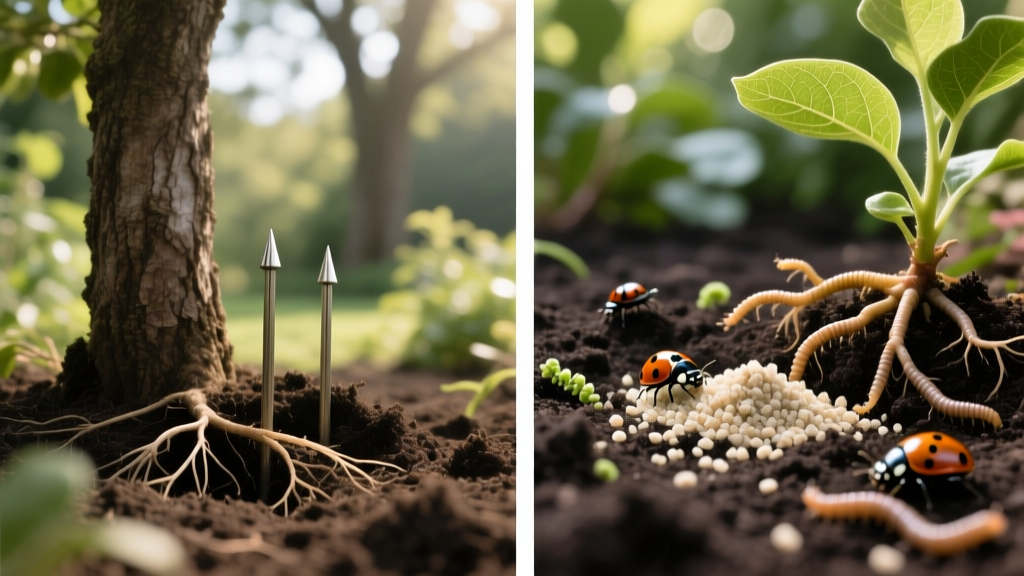
Jobe's Spikes vs Granular Fertilizer: 2026 Bio-Control Guide
Sarah ChenPublished
The Shift Toward Bio-Control in 2026 Tree Care
As we navigate the 2026 growing season, the paradigm of arboriculture and landscape management has shifted dramatically. Homeowners and professional arborists alike are moving away from purely synthetic, high-impact chemical interventions and embracing holistic soil biology and bio-control strategies. At the heart of this movement is a critical re-evaluation of how we feed our trees. The debate between using Jobe's tree fertilizer spikes versus traditional granular fertilizer applications is no longer just about convenience or NPK (Nitrogen, Phosphorus, Potassium) ratios; it is fundamentally about how these delivery methods impact the delicate soil food web and the beneficial insects that serve as natural pest control agents.
Historically, tree fertilization focused solely on delivering macronutrients directly to the root zone as quickly as possible. However, modern soil science has revealed that a tree's health is inextricably linked to the micro-arthropods, predatory nematodes, and mycorrhizal fungi living in the topsoil. When you choose a fertilization method, you are essentially choosing whether to feed or starve these vital bio-control organisms. In this comprehensive 2026 guide, we will explore the biological impacts of Jobe's synthetic spikes versus granular applications, helping you make an informed decision that supports both your tree's canopy and the ecosystem beneath it.
Understanding the Soil Food Web and Tree Health
The soil beneath your tree is not merely inert dirt; it is a thriving, complex metropolis. According to the USDA Natural Resources Conservation Service, a single teaspoon of healthy, undisturbed soil contains billions of microbes, alongside thousands of micro-arthropods and beneficial nematodes. These organisms form the 'soil food web,' a biological engine that breaks down organic matter, cycles nutrients into forms that tree roots can absorb, and suppresses soil-borne pathogens and root-feeding pests.
Beneficial insects and organisms, such as ground beetles (Carabidae), predatory soil mites (Hypoaspis miles), and entomopathogenic nematodes (Steinernema feltiae), rely on a stable, evenly distributed soil environment. They patrol the root zone, hunting down destructive pests like root weevils, fungus gnat larvae, and the pupal stages of tree borers. When the soil chemistry is disrupted by localized concentrations of synthetic salts, these beneficial populations crash, leaving your tree vulnerable to severe pest infestations that would otherwise be managed naturally.
Jobe's Tree Fertilizer Spikes: The Localized Impact
Jobe's tree fertilizer spikes, particularly their synthetic formulations like the popular 01611 (15-33-15 NPK) model, have been a staple in garden centers for decades due to their ease of use. You simply hammer them into the ground along the drip line and let rainfall dissolve them. While they offer a hands-off approach to delivering macronutrients, their physical design poses significant challenges for soil biology and bio-control agents in 2026.
The Osmotic Shock Factor
The primary issue with synthetic fertilizer spikes is the concept of 'osmotic shock' or 'salt burn.' Because the spike concentrates a massive dose of soluble salts into a physical space of just a few cubic inches, the immediate soil environment becomes highly toxic to microscopic life. While the tree's larger structural roots might eventually absorb the dissolved nutrients, the micro-arthropods, beneficial fungi, and predatory nematodes within a 6-to-12-inch radius of the spike are effectively eradicated by the sudden spike in soil salinity.
This creates 'dead zones' in the root zone. If a tree requires eight spikes placed around its drip line, you are creating eight localized biological dead zones. Root-feeding pests that happen to reside outside these zones will thrive, while the predatory nematodes that would normally keep them in check are wiped out. Furthermore, the physical act of hammering spikes into the earth can sever fine, nutrient-absorbing feeder roots and disrupt the fungal hyphae networks that connect the tree to the broader soil ecosystem.
Granular Fertilizer: Broadcasting for Biological Balance
In contrast, granular fertilizers—especially slow-release or organic options like Espoma Tree-tone or Milorganite—are broadcast evenly across the soil surface and lightly watered in. This method mimics the natural decomposition of leaf litter, providing a steady, low-dose trickle of nutrients that feeds the soil food web rather than shocking it.
According to Penn State Extension, broadcast application of granular fertilizers ensures a more uniform distribution of nutrients across the entire root zone. For bio-control, this is a game-changer. Even distribution prevents osmotic shock, allowing populations of beneficial ground beetles and predatory mites to flourish. Organic granular fertilizers go a step further by providing carbon-based organic matter, which serves as a direct food source for the bacteria and fungi that form the base of the soil food web. A robust fungal network not only helps the tree withstand drought stress but also produces secondary metabolites that repel harmful root-feeding insects.
Specific Beneficial Insects Affected by Fertilizer Methods
- Entomopathogenic Nematodes: These microscopic worms actively hunt soil-dwelling tree pests. Synthetic spikes dehydrate and kill them via salt toxicity, while organic granular fertilizers provide the moist, biologically active environment they need to reproduce and patrol the root zone.
- Ground Beetles (Carabidae):strong> These vital predators consume caterpillars and beetle grubs that threaten tree trunks. They lay their eggs in the topsoil. The physical disturbance and chemical burn from spikes disrupt their breeding grounds, whereas granular applications leave the soil structure intact.
- Mycorrhizal Fungi: While not insects, these symbiotic fungi extend the tree's root system and produce enzymes that deter pests. High-concentration synthetic nitrogen from spikes inhibits mycorrhizal colonization, forcing the tree to rely entirely on synthetic inputs rather than natural biological partnerships.
2026 Comparison Chart: Spikes vs. Granular for Bio-Control
| Feature | Jobe's Synthetic Spikes (15-33-15) | Organic Granular Fertilizer | Impact on Bio-Control & Beneficials |
|---|---|---|---|
| Nutrient Release | Rapid, localized dissolution | Slow, uniform broadcast release | Granular prevents osmotic shock, preserving predatory nematode populations. |
| Soil Salinity | Extremely high in immediate vicinity | Low, evenly distributed | Spikes create dead zones; granular supports continuous microbial activity. |
| Physical Soil Disruption | High (hammering severs roots/fungi) | None (surface applied) | Granular protects ground beetle breeding grounds and fungal hyphae networks. |
| Carbon/Organic Matter | None (purely synthetic salts) | High (feeds soil microbes) | Organic granular feeds the base of the food web, boosting overall pest resilience. |
| 2026 Avg. Cost | $10 - $14 per box (8 spikes) | $25 - $35 per 4lb bag | Granular offers better long-term value by reducing the need for chemical pest sprays. |
Best Practices for 2026: Fertilizing Without Disrupting Bio-Control
If your goal is to cultivate a resilient, self-regulating landscape where beneficial insects manage pests naturally, your fertilization strategy must align with biological principles. The Cornell University Soil Health initiative emphasizes that feeding the soil is always more sustainable than force-feeding the plant. Follow these actionable steps for the 2026 season:
Step 1: Conduct a Biological Soil Test
Before applying any fertilizer, send a soil sample to a local university extension lab. Do not just test for NPK; request an organic matter percentage and a biological activity assessment. If your soil already has adequate phosphorus and potassium, adding a high-phosphorus spike (like the 33% P in Jobe's spikes) will actually inhibit the growth of beneficial mycorrhizal fungi and can lead to toxic runoff into local waterways.
Step 2: Time Your Granular Application
Apply organic granular fertilizer in early spring, just as the soil temperature reaches 55°F and the tree's feeder roots begin to activate. Broadcast the granules evenly from the trunk (keeping a 6-inch buffer to prevent trunk rot) out to the drip line and slightly beyond. Water deeply immediately after application to activate the soil microbes and begin the breakdown process.
Step 3: Integrate Beneficial Nematodes
To supercharge your tree's bio-control defenses, apply a drench of Steinernema feltiae beneficial nematodes two weeks after your granular fertilization. The organic granular fertilizer will have already stimulated the soil biology, creating a hospitable environment for the nematodes to establish, hunt, and eliminate root-destroying grubs and weevil larvae before they can damage the tree's vascular system.
Conclusion
The convenience of Jobe's tree fertilizer spikes is undeniable, but as our understanding of soil ecology deepens in 2026, the hidden costs to the soil food web can no longer be ignored. By creating localized zones of high salinity, synthetic spikes inadvertently wipe out the very beneficial insects and microbes that protect your trees from devastating pests. Transitioning to a broadcast application of slow-release, organic granular fertilizers is a cornerstone of modern bio-control. It feeds the soil, nurtures predatory nematodes and ground beetles, and ultimately results in a healthier, more resilient tree that can defend itself naturally. Embrace the biology beneath the canopy, and your trees will reward you with vibrant, pest-free growth for decades to come.
