Tree Care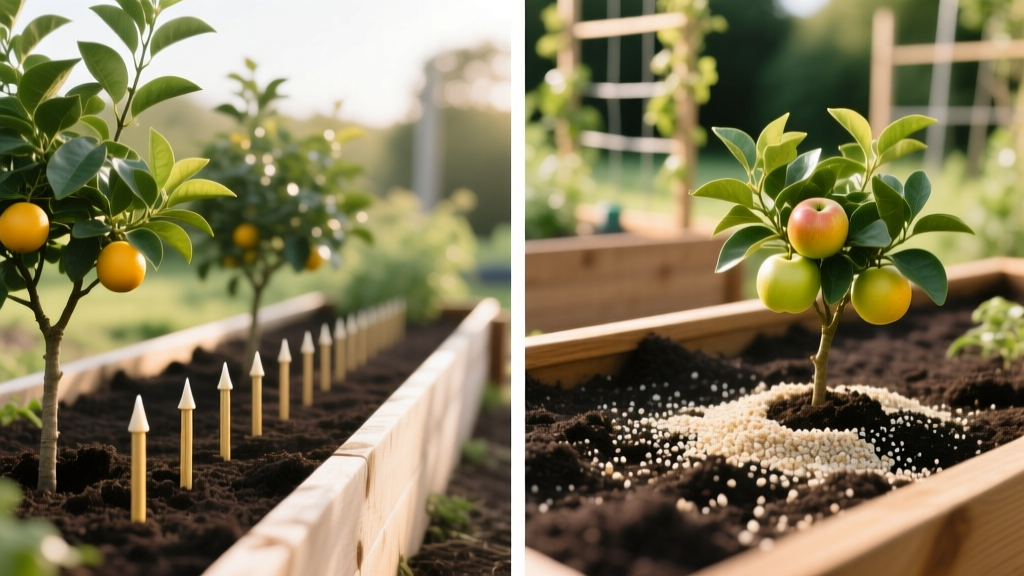
Jobe's Tree Spikes vs Granular Fertilizer in Raised Beds 2026
Mike RodriguezPublished
The Intersection of Arboriculture and Raised Bed Vegetable Gardening
As urban homesteading and intensive backyard agriculture continue to evolve in 2026, the integration of dwarf fruit trees into raised bed vegetable gardens has become a hallmark of space-efficient landscaping. Gardeners are increasingly planting semi-dwarf apple, fig, and citrus trees at the corners or borders of their raised vegetable beds to maximize yield per square foot. However, this innovative pairing introduces a complex horticultural challenge: how do you properly fertilize a deep-rooted perennial tree when it shares a confined, highly managed soil ecosystem with shallow-rooted annual vegetables? The debate between using Jobe's tree fertilizer spikes versus traditional granular applications is more nuanced in a raised bed environment than in an open orchard. This comprehensive 2026 guide breaks down the science, soil dynamics, and practical applications of both methods to help you achieve optimal tree health and vegetable yields.
The Unique Soil Dynamics of Raised Beds
To understand why fertilizer choice matters, we must first examine the soil environment of a raised bed. Unlike native ground soil, raised beds are typically filled with a loose, highly aerated mix of compost, peat or coconut coir, and vermiculite or perlite. According to the University of Minnesota Extension, this structure provides excellent drainage and prevents soil compaction, which is ideal for vegetable root development. However, this same porous structure leads to rapid nutrient leaching. Every time you water your thirsty summer tomatoes or peppers, water-soluble nutrients are washed deeper into the soil profile or out of the bed entirely.
Furthermore, raised beds warm up faster in the spring and retain heat differently than the surrounding earth, especially if constructed from modern 2026 composite materials or dark-stained cedar. This thermal dynamic accelerates microbial activity, which dictates how quickly organic fertilizers break down into plant-available forms. When a dwarf fruit tree is planted within or immediately adjacent to this environment, its root system is subjected to frequent, shallow watering cycles designed for vegetables, rather than the deep, infrequent soaking that trees naturally prefer. This clash in watering schedules fundamentally alters how fertilizer spikes and granular products perform.
Jobe's Tree Fertilizer Spikes: A Deep Dive
Jobe's Tree & Shrub Fertilizer Spikes have long been a staple for homeowners seeking a 'set it and forget it' approach to tree care. These spikes are typically formulated with a high-nitrogen synthetic NPK ratio (such as 15-3-3) or, in their increasingly popular 2026 organic lines, a balanced 3-5-5 ratio derived from bone meal, feather meal, and potash. The spikes are driven directly into the soil around the tree's drip line, where they slowly dissolve over several months, releasing nutrients directly into the root zone.
Advantages of Spikes in Raised Beds
- Targeted Delivery: Spikes bypass the top layer of soil where aggressive vegetable feeder roots dominate, delivering nutrients deeper where the tree's structural roots reside.
- Reduced Runoff: Because the fertilizer matrix is solid and buried, it is less susceptible to being washed away by the heavy, frequent watering required by raised bed vegetables.
- Application Speed: Driving three or four spikes into the soil takes mere minutes, saving time during the busy spring planting season.
Drawbacks of Spikes in Raised Beds
- Point-Source Concentration: Spikes create intense, localized zones of high salinity and nutrient density. In the confined volume of a raised bed, this can easily lead to root burn if the tree's roots are restricted by the bed's walls.
- Incomplete Coverage: Tree roots absorb nutrients best when they are evenly distributed. Spikes only feed the roots immediately adjacent to the spike, potentially leading to uneven canopy growth.
Granular Tree Fertilizers: The Traditional Approach
Granular fertilizers, whether synthetic blends like a 10-10-10 mix or slow-release organic options like Espoma Tree-tone, are broadcast over the soil surface and lightly scratched into the top few inches. This method mimics the natural decomposition of leaf litter and organic matter on a forest floor. In 2026, advanced microbially-enhanced granular fertilizers have become the gold standard for organic raised bed gardeners, as they rely on the robust soil food web to unlock nutrients precisely when the tree needs them.
Advantages of Granular in Raised Beds
- Uniform Distribution: Broadcasting granular fertilizer ensures that the entire root zone of the tree receives an even supply of macro and micronutrients, promoting balanced growth and structurally sound branches.
- Lower Burn Risk: Because the nutrients are spread out rather than concentrated in a single point, the risk of osmotic stress and root burn is drastically reduced, which is critical in the limited soil volume of a raised bed.
- Soil Microbiome Support: Organic granular fertilizers feed both the tree and the beneficial mycorrhizal fungi that are essential for nutrient uptake in intensive garden ecosystems.
Drawbacks of Granular in Raised Beds
- Nutrient Competition: Surface-applied granular fertilizers are easily intercepted by the dense, fibrous root mats of companion vegetables before they can reach the deeper tree roots.
- Leaching Vulnerability: Heavy watering schedules for vegetables can wash water-soluble granular nutrients out of the raised bed before the tree has a chance to absorb them.
Head-to-Head Comparison: Spikes vs. Granular
The following table summarizes how Jobe's spikes and granular fertilizers compare specifically within the context of a raised bed vegetable garden environment in 2026:
| Feature | Jobe's Tree Fertilizer Spikes | Granular Tree Fertilizer |
|---|---|---|
| NPK Ratio (Typical) | 15-3-3 (Synthetic) / 3-5-5 (Organic) | 6-3-2 (Organic) / 10-10-10 (Synthetic) |
| Application Time | 3-5 minutes per tree | 10-15 minutes per tree |
| Nutrient Distribution | Localized (Point-source) | Broad (Even spread) |
| Root Burn Risk in Beds | High (if placed near bed walls) | Low (when evenly broadcast) |
| Leaching Resistance | High (slow-dissolve matrix) | Moderate (depends on watering) |
| Veggie Root Competition | Low (placed deeper) | High (surface applied) |
| 2026 Avg. Cost per Tree | $1.80 - $2.75 | $0.90 - $1.40 |
The Root Burn Factor in Confined Soil Volumes
One of the most critical considerations for arborists and home gardeners alike is the phenomenon of root burn, or fertilizer salt injury. In an open landscape, a tree's roots extend far beyond the drip line, providing a massive buffer against localized nutrient toxicity. In a raised bed, however, the tree's roots are physically constrained by the wooden, stone, or composite walls of the bed. When you drive a Jobe's spike into the soil near the edge of a raised bed, the dissolving salts have nowhere to disperse. If a primary structural root happens to be resting against that spike, the high concentration of nitrogen and potassium will draw water out of the root cells via osmosis, causing necrosis and dieback. For this reason, if you choose to use spikes in a raised bed, you must map the root structure carefully and avoid placing spikes within six inches of the bed's perimeter walls.
Watering Schedules: The Vegetable vs. Tree Conflict
According to The Old Farmer's Almanac, raised bed vegetables generally require 1 to 2 inches of water per week, often applied in frequent, shallow doses to maintain consistent soil moisture for crops like cucumbers and leafy greens. Fruit trees, conversely, thrive on deep, infrequent watering that encourages roots to grow downward in search of moisture. When a tree is subjected to the daily shallow watering regimen of a vegetable bed, granular fertilizers applied to the surface are constantly being reactivated and flushed downward in small, inefficient increments. Jobe's spikes, being buried deeper, are somewhat insulated from the daily surface watering, but the constant ambient moisture of a raised bed can cause the spikes to dissolve much faster than their advertised 60-day release rate, potentially dumping a season's worth of nitrogen into the tree in just three weeks. This rapid nitrogen influx will result in explosive, weak vegetative growth at the expense of fruit production, leaving the tree vulnerable to late-season pest infestations like aphids and borers.
Step-by-Step Application Guide for 2026
How to Apply Jobe's Spikes in a Raised Bed
- Locate the Drip Line: Identify the outermost edge of the tree's canopy. In a raised bed, this may extend beyond the bed itself.
- Avoid the Walls: Ensure all spike placement is at least 8 inches away from the physical walls of the raised bed to prevent salt accumulation against the barriers.
- Use a Drive Cap: Always use the provided plastic drive cap to prevent the spike from shattering upon impact with buried stones or compacted compost layers.
- Water Deeply: After driving the spikes, water the tree deeply to initiate the dissolution process, then revert to your standard vegetable watering schedule.
How to Apply Granular Fertilizer in a Raised Bed
- Clear the Trunk Base: Pull back any mulch or creeping vegetable groundcovers from the base of the tree trunk to prevent collar rot.
- Broadcast Evenly: Sprinkle the granular fertilizer evenly from the trunk out to the drip line, ensuring no heavy clumps form.
- Incorporate Gently: Using a hand cultivator, gently scratch the granules into the top 1 to 2 inches of soil. Be careful not to sever the fine, hair-like feeder roots that reside near the surface.
- Mulch and Water: Replace a thin layer of organic mulch around the tree (keeping it away from the trunk) and water thoroughly to activate the microbial breakdown process.
Final Verdict: Which Method Reigns Supreme?
When managing dwarf fruit trees within the intensive, high-water environment of a raised bed vegetable garden in 2026, granular organic fertilizers are generally the superior choice. While Jobe's spikes offer undeniable convenience and resistance to surface leaching, the risk of root burn in confined soil volumes and the uneven nutrient distribution make them a risky proposition for restricted planting zones. Granular organic fertilizers, when applied correctly and incorporated into the soil, work in harmony with the robust microbial life of a raised bed, providing a steady, safe, and uniform supply of nutrients that supports both the structural integrity of the tree and the surrounding vegetable crops. By prioritizing soil health and uniform distribution, you ensure your integrated garden remains productive, beautiful, and biologically balanced for seasons to come.