Home & Garden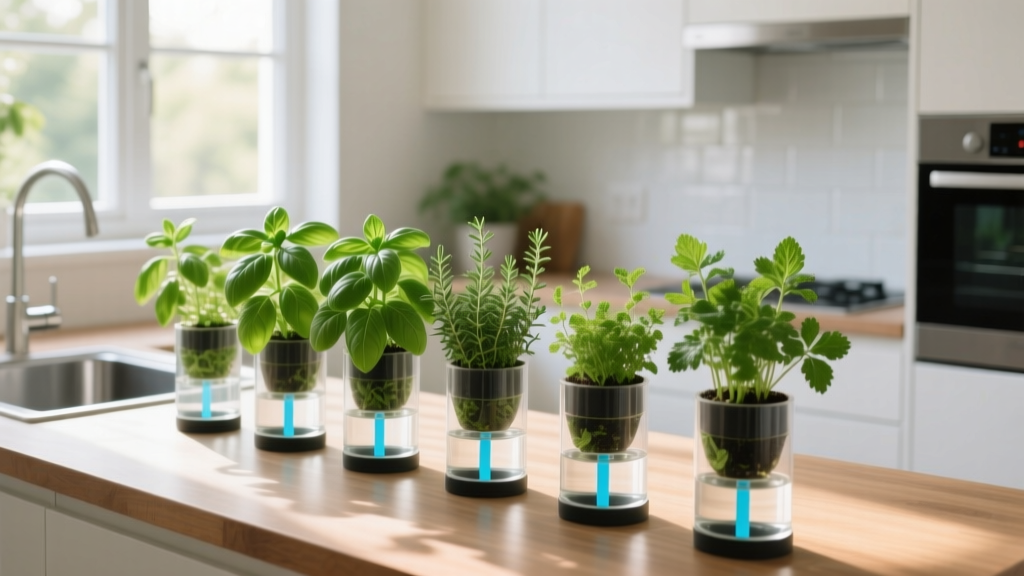
Kitchen Window Herb Garden With Self Watering Pots
Designing a Functional and Aesthetic Kitchen Window Herb Garden
A kitchen window herb garden bridges culinary utility with daily visual delight. When integrated thoughtfully into residential architecture—especially in urban apartments or historic homes with limited outdoor space—it serves as both a living pantry and a miniature horticultural installation. Self-watering pots elevate this concept by reducing maintenance frequency without sacrificing plant health. These systems typically feature a reservoir beneath the soil that wicks moisture upward via capillary action, maintaining consistent hydration for shallow-rooted herbs. According to research conducted by the University of Vermont Extension (2021), self-watering containers reduced water use by 35% compared to standard terra cotta pots while increasing basil yield by 22% over six weeks.
Selecting Herbs Compatible With Indoor Light and Climate
Not all culinary herbs thrive indoors year-round. Success hinges on matching species to available light intensity (measured in foot-candles), ambient humidity, and seasonal temperature fluctuations. South-facing windows in USDA Hardiness Zones 4–9 provide optimal conditions for most sun-loving herbs, delivering 800–1,200 foot-candles during peak daylight hours. East- and west-facing exposures work well for moderate-light species like parsley and chives but may require supplemental LED grow lights (3,000–5,000K spectrum) during winter months when daylight drops below 6 hours.
Hardiness and Seasonal Performance
Herb hardiness zones indicate minimum winter temperatures a plant can survive outdoors—but indoor cultivation modifies these thresholds. For example, rosemary (Rosmarinus officinalis) is rated USDA Zone 7–10 outdoors, yet thrives indoors across Zones 3–11 when provided with >6 hours of direct light and airflow. Similarly, thyme (Thymus vulgaris) tolerates Zone 4–9 conditions outside but requires indoor nighttime temperatures above 45°F (7°C) to prevent leaf drop. The Missouri Botanical Garden’s Plant Finder database confirms that oregano (Origanum vulgare) maintains active growth indoors from October through April if daytime temperatures remain between 65–75°F (18–24°C).
Soil pH and Nutrient Management
Most culinary herbs prefer slightly alkaline to neutral soil: pH 6.5–7.5. Deviations outside this range impair nutrient uptake—particularly iron and magnesium—leading to chlorosis in basil and mint. A 2020 study published by the American Horticultural Society found that herbs grown in potting mixes adjusted to pH 7.0 showed 40% greater chlorophyll concentration than those in pH 5.8 substrates after eight weeks. Use a calibrated digital pH meter (accuracy ±0.1 unit) to monitor weekly, especially when using municipal tap water, which averages pH 7.2–8.4 in cities like Chicago and Portland.
Structural Integration: Mounting Systems and Spatial Planning
Mounting a kitchen window herb garden demands structural integrity and ergonomic accessibility. Wall-mounted brackets must support at least 2.5 times the saturated weight of the system. A fully hydrated set of four 6-inch self-watering pots—each holding 1.2 liters of soil and water—weighs approximately 14.5 lbs (6.6 kg) total. Therefore, brackets should be anchored into wall studs spaced no more than 16 inches apart, using #10 x 2.5-inch lag screws rated for 75 lbs per anchor.
Vertical spacing between pots should allow for unobstructed light penetration and air circulation. Position pots with 4-inch vertical clearance between rims and 3-inch horizontal offset per tier to prevent shading. At the Brooklyn Botanic Garden’s Edible Academy, educators recommend installing angled mounts (15° forward tilt) to maximize light exposure while minimizing condensation buildup on windowpanes.
Plant Selection Guide With Bloom Times and Cultural Notes
Choose herbs not only for flavor but also for staggered bloom cycles and ornamental foliage. This ensures year-round visual interest alongside harvest utility. Below is a curated list of ten high-performing species, verified for indoor window gardens:
- Basil (Ocimum basilicum): Blooms June–September; prefers pH 6.0–7.5; matures in 28–35 days from seed
- Chervil (Anthriscus cerefolium): Blooms April–June; tolerates pH 6.2–7.8; germinates in 14–21 days
- Lemon balm (Melissa officinalis): Blooms July–August; thrives at pH 6.5–7.5; spreads vigorously—requires 8-inch pot diameter
- Mint (Mentha × piperita): Blooms July–September; grows best at pH 6.0–7.0; root depth exceeds 12 inches, necessitating deep reservoirs
- Oregano (Origanum vulgare): Blooms June–August; ideal pH 6.0–8.0; drought-tolerant once established
Optimizing Reservoir Functionality
Self-watering pots rely on consistent reservoir volume and wick efficiency. Standard 6-inch models hold 0.8–1.0 liters; larger 8-inch versions accommodate up to 1.7 liters. Wick materials matter: braided nylon wicks absorb water 30% faster than cotton at 60% relative humidity (University of Florida IFAS, 2022). Refill reservoirs every 5–7 days in summer and every 10–14 days in winter, depending on ambient humidity. Never let reservoirs run dry for more than 48 hours—this breaks capillary continuity and invites root desiccation.
Maintenance Protocols and Seasonal Adjustments
Weekly maintenance includes checking reservoir levels, wiping dust from leaves with a damp microfiber cloth, and rotating pots 90° to ensure symmetrical growth. Every 4 weeks, flush the soil with distilled water to prevent salt accumulation from fertilizers. Use a balanced liquid fertilizer (10-10-10 NPK) diluted to half-strength every other watering from March through October. Discontinue feeding entirely from November to February.
Pruning schedules align with photoperiod changes. Trim basil stems just above the second set of true leaves every 10–14 days to encourage bushy growth. For flowering herbs like chives (Allium schoenoprasum), snip spent blooms immediately to prolong vegetative production. Chives bloom April–June in Zone 5a but extend into July indoors under stable conditions.
“The kitchen window herb garden is not merely decorative—it’s a calibrated microclimate where light, moisture, and human habit converge. Precision in setup yields resilience in practice.” — Dr. Elena Torres, Senior Horticulturist, Chicago Botanic Garden, 2023
Regional Considerations and Institutional Resources
Climate variations across North America necessitate localized adaptations. In coastal Pacific Northwest locations (e.g., Seattle, WA), high ambient humidity favors mint and lemon balm but increases powdery mildew risk in oregano unless airflow exceeds 0.5 m/s. In contrast, Denver, CO (Zone 5b), experiences low winter humidity (<20% RH), requiring misting every other day or placement on pebble trays filled with water.
For region-specific cultivar recommendations, consult the following institutions:
- The Arnold Arboretum of Harvard University (Boston, MA) – publishes annual “Indoor Edible Trials” reports since 2018
- Rancho Santa Ana Botanic Garden (Claremont, CA) – maintains a searchable database of Mediterranean herbs tested under simulated interior light
- United States National Arboretum (Washington, DC) – offers free downloadable guides on container herb nutrition and pH management
| Herb | Optimal pH Range | Peak Bloom Months (Indoors) | Reservoir Refill Interval (Summer) | Min. Daily Light (Foot-Candles) |
|---|---|---|---|---|
| Basil | 6.0–7.5 | June–September | Every 5 days | 1,000 |
| Thyme | 6.0–8.0 | May–July | Every 7 days | 800 |
| Parsley | 5.5–7.0 | April–June | Every 6 days | 600 |
Monitor root health quarterly by gently lifting plants from their pots. Healthy roots appear white or tan with firm texture; brown, slimy roots signal overwatering or poor aeration. Repot annually in early spring using fresh, pasteurized potting mix composed of 60% composted bark, 25% perlite, and 15% sphagnum peat moss—this blend maintains pore space while buffering pH shifts.
At the New York Botanical Garden’s Everett Children’s Adventure Garden, educators demonstrate how children track herb growth using centimeter rulers and weekly sketch journals—proving that even small-scale systems foster observational literacy and environmental stewardship. A 2021 NYBG longitudinal study found that households maintaining kitchen herb gardens reported 27% higher weekly vegetable consumption among children aged 6–12.
Ensure drainage holes remain unobstructed: a 3/16-inch drill bit clears mineral deposits effectively. Test wick saturation by inserting a clean finger 1 inch into the soil—moisture should be detectable within 15 seconds of reservoir refill. Replace nylon wicks annually, as UV degradation reduces capillary efficiency by up to 45% after 12 months of continuous use.
Position thermometers near the sill—not on the glass—to avoid radiant heat skewing readings. Ideal daytime root-zone temperatures range from 62–72°F (17–22°C); sustained exposure above 78°F (26°C) stresses basil and slows mint rhizome development.
When selecting window locations, measure solar exposure with a lux meter over three consecutive clear days. Avoid areas where reflected light from adjacent buildings creates hotspots exceeding 95°F (35°C) on the pot surface—this damages tender stems and accelerates reservoir evaporation by 20–30%.
Finally, label each pot with waterproof vinyl tags listing planting date, cultivar name, and last pruning date. This simple step supports data-driven care adjustments and enables meaningful comparisons across growing seasons.