Pest Control
Landscape Design for Pest Control: Planning Your Yard
The Foundation of IPM in Landscape Architecture
When most homeowners think of pest control, they envision reactive treatments: spraying insecticides after an infestation has already taken hold or setting traps once rodents have invaded the garden. However, the most effective and sustainable approach to pest management begins long before a single pest appears. By integrating Integrated Pest Management (IPM) principles into your landscape design and planning phase, you can create an outdoor environment that is inherently hostile to pests while remaining beautiful and functional. Designing a pest-resistant landscape requires a strategic blend of hardscaping, hydrology, botanical selection, and spatial zoning. This proactive approach not only reduces your reliance on chemical treatments but also saves thousands of dollars in long-term extermination and plant replacement costs.
Strategic Zoning: Creating Microclimates that Repel Pests
The layout of your yard dictates airflow, sunlight penetration, and moisture retention—all of which are critical factors in pest proliferation. Many common lawn and garden pests, such as fungus gnats, slugs, and certain turf diseases, thrive in stagnant, overly shaded, and poorly ventilated microclimates. During the planning phase, map your property to identify sun and shade patterns throughout the day.
Prune or remove dense, overhanging canopy trees that block morning sunlight from reaching your primary lawn areas. Morning sun is crucial for burning off overnight dew, which deprives fungal spores and moisture-loving insects of the hydration they need to germinate and breed. Furthermore, design your garden beds with adequate spacing to promote cross-breezes. Stagnant air allows mosquito populations to hover and breed undisturbed. By orienting your planting beds parallel to prevailing winds, you create a natural wind tunnel effect that disperses flying insects and reduces the humidity trapped within dense foliage.
Hardscaping as a Pest Barrier
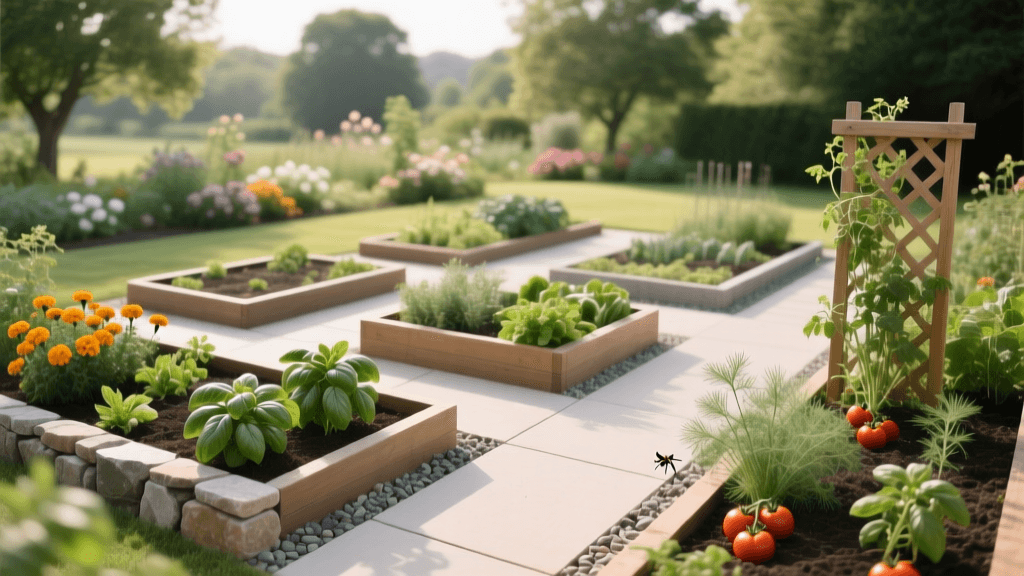
Hardscape elements serve as the structural bones of your landscape and can be engineered to act as formidable physical barriers against invasive pests. The transition zones between wild areas and manicured lawns are the most vulnerable points of entry for ticks, rodents, and encroaching weeds that harbor insects.
The Tick-Safe Gravel Perimeter
Ticks are notorious hitchhikers that migrate from wooded or brushy areas into recreational lawn spaces. According to the Centers for Disease Control and Prevention (CDC), creating a tick-safe zone requires a 3-foot-wide barrier of wood chips or gravel between lawns and wooded areas to restrict tick migration. Gravel is often superior to wood chips because it retains less moisture and does not provide the organic decay environment that ticks and centipedes prefer. For a 100-foot perimeter, installing a 3-foot wide by 2-inch deep gravel border costs approximately $450 to $900 in materials, a fraction of the cost of annual acaricide treatments.
Rodent Exclusion via Hardware Cloth
Burrowing pests like voles, gophers, and moles can decimate root systems and ruin hardscape foundations. When designing raised beds, retaining walls, or patio bases, incorporate a subterranean exclusion barrier. Burying 1/4-inch galvanized hardware cloth 12 inches deep and extending 6 inches above grade costs about $1.20 per linear foot. This specific mesh size is critical; standard chicken wire has gaps that are too large and will easily allow young voles to pass through.
Botanical Defense: Plant Selection and Layout
Your choice of flora is your first line of biological defense. Monoculture lawns and single-species garden beds are highly susceptible to rapid pest devastation. Instead, plan for biodiversity and incorporate companion planting strategies that utilize natural botanical repellents. Certain plants emit volatile organic compounds (VOCs) that mask the scent of vulnerable crops or actively repel specific insects.
The University of California Statewide Integrated Pest Management Program (UC IPM) emphasizes that cultural controls, specifically modifying the landscape design to reduce pest habitats and utilizing resistant cultivars, are the most sustainable long-term pest management strategies available to homeowners. Below is a strategic planting guide for pest deterrence:
| Plant Species | Common Name | Target Pests Deterred | Design Placement Strategy |
|---|---|---|---|
| Lavandula angustifolia | English Lavender | Mosquitoes, Fleas, Moths | Sun-drenched borders, patio edges, and entryways |
| Tagetes patula | French Marigold | Root-knot nematodes, Whiteflies | Interplanted heavily in vegetable beds and tomato borders |
| Allium sativum | Garlic | Aphids, Japanese Beetles, Deer | Perimeter of rose bushes, fruit trees, and vulnerable ornamentals |
| Mentha pulegium | Pennyroyal | Ants, Fleas, Ticks | Contained planters near seating areas (highly invasive if uncontained) |
| Fritillaria imperialis | Crown Imperial | Voles, Moles, Mice | Bulb borders, vulnerable lawn edges, and beneath fruit trees |
Hydrology and Drainage: Starving Moisture-Loving Pests
Water management is perhaps the most critical component of landscape pest control. Standing water, no matter how insignificant it may seem, is a primary breeding ground for mosquitoes and a magnet for dampwood termites and carpenter ants. During the design phase, conduct a thorough topographical survey to identify low spots where water pools after heavy rainfall.
Implement grading plans that slope the earth away from your home foundation and hardscape structures at a minimum rate of 1/4 inch per foot. For areas where surface grading is insufficient, design subsurface drainage solutions. Installing a 4-inch perforated pipe French drain wrapped in landscape fabric averages $20 to $30 per linear foot. This system captures subsurface water and redirects it to a dry well or municipal storm drain, permanently resolving the soggy soil conditions that attract fungus gnats and springtails. Additionally, consider designing a rain garden using deep-rooted, water-tolerant native plants to naturally absorb and filter runoff without creating stagnant pools.
Illumination: Designing Lighting to Reduce Insect Swarms
Outdoor lighting dramatically impacts nocturnal insect behavior. Traditional mercury vapor and incandescent bulbs emit high levels of ultraviolet (UV) and blue light, which act as a beacon for moths, beetles, and mosquitoes. When planning your landscape lighting layout, prioritize warm-toned LED fixtures or specialized yellow bug bulbs that emit wavelengths above 550 nanometers, which are far less visible and attractive to insects.
Furthermore, the placement of your fixtures is just as important as the bulb type. Avoid mounting lights directly above doorways or seating areas. Instead, use shielded, downward-facing path lights and uplights positioned at the periphery of your property to draw insects away from high-traffic human zones. This simple design adjustment can reduce the insect population around your evening entertaining areas by up to 80 percent without the use of a single chemical repellent.
Maintenance Corridors and Access Planning
A well-designed landscape must be maintainable. If your garden beds are too wide or lack internal access paths, routine pest inspections and targeted treatments become physically difficult, leading to neglected areas where pests can flourish undetected. Design maintenance corridors—such as subtle, flush-laid stepping stones or narrow mulch paths—every 4 to 6 feet within deep garden beds. This allows you to easily access the center of the planting area to inspect the undersides of leaves for aphid colonies, apply localized organic treatments like neem oil or insecticidal soap, and remove decaying plant matter that harbors overwintering pests.
Conclusion: The Long-Term ROI of Pest-Resistant Design
Integrating pest control into your landscape design requires a higher initial investment of time, planning, and capital. However, the return on investment is substantial. By engineering physical barriers, manipulating microclimates, selecting defensive flora, and mastering hydrology, you transform your yard into a self-regulating ecosystem. This proactive design philosophy minimizes environmental impact, protects beneficial pollinators, and ensures your outdoor space remains a pristine, usable sanctuary for years to come.