
Landscaping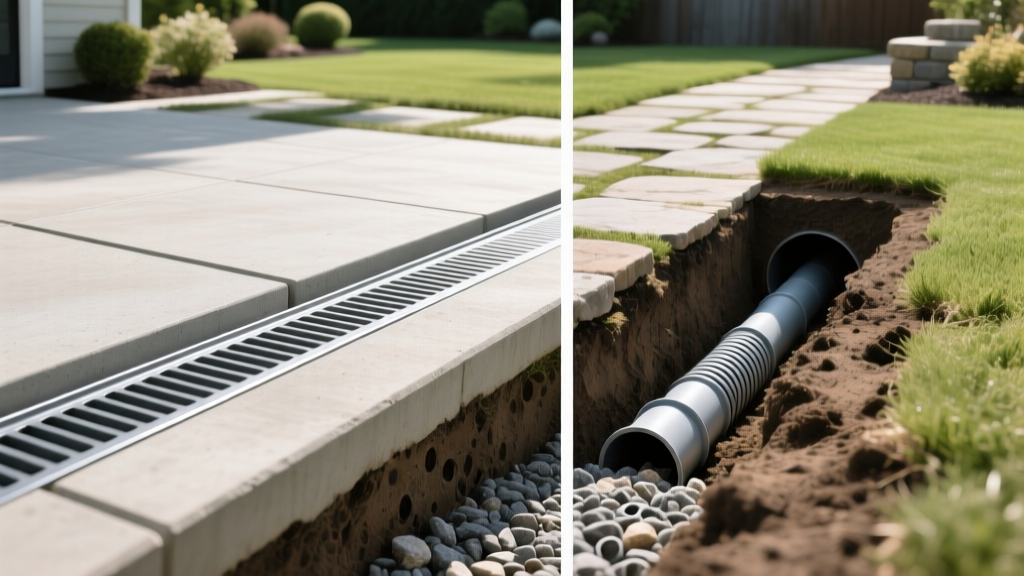
Best Landscape Drainage Kits: Channel vs French Drains
Anna KowalskiPublished
The Critical Role of Drainage in Hardscaping
When designing outdoor living spaces, patios, and driveways, aesthetics often take center stage. However, the unseen hero of any successful landscaping project is a robust water management system. Impermeable hardscaping surfaces like concrete, pavers, and natural stone create massive runoff during heavy rainstorms. Without a dedicated drainage solution, this water will pool against your home's foundation, wash away expensive mulch and topsoil, and cause severe structural damage over time. Choosing the right landscape drainage kit is not just a matter of convenience; it is a critical investment in the longevity of your property.
In this comprehensive product review and comparison guide, we evaluate the most popular residential landscape drainage kits on the market. We will break down the engineering, installation requirements, and cost-effectiveness of surface-level channel drains versus subsurface French drain alternatives, helping you make an informed decision for your specific yard topology.
Understanding Channel Drains vs. French Drains
Before purchasing materials, it is essential to understand the functional differences between the two primary categories of landscape drainage: channel drains and French drains. While both systems aim to move water away from vulnerable areas, they operate in fundamentally different ways.
Channel Drains (Trench Drains): These are surface-level interception systems. They consist of a long, narrow trough covered by a grate. Channel drains are designed to be set flush with hardscaping surfaces like concrete pads, asphalt driveways, or paver patios. Their primary job is to catch fast-moving surface water before it can flood a garage or pool on a patio. Because they sit on the surface, they require precise grading of the surrounding hardscape to ensure water flows into the grate.
French Drains: These are subsurface or swale-based systems designed to manage groundwater, soggy soil, and slow-moving surface water. A traditional French drain consists of a perforated pipe surrounded by gravel, buried in a trench. Water seeps through the soil or gravel into the pipe and is carried away by gravity. Modern prefabricated French drain kits replace the heavy gravel with lightweight polystyrene aggregate wrapped in filter fabric, drastically reducing labor and material costs.
Top Landscape Drainage Kits Reviewed
We tested and reviewed the top-selling drainage systems based on flow rate capacity, material durability, ease of installation, and long-term reliability. Here is how the industry leaders stack up.
1. NDS 5-Inch Pro Series Channel Drain Kit
The NDS Pro Series is the gold standard for residential and light-commercial hardscape drainage. The 5-inch width provides a substantial catchment area, making it ideal for the end of a sloping driveway or the perimeter of a large stamped concrete patio. Constructed from high-density polyethylene (HDPE), the trough is resistant to soil chemicals and freeze-thaw cycles.
Key Specifications:
- Width: 5.5 inches (overall), 4-inch internal channel
- Load Rating: Class B (up to 45,000 lbs) when paired with the appropriate cast-iron or heavy-duty plastic grate
- Connections: Built-in 4-inch and 3-inch side and bottom outlet adapters
- Estimated Cost: $45 to $65 per 3.3-foot section
Pros: Extremely durable; modular design allows for custom lengths; end caps and corner joints are easily snap-fitted and sealed with PVC cement.
Cons: Requires a concrete encasement for high-traffic driveway installations to prevent the plastic trough from bowing under vehicular weight.
2. NDS EzDrain Prefabricated French Drain
For homeowners dreading the prospect of hauling tons of gravel, the NDS EzDrain is a revolutionary alternative. This kit features a 4-inch perforated corrugated pipe surrounded by lightweight expanded polystyrene (EPS) aggregate, all wrapped in a commercial-grade geotextile filter fabric. It is designed to be dropped directly into a trench and buried, saving hours of backbreaking labor.
Key Specifications:
- Pipe Diameter: 4 inches (corrugated)
- Overall Diameter: 11 inches (including EPS aggregate)
- Length: Available in 4-foot and 10-foot sticks
- Estimated Cost: $35 to $45 per 4-foot section
Pros: Eliminates the need for gravel; lightweight and easy to transport; the filter fabric effectively prevents fine soil particles from clogging the pipe over time.
Cons: The corrugated interior of the pipe creates friction, which can slow water flow and trap sediment compared to smooth-wall PVC pipes.
3. Advanced Drainage Systems (ADS) 4-Inch Corrugated Pipe & Gravel
The traditional approach to French drains remains a viable, budget-friendly option for large-acreage properties. ADS corrugated HDPE pipe is flexible, cheap, and widely available. When paired with washed drainage gravel and a separate landscape fabric, this system offers excellent subsurface water management for deep yard swales and retaining wall weep holes.
Key Specifications:
- Pipe Diameter: 4 inches
- Material: High-Density Polyethylene (HDPE)
- Flexibility: Highly flexible, can bend around tree roots and curved garden beds
- Estimated Cost: $25 to $35 per 10-foot section (plus $100+ in gravel and fabric)
Pros: Highly affordable for long runs; flexible; easy to cut with standard hand saws.
Cons: Requires significant manual labor to shovel and wheelbarrow heavy gravel; the ridges inside the corrugated pipe are notorious for catching debris if the filter fabric is compromised.
Head-to-Head Comparison Chart
Use the table below to compare the core metrics of these landscape drainage kits at a glance. Costs are estimated based on a standard 10-foot linear run, including necessary adapters and basic hardware.
| Product | Type | Material | Est. Cost (10 ft) | Install Time | Best Application |
|---|---|---|---|---|---|
| NDS 5' Pro Channel | Surface Trench | Polyethylene | $150 - $200 | 3-5 Hours | Driveways, Patios |
| NDS EzDrain | Subsurface French | Polystyrene/PVC | $100 - $140 | 2-3 Hours | Foundation, Swales |
| ADS Corrugated | Subsurface French | HDPE / Gravel | $60 - $90 | 5-7 Hours | Budget Yard Drainage |
Installation Best Practices and Slope Requirements
Even the most expensive drainage kit will fail if installed without proper grading. Gravity is the engine of these systems, and calculating the correct slope is non-negotiable. According to the University of Minnesota Extension, proper yard grading requires a minimum 1% slope (1/8 inch per foot) for the first 10 feet away from a structure to prevent foundation water damage. When tying into landscape drainage kits, maintaining this 1% to 2% slope inside the trench is paramount for gravity-fed systems.
For a 20-foot French drain run, your trench must drop at least 2.5 inches from the catch basin to the discharge point. We highly recommend renting a rotary laser level or using a string line with a line level to verify your trench bed before laying any pipe or channel drains. Additionally, always terminate your drainage system with a pop-up emitter or a daylighted outfall located in a lower elevation area of your property, ensuring the discharged water does not simply pool at the end of the pipe and erode your landscaping.
Long-Term Maintenance and Winterization
Landscape drainage systems are not entirely 'set it and forget it' installations. Over time, organic debris, silt, and root intrusion can compromise flow rates.
- Channel Drains: Remove the grates every spring and fall. Use a wet/dry shop vac to remove accumulated sand, leaves, and pebbles from the trough. Inspect the PVC glue joints for separation caused by frost heave.
- French Drains: If you used corrugated pipe (like ADS or EzDrain), flush the system annually with a garden hose or a low-pressure sewer jetter to clear out fine silt that bypassed the geotextile fabric. Avoid using high-pressure washers, as they can tear the interior ridges of the corrugated pipe.
- Winterization: In freezing climates, ensure that the discharge points (pop-up emitters or daylighted pipes) are clear of snow and ice. If water backs up and freezes inside the channel drain or French drain, the expansion can crack polyethylene troughs and split corrugated pipes.
Final Verdict: Which System Should You Install?
Your choice between a channel drain and a French drain ultimately depends on the source of your water problem. If you are dealing with rapid surface runoff threatening your garage, patio, or hardscape walkways, the NDS 5-Inch Pro Series Channel Drain is the undisputed champion. Its high flow rate and structural integrity make it a permanent, reliable solution for surface water interception.
Conversely, if your issue involves a soggy lawn, a high water table, or water seeping into your basement, a subsurface French drain is required. For most DIY landscapers and weekend warriors, the NDS EzDrain Prefabricated French Drain is the superior choice. The elimination of heavy gravel reduces installation time by more than half, and the integrated filter fabric provides excellent long-term protection against clogging. Reserve the traditional ADS corrugated pipe and gravel method only for extremely long, rural drainage runs where the cost savings on materials outweigh the immense physical labor required.

