
Landscaping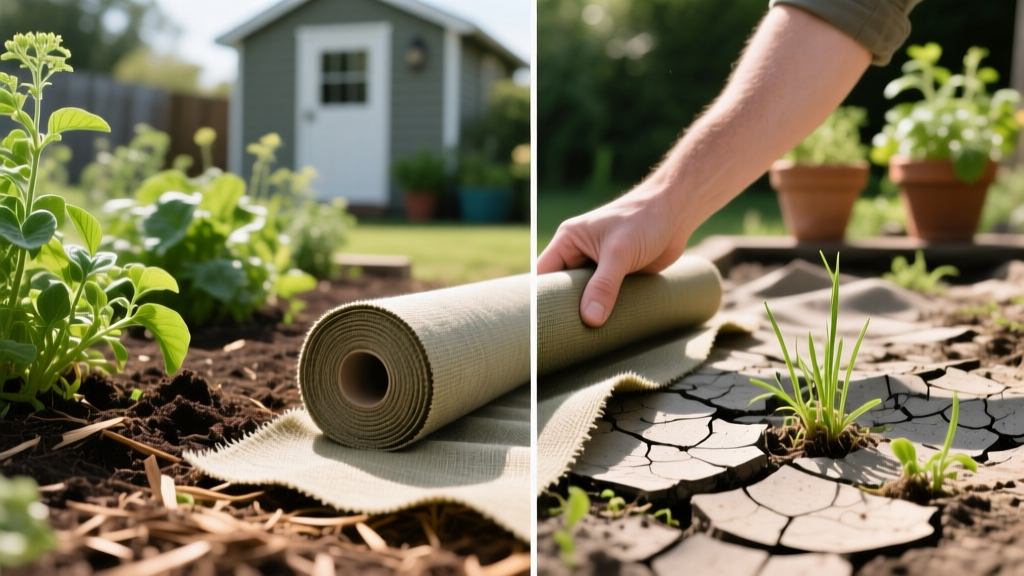
Landscape Fabric Myths: Fact vs Fiction for Garden Beds
Lisa ThompsonPublished
The Great Landscape Fabric Deception
Walk into any big-box garden center in early spring, and you will see pallets of black, woven landscape fabric flying off the shelves. Marketed as the ultimate, low-maintenance solution for weed control, this synthetic barrier has become a staple in residential landscaping. The promise is incredibly enticing: lay it down, cover it with mulch or gravel, and never pull a weed again. But what if this multi-million-dollar landscaping staple is actually harming your garden?
As a senior horticulturist and landscape designer, I have spent years tearing out degraded, weed-choked landscape fabric from frustrated homeowners' garden beds. The reality of weed barriers is far from the marketing hype. In this comprehensive myth-busting guide, we will separate fact from fiction, explore the hidden costs of synthetic barriers, and provide actionable, science-backed alternatives for a thriving, low-maintenance landscape.
Myth 1: Landscape Fabric is a Permanent Weed Barrier
The Fiction: Installing a heavy-duty woven or non-woven weed barrier will permanently stop weeds from germinating in your garden beds.
The Fact: Landscape fabric typically fails as a weed barrier within 12 to 24 months. While it may temporarily block weed seeds residing in the soil below, it does nothing to stop the inevitable accumulation of organic matter on top. Wind-blown dust, decomposing leaves, and bird droppings quickly form a layer of soil on top of the fabric. Weed seeds land in this newly formed topsoil layer, germinate, and send their roots directly into the porous fabric.
Once the roots anchor into the woven plastic, extracting the weeds becomes a nightmare. Instead of pulling weeds easily from loose soil, you are forced to rip them from a synthetic matrix, often tearing the fabric and leaving root fragments behind to resprout. According to research published by the Washington State University Extension, landscape fabric is entirely ineffective as a long-term weed control strategy in planted landscape beds, primarily because surface weed growth is unavoidable and the fabric itself degrades under UV exposure and soil friction.
Myth 2: Fabric Allows Soil to Breathe and Drain
The Fiction: Because landscape fabric is sold as 'permeable,' it allows water, oxygen, and nutrients to flow freely into the soil ecosystem.
The Fact: While a brand-new sheet of fabric may pass a water permeability test in a laboratory, real-world conditions tell a different story. Within a single season, the microscopic pores of the fabric become clogged with fine soil particles, dust, and fungal hyphae. Once clogged, the fabric becomes a hydrophobic barrier.
Instead of water penetrating deeply into the root zone, rainfall and irrigation hit the fabric and run off horizontally, leading to topsoil erosion and parched plant roots. Furthermore, soil microbiology requires constant gas exchange. By suffocating the soil surface, landscape fabric drastically reduces the population of beneficial earthworms and mycorrhizal fungi, which are essential for breaking down organic matter and delivering nutrients to your plants.
Myth 3: It is Safe for Plant and Tree Health
The Fiction: Cutting an 'X' in the fabric and planting a shrub or tree through it gives the plant enough room to grow while keeping the surrounding area weed-free.
The Fact: Trees and shrubs require their root flares and surrounding surface roots to breathe and expand. As the plant's trunk grows in diameter (secondary growth), the rigid landscape fabric does not expand with it. The fabric eventually girdles the trunk, cutting off the vascular cambium layer, which transports water and nutrients. This slow strangulation can take years to manifest but often results in the premature decline and death of expensive landscape trees. The Penn State Extension strongly advises against using synthetic barriers around trees and shrubs, noting that organic mulches applied directly to the soil surface are vastly superior for plant health and moisture retention.
Fact vs. Fiction: The Weed Barrier Breakdown
| Landscaping Claim | Verdict | The Scientific Reality |
|---|---|---|
| Stops all weeds permanently | FICTION | Weeds grow in the dust and debris that accumulate on top of the fabric within 1-2 years. |
| Improves soil moisture retention | FICTION | Clogged pores cause water runoff, leaving underlying soil dry and compacted. |
| Protects tree and shrub health | FICTION | Fabric girdles expanding trunks and suffocates surface roots, leading to plant decline. |
| Requires zero maintenance | FICTION | Removing weeds rooted into the fabric is labor-intensive, and replacing degraded fabric is costly. |
| Organic mulch is better for soil | FACT | Direct-to-soil organic mulch feeds microbes, retains moisture, and naturally suppresses weeds. |
Actionable Alternatives: What Actually Works
If landscape fabric is a landscaping liability, what should you use instead? The goal is to suppress weed germination while actively feeding the soil food web. Here are the professional-grade alternatives we recommend at Lawns Guide.
1. Cardboard Sheet Mulching (Lasagna Gardening)
For new garden beds or areas overrun with turfgrass and weeds, sheet mulching is the gold standard. This method mimics the natural leaf litter of a forest floor.
- Preparation: Mow existing weeds or grass as short as possible. Do not use herbicides; the decaying organic matter will feed the soil.
- The Barrier: Lay down plain, corrugated cardboard. Remove all plastic tape, labels, and glossy inserts. Overlap the edges of the cardboard by at least 6 inches to prevent aggressive weeds like Bermuda grass from finding a gap.
- Hydration: Soak the cardboard thoroughly with a garden hose until it is completely saturated and conforms to the soil contours.
- The Mulch Layer: Apply 3 to 4 inches of organic mulch directly on top of the wet cardboard. The cardboard will smother existing weeds and decompose within 6 to 9 months, inviting earthworms to the surface.
2. Coarse Arborist Wood Chips
Ditch the dyed, finely shredded hardwood mulch that mats down and repels water. Instead, source coarse arborist wood chips. These chips contain a mix of wood, bark, and leaves, providing a diverse carbon and nitrogen ratio that feeds soil fungi.
- Application Depth: Apply a uniform layer 3 to 4 inches deep. Any thicker, and you risk creating anaerobic conditions; any thinner, and weeds will easily penetrate.
- The Donut Rule: Keep the mulch at least 3 inches away from the base of tree trunks and woody shrub stems. Piling mulch against the bark (volcano mulching) invites rot and rodent damage.
- Sourcing: Check local municipal recycling centers or use apps like ChipDrop to get arborist chips delivered for free or a nominal fee (typically $25 to $50 per cubic yard).
3. Organic Pre-Emergent Herbicides
If you are dealing with annual weeds (like crabgrass or spurge) in existing beds where cardboard is not an option, use corn gluten meal. This natural byproduct of the corn milling process inhibits root formation in germinating seeds.
- Timing: Apply in early spring when soil temperatures reach 50°F to 55°F, just before forsythia bushes finish blooming.
- Measurement: Apply at a rate of 20 lbs per 1,000 square feet. Water it in lightly to activate, then allow the surface to dry out to kill the germinating weed seedlings.
Cost and Material Comparison Chart
When evaluating landscaping materials, it is crucial to look beyond the initial purchase price and factor in installation labor, lifespan, and long-term soil health impacts. The University of Missouri Extension highlights that organic mulches, while requiring periodic top-ups, eliminate the costly and labor-intensive removal process associated with synthetic fabrics.
| Material | Initial Cost (per 100 sq ft) | Lifespan | Soil Health Impact | Removal Difficulty |
|---|---|---|---|---|
| Woven Landscape Fabric + Gravel | $85 - $120 | 1 - 3 Years | Negative (Suffocates soil) | Extremely High (Tearing, root extraction) |
| Non-Woven Plastic Barrier | $45 - $60 | 6 - 12 Months | Severe (Blocks all water/air) | Moderate (Brittle, shreds into microplastics) |
| Cardboard + Arborist Wood Chips | $15 - $30 (or Free) | 1 - 2 Years (Requires top-up) | Highly Positive (Feeds microbiome) | Zero (Decomposes into topsoil) |
Final Verdict: Ditch the Plastic, Feed the Soil
The landscaping industry is slowly waking up to the reality that synthetic weed barriers do more harm than good. By relying on landscape fabric, you are essentially placing a plastic lid on a living, breathing soil ecosystem. The initial satisfaction of a weed-free bed quickly devolves into a frustrating cycle of surface weeds, water runoff, and struggling plants.
Embrace the natural mechanics of your garden. Use cardboard to smother existing competition, apply a thick layer of coarse organic mulch to retain moisture and regulate soil temperature, and let the earthworms do the tilling for you. Not only will you save money and save your back from tearing out degraded plastic, but your trees, shrubs, and perennials will reward you with vigorous, resilient growth for decades to come.

