
Landscaping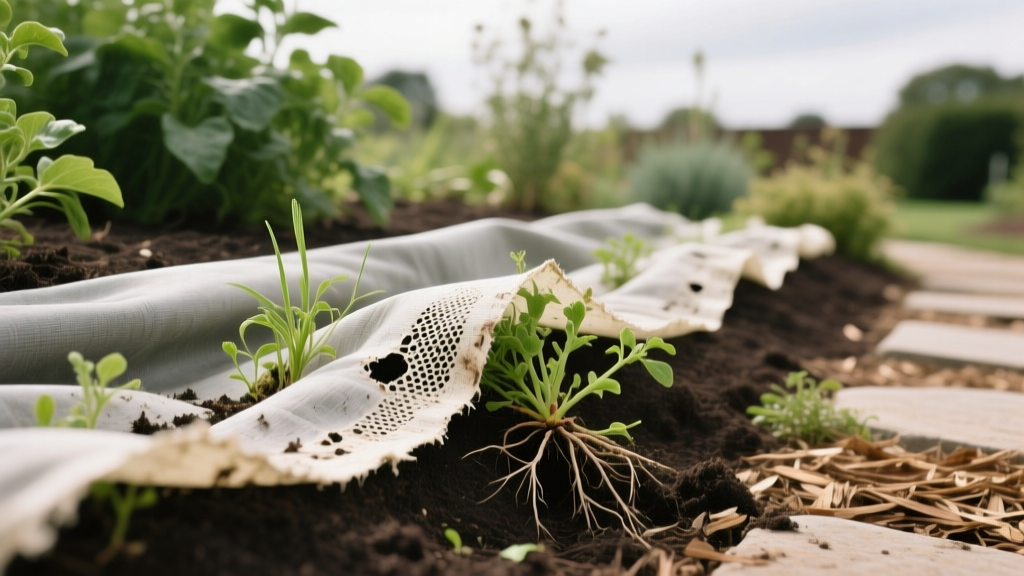
Landscaping Myths: The Truth About Weed Barrier Fabric
David ParkPublished
The Great Landscaping Deception: Is Weed Barrier Fabric Worth It?
Walk into any big-box hardware store in early spring, and you will inevitably find an entire aisle dedicated to a supposed landscaping miracle: landscape fabric. Sold under names like weed barrier, geotextile, and ground cover, these woven and non-woven polypropylene materials promise a pristine, weed-free garden bed with zero ongoing maintenance. For decades, homeowners and even some well-meaning landscaping contractors have rolled out this black plastic mesh, pinned it down with landscape staples, and covered it with mulch, believing they have permanently solved their weed problems.
But what if the ultimate landscaping shortcut is actually sabotaging your soil, wasting your money, and creating a much bigger headache down the road? It is time to separate horticultural fact from fiction. In this deep dive, we are busting the most pervasive myths surrounding landscape fabric and providing actionable, science-backed alternatives for sustainable landscape design.
Myth 1: Landscape Fabric is a Permanent Weed Barrier
The most common selling point of weed barrier fabric is that it physically blocks weeds from germinating and penetrating your garden beds. The fiction here is the word permanent. While a high-quality woven geotextile might suppress weed growth for the first year or two, it inevitably fails. How? The outdoor environment is dynamic. Wind blows soil, dust, and organic matter onto the surface of the mulch. As leaves decompose and mulch breaks down, a layer of rich topsoil forms on top of the fabric.
Weed seeds blow in and germinate in this newly formed top layer. Worse, the roots of these weeds grow downward and weave themselves directly into the porous mesh of the fabric. When you try to pull the weeds, the roots snap off, leaving the plant to regenerate, or the fabric itself gets ripped up. According to Robert Pavlis, a biochemist and author behind the widely respected publication Garden Myths, landscape fabric does not stop weeds; it merely changes the way they grow, often making them significantly harder to remove once their root systems anchor into the synthetic mesh.
Myth 2: Fabric Allows Water, Air, and Nutrients to Flow Freely
Manufacturers claim that the microscopic pores in geotextile fabrics allow rainwater and oxygen to reach the soil below while blocking sunlight. In a sterile laboratory setting, this is true. In a real-world garden bed, it is a complete myth. Over time, those microscopic pores become hopelessly clogged with fine silt, clay particles, and decomposing organic matter.
Once the fabric clogs, it essentially becomes a solid sheet of plastic. Water begins to pool on the surface or run off into your lawn, leading to soil erosion and deprived plant roots. Furthermore, the lack of oxygen exchange creates anaerobic soil conditions. This suffocates beneficial soil organisms, including earthworms and mycorrhizal fungi, which are essential for breaking down organic matter and delivering nutrients to your plants. The University of Minnesota Extension explicitly advises against using plastic or synthetic weed barriers around trees and shrubs, noting that these materials restrict the vital gas exchange and water infiltration that woody plants need to thrive.
Myth 3: It Protects Soil Health and Saves Money Over Time
Healthy soil is a living ecosystem that relies on the continuous cycle of organic matter decomposing on the surface and being pulled downward by earthworms and insects. Landscape fabric severs this natural cycle. By blocking organic matter from reaching the soil, the earth beneath the fabric slowly becomes dead, compacted dirt.
When it comes to cost, the initial price of landscape fabric might seem reasonable—typically $0.50 to $1.50 per square foot for commercial-grade woven materials. However, consider the hidden costs. Because the soil degrades, you will eventually need to apply synthetic fertilizers to keep your plants alive. Furthermore, when the fabric inevitably fails and tears after 5 to 7 years, removing it is a landscaping nightmare. You will spend hours painstakingly cutting and ripping the fabric out of the ground, often damaging the root systems of your desirable ornamental plants in the process.
Fact vs. Fiction: Data Comparison Chart
To understand why professional landscapers and horticulturists are moving away from synthetic barriers, let us compare the data side-by-side. The following table breaks down the long-term realities of using landscape fabric versus natural organic methods.
| Material | Initial Cost (per 100 sq ft) | Soil Health Impact | Weed Suppression Longevity | Removal Difficulty |
|---|---|---|---|---|
| Woven Landscape Fabric | $50 - $150 | Negative (Blocks microbiome, causes compaction) | 1 - 3 Years | Extreme (Roots tangle in mesh) |
| Non-Woven Fabric | $40 - $80 | Highly Negative (Clogs rapidly, stops water) | Less than 1 Year | Moderate (Tears easily) |
| Organic Sheet Mulching | $15 - $30 (Cardboard + Mulch) | Highly Positive (Feeds earthworms, retains moisture) | 1 - 2 Years (Requires top-dressing) | None (Decomposes naturally) |
The Actionable Alternative: Sheet Mulching (Lasagna Gardening)
If landscape fabric is a myth, what actually works? The most effective, sustainable, and soil-building method for suppressing weeds in garden beds is sheet mulching, often referred to as lasagna gardening. This method mimics the natural forest floor, smothering weeds while simultaneously building rich, fertile topsoil.
Step-by-Step Sheet Mulching Guide
- Step 1: Prep the Area. Mow down or string-trim existing weeds and grass as short as possible. Leave the clippings in place; they are free nitrogen.
- Step 2: Lay the Cardboard. Use plain, brown corrugated cardboard. Crucial detail: You must remove all plastic packing tape and avoid cardboard with glossy, heavily dyed inks. Overlap the edges of the cardboard by at least 6 inches to prevent rhizomatous weeds (like Bermuda grass or bindweed) from sneaking through the cracks.
- Step 3: Wet it Down. Thoroughly soak the cardboard with a garden hose. This weights it down, speeds up decomposition, and makes it immediately attractive to earthworms.
- Step 4: Apply Mulch. Cover the cardboard with 3 to 4 inches of organic mulch. Arborist wood chips (often available for free from local tree trimming services) are the gold standard for paths and large beds. For formal ornamental beds, premium shredded hardwood bark (approx. $35-$45 per cubic yard) provides a polished, manicured look.
Why This Works
The cardboard blocks sunlight, causing the weeds underneath to die and decompose. Because cardboard is fully biodegradable, it allows water and oxygen to pass through while inviting earthworms to the surface. By the time the cardboard decomposes (usually in 9 to 12 months), the weeds below are dead, and the soil structure has vastly improved. Dr. Linda Chalker-Scott, an extension horticulturist at Washington State University, has extensively documented how organic mulches outperform geotextiles in promoting plant vitality and soil structure.
Chemical and Organic Pre-Emergent Options
Sometimes, mulch alone is not enough, especially in gravel pathways, rock gardens, or areas prone to aggressive wind-blown weed seeds. In these specific hardscape or low-maintenance scenarios, using a pre-emergent herbicide is a highly effective, science-backed alternative to laying down plastic fabric.
Organic Pre-Emergent: Corn Gluten Meal
For organic gardeners, corn gluten meal is a natural byproduct of corn processing that inhibits root formation in germinating seeds. Application Rate: Apply 20 lbs per 1,000 square feet. Timing: Apply in early spring before weed seeds germinate. Note that it will not kill existing weeds, and it adds a significant amount of nitrogen to the soil, so adjust your fertilization accordingly.
Synthetic Pre-Emergent: Prodiamine
For stubborn commercial landscapes or rock beds, a synthetic pre-emergent like Prodiamine 65 WDG (active ingredient in Barricade) creates a microscopic chemical barrier in the top inch of soil. Application Rate: Mix 1.1 oz per 1,000 square feet in a backpack sprayer. Timing is everything: You must apply pre-emergents when soil temperatures at a 2-inch depth reach 50°F to 55°F for three consecutive mornings. This targets crabgrass, spurge, and annual broadleaf weeds before they ever break the surface.
Conclusion: Embrace Nature's Landscaping Wisdom
The myth of landscape fabric is rooted in a desire for control and a fear of weeds. However, treating soil like a sterile construction site rather than a living ecosystem always backfires. By ditching the synthetic weed barriers and embracing organic sheet mulching, targeted pre-emergents, and proper soil management, you will save money, protect the environment, and cultivate a landscape that is genuinely healthy from the ground up. The next time you walk past that aisle of black plastic rolls, keep walking—your soil will thank you.

