
Landscaping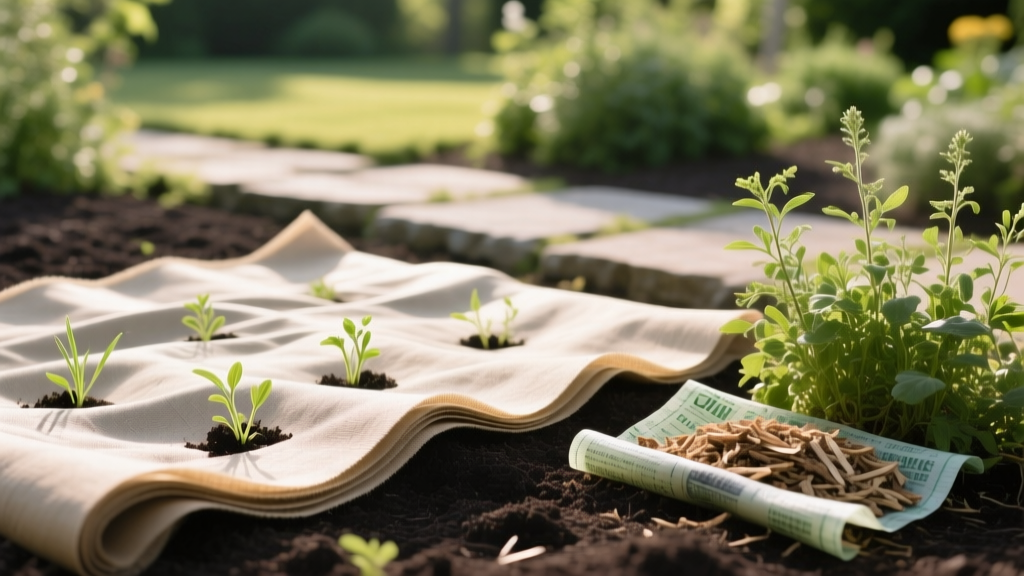
Landscape Fabric Myths Busted: Truth About Weed Barriers
David ParkPublished
The Landscaping Industry's Favorite Shortcut
Walk into any big-box garden center in early spring, and you will inevitably see massive rolls of black, woven geotextile material marketed as the ultimate solution for garden bed maintenance. Landscape fabric, often referred to as weed barrier, is a multi-million dollar industry staple. Homeowners and even some professional landscapers lay it down with the best of intentions, hoping to achieve a pristine, weed-free landscape that requires zero upkeep. But does this ubiquitous product actually deliver on its promises, or is it a landscaping myth that causes more harm than good?
As a senior horticulturist and landscape designer, I have spent years repairing garden beds damaged by improper weed control methods. The reality of landscape fabric is far more complicated than the packaging suggests. Today, we are separating fact from fiction, busting the most pervasive myths about weed barriers, and providing you with actionable, science-backed alternatives that will save you time, money, and backache in the long run.
Myth 1: Landscape Fabric Permanently Stops Weeds
The Fiction: If you lay down heavy-duty woven landscape fabric and cover it with rocks or mulch, you will never have to pull a weed again.
The Fact: Landscape fabric only delays the inevitable, and in many cases, it actually makes weed removal significantly more difficult. Weed seeds are constantly dispersed by wind, birds, and wildlife. These seeds land on the layer of mulch or gravel sitting above the fabric. When they germinate, their roots grow downward and easily penetrate the woven pores of the geotextile material.
Once the roots anchor into the soil beneath the fabric, the weed barrier acts as a protective shield for the weed. When you try to pull the weed by hand, the roots snap off at the fabric line, leaving the root system intact to regenerate. Furthermore, aggressive perennial weeds like field bindweed and nutsedge will effortlessly pierce right through the fabric from below, rendering the barrier completely useless. According to the University of Wisconsin-Madison Extension, landscape fabric is not a permanent solution and often fails within just a few years as organic matter accumulates on top of it, creating a perfect seedbed for new weeds.
Myth 2: Fabric Allows Water and Air to Flow Freely
The Fiction: Because landscape fabric is porous and marketed as 'breathable,' it allows essential rainwater and oxygen to reach the root zones of your desirable plants.
The Fact: While brand-new fabric straight out of the roll is indeed permeable, its performance degrades rapidly once installed in a real-world environment. Within 12 to 18 months, the microscopic pores of the fabric become completely clogged with fine soil particles, decomposing organic matter, and fungal mycelium.
Once clogged, the fabric becomes virtually impermeable. Instead of water soaking into the soil to hydrate your shrubs and perennials, it pools on the surface and runs off, often causing soil erosion and washing your expensive mulch into the street. This lack of gas exchange also suffocates the soil microbiome. Beneficial mycorrhizal fungi and earthworms, which are crucial for nutrient cycling and soil aeration, die off due to the lack of oxygen and organic matter integration. The Penn State Extension emphasizes that for soil to remain healthy, organic mulches need to be in direct contact with the soil surface so they can decompose and improve soil structure—a process completely blocked by synthetic fabrics.
Myth 3: Plastic Sheeting is a Better Alternative
The Fiction: If fabric fails because of its pores, using solid black plastic sheeting will provide a 100% impenetrable weed barrier.
The Fact: Using plastic sheeting in garden beds is an ecological disaster. While it may temporarily block light and stop weed germination beneath it, plastic creates a completely anaerobic (oxygen-free) environment in the soil. This kills off beneficial soil bacteria and fungi, essentially turning your garden bed into dead dirt. Furthermore, plastic prevents any water penetration, meaning you must install complex drip irrigation systems beneath the plastic just to keep your plants alive. When the plastic eventually tears or degrades from UV exposure, it leaves behind a nightmare of microplastics that will contaminate your soil for decades.
The Hidden Nightmare: Removing Old Landscape Fabric
One of the most frustrating aspects of landscape fabric is what happens when you decide to remove it. After five years in the ground, the fabric becomes deeply entangled with the root systems of your desirable plants, shrubs, and trees. Pulling up the fabric often strips the bark off surface roots, girdles the trunks of young trees, and destroys the delicate feeder roots responsible for water uptake. What was supposed to be a low-maintenance shortcut turns into a grueling, multi-day excavation project that can cost hundreds of dollars in professional labor to rectify, not to mention the cost of replacing the plants that were damaged during the removal process.
Fact vs. Fiction: Weed Control Method Comparison
To help you make an informed decision for your next landscaping project, we have compiled a data-driven comparison of the most common weed suppression methods used in residential garden beds.
| Method | Weed Suppression (Years) | Soil Health Impact | Water Permeability | Est. Cost (per 100 sq ft) |
|---|---|---|---|---|
| Woven Landscape Fabric | 1 - 3 Years | Negative (Blocks organic integration) | Poor (Clogs rapidly) | $15 - $25 |
| Black Plastic Sheeting | 1 - 2 Years | Severe Negative (Anaerobic) | Zero (Causes runoff) | $5 - $10 |
| Bare Organic Mulch (3-4") | 1 Year (Requires topping up) | Highly Positive (Feeds soil) | Excellent | $10 - $20 |
| Sheet Mulching (Cardboard) | 2 - 4 Years | Highly Positive (Builds topsoil) | Excellent (After breakdown) | $5 - $15 |
| Pre-Emergent Herbicides | 0.5 - 1 Year (Per application) | Neutral to Negative | Excellent | $15 - $30 |
The Ultimate Alternative: Sheet Mulching (Lasagna Gardening)
If landscape fabric is a myth and a liability, what should you use instead? The gold standard for sustainable, low-maintenance, and highly effective weed control is a technique known as sheet mulching. This method mimics the natural forest floor, where leaves and organic debris naturally smother weeds while feeding the soil beneath.
Sheet mulching utilizes a biodegradable barrier—specifically, plain corrugated cardboard—layered with compost and wood chips. The cardboard blocks sunlight, killing existing weeds and preventing new seeds from germinating, while naturally breaking down over 12 to 18 months to feed the earthworms and improve soil structure.
Step-by-Step Sheet Mulching Guide
Follow these precise measurements and steps to ensure your garden beds remain weed-free and ecologically vibrant.
- Step 1: Prepare the Site. Mow down or use a string trimmer to flatten any existing weeds or grass in the garden bed. Do not use chemical herbicides; the goal is to build soil biology, not destroy it.
- Step 2: Lay the Cardboard. Source plain, brown corrugated cardboard from local grocery stores or appliance shops (it is usually free). Remove all plastic tape, staples, and glossy labels. Lay the cardboard directly over the flattened weeds, ensuring every piece overlaps by at least 6 inches to prevent weeds from finding a gap.
- Step 3: Hydrate the Barrier. Use a garden hose to thoroughly soak the cardboard. This weights it down, conforms it to the soil contours, and jumpstarts the decomposition process.
- Step 4: Add Compost. Spread a 2 to 3-inch layer of high-quality organic compost or leaf mold directly over the wet cardboard. This provides an immediate nutrient source for your plants and soil microbes.
- Step 5: Apply the Top Mulch. Finish with a 3 to 4-inch layer of coarse arborist wood chips. Avoid dyed mulches or fine bark dust, which can compact and repel water. The Arbor Day Foundation highly recommends organic wood chips for their superior moisture retention and temperature regulation properties.
Timing and Costs
The best time to install a sheet mulch bed is in the late fall or early spring. This allows the cardboard to break down and the soil biology to activate before the peak summer weed germination season. In terms of cost, sheet mulching is incredibly budget-friendly. While the cardboard is often free, bulk compost typically costs around $30 to $40 per cubic yard, and bulk arborist wood chips can often be sourced for free from local tree trimming services or purchased for $20 to $30 per cubic yard. For a standard 100-square-foot garden bed, you can expect to spend less than $20 in materials.
Conclusion: Work With Nature, Not Against It
The landscaping industry has sold homeowners a bill of goods with landscape fabric. The promise of a zero-maintenance, permanently weed-free garden bed is a complete myth that ultimately leads to degraded soil, suffocated plant roots, and a massive headache when it comes time to renovate your landscape. By abandoning synthetic geotextiles and plastic sheeting in favor of biodegradable sheet mulching, you are not just suppressing weeds—you are actively building a resilient, drought-tolerant, and biologically diverse ecosystem right in your own backyard. Put down the weed barrier, pick up the cardboard, and let nature do the heavy lifting.

