
Landscaping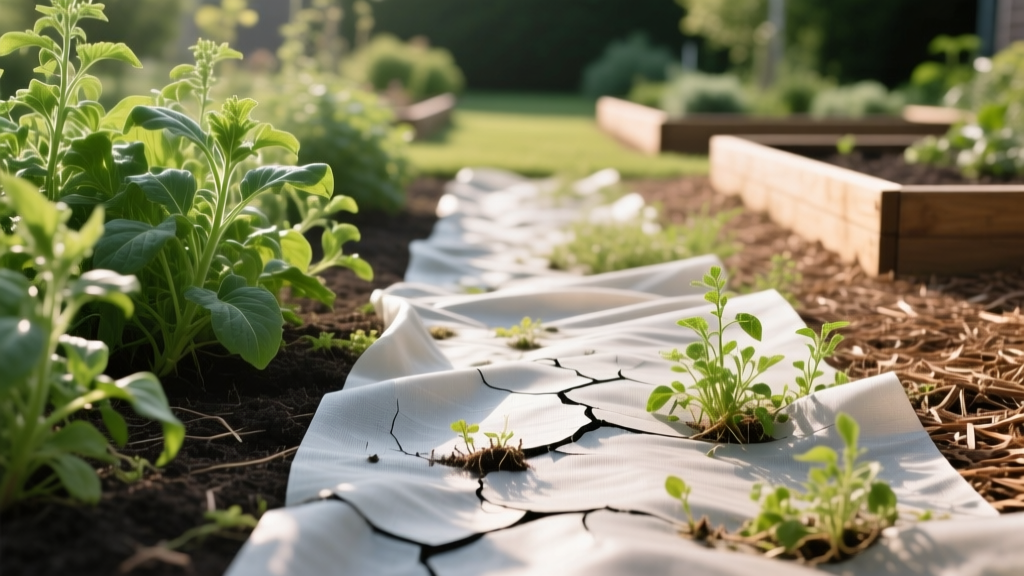
Landscape Fabric Myths: Fact vs Fiction for Weed Control
Lisa ThompsonPublished
The Backyard Illusion: Why We Love Landscape Fabric
Walk into any big-box home improvement store in early spring, and you will see towering rolls of landscape fabric positioned prominently near the mulch and garden soil. Marketed as the ultimate "weed barrier," this woven or spunbond polypropylene material has become a default installation step for homeowners and amateur landscapers alike. The promise is incredibly appealing: lay it down, cut an X for your plants, cover it with mulch, and never pull a weed again.
But as any seasoned landscape professional or horticulturalist will tell you, this promise is largely a myth. In fact, the widespread use of landscape fabric in planted garden beds has created a legacy of degraded soil, stunted plant growth, and nightmare weed removal scenarios. In this myth-busting guide, we separate fact from fiction, explore the hidden costs of weed barriers, and provide actionable, science-backed alternatives for long-term landscape success.
Myth 1: Landscape Fabric Stops Weeds Forever
The Fiction: Installing a weed barrier creates an impenetrable shield that permanently stops weeds from germinating in your garden beds.
The Fact: Landscape fabric only delays the inevitable, and it often makes future weed removal significantly worse. While it may block weed seeds already present in the soil from reaching the surface, it does nothing to stop wind-blown seeds, bird-dropped seeds, or seeds washed in by rain from settling on top of the fabric.
Over time, your mulch breaks down into organic matter, and dust settles into the woven pores of the fabric. This creates a perfect, shallow seedbed on top of the barrier. When these new weeds germinate, their roots push through the fabric's microscopic holes. As the roots thicken, they become hopelessly tangled in the woven mesh. When you finally try to pull the weed, the root snaps off, or worse, you rip up the expensive fabric and the mulch along with it.
Myth 2: Fabric Protects Soil Health and Drainage
The Fiction: Because landscape fabric is "permeable," it allows water, air, and nutrients to freely pass through to the soil and plant roots below.
The Fact: While a brand-new piece of fabric held up to the light appears porous, the reality in a garden environment is vastly different. According to extensive research by Dr. Linda Chalker-Scott, an extension horticulturist at Washington State University Extension, landscape fabric pores quickly clog with fine soil particles, fungal hyphae, and decomposing organic matter.
Once clogged, the fabric becomes an impermeable barrier. It restricts the vital gas exchange between the soil and the atmosphere, suffocating beneficial soil microbes and earthworms. Furthermore, it prevents water from penetrating evenly, leading to runoff and shallow root systems in your desirable landscape plants.
The Golden Rule of Soil Health: If a synthetic material prevents organic matter from naturally incorporating into the soil profile, it will ultimately starve and suffocate the root systems of your trees and shrubs.
Myth 3: Gravel Over Fabric is a Zero-Maintenance Path
The Fiction: Laying fabric under a gravel walkway or driveway will keep the gravel clean and prevent weeds forever.
The Fact: This is perhaps the most frustrating landscaping myth to maintain. In a gravel path, leaves, dirt, and organic debris accumulate on top of the stones. As this debris decomposes, it turns into soil. Weeds grow in this top layer of soil and root directly into the fabric. Because the fabric prevents deep rooting, the weeds are often shallow but incredibly dense.
If you ever need to repair the path or replace the gravel, removing the fabric is a back-breaking chore. The gravel becomes permanently wedged in the degraded mesh, forcing you to shovel up the stone, the fabric, and the weed mat in one heavy, tangled mess.
Weed Control Showdown: Fabric vs. Organic Alternatives
To understand why landscape fabric falls short, we must compare it to sustainable, soil-building alternatives. Below is a cost and performance analysis based on a standard 100-square-foot garden bed.
| Method | Est. Cost (per 100 sq ft) | Soil Health Impact | Year 1 Weed Suppression | Year 3 Weed Suppression |
|---|---|---|---|---|
| Woven Fabric + 3" Mulch | $80 - $130 | Poor (Suffocates soil) | High | Low (Weeds root in fabric) |
| Cardboard Sheet Mulch + 4" Wood Chips | $25 - $45 | Excellent (Builds topsoil) | High | Medium-High |
| Pre-Emergent + 3" Organic Mulch | $40 - $60 | Good (Allows gas exchange) | Very High | High (With annual reapplication) |
| 3" Organic Mulch Only | $30 - $50 | Good | Medium | Medium |
The Fact-Based Alternative: Sheet Mulching
If landscape fabric is out, what should you use to smother existing grass or heavy weed patches before planting? The horticultural gold standard is sheet mulching (often called the "lasagna method"). This method suppresses weeds while actively feeding the soil biome.
According to guidelines from the University of Missouri Extension, organic mulches are critical for moisture retention and weed suppression, but they must be in direct contact with the soil to improve its structure over time.
Step-by-Step Sheet Mulching Guide
- Step 1: Prep the Area (Timing: Early Spring or Fall). Mow existing weeds or grass as short as possible. Do not use herbicides; the decaying roots will feed the soil.
- Step 2: Lay the Barrier. Use plain, uncoated corrugated cardboard. Remove all plastic tape and glossy labels. Overlap the edges by at least 6 inches to prevent weeds from finding a seam. Wet the cardboard thoroughly with a garden hose to initiate decomposition and keep it from blowing away.
- Step 3: Add Compost. Spread a 2-inch layer of high-quality organic compost directly over the wet cardboard. This adds immediate nutrients and beneficial microbes.
- Step 4: Top with Mulch. Apply 3 to 4 inches of arborist wood chips or shredded bark. The Environmental Protection Agency (EPA) notes that organic mulches like wood chips regulate soil temperature and slowly break down to mimic natural forest floor ecosystems.
- Step 5: Planting. When ready to plant, simply pull back the mulch, cut a hole through the decomposing cardboard with a trowel, and dig into the native soil. The cardboard will be gone within 6 to 12 months, leaving behind rich, loose topsoil.
When Should You Actually Use Landscape Fabric?
Busting the myth of landscape fabric in garden beds does not mean the material is entirely useless. In the landscaping industry, heavy-duty geotextile fabrics serve vital structural and drainage purposes in hardscaping projects where no plant life is intended to grow.
Proper Applications for Geotextiles:
- French Drains and Drainage Ditches: Wrapping a perforated pipe and gravel trench in non-woven geotextile prevents soil infiltration while allowing water to pass through, saving the drain from clogging.
- Retaining Wall Base Preparation: Placing heavy-duty fabric beneath the compacted gravel base of a retaining wall helps separate the subgrade soil from the aggregate base, preventing settling and structural failure.
- Dry Creek Beds and Rip-Rap: Lining a decorative dry creek bed with fabric prevents the decorative river rock from sinking into the underlying clay or topsoil over time.
In these scenarios, professionals use commercial-grade geotextiles (like Mirafi or Typar) engineered for load-bearing separation and high-flow drainage, not the lightweight, UV-degrading "weed barriers" sold in the garden center.
Final Verdict: Ditch the Fabric, Feed the Soil
The myth of the permanent, plant-friendly weed barrier costs homeowners thousands of dollars in wasted materials, dead shrubs, and eventual removal labor. By abandoning landscape fabric in planted beds and embracing organic sheet mulching, you align your landscaping practices with natural ecological processes. You will spend less money, pull fewer weeds in the long run, and cultivate a vibrant, thriving landscape that improves year after year.

