
Landscaping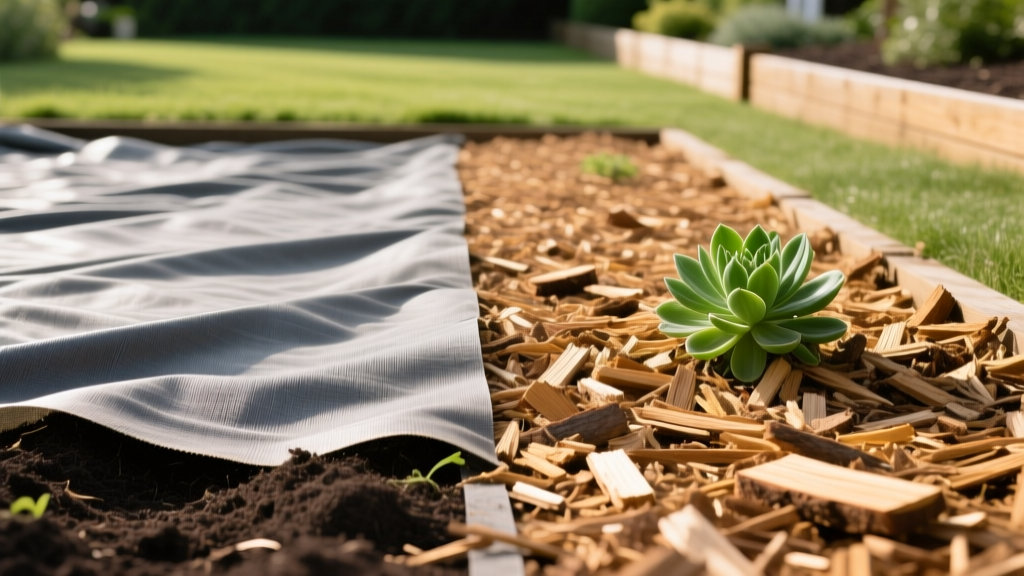
Landscape Fabric vs Wood Mulch: Which Weed Barrier Wins
Robert HayesPublished
The Great Garden Bed Debate: Landscape Fabric vs. Wood Mulch
When planning a new garden bed or refreshing an existing landscape, homeowners universally share one goal: minimizing weed growth while maximizing curb appeal. For decades, the landscaping industry has debated the most effective weed barrier strategy. On one side, we have synthetic landscape fabric (geotextiles), heavily marketed as a permanent, foolproof weed block. On the other side, we have organic wood mulch, a natural byproduct that promises soil enrichment alongside weed suppression. But which product actually delivers the best long-term results for your landscape?
Choosing between landscape fabric and wood mulch is not merely an aesthetic decision; it fundamentally alters the biology of your soil, the drainage capabilities of your yard, and the maintenance schedule of your weekends. In this comprehensive Product A vs. Product B comparison, we will break down the costs, installation requirements, and long-term efficacy of both materials to help you make an informed, science-backed decision for your outdoor living spaces.
Contender A: Landscape Fabric (Geotextiles)
Landscape fabric is a synthetic material, typically made from woven or non-woven polypropylene or polyester. It is designed to be laid directly over bare soil, with holes cut for existing plants, and is usually topped with a layer of decorative rock or mulch.
The Pros of Landscape Fabric
- Immediate Weed Suppression: When first installed, high-quality woven fabrics block up to 99% of sunlight, preventing weed seeds in the underlying soil from germinating.
- Material Separation: It excels at keeping inorganic hardscaping materials, like decorative gravel or river rock, from sinking into the native soil over time.
- Erosion Control: On mild slopes, the fabric holds the soil matrix together during heavy rainfall until groundcover can establish.
The Cons of Landscape Fabric
- Soil Asphyxiation: Over time, the microscopic pores in the fabric clog with dust, soil particles, and organic debris, severely restricting water and oxygen exchange.
- The 'False Security' Effect: Airborne weed seeds blow in and settle on top of the fabric. When they germinate, their roots penetrate the fabric, making them nearly impossible to pull without tearing the barrier.
- Hidden Costs: Requires specialized landscape staples (pins) every 3 to 5 feet to prevent shifting, adding to the overall material cost.
Estimated Cost: $0.50 to $1.50 per square foot for commercial-grade woven fabric, plus $0.15 per landscape staple.
Contender B: Organic Wood Mulch
Organic wood mulch includes shredded hardwood, pine bark nuggets, cedar chips, and arborist wood chips. It is applied directly to the soil surface in planted beds and around trees.
The Pros of Wood Mulch
- Soil Amendment: As it decomposes, wood mulch adds vital organic matter to the soil, feeding beneficial microbes and earthworms.
- Moisture Retention: A proper layer of mulch reduces soil water evaporation by up to 70%, significantly lowering your summer irrigation costs.
- Temperature Regulation: Acts as an insulating blanket, keeping root zones cooler in the summer and protecting them from freeze-thaw cycles in the winter.
The Cons of Wood Mulch
- Annual Maintenance: Organic mulch breaks down and must be topped up every 1 to 2 years to maintain its weed-suppressing thickness.
- Displacement: In areas with heavy water runoff or steep slopes, lightweight wood chips can wash away into storm drains or onto lawns.
- Nitrogen Tie-Up: If tilled directly into the soil (rather than left on the surface), decomposing wood can temporarily deplete soil nitrogen.
Estimated Cost: $30 to $45 per cubic yard (covers roughly 100 square feet at a 3-inch depth), plus potential delivery fees.
Head-to-Head Comparison Chart
| Feature | Landscape Fabric | Organic Wood Mulch |
|---|---|---|
| Year 1 Weed Control | Excellent (95%+) | Very Good (85-90%) |
| Year 3 Weed Control | Poor (Weeds root into fabric) | Good (With 1-inch top-up) |
| Soil Health Impact | Negative (Blocks biology) | Highly Positive (Feeds microbes) |
| Water Permeability | Degrades over time | Excellent and consistent |
| Installation Effort | High (Digging, cutting, pinning) | Low (Raking and spreading) |
| Best Application | Under gravel/stone pathways | Planted garden beds, tree rings |
Deep Dive: Soil Health and Microbiology
The most critical difference between these two products lies beneath the surface. Healthy soil is a living ecosystem teeming with mycorrhizal fungi, bacteria, and macro-invertebrates like earthworms. These organisms require a constant exchange of oxygen and water, as well as a steady supply of decaying organic matter.
According to research highlighted by the University of Minnesota Extension, organic mulches mimic the natural forest floor, slowly breaking down to improve soil structure and nutrient availability. Conversely, landscape fabric creates an artificial barrier. While it may allow some water through initially, it halts the natural cycle of leaf litter decomposition and earthworm aeration. Over a period of three to five years, the soil beneath landscape fabric often becomes compacted, hydrophobic, and biologically dead, making it incredibly difficult to establish new plantings in the future.
Deep Dive: The Weed Control Reality
The marketing behind landscape fabric often implies a 'install it and forget it' solution. However, professional landscapers know this is a myth. Weed seeds are constantly blown in by the wind or dropped by birds. When these seeds land on top of landscape fabric, they germinate in the dust and debris that naturally accumulate on the surface.
Because the fabric is porous, the weed roots will grow downward through the microscopic holes to seek moisture. Once a taproot or rhizome penetrates the woven polypropylene, it anchors itself. Attempting to pull the weed later will either snap the root (allowing it to regrow) or tear a permanent hole in the fabric, compromising the entire barrier system.
"Landscape fabrics are best used beneath inorganic mulches like stone or gravel in areas where no plants are intended to grow. In planted beds, they do more harm than good to the soil ecosystem." - General consensus among modern horticultural extension offices.
Actionable Installation Guides
If you are ready to tackle your landscape project, proper installation is just as important as product selection. Here is how to correctly apply both materials based on their ideal use cases.
How to Install Wood Mulch (The 3-Inch Rule)
For planted garden beds and tree rings, skip the fabric and opt for a thick layer of organic mulch. Follow these steps for optimal results:
- Preparation: Remove existing weeds by hand or apply a targeted, biodegradable herbicide two weeks prior. Edge the bed with a half-moon edger to create a 2-inch deep trench to hold the mulch in place.
- Application Depth: Apply a uniform layer of shredded hardwood or cedar mulch exactly 3 inches deep. Any less will fail to suppress weeds; any more will suffocate plant roots and encourage fungal diseases.
- The Donut Method: Never pile mulch against the trunk of a tree or the stems of shrubs—a practice known as 'volcano mulching.' This traps moisture against the bark, leading to rot and inviting rodent damage. Leave a 3-inch mulch-free gap around the base of all woody plants, as recommended by the Arbor Day Foundation.
- Timing: Apply mulch in mid-to-late spring after the soil has had a chance to warm up. Applying it too early traps winter chill in the soil and delays root growth.
When and How to Use Landscape Fabric
Landscape fabric is not entirely useless; it simply has a very specific, limited application. It is the correct choice for hardscaping projects where you are laying down inorganic materials like crushed granite, pea gravel, or river rock in non-planted areas (e.g., a dry creek bed, a stone patio base, or a decorative walkway).
- Grade the Soil: Ensure the native soil is compacted and graded away from your home's foundation to promote proper drainage.
- Overlap Seams: Roll out heavy-duty woven geotextile fabric. Where two rolls meet, overlap them by at least 6 inches to prevent gravel from pushing through the gap.
- Secure the Perimeter: Use 6-inch galvanized landscape staples every 3 feet along the seams and edges. In high-traffic areas, staple every 18 inches.
- Cover Immediately: UV rays will degrade exposed polypropylene in a matter of months. Cover the fabric with at least 2 inches of gravel or stone immediately after installation.
The Final Verdict
When comparing landscape fabric and wood mulch for traditional garden beds, organic wood mulch is the undisputed winner. While it requires an annual top-up, the benefits it provides to soil structure, moisture retention, and plant vitality far outweigh the minimal maintenance required. Landscape fabric should be relegated to the hardscaping toolbox, reserved strictly for use beneath gravel and stone in areas devoid of plant life.
By matching the right product to the right application, you can achieve a pristine, low-maintenance landscape that not only looks beautiful on the surface but thrives from the ground up. For more expert advice on sustainable yard care and soil management, consult your local cooperative extension office or visit resources like Penn State Extension to learn about region-specific mulching best practices.

