
Landscaping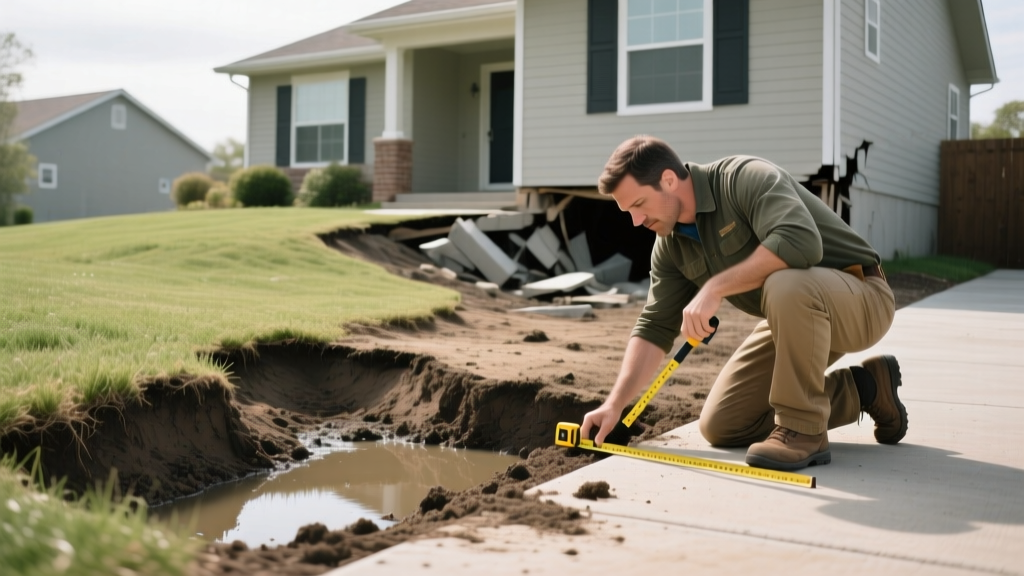
5 Landscape Grading Mistakes Flooding Your Yard (And Fixes)
Anna KowalskiPublished
The Hidden Cost of Poor Landscape Grading
Water is the single most destructive force against your home's foundation and landscape design. According to the Insurance Information Institute, water damage and freezing account for nearly 30% of all homeowners insurance claims, costing billions annually. Yet, many of these claims stem from a preventable issue: poor landscape grading and drainage design. When planning garden beds, outdoor living spaces, or hardscaping projects, homeowners often focus on aesthetics over hydrology. This leads to pooling water, soil erosion, and catastrophic foundation damage.
In this guide, we break down the five most common landscape grading and drainage mistakes, providing actionable fixes, specific product recommendations, and cost estimates to help you protect your property and boost your curb appeal.
Mistake 1: Negative Grading Toward the Foundation
The Mistake
Negative grading occurs when the soil around your home slopes toward the foundation rather than away from it. This is incredibly common in older homes where soil has settled over time, or in new builds where landscapers failed to properly compact the backfill. When it rains, water pools against your basement walls or slab, leading to hydrostatic pressure, cracks, and severe interior flooding.
The Fix
You must establish a positive grade that drops at least 6 inches over the first 10 feet away from your foundation (a 5% slope).
- DIY Approach: Use a string line and a line level to measure your current drop. Purchase screened fill dirt (not topsoil, which contains organic matter that decomposes and settles). Topsoil costs around $15 to $30 per cubic yard, while fill dirt is $10 to $20. Spread the dirt, slope it away, and compact it with a hand tamper or plate compactor.
- Professional Approach: Hiring a grading contractor to regrade a standard yard typically costs between $1,000 and $3,000, depending on the cubic yards of soil required and the accessibility of your yard for skid-steer loaders.
Mistake 2: Downspout Dump Zones
The Mistake
Your roof can shed hundreds of gallons of water during a single storm. If your gutter downspouts simply dump this water at the base of your foundation, no amount of positive grading will save you. Many homeowners use short, 2-foot corrugated plastic extenders that deposit water right back into the foundation's backfill zone.
The Fix
Extend all downspouts a minimum of 4 to 6 feet away from the house. For a cleaner, more sustainable landscaping approach, bury your downspout extensions.
- Materials: Use rigid Schedule 40 PVC pipe (4-inch diameter) rather than corrugated flexible pipe, which crushes easily and clogs with debris. Connect the PVC to an NDS 4-in. Pop-Up Drain Emitter at the discharge point in your lawn or garden bed.
- Cost: Burying a downspout line costs about $10 to $15 per linear foot if done DIY, or $25 to $40 per linear foot if hired out. Ensure the underground trench maintains a 1% slope (1/8 inch drop per foot) to guarantee gravity-fed drainage.
Mistake 3: Hardscaping Without Permeability or Channel Drains
The Mistake
Installing a solid concrete patio or a dense, non-permeable paver walkway without accounting for surface runoff essentially builds a dam in your yard. Water hits the hardscape, pools, and eventually finds the path of least resistance—usually back toward your home or into your neighbor's yard, causing erosion and disputes.
The Fix
Integrate permeability and strategic interception drains into your hardscaping design. The Environmental Protection Agency (EPA) highly recommends permeable pavements to reduce stormwater runoff and filter pollutants naturally into the soil.
- Permeable Pavers: Brands like Belgard or Pavestone offer permeable paver systems installed over a deep base of crushed angular gravel. This allows water to percolate directly into the sub-base. Expect to pay $10 to $20 per square foot for professional installation.
- Channel Drains: If you already have a solid concrete slab that slopes toward your house, install an NDS Pro Series 5-inch Channel Drain across the edge of the patio. Trench the concrete, set the drain in fresh mortar, and pipe the captured water to a dry well or storm drain.
Mistake 4: Volcano Mulching and Foundation Traps
The Mistake
Piling mulch high against your home's siding and foundation—a practice known as 'volcano mulching'—is a massive landscaping error. Not only does it trap moisture against the foundation, accelerating concrete spalling and wood rot, but it also creates a hidden highway for termites and carpenter ants to bypass your home's termite shield.
The Fix
Follow the guidelines set forth by the Arbor Day Foundation and professional landscapers regarding proper mulching techniques.
- The 3-Inch Rule: Never apply mulch deeper than 3 inches. Deeper layers become hydrophobic, meaning water will run off the top rather than soaking into the soil below.
- The 6-Inch Gap: Maintain a strict 6-inch bare-soil or gravel gap between the edge of your mulch beds and your home's foundation or siding. Use decorative river rock or gravel in this gap to promote rapid drying and deter pests.
Mistake 5: Ignoring Soil Percolation Rates
The Mistake
Planting water-loving shrubs in heavy clay soil, or installing a French drain in soil that doesn't percolate, leads to chronic swampy conditions. Clay particles are microscopic and pack tightly together, preventing water from draining downward. If you dig a hole and fill it with gravel in solid clay, you haven't built a drain; you've built an underground bathtub.
The Fix
Before executing any major drainage or planting plan, perform a simple DIY percolation test.
How to Perform a Perc Test
- Dig a hole 12 inches deep and 6 inches wide in the suspected problem area.
- Fill the hole with water and let it drain completely (this pre-soaks the soil).
- Refill the hole to the top and measure how long it takes for the water level to drop 1 inch.
- Results: If it drops 1 inch per hour, your drainage is excellent. If it takes 3 to 4 hours, you have moderate clay. If water remains after 12 hours, you have severe drainage issues requiring mechanical intervention.
For severe clay, amend garden beds with expanded shale and coarse compost to break up the soil structure. For drainage, you must route water to a daylight exit or a dry well rather than relying on soil absorption.
Comparison of Common Landscape Drainage Solutions
Choosing the right fix depends on your yard's specific topography, budget, and soil type. Use the chart below to compare your options.
| Solution | Best Application | Estimated Cost | DIY Difficulty |
|---|---|---|---|
| Regrading (Fill Dirt) | Correcting negative slope near foundation | $1,000 - $3,000+ | High (Requires machinery) |
| French Drain | Intercepting subsurface water in clay soils | $20 - $35 per linear ft | Moderate (Trenching required) |
| Dry Well | Managing downspout runoff in flat yards | $200 - $600 per unit | Moderate (Deep excavation) |
| Channel Drains | Capturing surface runoff from hardscapes | $30 - $50 per linear ft | High (Concrete cutting) |
| Permeable Pavers | Sustainable patios and walkways | $10 - $20 per sq ft | High (Precision base prep) |
Proper drainage is not just about moving water away from your house; it is about managing the entire micro-climate of your property to ensure sustainable landscaping, healthy garden beds, and long-lasting hardscaping investments.
Final Thoughts on Landscape Hydrology
Fixing landscape grading and drainage mistakes is rarely the most glamorous part of outdoor design, but it is undeniably the most critical. By ensuring a 5% positive slope, extending downspouts properly, utilizing permeable hardscaping materials, and respecting soil percolation rates, you safeguard your home's structural integrity. Before breaking ground on your next garden bed or patio, take the time to observe how water moves across your property during a heavy rain. A few hours of planning and a modest investment in PVC, gravel, and fill dirt can save you tens of thousands of dollars in foundation repairs and landscape renovations down the road.

