
Landscaping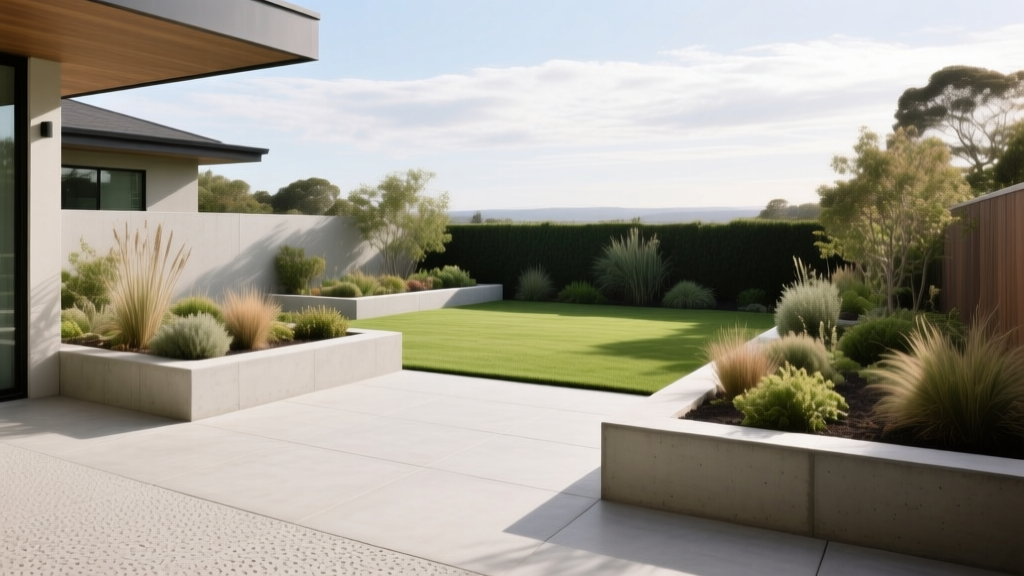
Landscaping Cost Guide: Patios, Garden Beds, and Turf
Anna KowalskiPublished
The True Cost of Transforming Your Outdoor Space
Investing in your outdoor space is one of the most rewarding home improvement projects you can undertake. Whether you are envisioning a sprawling stone patio for summer entertaining, lush garden beds bursting with native perennials, or a perfectly manicured turf lawn, understanding the financial commitment is the crucial first step. Landscaping costs vary wildly based on your geographic location, the scope of the project, material choices, and the current condition of your yard. On average, homeowners spend anywhere from $3,000 to $15,000 for a mid-sized backyard renovation, but high-end landscape architecture projects can easily exceed $50,000. This comprehensive pricing guide breaks down the exact costs of hardscaping, softscaping, labor, and sustainable infrastructure so you can budget accurately and avoid unexpected expenses.
Breaking Down Hardscaping Costs
Hardscaping forms the structural backbone of your landscape design. It includes non-living elements like patios, walkways, retaining walls, and outdoor kitchens. Because hardscaping requires heavy materials, specialized equipment, and significant manual labor, it typically consumes the largest portion of a landscaping budget.
Patios and Walkways
The cost of a patio depends heavily on the material you choose. Poured concrete is the most budget-friendly option, ranging from $8 to $15 per square foot. If you want the look of stone without the premium price tag, stamped concrete costs between $12 and $20 per square foot. Concrete pavers are a popular mid-range choice, offering excellent durability and design flexibility for $15 to $25 per square foot. For a luxurious, natural aesthetic, flagstone or bluestone patios will cost between $25 and $45 per square foot installed. Walkways generally follow the same pricing tiers, though they may require additional excavation if the terrain is uneven.
Retaining Walls and Grading
If your property features slopes or uneven terrain, retaining walls are essential for preventing soil erosion and creating usable flat spaces. Segmental concrete blocks cost $20 to $35 per square foot, while natural stone or poured concrete walls can push the price to $40 to $60 per square foot. Before any hardscaping begins, proper yard grading is mandatory to ensure water flows away from your home's foundation. Professional grading costs between $1,500 and $3,500, depending on the amount of dirt that needs to be moved and hauled away.
Softscaping and Planting Expenses
Softscaping encompasses all the living, horticultural elements of your yard. This includes lawn installation, trees, shrubs, flowers, soil, and mulch. While softscaping materials are generally cheaper than stone or concrete, they require careful selection based on your local hardiness zone and ongoing maintenance.
Turf Installation: Seed vs. Sod
Establishing a new lawn can be done via seeding or sodding. Seeding is the most cost-effective method, averaging $0.15 to $0.30 per square foot, but it requires months of careful watering and is vulnerable to birds and washouts. Sod provides an instant, weed-free lawn and costs between $1.00 and $2.50 per square foot professionally installed. For a standard 5,000-square-foot backyard, expect to pay around $1,500 for seed or $6,000 for premium sod.
Trees, Shrubs, and Garden Beds
Mature trees provide immediate shade and privacy but come with a premium price. Planting a 10-foot to 15-foot tree costs $500 to $1,500, factoring in the heavy machinery needed to transport and plant the root ball. Smaller saplings (5 to 7 feet) cost $150 to $300. Shrubs range from $30 to $100 each, depending on the species and size. Building raised garden beds using cedar or composite lumber costs $150 to $300 per bed, plus $50 to $100 for high-quality organic soil and compost.
Essential Infrastructure: Irrigation and Drainage
A beautiful landscape will quickly deteriorate without proper water management. Installing an in-ground automated sprinkler system costs between $2,500 and $4,500 for a standard quarter-acre lot. For garden beds and shrubs, drip irrigation is a highly efficient alternative, costing $2 to $4 per square foot. On the drainage side, if your yard suffers from pooling water, installing a French drain costs $20 to $30 per linear foot, while dry creek beds—a more aesthetic drainage solution—cost $5 to $7 per square foot.
2024 Landscaping Cost Comparison Table
The following table provides a quick-reference breakdown of average national costs for common landscaping projects. Keep in mind that regional labor rates and material availability can cause these prices to fluctuate by 20% or more.
| Project Type | Material Cost (per sq. ft.) | Labor Cost (per sq. ft.) | Total Average Cost |
|---|---|---|---|
| Concrete Patio | $3 - $6 | $5 - $9 | $8 - $15 / sq. ft. |
| Paver Patio | $5 - $12 | $10 - $15 | $15 - $27 / sq. ft. |
| Sod Installation | $0.50 - $1.50 | $0.50 - $1.00 | $1.00 - $2.50 / sq. ft. |
| Mulch Application | $0.20 - $0.40 | $0.15 - $0.30 | $0.35 - $0.70 / sq. ft. |
| Retaining Wall (Block) | $10 - $20 | $15 - $25 | $25 - $45 / sq. ft. |
Professional Labor and Design Fees
The complexity of your project will dictate the level of professional expertise required. A standard landscape contractor charges $50 to $100 per hour for installation labor. If your project requires structural engineering, complex grading, or 3D architectural renderings, you will need a landscape architect, whose fees range from $100 to $250 per hour, or a flat design fee of $2,000 to $6,000. Landscape designers, who focus primarily on plant selection and aesthetic layout, typically charge $50 to $150 per hour. Always ensure your contractor is licensed, bonded, and insured, especially when heavy excavation or retaining wall construction is involved.
Sustainable Landscaping and Long-Term Financial Benefits
While sustainable landscaping practices like xeriscaping or planting native species might require a moderate upfront investment in design and soil preparation, they offer massive long-term dividends. According to the Environmental Protection Agency (EPA), outdoor water use accounts for nearly 30% of total household water use, with some arid regions seeing that number climb above 50%. By replacing thirsty turf with drought-tolerant native plants and installing smart drip irrigation, homeowners can drastically reduce their monthly water bills and eliminate the need for chemical fertilizers.
Furthermore, strategic landscaping can lower your indoor utility bills. The U.S. Department of Energy notes that carefully positioned shade trees and windbreaks can reduce household energy consumption for heating and cooling by up to 25%. Planting deciduous trees on the south and west sides of your home blocks intense summer sun while allowing passive solar heating in the winter, proving that eco-friendly landscaping is also financially savvy.
Maximizing Your Return on Investment
Landscaping is one of the few home improvements that actually appreciates over time as trees mature and gardens fill in. According to data published by the National Association of Realtors (NAR), standard lawn care services and basic landscape upgrades consistently yield a high return on investment at resale. A well-maintained lawn and functional outdoor living space, such as a paver patio or fire pit area, can increase a home's overall property value by 5% to 12%. Curb appeal is the first thing buyers notice, and a cohesive, professionally executed landscape signals that the home has been meticulously cared for.
Smart Budgeting Strategies for Homeowners
If your dream landscape exceeds your current budget, adopt a phased approach. Start with the foundational hardscaping and grading, as heavy machinery will destroy existing softscaping. Next, install your irrigation system and plant large anchor trees, which take the longest to mature. In subsequent seasons, fill in garden beds, lay sod, and add decorative lighting. Additionally, consider tackling labor-intensive but low-skill tasks yourself, such as spreading mulch, planting small perennials, or building simple raised beds, to save thousands on contractor fees. Finally, schedule your hardscaping projects in the late fall or early winter when landscape contractors are in their off-season and may offer discounted rates to keep their crews employed.

