Lawn Care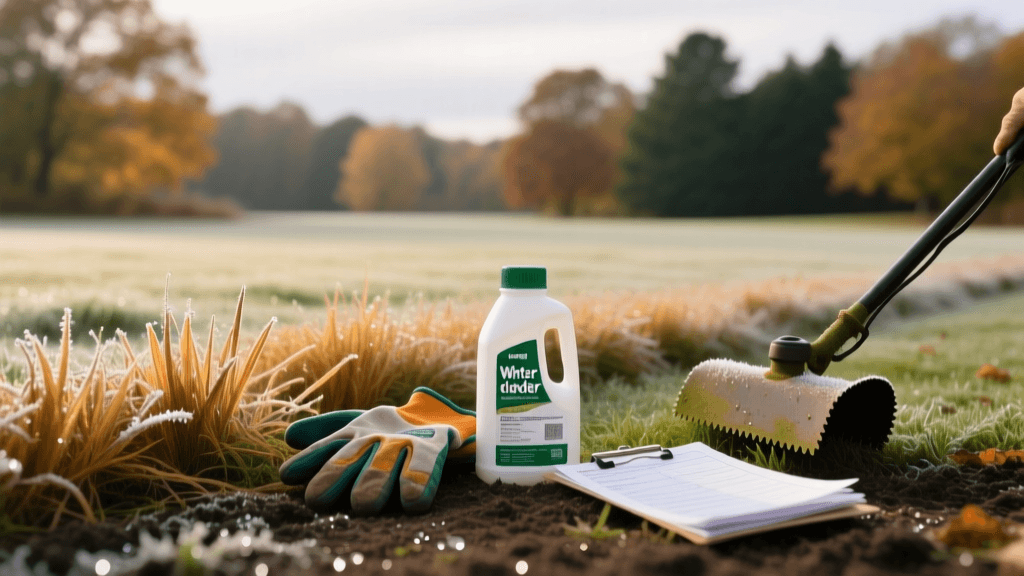
Late Fall Lawn Care: Winterizer Fertilizer and Dormancy Prep
Why Late Fall Lawn Care Matters for Cool-Season Grasses
As the vibrant colors of autumn begin to fade and the first frosts threaten the landscape, many homeowners make the critical mistake of putting their lawn care equipment away for the season. However, for cool-season grasses such as Kentucky bluegrass, perennial ryegrass, and tall fescue, late fall is arguably the most important time of the year. The seasonal maintenance and health routines you perform between late October and early December dictate not only how well your turf survives the harsh winter dormancy period but also how vigorously it greens up the following spring. Neglecting late fall lawn care leaves your turf vulnerable to winter desiccation, snow mold diseases, and aggressive spring weed invasions.
The Science of Fall Root Growth
To understand why late fall maintenance is crucial, one must look beneath the soil surface. According to turfgrass researchers at Purdue University Extension, while the top growth (shoots) of cool-season grasses slows down significantly as air temperatures drop below 50°F, root growth and carbohydrate storage continue well into the late fall until the soil temperature consistently falls below 40°F. During this window, the grass is actively pulling nutrients from the soil and storing them in its crown and root system. By providing the right nutrients and environment during this phase, you are essentially building a biological energy reserve that will fuel rapid, thick spring growth without the excessive, disease-prone top growth that early spring fertilization often causes.
Winterizer Fertilizer: Timing, Ratios, and Application
The cornerstone of late fall seasonal health is the application of a 'winterizer' fertilizer. Unlike spring fertilizers that promote rapid blade growth, a true winterizer is designed to maximize root development and carbohydrate storage.
Choosing the Right N-P-K Ratio
A winterizer should be high in nitrogen (N) and contain moderate to low levels of phosphorus (P) and potassium (K). An ideal N-P-K ratio for late fall is 24-0-10 or 32-0-10. The nitrogen should be a mix of quick-release (like urea or ammonium sulfate) and slow-release sources. The quick-release nitrogen provides an immediate surge of nutrients that the roots can absorb and store before the ground freezes, while the slow-release portion ensures a steady supply of nutrients during the earliest days of spring thaw.
Application Rates and Timing
The optimal time to apply a winterizer is after the final mowing of the season, but before the ground freezes solid. In most northern and transitional zones, this falls between mid-November and early December. You should apply exactly 1.0 to 1.5 pounds of actual nitrogen per 1,000 square feet. For example, if you are using a 32-0-10 fertilizer, you would need to apply roughly 3.1 pounds of product per 1,000 square feet to achieve a 1-pound nitrogen rate. Premium products like Lesco Professional Winterizer or Scotts Turf Builder WinterGuard are formulated specifically for this purpose and typically cost between $15 and $25 per bag, covering up to 4,000 square feet.
Late Fall Soil Testing and pH Adjustment
Late fall is the absolute best time to address soil pH imbalances. If you have not conducted a soil test recently, purchase a mail-in soil test kit from your local university cooperative extension office or a private lab like Waypoint Analytical (costing around $20 to $30). If your soil test reveals a pH below 6.0, applying pelletized calcitic or dolomitic lime in late fall is highly recommended. Lime takes several months to break down and alter the soil chemistry. By applying 20 to 50 pounds of lime per 1,000 square feet in November, the freeze-thaw cycles of winter will help work the lime into the soil profile, ensuring the pH is optimized by the time spring growth begins.
Final Mowing and Leaf Management
How you handle the final weeks of mowing directly impacts your lawn's winter health. Throughout the early fall, you likely kept your mowing height around 3.0 to 3.5 inches to shade out weeds and conserve moisture. However, leaving grass too tall over the winter invites snow mold (Typhula blight and Microdochium patch) and provides a warm habitat for voles and mice that can chew on the turf crown.
For your final two mowings, gradually drop your mower deck down to 2.0 or 2.5 inches. This shorter height prevents the grass blades from matting down under heavy snow and ice.
Regarding leaf management, never allow a thick layer of wet leaves to smother your lawn, as this will suffocate the grass and cause dead patches. Instead of raking, use a mulching mower blade to chop leaves into dime-sized pieces. According to Penn State Extension, mulched leaves decompose rapidly, returning valuable organic matter and micronutrients to the soil without contributing to thatch buildup.
Dormant Seeding for Thin Turf
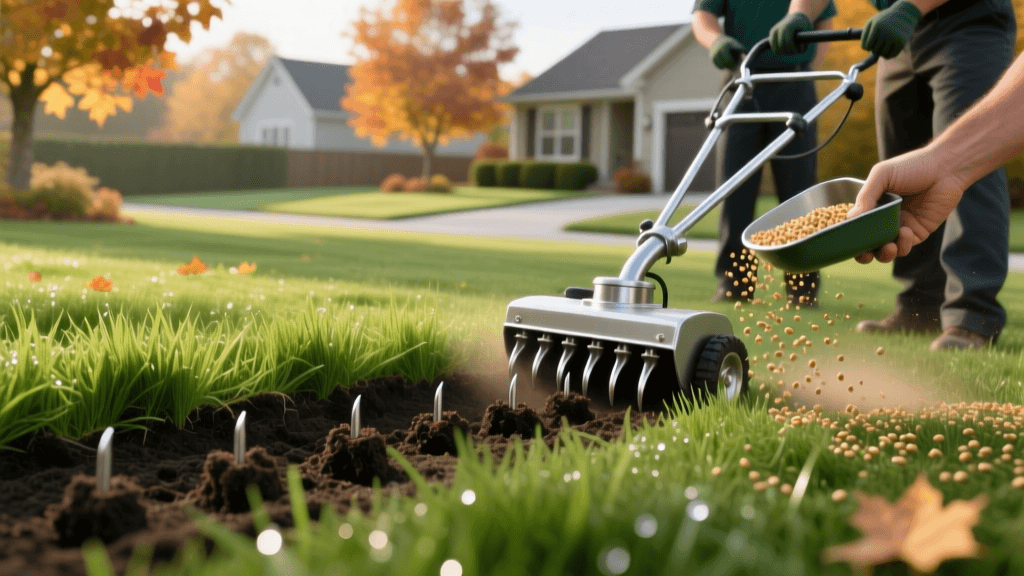
If your lawn suffered severe drought or disease damage during the summer and you missed the early fall overseeding window, late fall offers a strategic alternative: dormant seeding. Dormant seeding involves spreading grass seed after soil temperatures have dropped below 40°F, meaning the seed will not germinate until the following spring. The advantage of this technique is that the natural freeze-thaw cycles of winter will create small crevices in the soil, naturally pulling the seed into excellent soil contact. Use a high-quality, uncoated Kentucky bluegrass or tall fescue seed blend at a rate of 3 to 5 pounds per 1,000 square feet. Do not apply a pre-emergent crabgrass preventer the following spring if you choose this route, as it will kill your new grass seedlings.
Late Fall Lawn Care Schedule and Cost Breakdown
To help you budget and plan, review the following late fall maintenance schedule tailored for a standard 5,000 square foot cool-season lawn.
| Maintenance Task | Ideal Timing | Key Details | Estimated Cost (per 1,000 sq ft) |
|---|---|---|---|
| Soil Testing | October | Mail-in lab test for pH and N-P-K levels | $5.00 - $8.00 |
| Lime Application | November | Apply only if pH is below 6.2 | $4.00 - $6.00 |
| Winterizer Fertilizer | Late Nov - Early Dec | 1 lb N per 1,000 sq ft; high quick-release N | $4.50 - $6.50 |
| Final Mowing | Late November | Lower deck to 2.0 - 2.5 inches | Time / Fuel |
| Dormant Seeding | December (Post-Freeze) | 3-5 lbs seed; rely on frost heave for contact | $12.00 - $18.00 |
Winterizing Your Lawn Equipment
Seasonal health also applies to the tools that maintain your turf. Leaving ethanol-blended gasoline in your mower's carburetor over the winter will lead to varnish buildup and clogged jets, resulting in expensive spring repairs. Before storing your mower, add a fuel stabilizer like STA-BIL to the gas tank, run the engine for ten minutes to circulate the treated fuel through the lines, and then either run the carburetor completely dry or top off the tank with fresh, non-ethanol fuel. Additionally, remove the mower blade, sharpen it with a metal file or bench grinder, balance it, and coat it with a light layer of WD-40 or motor oil to prevent rust during the humid winter months.
Conclusion
Late fall lawn care is an investment in the future vitality of your landscape. By focusing on root nutrition through winterizer fertilizers, managing soil pH, adjusting your mowing height, and properly preparing your equipment, you set the stage for a remarkably resilient and lush lawn. As the experts at university extension offices consistently emphasize, the battle against summer stress, weeds, and diseases is largely won during the quiet, cold weeks of late autumn. Embrace the seasonal maintenance window, and your turf will reward you with a vibrant, early-spring green-up that outshines the neighborhood.