Lawn Care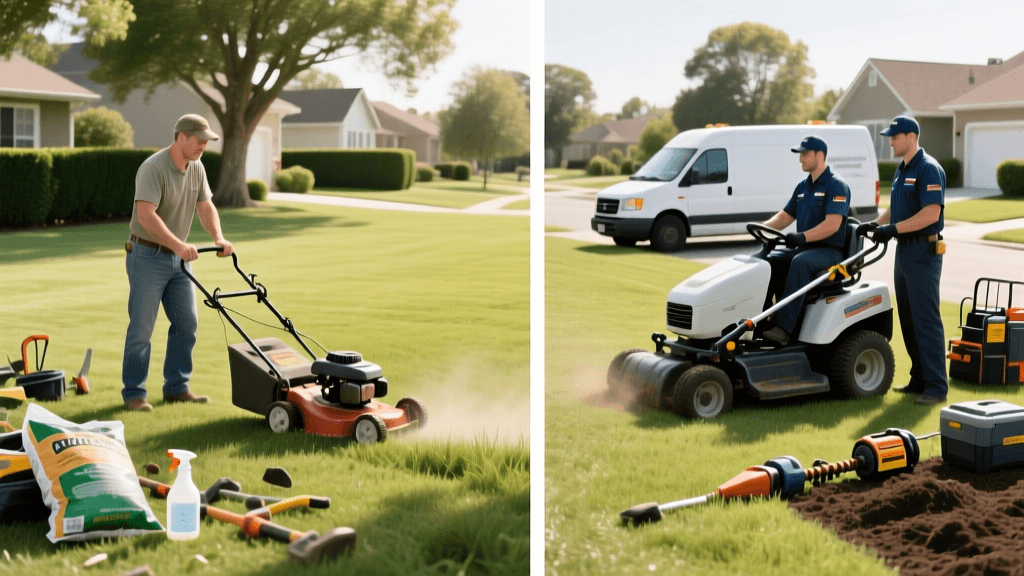
The True Cost of Lawn Care: DIY vs Professional Budgets
Introduction to Lawn Care Budgeting
Maintaining a lush, green lawn is a point of pride for many homeowners, but it is also a significant line item in your annual household budget. Whether you are battling crabgrass in a warm-season Bermuda lawn or trying to keep cool-season Kentucky Bluegrass green through a summer drought, the financial commitment is real. For homeowners trying to balance a pristine yard with a sensible budget, the ultimate question remains: should you do it yourself, or hire a professional?
To provide an accurate and actionable financial breakdown, this guide uses a standard 5,000 square foot lawn as our baseline. We will analyze the upfront equipment costs, recurring annual expenses, and the hidden value of your time to help you build a realistic lawn care budget for the upcoming seasons.
The Baseline: What Does a Lawn Actually Need?
Before assigning dollar amounts, it is crucial to understand the agronomic requirements of your turf. A healthy lawn requires regular mowing, balanced fertilization, proactive weed control, proper irrigation, and periodic aeration. Cool-season grasses like Tall Fescue and Perennial Ryegrass have peak growing seasons in the spring and fall, requiring heavy nitrogen applications and annual overseeding. Warm-season grasses like Zoysia and St. Augustine thrive in the summer heat and require frequent mowing and targeted pre-emergent herbicides in early spring.
Regardless of your grass type, the baseline inputs remain similar. You will need to cut the grass roughly 30 times a year, apply fertilizer 4 to 5 times a year, treat for weeds, and water deeply during dry spells. How you choose to execute these tasks dictates your budget.
DIY Lawn Care: Upfront and Annual Costs
Taking the do-it-yourself route is often viewed as the budget-friendly option, but it requires a significant upfront capital investment in equipment. For a 5,000 square foot lawn, a commercial zero-turn mower is overkill; a high-quality 21-inch push mower or self-propelled mower is perfectly adequate. You will also need a string trimmer for edging and a broadcast spreader for evenly distributing fertilizer and grass seed.
Beyond the initial equipment purchase, your annual budget will be consumed by consumables: fertilizer, weed control, grass seed, fuel or electricity, and replacement parts like trimmer line and mower blades. Let us look at the financial breakdown for a standard DIY setup.
| Item / Service | Type of Cost | Estimated Price |
|---|---|---|
| 21-inch Self-Propelled Mower | Upfront (One-time) | $400.00 |
| Gas String Trimmer / Edger | Upfront (One-time) | $175.00 |
| Rotary Broadcast Spreader | Upfront (One-time) | $90.00 |
| Manual Core Aerator / Shoes | Upfront (One-time) | $40.00 |
| Fertilizer (4 apps/year) | Annual Consumable | $160.00 |
| Pre/Post-Emergent Weed Control | Annual Consumable | $85.00 |
| Overseeding (Cool-Season) | Annual Consumable | $60.00 |
| Fuel, Oil, and Trimmer Line | Annual Consumable | $75.00 |
Total First-Year DIY Cost: $1,085.00
Subsequent Annual DIY Cost: $380.00 (Consumables only)
Professional Lawn Care: Outsourcing the Work
Hiring a professional lawn care service eliminates the need for equipment storage, maintenance, and the physical labor of weekend yard work. Professional companies bring commercial-grade equipment, licensed pesticide applicators, and agronomic expertise to your property. However, this convenience comes at a premium.
Most professional services offer a la carte pricing or bundled seasonal programs. A standard mowing, edging, and blowing service will visit your property 30 to 35 times a year. Chemical and fertilization programs are usually billed as a 6-to-8 step annual contract. Below is the typical cost structure for outsourcing a 5,000 square foot lawn to a local professional company.
| Professional Service | Frequency | Estimated Annual Cost |
|---|---|---|
| Weekly Mowing, Edging, Blowing | 30 visits/year | $1,350.00 |
| Fertilization & Weed Control Program | 6 applications | $450.00 |
| Core Aeration Service | 1 visit (Fall) | $150.00 |
| Grub Control / Preventative | 1 application | $65.00 |
Total Annual Professional Cost: $2,015.00
The Hidden Cost: Valuing Your Time and Water
The most frequently overlooked expense in the DIY versus professional debate is the value of your time. Mowing, trimming, edging, and blowing a 5,000 square foot lawn takes the average homeowner about 90 minutes. Add in the time spent traveling to the garden center, mixing herbicides, and maintaining equipment, and you are easily investing 80 to 100 hours per year into your lawn.
If you value your weekend leisure time at just $25 per hour, the 'hidden' cost of DIY lawn care is an additional $2,000 to $2,500 annually. Furthermore, water usage is a massive variable in your budget.
According to the University of California Agriculture and Natural Resources (UC ANR), a 5,000 square foot lawn requires about 620 gallons of water to receive one inch of irrigation. In peak summer heat, your lawn may need 1.5 inches per week. At a national average of $1.50 to $3.00 per 1,000 gallons, summer watering alone can add $40 to $100 to your monthly utility bill.
To mitigate these costs, budget-conscious homeowners should invest in smart irrigation controllers and consider drought-tolerant grass varieties like Bermuda or Zoysia if they live in a warm-season climate.
The Hybrid Approach: Maximizing Your Budget
You do not have to choose strictly between 100% DIY and 100% professional. The most financially savvy homeowners often adopt a hybrid approach, outsourcing the heavy, technical, or time-consuming tasks while handling the routine maintenance themselves.
- DIY Mowing: Purchase a reliable electric push mower (like an EGO or Ryobi 21-inch) to eliminate gas maintenance and save money on weekly mowing fees.
- Pro Fertilization & Chemicals: Hire a professional service like TruGreen or a reputable local provider for your 6-step chemical program. They have access to commercial-grade pre-emergents like Prodiamine and post-emergents that are more effective and often cheaper per application than retail box-store products.
- DIY Overseeding and Aeration: Rent a commercial core aerator from a local hardware store for $80 a day and buy bulk seed from a landscape supplier. This saves hundreds compared to professional aeration and seeding packages.
This hybrid model typically caps out around $800 to $1,000 annually after your initial equipment purchases, offering the best balance of a pristine lawn and financial efficiency.
Seasonal Budgeting Calendar
To avoid sticker shock, it is vital to map out your lawn care expenses according to the seasons. Here is how you should allocate your budget throughout the year:
Spring (March - May)
Spring is the most expensive season for chemical applications. Budget for pre-emergent crabgrass preventers, broadleaf weed control, and high-nitrogen starter fertilizers. If you are DIY-ing, this is the time to service your mower, change the oil, and install a fresh spark plug and blade.
Summer (June - August)
Summer budgets are dominated by water costs. Warm-season grasses will require frequent mowing, so fuel or battery charging costs will peak. Budget for preventative grub control applications and spot-treatments for summer weeds like nutsedge and spurge.
Fall (September - November)
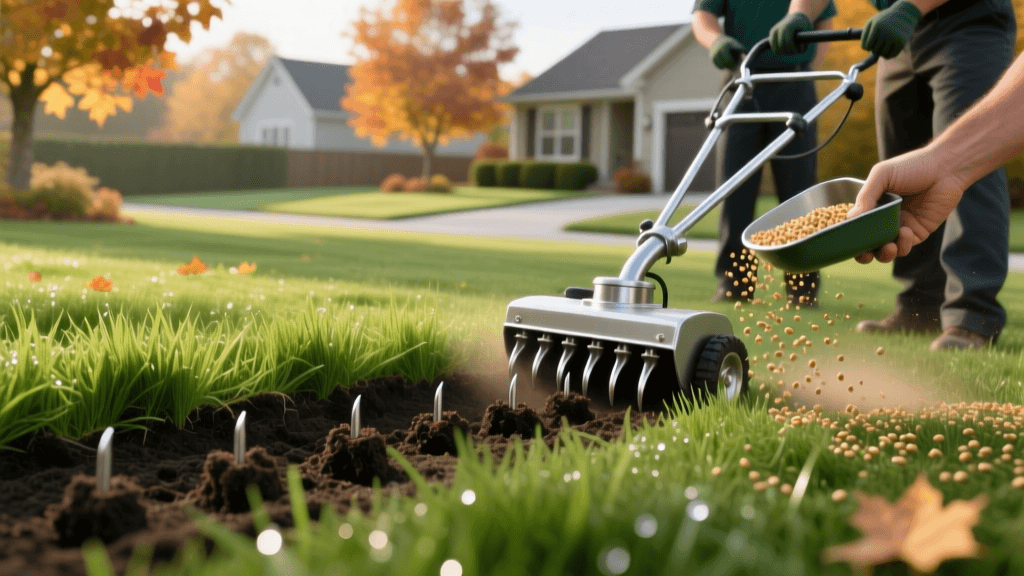
Fall is the most critical season for cool-season grasses. Budget heavily for core aeration, high-quality overseeding, and winterizer fertilizers. According to Penn State Extension, fall is the optimal time to establish cool-season turf because soil temperatures are warm enough for germination, but air temperatures are cool enough to prevent heat stress on seedlings.
Winter (December - February)
Winter is the cheapest season for active lawn care. Use this time to budget for equipment upgrades, purchase bulk fertilizer and seed during off-season sales, and plan your agronomic strategy for the upcoming spring.
Conclusion
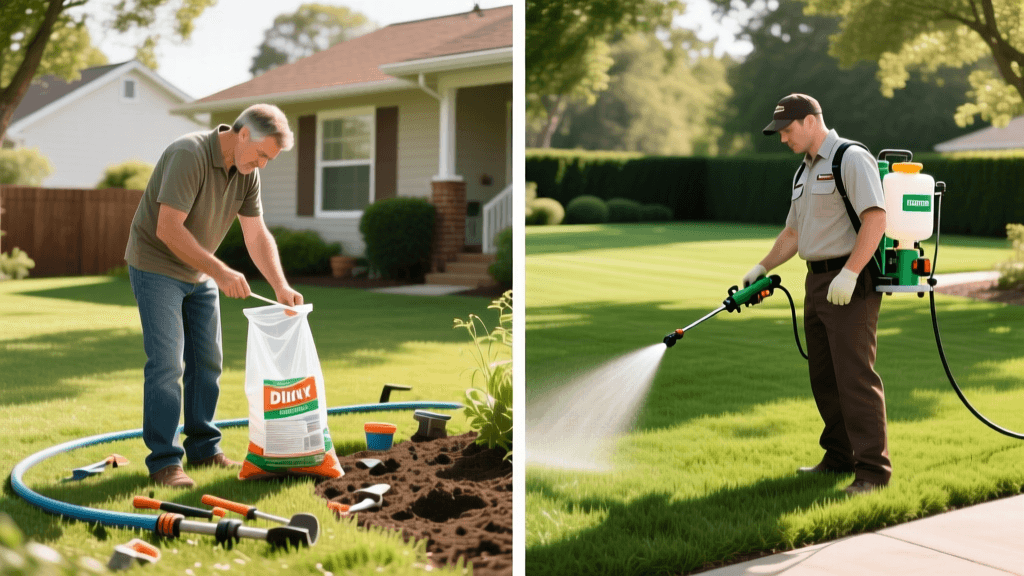
Ultimately, the cost of lawn care is dictated by your personal standards, your local climate, and the value you place on your own time. A pure DIY approach will save you roughly $1,600 a year in out-of-pocket expenses compared to hiring professionals, but it demands a heavy investment of physical labor and weekend hours. By understanding the true costs of equipment, consumables, and professional services, you can build a customized lawn care budget that keeps your turf thick and your bank account healthy.