
Lawn Care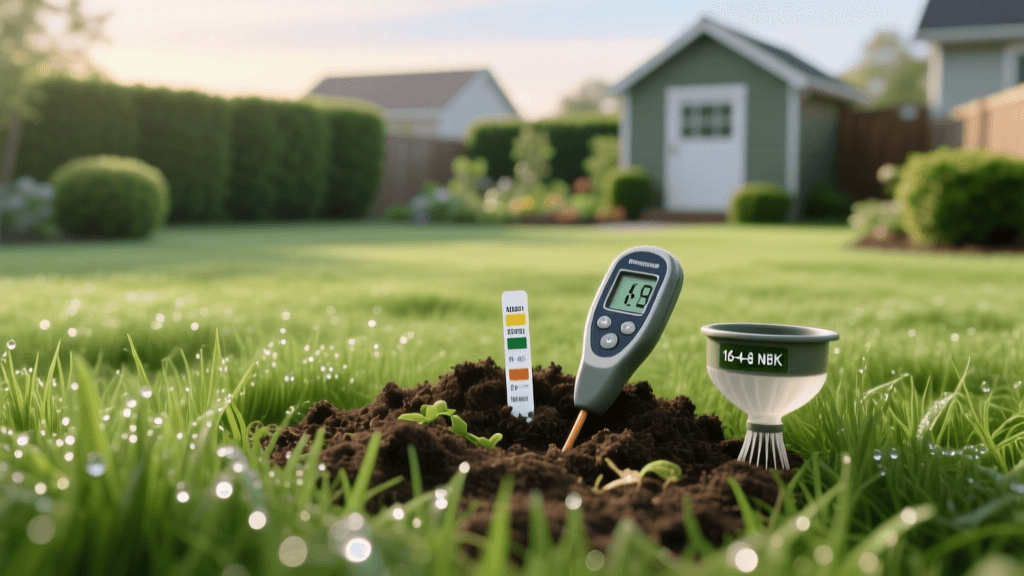
Expert Lawn Fertilization: Soil Testing and NPK Guide
Achieving a dense, emerald-green lawn is rarely an accident; it is the result of precise, science-backed turf management. While amateur homeowners often rely on guesswork and generic weed and feed products, professional turfgrass managers base their fertilization strategies on comprehensive soil data and exact NPK (Nitrogen, Phosphorus, Potassium) ratios. In this expert guide, we break down the best practices for lawn fertilization, from interpreting soil test results to calculating precise application rates for both cool-season and warm-season grasses.
Why Soil Testing is the Foundation of Expert Lawn Care
Before a single granule of fertilizer touches your turf, you must understand your soil's chemical makeup. Applying fertilizer without a soil test is akin to prescribing medication without a diagnosis. According to the University of Minnesota Extension, routine soil testing prevents over-fertilization, reduces environmental runoff, and saves homeowners up to 30% on annual lawn care costs by eliminating unnecessary product applications.
For the most accurate results, bypass the cheap DIY test kits found at big-box stores. Instead, send your soil cores to a professional laboratory like Logan Labs or your local university cooperative extension.
How to Collect a Proper Soil Sample
- Tools: Use a stainless steel soil probe or a clean spade. Avoid brass or galvanized tools, which can skew zinc and copper readings.
- Depth: Extract cores from the top 3 to 4 inches of soil, which represents the primary root zone.
- Sampling Strategy: Take 10 to 15 random samples across your lawn, avoiding areas near garden beds, driveways, or recent pet urine spots.
- Preparation: Mix the samples in a clean plastic bucket, remove debris and stones, and let the soil air-dry before mailing the required 2-cup volume to the lab.
Cost Expectation: A comprehensive professional soil test typically costs between $20 and $35, a small investment that dictates your entire annual fertility program.
Decoding NPK: What Your Lawn Actually Needs
Every commercial fertilizer bag displays a three-number NPK ratio (e.g., 20-5-10). Understanding how to manipulate these macronutrients is the hallmark of expert lawn care.
Nitrogen (N): The Growth Engine
Nitrogen is responsible for vigorous blade growth and deep green coloration. It is the most mobile nutrient in the soil and the one your lawn consumes in the highest quantities. Experts recommend using a mix of quick-release nitrogen (like urea or ammonium sulfate) for immediate green-up, and slow-release nitrogen (like methylene urea or organic options such as Milorganite) for sustained, burn-free feeding over 8 to 10 weeks.
Phosphorus (P): The Root Builder
Phosphorus is critical for seedling establishment and deep root development. However, established lawns rarely need supplemental phosphorus unless a soil test indicates a deficiency. In fact, many states have banned phosphorus in lawn fertilizers to protect waterways from harmful algal blooms. Only apply high-phosphorus starter fertilizers (e.g., 18-24-12) when overseeding or laying new sod.
Potassium (K): The Stress Defender
Potassium acts as the lawn's immune system. It regulates water uptake, improves drought tolerance, and fortifies cell walls against disease and winter freeze damage. Applying a high-potassium winterizer fertilizer in late autumn is a crucial best practice for cool-season grasses preparing for dormancy.
Expert Fertilization Schedule and Application Rates
The timing and volume of your fertilizer applications must align with your specific grass type's natural growth cycles. Applying heavy nitrogen during summer dormancy can severely stress warm-season grasses and promote fungal diseases in cool-season varieties.
Annual Nitrogen Requirements and Timing
| Grass Type | Total Annual N (lbs/1,000 sq ft) | Primary Application Windows | Expert Strategy |
|---|---|---|---|
| Kentucky Bluegrass (Cool) | 2.0 - 4.0 | Early Fall, Late Fall, Late Spring | Heavy fall feeding; light spring feeding to avoid summer disease. |
| Tall Fescue (Cool) | 2.0 - 3.0 | September, November, May | Moderate rates; avoid high N during summer heat stress. |
| Bermudagrass (Warm) | 3.0 - 5.0 | Late Spring, Early Summer, Mid-Summer | Feed heavily during peak summer heat; stop 6 weeks before first frost. |
| Zoysia (Warm) | 1.0 - 3.0 | Late Spring, Early Summer | Low N requirement; over-fertilization causes excessive thatch. |
Best Practices for Applying Granular and Liquid Fertilizers
Having the right product is only half the battle; uniform application is what separates a pristine lawn from a striped, patchy mess.
Calibrating Your Spreaders
Never blindly trust the setting printed on the fertilizer bag, as spreader mechanisms wear down over time. To calibrate a rotary spreader:
- Weigh out the exact amount of product needed for a 1,000-square-foot test area.
- Set your spreader to a medium-low setting.
- Walk at a consistent, brisk pace (roughly 3 mph) over the measured area.
- Weigh the leftover product. If you have too much left, open the setting; if you run out, close it. Repeat until the application is precise.
The Two-Pass Crosshatch Method
To prevent missed strips and overlapping burns, always apply granular fertilizer in a crosshatch pattern. Apply half of your calculated total rate walking North-to-South, and the remaining half walking East-to-West. This guarantees uniform coverage and eliminates the risk of localized nitrogen burn.
Liquid Fertilizer and Foliar Feeding
Liquid fertilizers, such as chelated iron or soluble urea, offer rapid absorption through the leaf tissue. When applying liquids via a backpack sprayer, use a flat-fan nozzle (like the TeeJet 8002) and maintain a constant pressure of 20 to 30 PSI. Always apply liquid iron or fast-acting nitrogen in the early morning or late evening to prevent rapid evaporation and leaf scorch.
Managing Soil pH: The Hidden Gatekeeper of Nutrients
Your soil could be packed with nitrogen, phosphorus, and potassium, but if the pH is off, the grass roots cannot absorb them. Turfgrass thrives in a slightly acidic to neutral pH range of 6.0 to 7.0.
- Acidic Soil (Below 6.0): Nutrients like phosphorus become locked up. Apply pelletized calcitic lime at a rate of 50 lbs per 1,000 sq ft in the fall to raise the pH. Avoid applying lime within two weeks of a nitrogen application, as the chemical reaction will volatilize the nitrogen into ammonia gas.
- Alkaline Soil (Above 7.5): Micronutrients like iron and manganese become unavailable, leading to chlorosis (yellowing). Apply elemental sulfur or ammonium sulfate to gradually lower the pH over the growing season.
Troubleshooting Common Fertilization Mistakes
Even seasoned DIYers make errors that can damage the turf ecosystem. Here is how to avoid the most common pitfalls:
Fertilizer Burn from Salts
Synthetic fertilizers are essentially salts. If applied to a dry lawn and left on the surface in direct sunlight, they will draw moisture out of the grass blades, causing severe tip burn. Expert Tip: Always water your lawn deeply 24 hours before a granular application, and irrigate with 1/4 inch of water immediately after spreading to wash the prills off the blades and into the soil profile.
The Weed and Feed Dilemma
Combining herbicides and fertilizers in a single application is generally discouraged by turf scientists. Pre-emergent herbicides require immediate watering to form a soil barrier, while post-emergent broadleaf herbicides need to remain on the weed foliage for 24 to 48 hours to be effective. These opposing water requirements make combination products inherently inefficient. Treat weeds and feed the lawn as two separate, targeted operations.
Conclusion: Consistency is the Ultimate Best Practice
Expert lawn fertilization is not about finding a single miracle product; it is about establishing a consistent, data-driven routine. By investing in annual soil tests, respecting the natural growth cycles of your specific grass type, and calibrating your equipment for precise applications, you will build a resilient, deep-rooted lawn that naturally crowds out weeds and withstands environmental stress. Start with a soil test today, and let the data dictate your turf's diet.